Where to Put a Village Permit Sticker on a UTV
You’ve navigated the sometimes-tricky waters of getting your UTV legally registered for street use in your Illinois village – a huge achievement! But now you're faced with a seemingly simple task that often causes a surprising amount of confusion: where exactly do you put that permit sticker? It’s a common frustration, wondering if there’s a secret spot or if just slapping it anywhere will do. This guide will help you understand the nuances of permit sticker placement, ensuring your UTV is fully compliant and you can ride with peace of mind.
The Quest for Street Legality: Why Sticker Placement Matters
Getting your UTV street legal in Illinois often feels like a mini-quest, doesn’t it? First, you have to find out if your specific town even allows it, because [Illinois UTV Street Legal Rules by Town] are highly localized. Then there’s the process of applying, getting your machine inspected for all the necessary safety equipment, and finally, receiving that precious permit sticker. After all that effort, the last thing you want is to be pulled over or cited for something as seemingly minor as improper sticker placement. It’s not just about aesthetics; it's about compliance, visibility, and proving you’ve done your due diligence.
Proving Your Compliance on the Road
Imagine cruising down a village street, enjoying the freedom your newly street-legal UTV offers, only to see flashing lights in your rearview mirror. The officer approaches, and after checking your driver's license and insurance, their eyes naturally scan your machine for that permit sticker. If it's obscured, falling off, or simply not where they expect it, it can lead to unnecessary delays, questions, and even a citation. The sticker is your visible proof that you've met your village's requirements, and making it easy for law enforcement to spot is in your best interest. It saves you time, prevents awkward conversations, and helps maintain a good relationship with local authorities who are just doing their job.
It’s often the small details that trip us up. You’ve likely spent money on [Illinois Street-Legal Equipment Costs for a UTV] like turn signals, mirrors, and maybe even a horn. You’ve applied for your permit at Village Hall, paid the [Illinois Permit Fees Set by a Town], and passed the [The Inspection a Village Runs Before Issuing a Permit]. All of these steps lead to this final piece of paper (or vinyl), and its proper display is the finishing touch on your journey to legal street riding. Don't let a misplaced sticker undermine all your hard work.
Avoiding Penalties and Unwanted Attention
No one wants a ticket, especially for something preventable. Many Illinois municipalities have specific ordinances governing UTV use, and while some may be vague about sticker placement, others might explicitly state requirements. A sticker that's illegible due to dirt, fading, or an awkward angle could be considered non-compliant, just as if you didn't have one at all. Think about it from the perspective of a village officer: if they can't easily see and read your permit sticker from a reasonable distance, they have reason to believe you might not have one.
This isn't to say every officer is looking for an excuse to write a ticket, but proper placement minimizes any ambiguity. An easily visible sticker allows them to quickly confirm your compliance without having to pull you over for a closer look. It helps you blend in and continue enjoying your ride without drawing unnecessary attention. Keep in mind that some villages may have different rules or expectations than neighboring towns, so knowing [Illinois Rules for Riding a Village Street] is key. A clear, accessible sticker tells them at a glance that you are playing by the rules.
Deciphering the Ordinance: Finding the Right Spot for Your Sticker
When it comes to permit stickers, there isn’t a one-size-fits-all state law in Illinois. Instead, it falls to each individual village or municipality to set its own rules. This is where things can get a little murky, as some local ordinances are incredibly detailed, while others might be surprisingly silent on the exact spot for your sticker. Your first step should always be to review the specific ordinance passed by your village.
Checking Your Local Village Ordinance
Before you even think about peeling off that backing, take the time to find and read your village’s UTV ordinance. Many towns post these on their official websites, often under sections related to vehicle codes, village clerk, or police departments. You might have received a copy when you applied for your permit at Village Hall, or you might need to make a quick call to the clerk’s office. Ask specifically about "UTV ordinances" or "recreational vehicle codes."
Some ordinances will be quite explicit, stating, for example, "the permit decal shall be affixed to the lower left corner of the windshield" or "shall be prominently displayed on the driver's side front fender." If your village’s ordinance specifies a location, that’s your definitive answer. Stick to it without deviation. These rules are usually put in place for consistent visibility for law enforcement. Don't second-guess the local authorities; they set the rules.
Best Practices When No Specific Location Is Stated
What happens if you pore over the ordinance and find absolutely no mention of where to put the sticker? This is actually a fairly common scenario, as many smaller towns are still refining their UTV regulations. In such cases, you’ll need to rely on common sense, general principles of vehicle decal placement, and the implied intent of such permits: clear visibility. The goal is to make it obvious to anyone looking that you have a valid permit.
Here are some general guidelines to follow when your village ordinance is silent on the matter:
- Prominent, unobstructed view: The sticker should be easily seen from the front or driver’s side of the UTV. It shouldn't be hidden behind a winch, a light bar, or mud.
- Durable surface: Choose a flat, clean, and smooth surface that will allow the adhesive to bond securely and won't flex or chip easily.
- Away from excessive heat or exhaust: Extreme heat can degrade the adhesive and fade the sticker over time.
- Clean and dry application: Always clean the surface thoroughly before applying the sticker. Use an alcohol wipe to remove any grease or residue, then let it dry completely.
When considering accessories, if you have a SuperATV windshield or a custom body kit, think about how those might offer a good, flat surface. The key is to avoid placing it somewhere that it could be easily torn off by brush, mud, or even during washing.
Real-World Placement Strategies for Illinois UTVs
When it comes to physically sticking that permit to your UTV, you've got a few common areas that most riders consider. Each has its pros and cons, and the best choice for you might depend on your specific machine, its modifications, and the type of riding you do when you're off the pavement. Let's break down some of the most popular and practical options.
Common Placement Areas and Considerations
1. The Windshield (If You Have One):
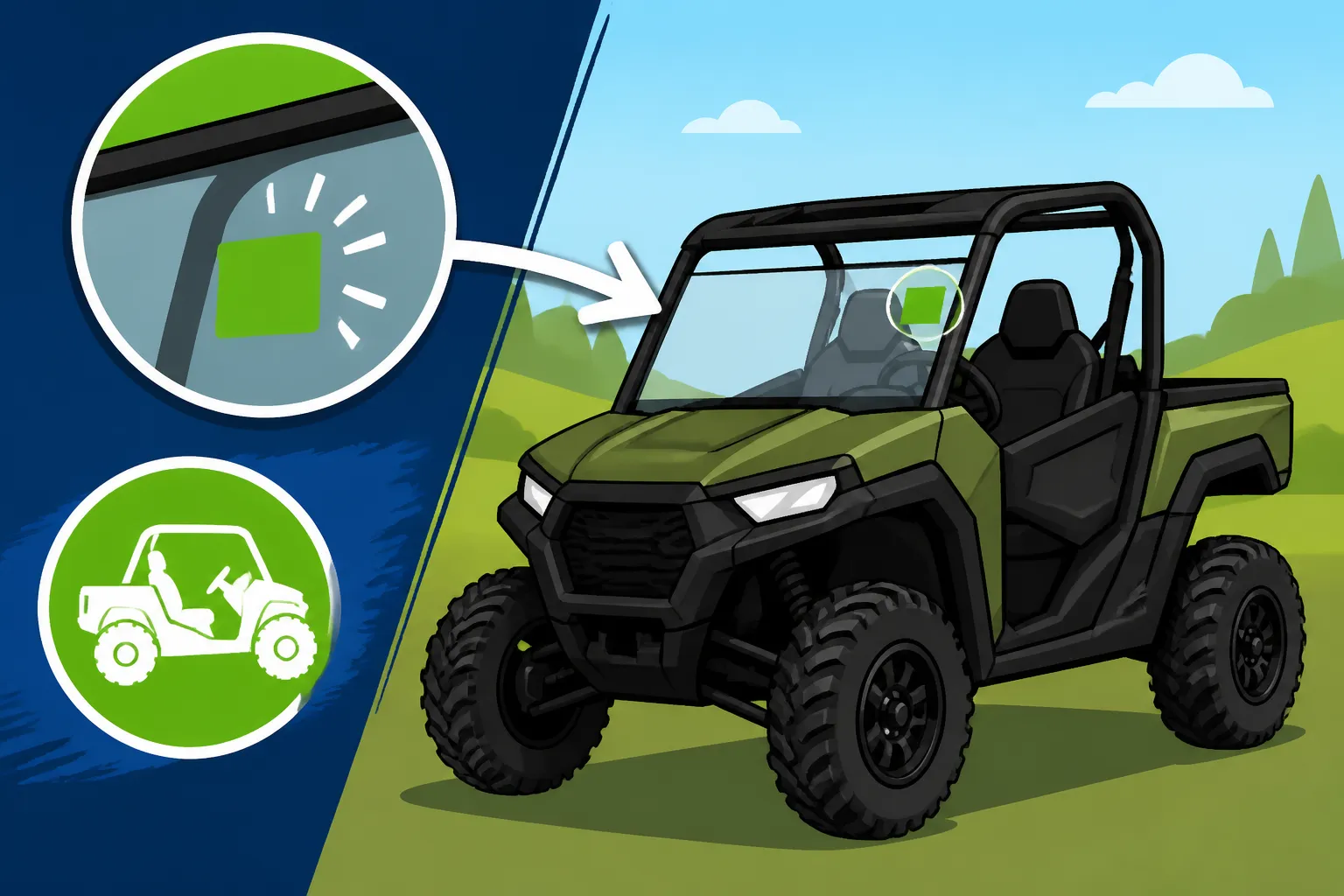
Many UTVs, especially those configured for street use, have a front windshield. This is often the go-to spot for permit stickers, much like car registration stickers.
- Pros: Highly visible from the front, usually a clean and flat surface, protected from mud and debris. If you have a full SuperATV windshield, it's a prime location.
- Cons: If your windshield is foldable or removable, this might not be ideal. Some villages might specify the lower left or lower right corner to avoid obstructing the driver's view. If you have multiple machines or are considering future modifications, think about how a different windshield might impact sticker transfer.
2. Front Fender or Hood:
This is another popular choice, particularly for UTVs without a full windshield or where the windshield is frequently removed.
- Pros: Very visible from the front and sides, usually a flat surface.
- Cons: More exposed to mud, dirt, and branches, which can obscure or damage the sticker. Some UTV fenders are textured, which can make adhesion difficult. Ensure the surface is as flat and smooth as possible for good adhesion.
3. Dashboard or Interior Console:
If your UTV has a dashboard area that’s visible through the windshield, this can be an option, especially for peel-and-stick decals that are more like window clings.
- Pros: Protected from the elements, won't peel off easily.
- Cons: May not be easily visible to an officer approaching from outside the vehicle without leaning in. Might be less prominent than an exterior placement. Check if your particular sticker is designed for interior application (some are meant to be seen from the outside, applied to the inside of glass).
4. Frame or Roll Cage:
For a very robust and secure option, some riders choose a flat section of the frame or roll cage.
- Pros: Extremely durable placement, less prone to being torn off or damaged.
- Cons: Can be less visible depending on the angle and exact spot. Might require a very specific, flat section that is still somewhat prominent. This is where a little creativity and a lot of common sense come in.
Here's a quick comparison of common placement options:
| Placement Area | Pros | Cons | Visibility | Durability |
|---|---|---|---|---|
| Windshield | High visibility, protected, flat surface | May obstruct view (if large), not for removable windshields | Excellent (front) | Good |
| Front Fender/Hood | High visibility (front/side) | Exposed to elements, dirt, potential damage; textured surfaces | Excellent (front) | Moderate (exposed) |
| Dashboard/Interior | Protected from elements, secure adhesion | May be less visible from outside, sticker type dependent | Fair (from front) | Excellent (sheltered) |
| Frame/Roll Cage | Highly durable, very secure | Can be less visible depending on exact spot, may need specific tools | Fair (varies) | Excellent |
Practical Tips for Optimal Placement
Beyond just picking a spot, how you actually apply the sticker makes a huge difference in its longevity and compliance.
- Cleanliness is Key: I cannot stress this enough. A clean, dry surface is paramount for proper adhesion. Even if it looks clean, wipe it down with isopropyl alcohol and let it air dry completely before applying the sticker. Any dirt, dust, or wax residue will compromise the adhesive.
- Smooth Application: Start applying from one edge and slowly press down, working out any air bubbles as you go. A credit card or squeegee can help here. Air bubbles can lead to peeling over time.
- Consider Sun Exposure: While you want it visible, direct, constant sun exposure can fade some stickers over time. If you have options, a slightly shaded but still prominent spot might extend the sticker's life.
- Check from Multiple Angles: Once applied, step back and check the sticker from different angles – from the front, the driver’s side, and even from a standing position. Is it clearly visible? Is it legible? If you have to squint or walk around the UTV to see it, it might not be ideal.
- Don't Rush It: Take your time. This isn't a race. A few extra minutes now can save you headaches down the road.
Remember, the goal is to make it easy for an officer to see that you're legal without having to ask. That’s the true sign of good permit sticker placement.
Maintaining Compliance: Tips for Long-Term Sticker Success
Once your permit sticker is securely in place and clearly visible, your job isn't quite done. These stickers aren't meant to last forever, and the harsh conditions UTVs often face can take their toll. Keeping your sticker in good condition is an ongoing part of maintaining your UTV's street legality.
What to Do If Your Sticker Gets Damaged or Fades
Let's be realistic: UTVs get dirty. They get splashed, they encounter branches, and they spend time outdoors. Over time, your permit sticker might fade due to UV exposure, get scratched, or even start to peel at the edges. If this happens, don't just ignore it. A damaged or illegible sticker is just as problematic as having no sticker at all, as it fails to clearly display your permit.
Your first course of action should be to contact your village office, specifically the department that issues the permits (often the village clerk or police department). Explain that your sticker has been damaged or is no longer clearly visible and inquire about the process for obtaining a replacement. There might be a small fee for a duplicate, but it's a small price to pay to avoid a potential ticket. While you're at it, ask about [Illinois Duplicate Title Cost] or [Illinois Stamp Replacement If Lost] if those ever apply to other parts of your off-road machine's paperwork. Don't wait until you're pulled over to realize your sticker is unreadable.
Annual Renewals and New Sticker Application
Most village UTV permits are issued annually. This means that each year, you'll likely receive a new sticker after renewing your permit. When it's time for the new sticker, you'll need to decide whether to remove the old one or simply apply the new one over it. My advice? Always remove the old sticker cleanly. Multiple stickers can look messy and could potentially confuse an officer, making it harder to verify the current permit's validity.
Tips for removing old stickers:
- Heat it up: A hairdryer or heat gun (used carefully on a low setting) can soften the adhesive, making the sticker easier to peel off.
- Scrape gently: Use a plastic scraper or even an old credit card to gently lift the edges and work the sticker off. Avoid metal blades, especially on painted surfaces or plastic.
- Clean the residue: Once the sticker is off, there will likely be some adhesive residue. Products like Goo Gone or even rubbing alcohol can help remove it. Again, ensure the surface is perfectly clean and dry before applying the new sticker.
By removing the old sticker, you ensure that your UTV always displays the most current and visible proof of your street-legal status. It’s a simple habit that keeps you compliant and avoids any potential confusion. If you're going through all the trouble to ensure your UTV meets [Illinois Non-Highway Vehicle Equipment List] requirements, don't overlook the simple sticker. Always remember to check if [Illinois Usage Stamps Expire March 31] or when your access decals need renewing, as these also contribute to your overall compliance for different types of riding.
Disclaimer
This article is for general informational purposes only and does not constitute professional advice. Laws, prices and regulations vary by location and change over time. Consult a qualified professional for guidance on your specific situation.