Illinois Rules for Riding a Levee
Oh, the lure of those levee roads! It’s a scene many an Illinois ATV or UTV owner has seen: a seemingly smooth, elevated path winding through fields, looking like the perfect shortcut or a scenic cruise. But let me tell you, that smooth path can lead to some seriously rough legal and financial bumps if you don't know the rules. This guide is all about cutting through the confusion, explaining why riding your off-road machine on a levee in Illinois is usually a no-go, and what you need to know to stay on the right side of the law and protect your machine.
The Complex Landscape of Levee Ownership and Control in Illinois
When you look at a levee, especially one that stretches for miles, it's easy to assume it's just part of the landscape, maybe even public land. But the reality is far more intricate, and understanding who owns or controls a levee is the first step to understanding why you almost certainly can't ride your ATV or UTV on it.
Who Owns Illinois Levees? Federal, State, Local, and Private Hands
Illinois, with its vast network of rivers and agricultural land, relies heavily on levees for flood control. These aren't just dirt piles; they're engineered structures with critical functions. Their ownership can be a real patchwork, making the rules incredibly complex.
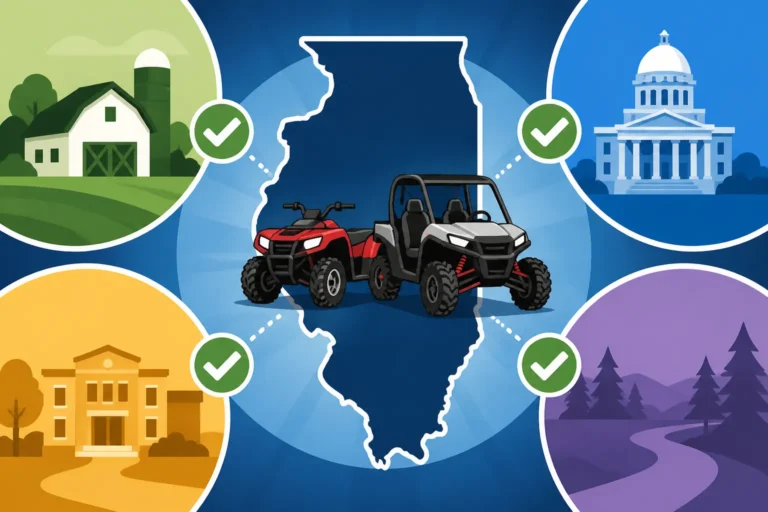
First, you have federal levees, primarily managed by the U.S. Army Corps of Engineers. These are typically massive structures along major waterways like the Mississippi and Illinois Rivers. They are considered federal property or easements, and access is tightly restricted. Then there are state-owned levees, often part of parks, conservation areas, or other state infrastructure. Again, these are not open for recreational off-road vehicle use without explicit, rare permission. Beyond that, many levees are managed by local levee districts, drainage districts, or even private landowners. These districts are often quasi-governmental entities formed by local landowners to protect their property from flooding. Even if the land technically belongs to a private farmer, the levee itself might be under the operational control of a district with its own set of bylaws and rules, usually prohibiting recreational vehicle traffic. It’s a lot to unpack, and it’s never as simple as “it looks like a dirt road.”
Jurisdiction and the Varying Rules
Because of this varied ownership, the rules for levees aren't uniform across Illinois. What might be explicitly forbidden by the Army Corps of Engineers on a federal levee near Quincy could have a slightly different enforcement approach from a small, local drainage district in the middle of the state. However, the common thread, the overwhelming default, is that recreational ATV and UTV riding is prohibited.
These different jurisdictions mean that merely seeing a levee that "looks" like others you might have seen doesn't mean the rules are the same. A levee district’s primary concern is the integrity of the levee for flood protection, not recreation. Any activity that could compromise that integrity, like rutting from tires or erosion caused by off-road vehicles, is a serious concern. They're also worried about liability if someone gets hurt on their property. This layered jurisdiction is precisely why you can’t make assumptions; you need clear, explicit permission, and even then, it's incredibly rare for recreational riding.
The Core Restriction: Levees Are Not Public Roads
This is the most crucial takeaway: a levee, regardless of its appearance or construction, is fundamentally not a public road. It wasn't designed for public traffic, and it's not maintained for it. You might occasionally see maintenance vehicles, utility crews, or even landowners driving on portions of levees for specific purposes. That doesn't mean it's open season for your weekend ride.
Illinois law, at its core, generally restricts off-road vehicles to private property with permission or designated public trails. [Illinois Law Starts by Banning Street Riding], and this principle extends even more strongly to non-road infrastructure like levees. Think of a levee more like a railway embankment or a power line easement – critical infrastructure that's off-limits to joyriding. The assumption should always be "no," and any deviation from that requires explicit, written proof of permission, which, as I mentioned, is exceptionally rare for recreational purposes.
Why Levee Riding is Generally Prohibited (and the Rare Exceptions)
There are very good reasons why riding your ATV or UTV on a levee is almost universally restricted. These reasons aren't just about fun-killing; they're about public safety, environmental protection, and legal liability.
Safety Concerns and Environmental Impact
First and foremost, levees are not designed with recreational safety in mind. They often have steep slopes, unpredictable surfaces, and are usually unmonitored. There could be hidden erosion, unstable sections, or maintenance equipment operating without warning. A rollover or a slide down an embankment could lead to serious injury, or worse. The edges can be soft, and a machine can easily slip off. Plus, many levees are quite remote, making emergency response a challenge.
Beyond immediate safety, there's a significant environmental impact. ATV and UTV tires, especially aggressive off-road treads, can cause significant erosion, particularly after rain. This rutting weakens the levee structure, making it less effective in flood control. It can also disrupt sensitive ecosystems that have developed on or alongside the levee. The environmental impact is a huge reason why most land managers and levee districts are so strict. They are literally trying to protect communities from floods, and recreational riding can undermine that effort. This is also why many grant-assisted riding areas or private parks require [Illinois Spark Arrestor Requirements] to prevent wildfires, showing a broader commitment to environmental safety.
Legal Ramifications of Trespassing
Let's be blunt: riding on a levee without explicit, specific permission is trespassing. [Illinois Trespass Law for Riders] means you can face fines, your machine could be impounded, and you could even face criminal charges depending on the severity and frequency of the offense. It's not just a slap on the wrist. A ticket could cost you hundreds of dollars in fines and court costs. Imagine your UTV being towed away; getting it back will not only cost you impound fees but also storage charges, which add up daily.
Even if you don't get caught the first time, continued unauthorized use is a high-risk gamble. Law enforcement, conservation officers, or levee district personnel do patrol these areas. They're especially vigilant during periods of heavy rain or high water, when levee integrity is paramount. It’s far better to find a legal place to ride than to risk these serious penalties. If you were found without the proper permits or decals at a designated riding area, the [Illinois Penalties for No Decal] can already be steep, so imagine the penalties for outright trespassing.
When Riding Might Be Allowed: Specific Permissions (Rare)
Now, I said "generally prohibited" for a reason. There are extremely rare circumstances where riding on a levee might be permitted, but it always comes down to explicit permission.
-
Private Landowner Permission: If a levee runs across private property that you own, or if you have direct, written permission from the landowner and that landowner also has the authority from the levee district or governing body to grant such permission, then you might be in the clear. However, this is a double-check situation. Even if your buddy owns the farm, the levee might not be his to grant access to. He'd need to confirm with the levee or drainage district first. Always ask for written permission, clearly stating the dates, times, and specific areas you're allowed to ride. [Illinois Private Land Permission Rules] are crucial here.
-
Levee or Drainage District Authority: In very rare cases, a local levee or drainage district might have specific, designated sections where ATV/UTV use is allowed, perhaps for access to hunting blinds or specific agricultural tasks. Again, this would be clearly marked or require a special permit issued directly by the district. You won't just stumble upon these. You'd need to actively inquire with the specific district that manages that levee. This is not a common occurrence for recreational riding.
-
Emergency or Work-Related Access: This isn't recreational, but it's worth noting that if you're part of an emergency response team, a utility crew, or engaged in levee maintenance, you'd obviously have authorized access. This is work, not play, and comes with its own set of rules and protocols.
For the vast majority of us who just want to enjoy our machines, the answer to "Can I ride on this levee?" will be a resounding "No."
What to Do Instead of Riding on Levees
Given the high risks and general prohibitions, the best advice for an Illinois ATV or UTV rider looking for a good time is to simply avoid levees. There are so many other, legal, and safer options available!
Finding Designated Off-Road Trails
Illinois might not be known as an off-road mecca, but we do have options! Instead of risking a trespassing ticket on a levee, seek out legitimate riding areas. The most prominent is Sahara Woods State Off-Highway Vehicle (OHV) Park in Southern Illinois, offering miles of dedicated trails. There are also several private parks and club-run riding areas like Little Egypt Off Road or The Cliffs Insane Terrain Park, which offer a variety of challenges from mud pits to rock crawling.
These parks often require specific permits or day passes, but they provide a safe, legal environment where you can truly enjoy your machine without worry. Many of them also have amenities like restrooms, wash stations, and even camping. This is where you can really test out those heavy-duty SuperATV skid plates and winches without fear of damaging public infrastructure or incurring huge fines. Always check their specific rules regarding helmets, age restrictions, and machine requirements before you go. The best way to find current information on these places is to look up their official websites or call them directly. If you're looking for where to start, check out [Illinois ATV Trails: Where You Can Actually Ride].
Securing Private Land Permission
This is the golden ticket for many rural Illinois riders. If you have friends, family, or acquaintances who own large tracts of private land, especially farmland or timberland, you might be able to get permission to ride there. This is a much safer and more legal alternative to a levee.
When seeking permission:
- Be Polite and Respectful: Landowners are doing you a favor.
- Get it in Writing: Even a simple email or text exchange can serve as proof. Clearly state dates, times, and areas.
- Know Their Boundaries: Stick strictly to the agreed-upon areas.
- Leave No Trace: Pack out everything you pack in. Be mindful of noise, dust, and potential damage.
- Offer to Help: Sometimes, helping with a chore or two can go a long way in building goodwill.
- Understand Their Concerns: Farmers might have specific planting or harvesting seasons where riding isn't welcome. Respect that.
This approach offers a personalized riding experience while ensuring you're legally authorized to be there.
Understanding Local Ordinances for Road Use
While levees are off-limits, some Illinois towns and counties have passed ordinances that allow UTVs (and sometimes ATVs) on certain public roads. This isn't a free-for-all, but it can provide access to trails or simply allow you to legally run errands within a small community.
These ordinances come with strict requirements:
- Equipment: Your machine must be street-legalized with items like turn signals, headlights, taillights, a rearview mirror, and a slow-moving vehicle emblem. Many riders turn to brands like SuperATV for their robust lineup of street-legal kits and accessories to meet these specific requirements.
- Insurance: You'll need proof of liability insurance. [Illinois Insurance Minimums for Street Use] apply.
- Permits: Most towns require an annual permit and often an inspection.
- Road Types: Usually, only roads with a speed limit of 35 mph or less are permitted. Interstates and state highways are almost always off-limits for continuous travel, though crossing them at intersections might be allowed.
Always check with the specific village or county clerk's office for the exact wording of their ordinance. Don't rely on hearsay! Riding illegally on public roads can result in [Illinois Penalties for Illegal Street Riding], which can include significant fines and even impoundment. This is an entirely different set of rules than riding a levee, and it's essential not to confuse the two.
Equipment and Responsibility Considerations (Even on Private Land)
Whether you're riding on private land with permission or at a designated trail park, a huge part of being a responsible and safe ATV/UTV rider in Illinois involves your equipment and your mindset. These considerations become even more critical when operating your machine in areas that aren't purpose-built for recreation.
Essential Gear and Machine Maintenance
Having the right gear and keeping your machine in top shape isn't just about performance; it's about safety and preventing breakdowns that could leave you stranded or, worse, cause an accident.
- Helmets: Always wear a DOT-approved helmet. Even if it's not legally mandated for all riding scenarios in Illinois, it's a non-negotiable safety item.
- Protective Gear: Goggles, gloves, long pants, and sturdy boots are essential for protecting against debris, branches, and impacts.
- Machine Inspection: Before every ride, do a quick walk-around. Check tire pressure, fluid levels, brakes, lights, and ensure all nuts and bolts are tight. A loose component can quickly turn a fun ride into a dangerous situation.
- Spark Arrestor: This is crucial. [Illinois Spark Arrestor Requirements] are often in place for riding on public or grant-assisted lands, preventing wildfires from engine exhaust. Even on private land, it's just good sense.
- Tires: Ensure your tires are appropriate for the terrain. If you're riding through mud or over rocky ground, proper off-road tires provide traction and stability.
- Winch: For muddy or challenging terrain, a good winch can be a lifesaver, not just for you but for helping out fellow riders. Many riders opt for durable, high-capacity winches, often looking to brands like SuperATV for reliable recovery gear.
Proper maintenance not only extends the life of your machine but significantly reduces your risk of an accident.
Insurance and Liability
This is one area where many riders fall short, especially when riding on private property. While Illinois law may not always require insurance for private land use, it is an incredibly wise investment.
- Liability Coverage: If you cause an accident that injures someone else or damages property (even a fence on private land), liability insurance can protect your assets. Think about it: if you're riding on a friend's farm with permission and accidentally hit a piece of farm equipment or injure someone in your riding party, you could be held financially responsible. Without insurance, that could be devastating.
- Collision and Comprehensive: These cover damage to your own machine from an accident, theft, or other non-collision events. Imagine your expensive side-by-side gets stolen from your shed or rolls over on a trail – having this coverage means you're not out thousands of dollars.
- Proof of Coverage: Always carry proof of your insurance, whether a physical card or digital copy. In the event of an accident or if questioned by authorities on accessible roads, you'll be glad you have it.
The peace of mind that comes with adequate insurance is priceless, far outweighing the annual cost. After all, even if you are an expert rider, accidents happen. Having proper coverage protects you and those around you.
Being a Responsible Rider
Beyond the legal and safety aspects, being a responsible rider is about contributing positively to the riding community and ensuring access for future generations.
- Respect Land and Wildlife: Stay on designated trails or within approved areas. Don't cut new paths, disturb wildlife, or damage vegetation. Pack out all trash. This is especially important for [Illinois Public Land Not Designated for ATVs] where sensitive ecosystems exist.
- Noise Awareness: While our machines are loud, be mindful of noise, especially near residential areas or at designated campsites. Excessive noise can lead to [Illinois Noise Complaints About Quads] and strain relationships with landowners or local communities, potentially leading to bans.
- Know Your Limits: Don't attempt trails or obstacles beyond your skill level or your machine's capabilities. There's no shame in walking a section or taking a bypass.
- Ride Sober: Never, ever operate an ATV or UTV under the influence of alcohol or drugs. [Illinois DUI Law and Off-Road Machines] applies to off-road vehicles just as it does to cars. Your reaction time and judgment are severely impaired, putting yourself and others at extreme risk.
- Report Accidents: In the unfortunate event of an accident, know how to report it properly. [Illinois Accident Reporting for a UTV Crash] procedures ensure that incidents are documented and can help with insurance claims or emergency response.
Riding off-road machines in Illinois can be an incredible adventure, but it comes with a responsibility to know the rules, respect the land, and prioritize safety. Steer clear of those tempting levee paths and stick to the many fantastic legal options available to ensure you keep riding for years to come.
Disclaimer
This article is for general informational purposes only and does not constitute professional advice. Laws, prices and regulations vary by location and change over time. Consult a qualified professional for guidance on your specific situation.