Every Jurisdiction Must Agree
Getting your UTV or ATV street legal in Illinois can feel like you’re trying to solve a puzzle with missing pieces, or worse, pieces that keep changing shape depending on where you want to ride. It’s a common frustration for riders across the state who just want to enjoy their machines beyond the confines of private property or designated trails. This comprehensive guide will untangle the often-confusing web of Illinois laws and local ordinances, helping you understand why securing street legal status means getting every single jurisdiction you plan to traverse to agree.
The Complex Reality of Illinois UTV Street Legality
For many riders, the idea of taking their UTV or ATV from the trail directly to the local ice cream shop, or simply to get groceries, is a dream. The machines are versatile, fun, and can be incredibly practical. However, the path to making that dream a reality in Illinois is rarely straightforward. Instead of a single, clear statewide law, riders are faced with a patchwork of rules that can vary from one municipality to the next, creating a significant hurdle for anyone hoping to navigate public roads.
The "Wild West" Feeling of Local Ordinances
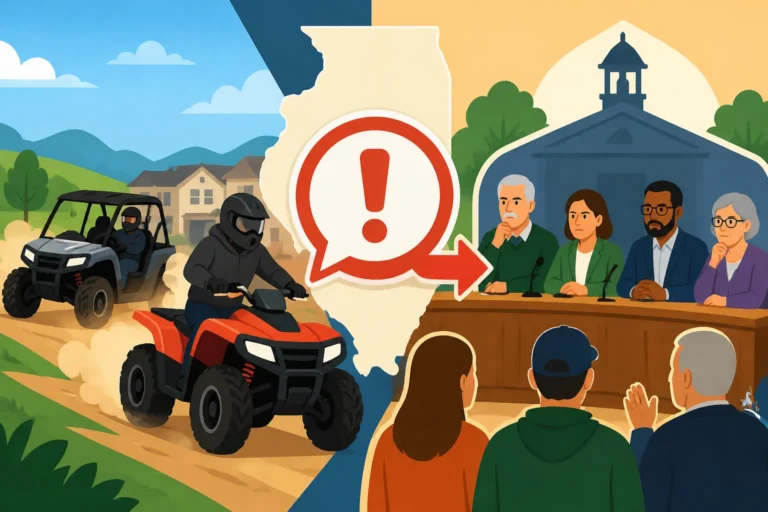
It’s easy to feel like you’re in the Wild West when trying to figure out where you can legally ride your UTV on the street in Illinois. One town might have a clear ordinance allowing it, complete with a permit process and specific equipment requirements, while the next town over strictly forbids it. This can lead to situations where you can ride legally down your street, but once you cross an invisible municipal line, you're suddenly breaking the law. Imagine the frustration of planning a route only to find a critical stretch of road falls under a jurisdiction that hasn't given its blessing. It’s not just inconvenient; it’s a genuine risk for citations and fines, which can really put a damper on your riding plans.
The Dream Versus the Reality of Riding Off-Road Machines on Roads
The appeal of street-legal UTVs is undeniable. They offer a blend of utility and recreation that traditional vehicles often can't match. You might envision cruising through small towns, running errands, or simply enjoying the scenery without having to trailer your machine everywhere. But the reality in Illinois often means hitting a wall of local bureaucracy. You might spend time and money outfitting your UTV with all the necessary street-legal accessories – from turn signals to a proper horn – only to discover that your county board hasn't passed a resolution, or the village you need to pass through on your way to a friend's house still says "no." This mismatch between aspiration and local regulation is a major source of confusion and disappointment for many Illinois riders.
Understanding the Foundation: Illinois State Law
Before diving into the local nuances, it’s essential to grasp the statewide framework that dictates how UTVs and ATVs are generally treated on public roads in Illinois. The state doesn't give a blanket "yes" or "no" to street legality; instead, it sets the stage for local governments to make their own decisions, within certain parameters. This legislative structure is the bedrock upon which all local ordinances are built, and understanding it is key to deciphering the larger puzzle.
The Statewide Ban on Non-Highway Vehicles
The Illinois Vehicle Code starts with a pretty clear stance: Off-Highway Vehicles (OHVs), which include ATVs and UTVs, are generally considered "non-highway vehicles" and are prohibited from operating on public roads. This is the critical starting point. Without any specific allowances, your machine is not welcome on streets, highways, or even most local roads. This initial prohibition is why local action is so vital. It’s not about the state permitting you to ride, but rather the state allowing local governments to permit you to ride under specific, stringent conditions. This is a crucial distinction that often gets overlooked, leading to misunderstandings about who has the ultimate authority.
Conditions for Local Permission
While the default is a statewide ban, the Illinois Vehicle Code does provide a pathway for local governments to authorize UTVs on their roads. This is where the flexibility comes in, but also the complexity. Generally, a municipality or county can pass an ordinance or resolution allowing UTVs on roads where the posted speed limit is 35 mph or less. There are also specific equipment requirements that must be met, ranging from headlights and tail lamps to rearview mirrors and turn signals. Beyond these general requirements, the state also mandates certain insurance minimums if you plan to operate on public streets. [Illinois Requires Insurance for Street Use] It’s not just a matter of local permission; it's local permission contingent upon meeting a list of state-mandated safety and equipment criteria. This means even if your local village says "yes," you still need to ensure your machine is properly equipped and insured before you hit the pavement.
Local Authority: Villages, Counties, and Townships
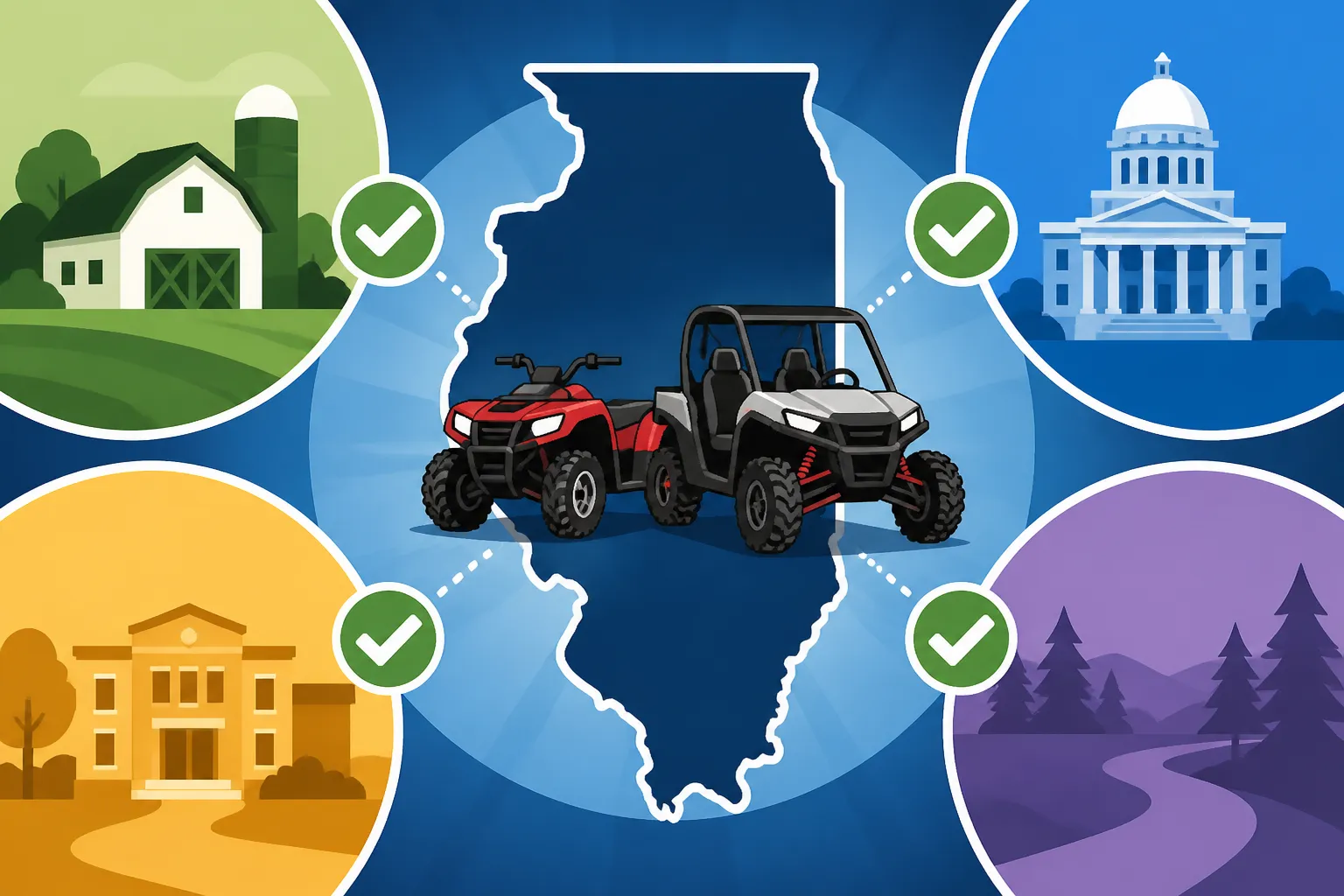
The concept of "Every Jurisdiction Must Agree" stems directly from the hierarchical and sometimes overlapping nature of road ownership and regulatory authority in Illinois. You can't just get one permission slip and be good to go everywhere. Different governmental bodies control different types of roads, and each one needs to actively permit UTV access for their specific domain.
Village Ordinances for Municipal Streets
Many Illinois villages have taken the initiative to pass ordinances allowing UTVs on their municipal streets. These ordinances typically outline specific zones where UTVs are permitted (usually roads with speed limits of 35 mph or lower), hours of operation, and often require a local permit or registration sticker. When a village passes such an ordinance, it provides a clear legal framework for residents and visitors to use their UTVs on roads within that village’s corporate limits. [Illinois Municipalities That Pass Ordinances] For example, a small town might decide that allowing UTVs helps local businesses and improves community accessibility, so they draft an ordinance, outline their fees, and set up an inspection process at village hall. However, that authority strictly ends at their town's border. The moment your tire touches a county road outside the village, or a road belonging to an adjacent township, you're back under a different set of rules.
County Resolutions for County Roads
Counties in Illinois also have the power to pass resolutions allowing UTVs on county roads. These are the main thoroughfares that connect towns, run between townships, and traverse rural areas. A county resolution is crucial because it opens up these larger arteries for UTV traffic, which is often necessary to connect various points of interest or even to link two villages that have their own UTV ordinances. [Illinois Counties That Pass Resolutions] Without a county resolution, even if your village allows UTVs, you might be stuck within its borders, unable to legally access neighboring areas if the intervening roads are county-owned. It’s a common scenario in many rural areas where county roads form the backbone of the local transportation network.
Township Road Commissioner's Say on Township Roads
Beyond villages and counties, Illinois also has townships, each with a Road Commissioner who oversees township roads. These are often the smaller, more localized roads, frequently gravel or less-traveled routes, that crisscross agricultural and residential areas outside of incorporated towns. For a UTV to be legally operated on a township road, the township board, often with the input and concurrence of the Road Commissioner, must pass a resolution. [Illinois Townships and Their Authority] This layer of authority adds another critical piece to the puzzle. You might have permission from your village and the county, but if your route requires you to travel a short stretch of township road, and that township hasn’t approved UTV use, your journey comes to an abrupt halt. This is why even a seemingly minor stretch of road can become a major legal barrier.
The Interplay of Jurisdictions: Why "Every Jurisdiction Must Agree"
This is where the rubber meets the road, quite literally. The title "Every Jurisdiction Must Agree" isn't an exaggeration; it's the fundamental truth of achieving street legality for your UTV in Illinois. It highlights the complex coordination required among various levels of local government to create a continuous, legal riding experience.
Shared Roads and Seamless Travel
Imagine you live in a village that has proudly passed a UTV ordinance. You’ve got your permit, your UTV is equipped, and you’re ready to cruise. But what if the main road leading out of your village, the one you need to take to get to the neighboring town (which also has a UTV ordinance), is a county road? If the county hasn't passed its own resolution, you're immediately in violation once you leave your village limits. This scenario perfectly illustrates why [Illinois Roads Under Two Jurisdictions] require approval from both entities. For truly seamless travel, every single governmental body that owns or controls a segment of the road you intend to travel must give its explicit permission. It's not enough for 90% of your route to be legal; the remaining 10% under a dissenting jurisdiction will halt your plans.
State Highways as Barriers
Adding another layer of complexity are state highways. These are managed by the Illinois Department of Transportation (IDOT) and typically carry higher speed limits and greater traffic volumes. Even if a village, county, or township has approved UTV use on its local roads, this permission almost never extends to state highways, with very limited exceptions for direct crossing. [State Highways May Be Crossed Only at an Intersection] This means that even if you have a perfectly legal route planned through several cooperative local jurisdictions, a state highway running through the middle of it can act as an impassable barrier. You might be able to cross it directly at an intersection, but you certainly can't ride on it. This often forces riders to find alternative, longer, or less convenient routes on approved local roads to bypass these major state arteries, further emphasizing the need for every link in the chain to be legally accessible.
The "Connecting the Dots" Challenge
The biggest challenge for Illinois UTV riders is connecting the dots between these different jurisdictional approvals. It's not uncommon to find a county that has passed a resolution, but then some of its townships haven't, or vice-versa. Or, a small village might be an island of UTV legality, completely surrounded by county or township roads that remain off-limits. This fragmented approach means that mapping out a legal route often involves extensive research into each specific road segment and the governmental body responsible for it. Riders frequently find themselves hitting a legal wall just a few miles into their journey, simply because one small stretch of road hasn't received the necessary local blessing. This is why when people ask "Can you drive a UTV on the road in Illinois?", the answer is almost always, "It depends, and you need to check every mile of your route."
Navigating the Permit Process and Equipment Requirements
So, you’ve done your homework and found a chain of jurisdictions that might allow UTVs. What’s next? Getting your machine and your paperwork in order. This involves not only understanding what each local ordinance demands in terms of permits but also ensuring your UTV is properly outfitted according to both state and local specifications.
The Essential Equipment Checklist
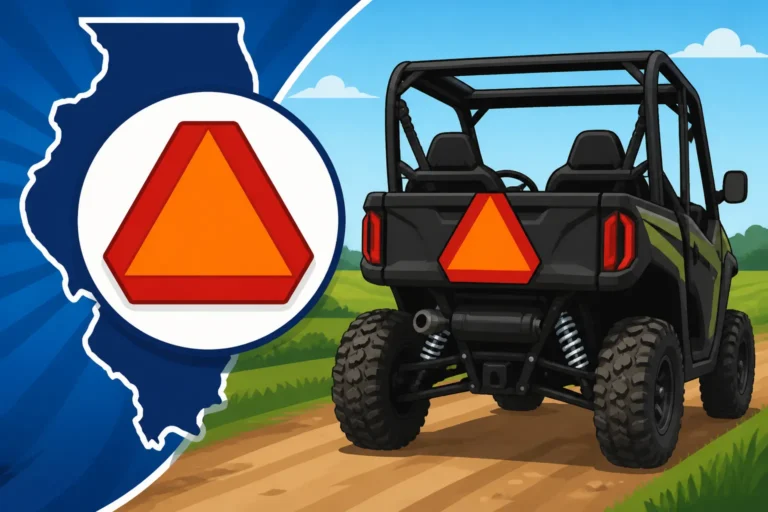
Illinois state law, as a prerequisite for any local street legality, mandates a range of equipment for Non-Highway Vehicles to operate on public roads. This isn't just a suggestion; it's a requirement that your machine must meet before any local permit can even be considered. You'll need working headlights that illuminate at least 500 feet ahead, and a tail lamp visible from 100 feet behind. Brake lights are a must, as are turn signals for both front and rear. A rearview mirror is essential, providing a clear view of traffic behind you. Beyond that, many local ordinances add their own specific requirements, which might include a slow-moving vehicle emblem (the orange triangle), a horn, and even a windshield. This is where investing in quality aftermarket parts can come in handy. You might find yourself browsing through the vast catalog of aftermarket parts from places like SuperATV to ensure your machine is up to snuff. They offer a wide range of options, from robust turn signal kits to durable mirrors that can withstand the rigors of both trail and street. [Illinois Non-Highway Vehicle Equipment List] [Illinois Turn Signal Requirements] [Illinois Mirror Requirements for an ATV] [Illinois Headlight Requirements for an ATV]
Applying for Local Permits and Registration
Once your UTV is properly equipped, the next step is typically applying for local permits. Each village or county that has an ordinance will likely have its own specific process. This often involves:
- Application Form: Filling out paperwork at the village or county clerk's office.
- Proof of Ownership and Insurance: Presenting your title and proof of liability insurance that meets Illinois minimums.
- Inspection: Many jurisdictions require a physical inspection of your UTV to ensure it meets all the specified equipment requirements. This is where those SuperATV lights and mirrors really get put to the test.
- Fees: Paying a permit fee, which can vary widely from town to town. Some towns might charge a nominal fee, while others might charge a higher annual amount, like [Byron Charges $100 for a First-Year UTV Permit] and [$50 a Year to Renew a Village UTV Permit].
- Sticker/Decal: Receiving a permit sticker or decal that must be prominently displayed on your machine, signifying its street-legal status within that specific jurisdiction.
It's critical to remember that a permit from one village doesn't automatically grant you permission to ride in another, or on county or township roads unless those jurisdictions have also passed their own permitting resolutions. Each local permit is a piece of the larger "Every Jurisdiction Must Agree" puzzle.
Common Pitfalls and How to Avoid Them
The path to street-legal UTV use in Illinois is fraught with potential missteps. Many riders, with the best intentions, find themselves in hot water because they misunderstood a rule or overlooked a crucial detail. Being aware of these common pitfalls can save you a lot of headache, fines, and even legal trouble.
Assuming Permission or Overlooking Jurisdictional Boundaries
One of the most frequent mistakes riders make is assuming that if one town allows UTVs, all surrounding areas do too, or that a permit from one entity covers all roads. This is a dangerous assumption in Illinois. As we've discussed, the default is that UTVs are not allowed on public roads, and any allowance must be explicit from the specific governmental body that owns or controls that road. Imagine traveling a county road that hasn't approved UTVs, only to be stopped by a sheriff's deputy. Your perfectly valid village permit won't do you any good there. Always consult local ordinances for every single jurisdiction you plan to pass through. Don't rely on word-of-mouth; verify the information directly with the village clerk, county office, or township commissioner. This diligence is paramount in a state where [Illinois UTV Street Legal Rules by Town] are so varied.
Ignoring Specific Equipment or Operating Regulations
Even if a jurisdiction permits UTVs, they invariably come with a list of required equipment and operating rules. This isn't just about having the basics like lights and mirrors; it can also include restrictions on passenger numbers, helmet laws for certain age groups, or specific hours of operation. For example, [Only Streets Posted 35 mph or Lower Qualify] is a common stipulation. Neglecting these details can quickly lead to trouble. Riders might have aftermarket accessories from SuperATV that improve performance, but if those parts don't meet the specific street-legal requirements, they're still out of compliance. Ensure your machine has proper turn signals, a functional horn, and any other items specified in the local ordinance. Carrying your proof of insurance and local permit at all times is also crucial. A simple traffic stop can turn into a costly citation if you're not fully compliant with every rule.
The Cost of Non-Compliance: Fines and Legal Headaches
The consequences of riding an unregistered or improperly equipped UTV on public roads in Illinois can range from a minor inconvenience to significant financial penalties and legal headaches. [Illinois Penalties for Illegal Street Riding] often include fines that can quickly add up, especially if combined with court costs. Beyond the immediate financial hit, there’s the potential for your machine to be impounded, requiring additional fees for towing and storage to get it back. In some cases, repeated violations could even lead to more serious legal repercussions. An accident while illegally operating on a public road could also complicate insurance claims, potentially leaving you on the hook for damages that would otherwise be covered. It's a stark reminder that while the dream of street-legal UTVs is appealing, cutting corners on the rules is a gamble with potentially severe consequences.
The Future of Illinois UTV Street Legality
The current landscape of UTV street legality in Illinois, with its fragmented local ordinances and the "every jurisdiction must agree" principle, is certainly challenging. However, it's not a static situation. As UTVs continue to grow in popularity and become more sophisticated, there's ongoing discussion and advocacy regarding statewide uniformity and clearer guidelines.
Calls for Statewide Legislation
Many riders and advocacy groups are actively pushing for clearer, more consistent statewide legislation regarding UTV street legality in Illinois. The current piecemeal approach, where some villages are open and others are closed, creates confusion and limits the utility of these machines. A statewide framework could streamline the process, set universal equipment standards, and potentially open up more roads while maintaining safety. This would alleviate the burden on individual riders to meticulously research every mile of their intended journey. While changes at the state level can be slow and complex, the increasing demand from the riding community keeps the conversation alive.
Staying Informed and Advocating for Change
For now, the best approach for Illinois UTV owners is to stay meticulously informed about the specific rules in their local area and any adjacent jurisdictions they plan to visit. Websites for village halls, county offices, and township boards are your best friends. Attending local government meetings or joining local ATV/UTV clubs can also be invaluable for understanding current regulations and influencing future decisions. Many clubs actively work with local officials to propose and pass new ordinances, effectively expanding riding opportunities. While the "every jurisdiction must agree" rule remains the reality today, being an informed and engaged member of the riding community is the best way to navigate the current complexities and potentially shape a more UTV-friendly future for Illinois roads.
Disclaimer
This article is for general informational purposes only and does not constitute professional advice. Laws, prices and regulations vary by location and change over time. Consult a qualified professional for guidance on your specific situation.