State Highways May Be Crossed Only at an Intersection
It can feel incredibly confusing trying to navigate the patchwork of laws governing ATV and UTV use on Illinois roads. One moment you think you’ve got it figured out, and the next you hear something completely different that throws you for a loop, especially when it comes to those bigger, busier state highways. This guide is all about cutting through that confusion, explaining precisely what the law says about crossing state highways with your off-road machine, and giving you the realistic insights you need to stay on the right side of the rules and keep yourself safe.
The Foundation: Illinois's Starting Point for Off-Road Machines on Roads
Let's be real, the general rule in Illinois is that off-highway vehicles (OHVs) like ATVs and UTVs aren't meant for public roads. This isn't just some suggestion; it's a fundamental principle woven into the state's vehicle code. The intention is clear: these machines are designed for off-road environments, trails, and private land, not for sharing lanes with cars, trucks, and semi-trailers.
Why the General Ban Exists
Think about it from a safety perspective. ATVs and UTVs often lack the same safety features as passenger cars, like airbags, reinforced cabins (for ATVs), or even basic turn signals and brake lights (on some stock models). Their handling characteristics are vastly different, too. They might have a higher center of gravity, narrower tires, or just not be built for sustained speeds or the demands of typical road traffic. The state legislature, in its wisdom, recognized these inherent differences and put the default ban in place to protect riders and other motorists alike. It's not meant to frustrate you, but to prevent serious accidents that could arise from mixing off-road machines with high-speed road traffic.
How Local Jurisdictions Create Exceptions
Now, here's where it gets interesting and, let's be honest, a little complicated. While the state starts with a general prohibition, it also provides a framework for local units of government – your villages, cities, townships, and counties – to create exceptions. This means that while you can't just hop on any road in Illinois, a specific town or county might have passed an ordinance allowing UTVs on certain designated streets within their boundaries. This is why you might see a UTV driving legally in one small town, but just a few miles down the road, it's strictly forbidden in the next. It’s a decentralized approach that requires riders to do their homework for every area they plan to ride in. Many riders often consult with their [Illinois Rules for Riding a Village Street] or [Illinois Rules for Riding a County Road] for guidance.
Understanding the "Crossing Only at an Intersection" Rule
When it comes to state highways, this is one of the most crucial distinctions you need to understand. Even if a local municipality has opened its local roads to UTVs, the state highway system operates under a different set of rules. You can't just drive your UTV down a state highway, and you can't simply pull out onto one from a side road in the middle of a block.
What Constitutes a "State Highway"
Before we dive deeper, let's clarify what we're talking about when we say "state highway." These are typically roads designated and maintained by the Illinois Department of Transportation (IDOT). They often have route numbers (like IL-1, US-51, or IL-13) and are generally higher-volume, higher-speed roads than local village streets or township roads. You'll usually know one when you see it, as they tend to be major arteries connecting towns and regions. These are the roads where the risks of an ATV or UTV operating on them are significantly amplified due to traffic speed and volume.
The Specifics of Crossing at an Intersection
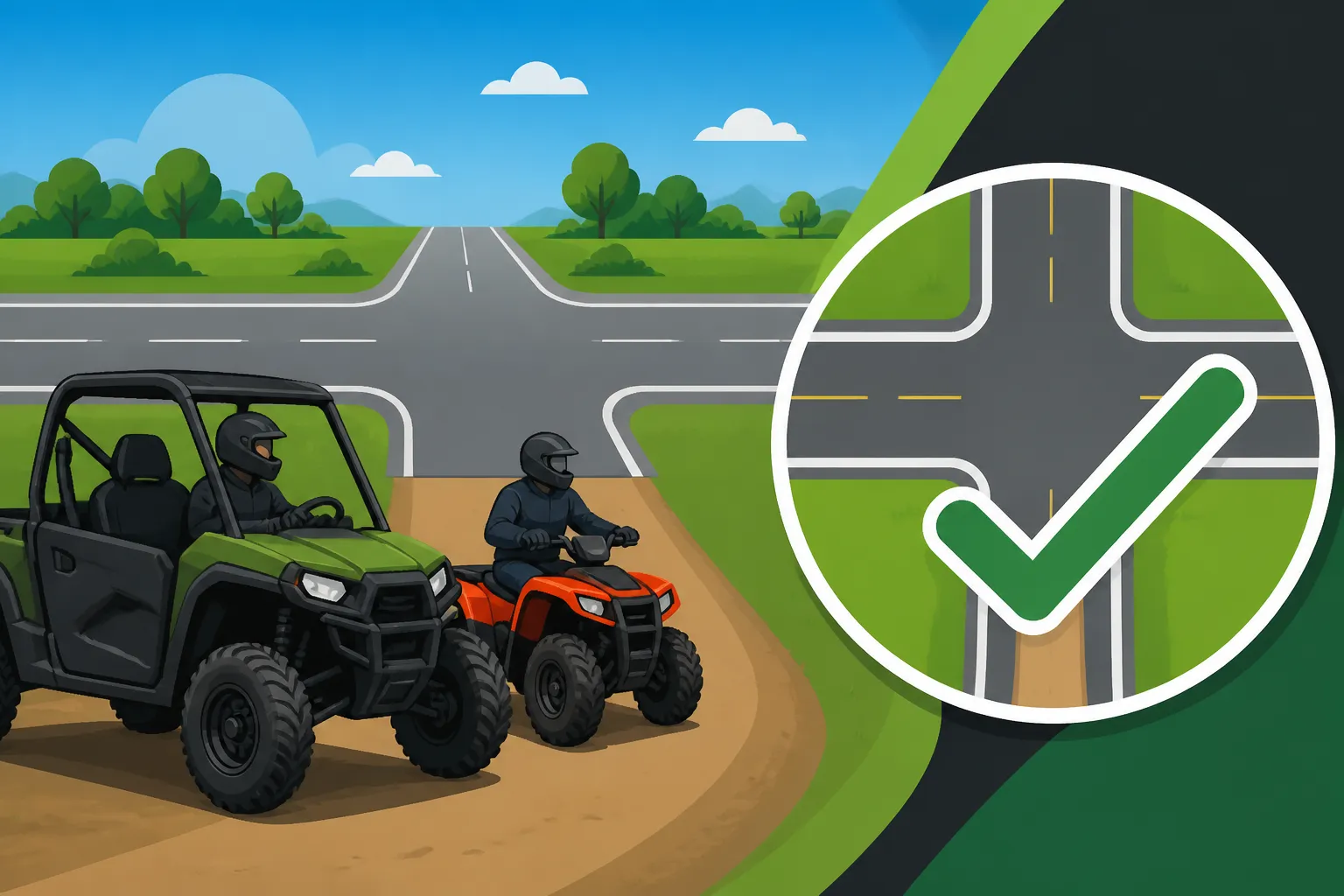
So, the rule states you may cross a state highway only at an intersection. What does that mean in practical terms? It means if you're riding your UTV on a legally designated street within a town, and that street dead-ends into or crosses a state highway, you are generally allowed to proceed straight across the state highway at that intersection to continue onto a legally designated street on the other side. You cannot, however, turn onto the state highway and travel alongside traffic, even for a short distance. This permission is strictly for crossing from one side of the highway to the other. Imagine a stop sign or traffic light where a smaller road meets a bigger one; that's your designated crossing point. It's a critical safety measure, as intersections are typically designed with clearer sightlines, traffic control devices, and designated turning lanes for traditional vehicles, making them the safest points to cross busy thoroughfares. Riders often confuse this with other rules, so it's good to reference [Illinois Crossing Rules at Intersections].
The Rationale Behind This Specific Rule
This "intersection only" rule isn't arbitrary. It's rooted in the same safety concerns that underpin the general ban. By restricting crossings to intersections, Illinois authorities are trying to minimize the time an off-road machine spends in direct contact with high-speed traffic on a state highway. Intersections provide a more predictable environment where all drivers, including those of off-road machines, are expected to slow down, be aware of cross-traffic, and often follow traffic signals or signs. Attempting to enter or cross a state highway at a point other than a marked intersection would be incredibly dangerous, increasing the risk of high-speed collisions with vehicles that aren't expecting a slow-moving UTV to suddenly appear. It also ensures that any interaction happens at a point where visibility is typically better and other road users are already anticipating merging or crossing traffic.
Essential Equipment for Illinois Street and Highway Crossings
While crossing a state highway might be fleeting, the state has specific equipment requirements that your ATV or UTV must meet even for these short, allowed stints on public roads, especially if you're using them on any local streets that permit it. This isn't just about safety; it's about legality. A conservation officer or local police department can and will pull you over if your machine isn't up to snuff.
Headlights, Taillights, and Brake Lights
Your machine absolutely needs to be visible. This means working headlights that can illuminate the road for a set distance (typically 500 feet) and a red tail lamp visible from behind (usually 100 feet). And, of course, functional brake lights are non-negotiable. These signals are fundamental for communicating your presence and intentions to other drivers, particularly during dusk, dawn, or bad weather. Imagine coming to a stop at an intersection; without brake lights, the driver behind you has no visual cue of your deceleration, creating a dangerous situation. Many riders look to aftermarket solutions from brands like SuperATV to ensure their machines are properly equipped with bright, reliable lighting systems that meet or exceed state standards.
Turn Signals and Mirrors
This is often where stock ATVs fall short. To be legal for street use (even just for crossing a state highway), your UTV or ATV needs working turn signals. These are vital for indicating your intentions when navigating an intersection. If you're going to turn left or right after crossing, or even just crossing from one side of a road to another, a clear signal is paramount for safety. Additionally, a rearview mirror is required. Just like in a car, this allows you to monitor traffic approaching from behind, which is critical for situational awareness, especially when approaching or departing an intersection. These features are standard on cars for a reason, and when you bring your OHV onto public roads, those same safety principles apply. It's why many riders, myself included, will recommend exploring options for [Illinois Requires Turn Signals] and [Illinois Requires a Rearview Mirror].
Slow-Moving Vehicle Emblem
For any machine that operates at speeds slower than the flow of traffic, a slow-moving vehicle (SMV) emblem is required. This bright orange, triangular sign is mounted on the rear of your machine and serves as a universally recognized signal to other drivers that you are operating at a slower pace. On a state highway, where traffic speeds are generally higher, this emblem is incredibly important. It gives approaching drivers a visual cue, allowing them more time to react and adjust their speed, preventing rear-end collisions. Even for the brief moments you spend crossing an intersection, this emblem significantly enhances your visibility and safety.
Here's a quick reference table for key equipment:
| Equipment Feature | Purpose | Illinois Requirement | Notes |
|---|---|---|---|
| Headlights | Illuminate path, signal presence | Visible 500 feet ahead | Necessary for dawn, dusk, night, or low visibility |
| Tail Lamp | Signal presence from rear | Visible 100 feet from behind (red) | Essential for rear visibility, especially at intersections |
| Brake Lights | Signal deceleration | Functional, activate upon braking | Crucial to prevent rear-end collisions |
| Turn Signals | Indicate turns/lane changes | Operational front and rear | Communicate intentions to other drivers at intersections |
| Rearview Mirror | Monitor rear traffic | At least one, mounted for clear rear view | Critical for situational awareness, especially when pulling out or crossing |
| Slow-Moving Vehicle Emblem | Alert others to slow speed | Orange triangle, mounted on rear | Provides advanced warning on roads, especially state highways |
| Horn | Audible warning | Functional, provides an audible warning | Useful for alerting pedestrians or other drivers |
| Insurance | Financial protection | Minimum liability if street-legal for any street use | Required for street-legal machines, check [Illinois Insurance Minimums for Street Use] |
| Driver's License | Operator qualification | Valid state-issued driver's license | Required for operating any motor vehicle on public roads, including OHVs |
The Legal and Financial Consequences of Violations
Riding your ATV or UTV where it's not allowed, or failing to meet the equipment requirements, isn't just a minor infraction. Illinois takes these rules seriously, and the penalties can be significant, ranging from fines to impoundment of your machine. It's truly not worth the risk.
Fines and Court Costs
If you're caught riding your ATV or UTV illegally on a state highway, or even on a local road that hasn't been specifically opened to OHVs, you're looking at a ticket. These aren't usually cheap. The fines can quickly add up, and then you have court costs on top of that, even if you just pay the ticket without a court appearance. A single ticket could set you back hundreds of dollars, money that would be much better spent on proper gear, maintenance, or permits for legal riding areas. [Illinois Penalties for Illegal Street Riding] details some of the specific consequences you might face.
Potential Machine Impoundment and Recovery Fees
One of the most severe consequences of an illegal ride is the potential impoundment of your machine. If law enforcement deems your operation unsafe or highly illegal, they have the authority to have your ATV or UTV towed away. Once impounded, getting your machine back isn't as simple as paying a fine. You'll face towing fees, daily storage fees, and potentially administrative fees from the impounding agency. These costs can rapidly escalate, sometimes even exceeding the value of an older machine. It's a huge headache and a significant financial hit that can ruin your riding season and put a serious dent in your wallet.
Insurance Implications
Beyond the immediate fines and fees, there are broader implications for your insurance. If you're involved in an accident while riding illegally on a state highway or any other prohibited area, your insurance company might deny coverage. Most standard off-road policies have exclusions for illegal operation. This means you could be personally liable for damages to other vehicles, property, or medical bills for injured parties, which could amount to tens or even hundreds of thousands of dollars. Always ensure you understand your policy's terms and conditions, especially if you plan any kind of street-legal modifications or use. Carrying proper [Illinois Insurance Minimums for Street Use] is paramount if you plan any legal street usage.
Navigating State Highways Safely and Legally
Given the strict rules, it's crucial to approach any potential interaction with a state highway with a plan and a deep understanding of the law. You want to ensure every ride is both enjoyable and above board.
Route Planning and Local Ordinances
The absolute first step before you even start your engine is to know your route. If your ride involves any public roads, especially crossing a state highway, you must verify the local ordinances for every single town, village, township, or county you'll be passing through. Don't assume that because one town allows UTVs, the next one does. It's a common mistake, and it's an easy way to end up with a ticket. Many towns have their ordinances published online; otherwise, a quick call to the village hall or county clerk's office can provide clarity. Look specifically for information on [Illinois UTV Street Legal Rules by Town].
You also need to understand that even if a village street is open to UTVs, it's often limited to roads with a posted speed limit of 35 mph or less. A local ordinance can't unilaterally open a higher-speed road to OHVs. So, pay attention to those speed limit signs!
Identifying Legal Crossing Points
Once you've confirmed that your local roads are indeed open to UTVs and you've got the proper permits and equipment, you need to pinpoint the exact legal intersections for crossing state highways. These are typically signalized intersections or those with clear stop signs where local roads meet the state route. Do not attempt to cross at unmarked points, farm entrances, or driveways. Not only is it illegal, but it's incredibly dangerous due to reduced visibility and unexpected entry into high-speed traffic. If you're unsure, it's always better to find an alternate route that avoids the state highway entirely. Sometimes the path means using [Illinois Rules for Crossing a State Highway].
Exercising Extreme Caution When Crossing
Even when you're at a legal intersection and have every permit and piece of equipment in place, crossing a state highway demands your full, undivided attention and extreme caution. These are often busy roads with fast-moving traffic.
- Look Twice (or Three Times): Before you even think about pulling out, look both ways, then look again. State highway traffic can move quickly, and judging gaps can be tricky, especially on two-lane highways where vehicles might be coming from far away.
- Be Predictable: Use your turn signals if you intend to turn after crossing. If you're going straight, maintain a steady speed and direction. Don't weave or make sudden movements.
- Yield to All Traffic: Always assume you need to yield to traffic on the state highway. Even if you technically have the right-of-way (e.g., at a green light), it's safer to err on the side of caution with a UTV, which is smaller and less visible than a car.
- Minimize Time on the Highway: The goal is to cross swiftly and efficiently, spending the absolute minimum amount of time exposed to state highway traffic. Accelerate purposefully from a stop and clear the intersection as quickly and safely as possible.
- Daytime Visibility: Whenever possible, plan your crossings for daylight hours when visibility is optimal. While your lights are required at night, the sheer volume and speed of traffic make nighttime crossings inherently more risky for OHVs.
By understanding the nuanced rules of [Illinois Crossing Rules at Intersections], ensuring your machine is properly equipped, and exercising peak situational awareness, you can navigate Illinois's state highways legally and, most importantly, safely. Stay informed, ride smart, and enjoy the trails and roads that are legally open to you!
Disclaimer
This article is for general informational purposes only and does not constitute professional advice. Laws, prices and regulations vary by location and change over time. Consult a qualified professional for guidance on your specific situation.