Illinois Rules for Riding After Dark
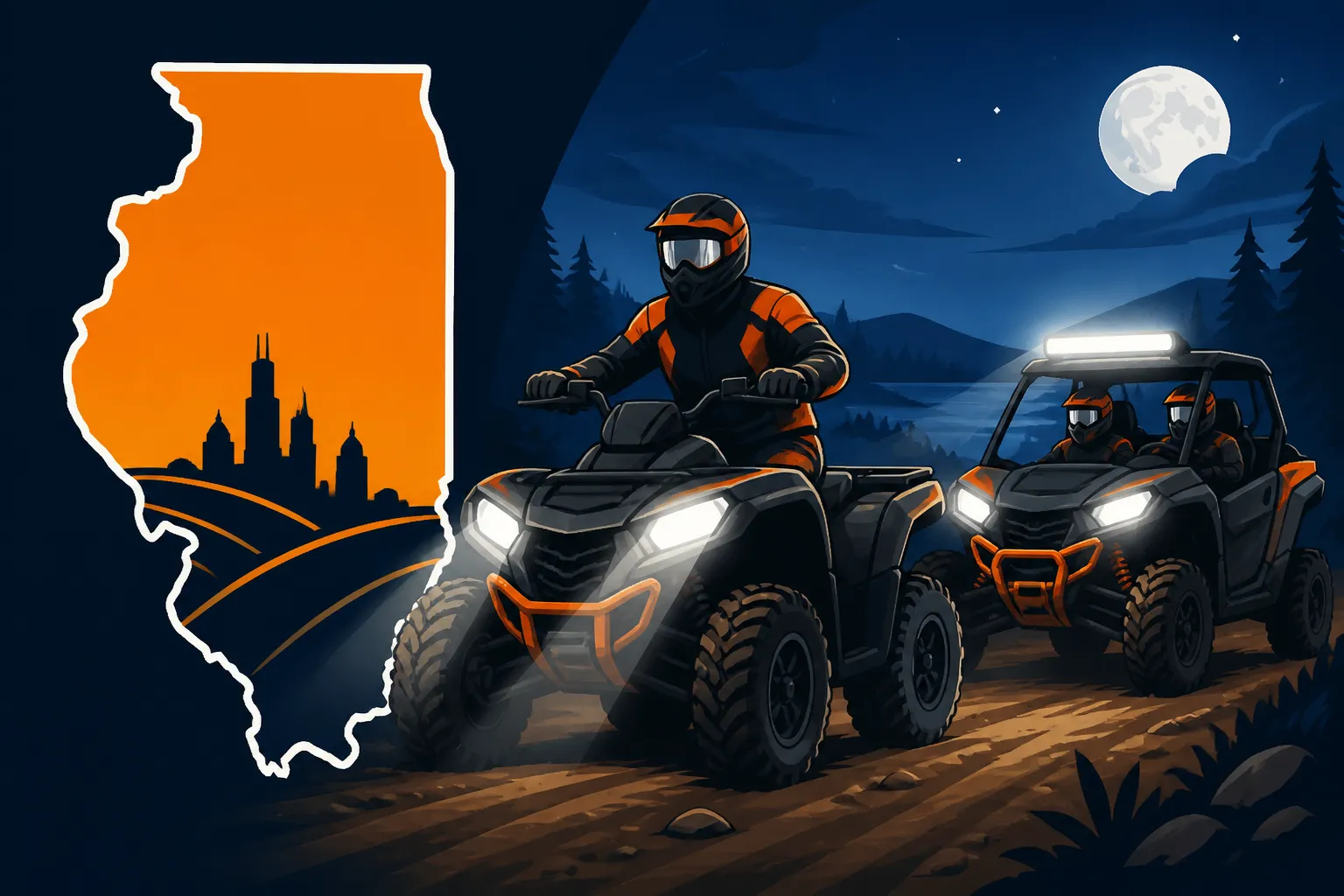
Riding your ATV or UTV after the sun dips below the horizon in Illinois can feel like navigating a legal minefield. Many riders assume that if their machine has headlights, they're good to go, but the reality for street use is far more complex and varies greatly by location. This guide will shine a light on the specific rules and necessary equipment for safely and legally riding your off-road machine on Illinois roads once darkness falls, helping you understand where and how you can actually enjoy those twilight adventures.
Understanding the General Ban on After-Dark ATV/UTV Road Use in Illinois
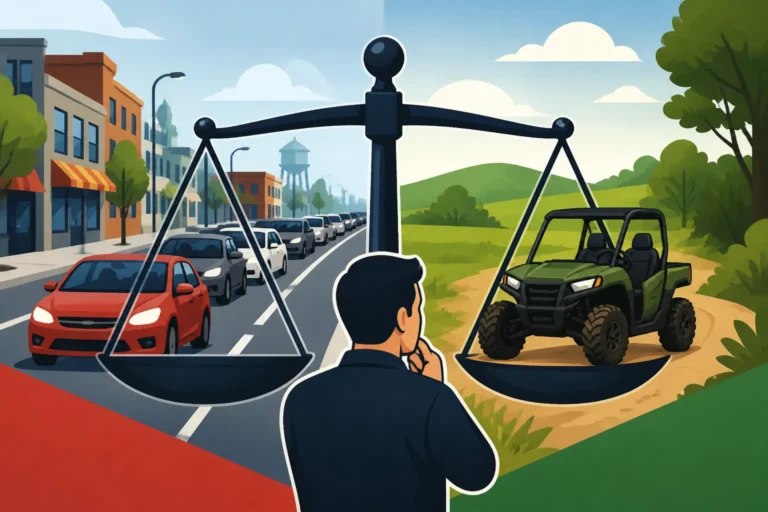
Let's get one thing straight from the start: Illinois law generally prohibits ATVs and UTVs from being operated on public roads, period. This foundational rule means that riding your machine on a street, road, or highway, day or night, is typically off-limits unless a specific exception or local ordinance permits it. When you factor in the reduced visibility of nighttime, the stakes and the legal complexities only increase. It's a frustrating reality for many off-road enthusiasts who might use their machines for practical purposes or simply want to extend their riding day.
Why Local Ordinances Are Your Only Way to Ride After Dark on Roads
Given the statewide ban, your ability to legally ride an ATV or UTV on public roads, especially after dark, hinges entirely on local municipal or county ordinances. The state legislature has granted individual towns, villages, and counties the authority to create their own rules regarding the use of these vehicles on roads under their jurisdiction. This means what's perfectly legal in one small town just down the road might land you a hefty ticket in the next. It’s a patchwork system that requires every rider to do their homework before venturing out, particularly when darkness falls and visibility becomes a critical safety and legal factor. You’ll need to check [Illinois UTV Street Legal Rules by Town] to understand the specific lay of the land where you plan to ride.
For instance, a village might pass an ordinance allowing UTVs on streets posted 35 mph or lower, but with strict curfew hours that prohibit night riding, or specific requirements for additional lighting if night riding is permitted. Without a local ordinance explicitly permitting it, any after-dark operation on a public road would be considered illegal, regardless of how well-equipped your machine is. This is why conversations with your local village hall or county board are so important if you want to expand your riding opportunities.
The Difference Between Private Land and Public Road Night Riding
It's crucial to distinguish between riding on private property and riding on public roads. When you're on your own land, or on private land where you have explicit permission from the landowner, the state's public road laws generally don't apply. You can often ride your ATV or UTV after dark on these private grounds without needing specific street-legal equipment like turn signals or a slow-moving vehicle emblem. However, safety should always be paramount. Even on private land, adequate lighting, such as powerful headlights and tail lights, is essential for your own safety and the safety of anyone else on the property.
When you transition from private land to a public road, even just to cross it, you instantly become subject to all applicable state laws and local ordinances. This distinction is often a point of confusion for riders, leading to unintended violations. For example, using your UTV to check fences on your farm is one thing, but driving it down a county road to your neighbor's farm after sunset is an entirely different legal scenario that requires compliance with local street-legal rules, including those specific to nighttime operation. Keep in mind that [Illinois Residential Property Exemption] means you can often ride on your own property without a usage stamp, but this has no bearing on public road rules.
Mandatory Lighting and Safety Gear for Nighttime Road Operation
If you're fortunate enough to live or ride in an Illinois municipality or county that allows ATVs or UTVs on its public roads, and specifically permits after-dark operation, your machine must meet a stringent set of equipment requirements. These aren't just suggestions; they are legal mandates designed to ensure your visibility and safety, as well as the safety of other motorists. Neglecting even one of these requirements can lead to citations and make your legal ride illegal.
Headlights, Tail Lights, and Brake Lights: More Than Just "Having Them"
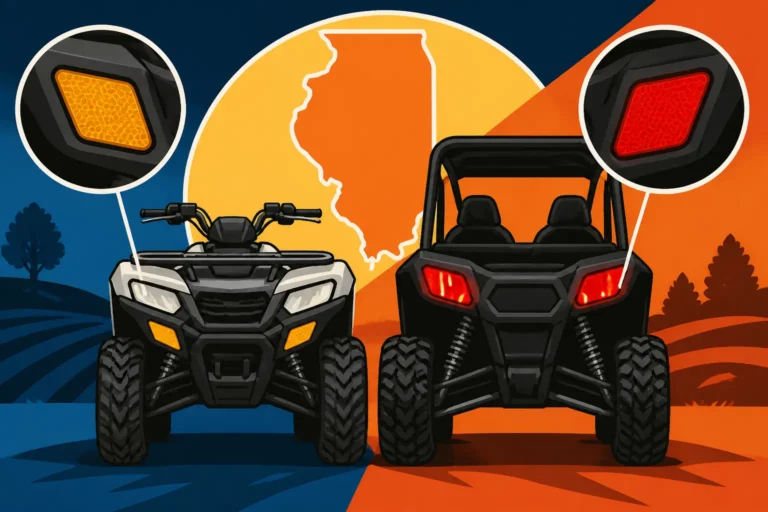
Simply having a headlight and tail light isn't enough; they must meet specific performance standards. Illinois law generally requires a headlight that is visible from at least 500 feet and a tail lamp that emits a red light visible from at least 100 feet. For safe night riding, especially on roads, these are absolute minimums. You'll want to ensure your lights are not only functional but also bright and properly aimed. A dim, misaligned headlight can be as dangerous as no headlight at all, as it won't effectively illuminate your path or make you visible to oncoming traffic. [Illinois Requires a 500-Foot Headlight] and [Illinois Requires a 100-Foot Tail Lamp] are not just recommendations; they're the law.
Brake lights are also non-negotiable for road use. They must activate when you apply the brakes, clearly signaling to drivers behind you that you are slowing down or stopping. This is a critical safety feature to prevent rear-end collisions, particularly in low-light conditions when it can be harder for other drivers to judge your speed. When upgrading or installing these components, quality matters. Aftermarket parts from reputable brands like SuperATV can help ensure your machine meets or exceeds these standards, often offering enhanced brightness and durability for those challenging night rides.
Reflectors, Turn Signals, and Other Visibility Essentials
Beyond active lighting, passive visibility features are also crucial for night riding on Illinois roads. Your machine must be equipped with red reflectors on the rear, visible from a certain distance. These are your fallback in case your tail lights fail or you're parked on the side of the road. But let's be honest, for night riding, you want more than passive reflectors. [Illinois Requires Red Reflectors] for a reason, but consider them a minimum.
Turn signals are another key requirement for any street-legal UTV or ATV, and they are especially vital after dark. Hand signals are often insufficient or not easily seen by other drivers at night. Functional front and rear turn signals allow you to clearly communicate your intentions to change direction, preventing confusion and potential accidents. If your machine didn't come with them, you'll need to add a kit. Remember, [Illinois Requires Turn Signals] for street use, which applies day or night. A rearview mirror is also mandatory, allowing you to monitor traffic behind you without constantly turning your head, a task that becomes even more difficult and risky in the dark. [Illinois Requires a Rearview Mirror] to help with this.
The Slow-Moving Vehicle Emblem: A Crucial Nighttime Identifier
Perhaps one of the most distinctive and legally required items for any slow-moving vehicle, including an ATV or UTV operating on Illinois roads, is the slow-moving vehicle (SMV) emblem. This fluorescent orange triangle with a reflective red border is designed to be highly visible both day and night. It signals to other drivers that your vehicle is traveling at a speed significantly slower than normal traffic, giving them extra warning and time to react. This is incredibly important after dark, when speed and distance are harder to judge.
The SMV emblem must be mounted on the rear of your machine, pointing upwards, and remain clean and unobstructed. It's not just a suggestion; [Illinois Requires a Slow-Moving Vehicle Emblem] for a reason. Without this emblem, your machine may not be considered street-legal in any jurisdiction that allows it, and it significantly compromises your safety by failing to adequately warn faster-moving vehicles approaching from behind, particularly at night. Always make sure this emblem is present, in good condition, and visible before heading out after sunset.
| Equipment Item | Illinois Requirement (for street legal) | Night Riding Best Practice (beyond minimum) |
|---|---|---|
| Headlight | Visible 500 feet (white/amber) | Bright LED, wide beam pattern, properly aimed |
| Tail Light | Visible 100 feet (red) | Bright LED, multiple lights for redundancy |
| Brake Light | Activated when braking (red) | Bright LED, clearly distinguishable from tail light |
| Reflectors | Red, rear-mounted | Additional reflective tape on sides/front, bright colors |
| Turn Signals | Front (amber), Rear (red/amber) | Bright LED, clearly visible from all angles |
| Rearview Mirror | Required | Dual mirrors, wide-angle for better coverage |
| Slow-Moving Vehicle Emblem | Required, rear-mounted | Clean, unobstructed, well-maintained |
| Horn | Audible 200 feet | Clear, loud, easily accessible |
| Windshield (UTV) | Not explicitly required by state for all UTV street use | Clear, clean, scratch-free for optimal night vision |
| Fender Flares | Not explicitly required by state for all UTV street use | Helps contain mud/debris, maintaining light clarity |
Navigating Village and County Ordinances for After-Dark Riding
As we've discussed, local ordinances are the gateway to legal ATV and UTV road use in Illinois, and this is especially true for riding after dark. Without a green light from your specific municipality or county, you simply cannot ride on their roads once the sun goes down. This means you need to be proactive in researching and understanding the specific rules in your area, or any area you plan to visit with your machine.
The Process of Getting a Local UTV Permit for Night Use
If your town or county has an ordinance allowing UTVs on certain roads, there's almost always a permit process involved. This typically starts with an application at the village or city hall, or the county clerk's office. You'll likely need to provide proof of ownership, valid driver's license (since [Illinois Requires a Driver's License] for street operation), and proof of insurance. [Illinois Requires Insurance for Street Use], and you'll want to make sure your policy covers road operation, especially if you're venturing out after dark.
Many localities will also require an inspection of your machine to ensure it meets all the safety and equipment requirements outlined in their ordinance, including those critical for night riding like proper headlights, tail lights, brake lights, turn signals, and the SMV emblem. This might involve an appointment with the local police or a designated village staff member. Once your machine passes inspection and your paperwork is in order, you'll pay a permit fee, which can vary widely, and receive a sticker or plate that must be affixed to your UTV. It's a formal process, but it's your only ticket to legal road access, particularly when the sun sets. [Illinois Equipment Inspections by a Village] are very common as part of this process.
Common Restrictions and Curfews in Local Night Riding Ordinances
Even if an ordinance permits UTVs on public roads, it's highly common for specific restrictions to apply to after-dark operation. Many towns impose curfews, meaning you might be allowed to ride during daylight hours but must be off the roads by a certain time, like 9 PM or 10 PM. Other ordinances might restrict night riding to specific days of the week or only to emergency situations, like snow removal. These restrictions are often in place due to concerns about noise complaints, safety, and community impact.
Additionally, some ordinances may have stricter equipment requirements for night riding than for daytime use, or they might limit night riding to only certain types of roads (e.g., residential streets but not main thoroughfares). It's crucial to read the specific text of the ordinance carefully, paying close attention to any clauses that explicitly address nighttime operations. Overlooking a curfew or a specific night riding equipment mandate can still result in a ticket, even if you have a valid permit.
Best Practices for Safe and Responsible Night Riding
Legal compliance is the baseline, but true safety on an ATV or UTV after dark goes beyond simply meeting the minimum legal requirements. Night riding introduces unique challenges, from reduced visibility for both you and other drivers to the increased potential for encountering wildlife. Adopting best practices can significantly reduce risks and ensure a more enjoyable experience.
Enhancing Visibility Beyond Minimum Legal Requirements
While Illinois law specifies minimum visibility for your lights, opting for superior lighting is a smart investment, especially if you plan to frequently ride after dark on roads. Consider upgrading to brighter LED headlights and tail lights. Many riders also add auxiliary LED light bars for off-road use, but be mindful that these are often too bright for public roads and must be covered or turned off when operating among other vehicles. However, they can be invaluable once you transition back to private land or designated riding areas. SuperATV offers a range of lighting upgrades that can vastly improve your visibility and ability to see obstacles at night.
Beyond active lighting, consider passive enhancements. Reflective tape on your helmet, clothing, and the sides of your machine can make you more conspicuous to other drivers. High-visibility gear, even in reflective patterns, stands out against the darkness. Remember, the goal is to be seen as early as possible by other road users, allowing them maximum time to react to your presence. The more you stand out, the safer you'll be.
Driver Awareness and Environmental Factors in Low Light
Night riding demands an elevated level of driver awareness and caution. Your depth perception is reduced, and obstacles, potholes, or debris on the road become much harder to spot. Slow down, especially on unfamiliar roads or those with poor lighting. Maintain a greater following distance from other vehicles, as their brake lights can create an optical illusion and make it harder to judge their actual speed. Be extra vigilant at intersections and driveways, as other drivers may not anticipate an ATV or UTV. [Illinois Crossing Rules at Intersections] still apply, but visibility is much lower.
Environmental factors play a huge role. Fog, rain, or even just dust on a gravel road can severely diminish your visibility and the effectiveness of your lights. Wildlife, such as deer or coyotes, are more active at dawn and dusk, and spotting them in the dark can be nearly impossible until it's too late. If conditions are poor, or if you feel uncomfortable, it's always best to postpone your ride or stick to areas with ample street lighting. Your safety is always worth more than a short ride in questionable conditions.
Avoiding Common Pitfalls and Violations
One of the biggest pitfalls is assuming that because one town allows night riding, all towns do. Always verify the specific ordinance for your planned route. Another common mistake is neglecting maintenance on your lighting components. A burnt-out bulb or a cracked reflector can turn a legal ride into a citation. Regularly check all your lights, signals, and the SMV emblem before each night ride.
Drinking and riding is a severe violation, and one that is even more dangerous in low-light conditions. [Illinois DUI Law and Off-Road Machines] applies whether you're on a trail or a local road, and the penalties are harsh. Furthermore, excessive noise, especially at night, can lead to [Illinois Noise Complaints About Quads] and potentially result in the repeal of local ordinances that allow UTVs on roads. Be a good neighbor and rider by keeping noise levels down, particularly when operating after dark in residential areas. By being diligent, prepared, and respectful of both the law and your surroundings, you can enjoy night riding where it's permitted, safely and responsibly.
Disclaimer
This article is for general informational purposes only and does not constitute professional advice. Laws, prices and regulations vary by location and change over time. Consult a qualified professional for guidance on your specific situation.