Towns Must Weigh Traffic Volume Before Allowing UTVs
When a small town or bustling village in Illinois considers allowing Utility Task Vehicles (UTVs) on its public roads, one of the biggest hurdles, and often the most debated, is understanding and weighing the local traffic volume. It's not just about opening up streets for recreation; it's about making a responsible decision that prioritizes safety for everyone – UTV riders, drivers of traditional vehicles, pedestrians, and cyclists. This guide dives deep into the intricate factors Illinois municipalities grapple with when they contemplate inviting UTVs onto their streets, offering a realistic look at the considerations that go far beyond a simple "yes" or "no."
The Complexities of UTVs on Public Roads in Illinois
For many Illinois communities, the idea of UTVs on local roads stirs a mixed bag of excitement and apprehension. On one hand, it represents a potential boost for local businesses, offering a new way for residents and visitors to enjoy the community and access amenities. On the other, it introduces a novel dynamic to existing traffic patterns, raising valid concerns about safety, noise, and the overall character of the town. Understanding this inherent tension is crucial for any municipality looking to navigate the path toward a UTV ordinance.
Why Local Control is Paramount
It’s important to remember that, by default, Illinois law generally prohibits the operation of off-highway vehicles, including UTVs, on public roadways. This isn't just a suggestion; it's the baseline. The power to change this blanket prohibition rests firmly with local units of government. This means that if you want to legally ride your UTV on town streets, your local village, city, or even county board must take specific action to permit it. [Illinois Law Starts by Banning Street Riding] underscores this fundamental principle. Without a local ordinance, that UTV belongs on private property or designated off-road trails, not on Main Street. This local control is a double-edged sword: it empowers communities to tailor rules to their unique circumstances, but it also places the full burden of responsibility on their shoulders to get it right. They can't simply defer to a state-wide rule for street access because, for UTVs, the state's default is "no."
This local autonomy means that what’s perfectly permissible in one Illinois town might be strictly forbidden in the neighboring one. Riders often express frustration at this patchwork of regulations, but it stems from a deeply ingrained principle of local governance. Each community knows its roads, its traffic patterns, its school zones, and its specific safety concerns best. A rural township with miles of gravel roads and minimal traffic will have very different considerations than a densely populated suburban village with narrow streets and heavy pedestrian activity. The decision-makers in your town must weigh these factors carefully, and that process often starts with a robust discussion about the existing traffic landscape and how UTVs might integrate (or clash) with it.
Balancing Recreation with Public Safety
The allure of street-legal UTVs is strong for many enthusiasts. Imagine being able to run errands, visit local shops, or even commute short distances without having to load your machine onto a trailer. For many, it's about convenience and expanding the utility of their investment. For towns, it can mean attracting tourism or offering a unique recreational amenity to residents. However, this desire for expanded access must always be balanced against the paramount concern of public safety. This isn't just about preventing accidents; it's about mitigating the potential for accidents.
When a town considers allowing UTVs, they're essentially adding a new type of vehicle to their existing transportation ecosystem. Unlike cars, UTVs often have different handling characteristics, lower top speeds, and might be less visible to other motorists. These differences can create hazards if not properly managed. For example, a UTV turning left onto a busy road might struggle to accelerate quickly enough to merge safely into traffic. Or a child on a bicycle might not anticipate a UTV sharing a quiet residential street. [Illinois Municipalities That Pass Ordinances] are forced to confront these realities head-on. The challenge is to find that sweet spot where recreational opportunities are maximized without compromising the safety and peace of mind of the community. This often involves crafting specific rules about where UTVs can operate, when they can operate, and what equipment they must have to be considered safe for public roads.
Understanding Traffic Volume and Its Impact on UTV Ordinances
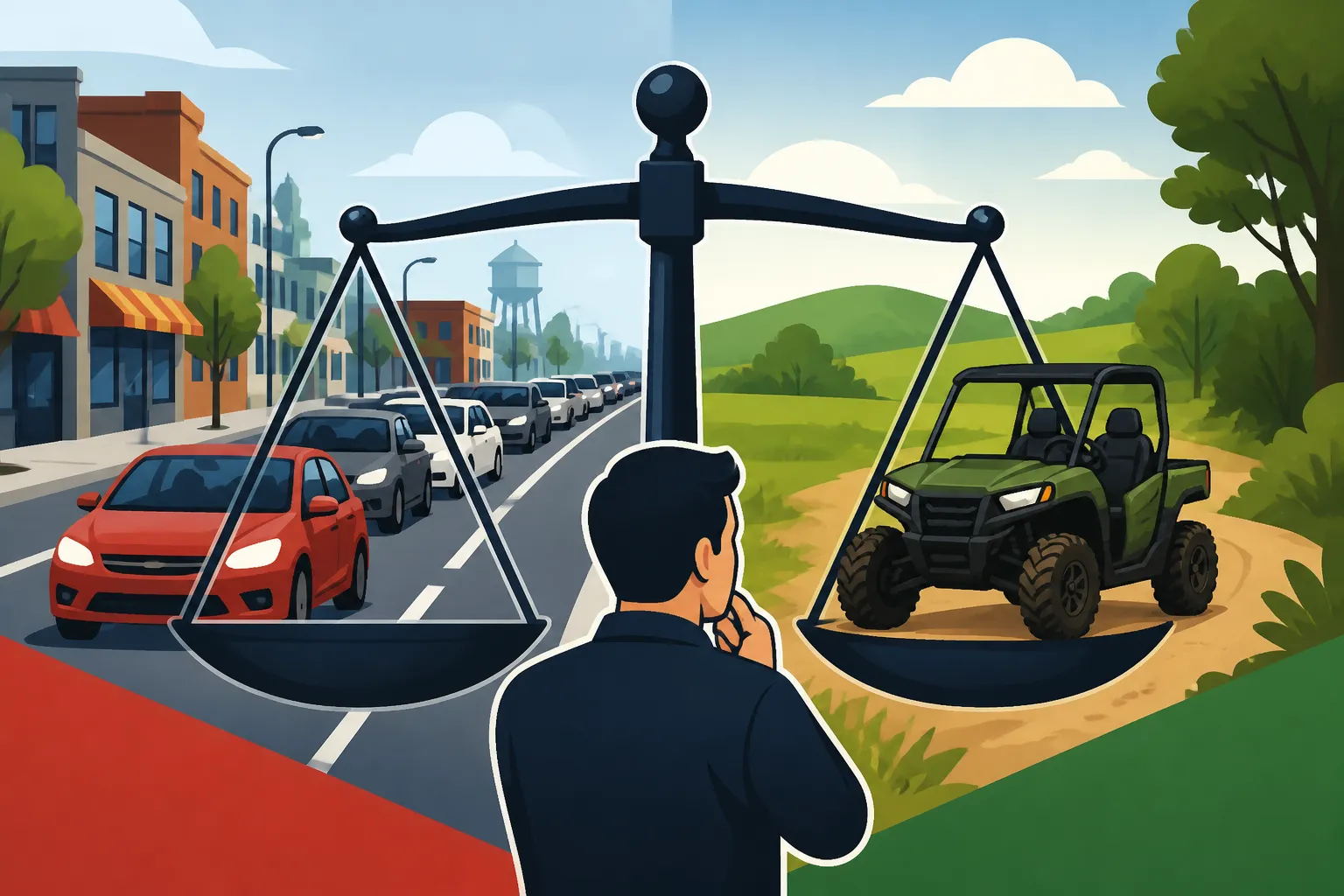
The core issue that often tips the scales in these local discussions is traffic volume. It’s not just a number; it’s a dynamic representation of how many vehicles are on the road, how fast they’re moving, and how those interactions unfold throughout the day. For a UTV ordinance to be successful and safe, it must be rooted in a realistic assessment of a town's traffic patterns. Ignoring this critical element is a recipe for problems down the road.
Defining "Low Traffic" for UTVs
When Illinois law grants municipalities the authority to allow UTVs on streets, it often comes with caveats, a primary one being that these machines are generally restricted to roads with lower speed limits, which inherently implies lower traffic volumes. [Only Streets Posted 35 mph or Lower Qualify] is a common restriction you'll see in many local ordinances. But what truly defines "low traffic" in a practical sense? It's more than just the posted speed limit. It involves a qualitative assessment of several factors:
- Vehicle Count: How many vehicles typically use a particular street during peak hours versus off-peak? A street with 50 cars an hour might be considered low traffic in some contexts, but high in others, especially if those 50 cars are moving quickly.
- Types of Traffic: Is it primarily residential traffic, or do commercial vehicles, school buses, or large trucks frequently use the road? The presence of larger, heavier vehicles changes the dynamic for smaller UTVs.
- Pedestrian and Bicycle Activity: Are there sidewalks? Are children often playing near the street? Are there popular walking or cycling routes that coincide with potential UTV routes?
- Visibility and Road Design: Are there blind curves, steep hills, or intersections with poor sight lines? These design elements can make even a low-traffic road hazardous for UTVs, which may not be as readily seen as a full-sized car.
Towns often conduct traffic studies or rely on existing data to determine which streets genuinely meet a "low traffic" profile. This isn't just about preventing accidents between UTVs and cars; it's also about ensuring UTVs don't create unexpected hazards for pedestrians or cyclists who are accustomed to a certain type of road use. SuperATV, for instance, makes a wide range of accessories that can enhance UTV visibility and safety, but these aftermarket additions don't negate the fundamental responsibility of the municipality to choose appropriate routes based on traffic.
Assessing Risk in Densely Populated Areas
Conversely, densely populated areas present a unique set of challenges. In these settings, even streets with a 25 or 30 mph speed limit might experience significant traffic congestion, frequent stops, and complex intersections. Introducing UTVs into such an environment can dramatically increase the risk profile.
Consider a village street lined with shops and restaurants, where parallel parking is common, and pedestrians frequently cross mid-block. Here, UTVs might contribute to:
- Increased Congestion: UTVs, with their often slower acceleration and sometimes wider profile, can exacerbate traffic backups, especially during busy times.
- Visibility Issues: In an urban environment with many visual distractions (signs, parked cars, bustling sidewalks), a UTV might be harder for other drivers to spot, particularly in their blind spots or during turns.
- Pedestrian Conflicts: More vehicles on the road, particularly those that are less familiar to pedestrians, can lead to a higher incidence of near-misses or actual collisions, especially in areas with high foot traffic.
- Noise Concerns: While many modern UTVs are designed to be quieter, the cumulative effect of additional motorized traffic can increase ambient noise levels, which can be a significant quality-of-life issue for residents in dense areas.
Because of these heightened risks, many towns in more urbanized or densely populated areas choose to either prohibit UTVs entirely or restrict them to a very limited network of designated access roads. The goal is to avoid creating an environment where the introduction of UTVs inadvertently leads to a spike in accidents or resident complaints. The safety and well-being of the entire community must always take precedence over the recreational desires of a segment of the population.
Key Factors Towns Consider When Drafting UTV Ordinances
Crafting an effective UTV ordinance is far from a one-size-fits-all endeavor. Local officials must navigate a maze of variables, taking into account everything from the physical characteristics of their roads to the unique temperament of their community. It's a careful balancing act, and thoughtful consideration of these factors can make the difference between a successful program and one fraught with problems.
Road Classification and Speed Limits
One of the most fundamental considerations for any Illinois town looking at UTV access is the type of roads within its jurisdiction and their associated speed limits. State law provides a framework, but local interpretation and application are key. Generally, UTVs are explicitly prohibited from state highways and interstates within municipal limits. This leaves county, township, and village roads as potential candidates.
However, not all village roads are created equal. As we discussed, [Only Streets Posted 35 mph or Lower Qualify] for UTV access under many interpretations of the law and best practices for safety. This immediate filters out a significant portion of a town's road network. Beyond that, even within the 35 mph limit, some roads are simply unsuitable:
- Collector Roads: These are designed to move traffic from local streets to arterial roads. They often have higher traffic volumes and more complex intersections, making them less ideal for UTVs.
- Residential Streets: These are typically low-speed and low-volume, making them prime candidates. However, proximity to schools, parks, and playgrounds might still warrant restrictions or specific hours of operation.
- Business Districts: While the speed limit might be low, the combination of parked cars, delivery vehicles, and high pedestrian traffic can make UTV operation hazardous.
A town might create a map delineating approved UTV routes, often favoring quieter residential streets and linking them to specific destinations like parks, businesses, or trailheads. This strategic planning helps guide riders to the safest paths and prevents them from straying onto more dangerous roads. It's also critical for ensuring clarity for enforcement officers and for informing residents and visitors alike.
Existing Infrastructure and Community Character
Beyond speed limits and road classification, a town’s existing infrastructure and its unique community character play a huge role in ordinance development. Does the town have a robust network of sidewalks? Are there bike lanes? What about off-road trails nearby that UTVs could access via town streets?
- Sidewalks and Bike Lanes: The presence of dedicated pedestrian and bicycle infrastructure can actually make UTV integration easier, as it separates these vulnerable users from the motorized traffic. However, if UTVs are permitted on streets without such separation, the risk to pedestrians and cyclists increases dramatically.
- Road Width and Condition: Narrow streets can become particularly congested with UTVs sharing space with cars, especially if there’s on-street parking. Poor road conditions, such as potholes or crumbling shoulders, can also be more hazardous for UTVs, which may have different suspension and tire capabilities than a typical car.
- Historical or Quiet Districts: Many towns have areas known for their historic charm or a prevailing sense of quiet tranquility. Introducing UTVs, even if legal, might fundamentally alter this character, leading to complaints about noise, dust, or a perceived shift in the community's identity. This isn't always about safety; sometimes it's about preserving the aesthetic and aural environment residents cherish.
- Proximity to Parks and Schools: Areas around schools and public parks are almost universally designated as sensitive zones. Traffic is often heavier during drop-off and pick-up times, and children are present, necessitating extreme caution. Many ordinances will prohibit UTVs entirely from these areas or impose strict time-of-day restrictions.
Consider a town like Winnebago, Illinois, which has adopted a UTV ordinance. They likely weighed their specific road layouts, the presence of schools, and how UTVs would integrate with their existing agricultural and residential blend. These nuances are what make each local ordinance unique, reflecting the specific needs and desires of that particular community.
Resident Feedback and Local Concerns
No UTV ordinance can succeed without community buy-in, or at least a thorough understanding of resident sentiments. Public engagement is a critical step. This isn't just a formality; it's an opportunity for residents to voice their concerns, share their perspectives, and for the local government to truly gauge the pulse of the community.
Common concerns raised by residents include:
- Noise Pollution: While UTVs have become quieter over the years, some modified machines or aggressive driving can still generate significant noise, disturbing residential areas, especially at night.
- Safety Worries: Many residents, particularly those with children, worry about UTVs sharing roads with cars, bikes, and pedestrians, especially if riders are perceived as careless or untrained.
- Property Damage: Concerns about UTVs leaving the roadway, tearing up lawns, or creating dust on gravel roads are common, particularly in rural or semi-rural areas.
- Enforcement Challenges: Residents often wonder how an ordinance will be enforced. Will there be enough police presence? Will rules be consistently applied? Questions about [Illinois Penalties for Illegal Street Riding] often come up in these discussions.
- Impact on "Quiet Enjoyment": For some, the mere presence of UTVs on local streets, even if driven responsibly, disrupts the peace and quiet they expect from their neighborhood.
Public hearings, town hall meetings, and online surveys are common methods for collecting this feedback. It’s also important for officials to distinguish between legitimate safety concerns and general resistance to change. A well-crafted ordinance will address these concerns directly, perhaps by setting strict hours of operation, establishing clear routes, or requiring specific safety equipment. The process of gathering and responding to resident feedback is a cornerstone of democratic governance and is absolutely vital for ensuring an ordinance is both accepted and effective.
Equipment Requirements and Safety Measures for Street-Legal UTVs
Beyond simply identifying which roads are suitable, a critical piece of any UTV ordinance is defining what makes a UTV "street-legal" within that specific municipality. It's not enough to just buy a machine; it must be properly equipped to safely share the road with other vehicles. These requirements are put in place to enhance visibility, ensure basic functionality, and mitigate risks.
Essential Safety Gear
Illinois law, and by extension local ordinances, mandates certain equipment for non-highway vehicles when they are allowed on public roads. This isn't about making your UTV look "cool" for the street; it's about making it visible, controllable, and predictable for everyone else sharing the asphalt. [Illinois Non-Highway Vehicle Equipment List] provides a good starting point for what's typically required.
Here's a breakdown of common equipment mandates:
- Headlights and Taillights: These are non-negotiable for visibility, especially during dusk, dawn, or inclement weather. Most UTVs come standard with these, but they must be functional and meet minimum brightness requirements.
- Brake Lights: Essential for signaling stops to vehicles behind the UTV. These often need to be visible from a certain distance.
- Turn Signals: Critical for indicating intended direction changes, just like on a car. Many UTVs don't come factory-equipped with turn signals, so aftermarket kits are often necessary. SuperATV, for example, offers various turn signal kits that can be integrated into different UTV models to meet these requirements.
- Rearview Mirrors: A UTV must have at least one, if not two, functional rearview mirrors to allow the operator to monitor traffic behind them. [Illinois Requires a Rearview Mirror] is a standard requirement.
- Horn: A working horn is necessary for alerting other drivers or pedestrians to your presence.
- Windshield: While not always explicitly required, many ordinances encourage or require a windshield to protect the operator from road debris.
- Seatbelts: Most UTVs come with seatbelts, and they are almost universally required to be worn by all occupants while operating on public roads.
- Slow-Moving Vehicle (SMV) Emblem: Since UTVs often have lower top speeds than typical road vehicles, an SMV emblem mounted on the rear signals to other drivers that they may need to slow down or pass with caution. [Illinois Requires a Slow-Moving Vehicle Emblem] is a common part of these rules.
These equipment lists are not just suggestions; they are often strictly enforced. A UTV that does not meet these requirements can be ticketed or even impounded, regardless of whether a permit has been issued. The onus is on the UTV owner to ensure their machine complies with all local regulations before venturing onto public streets.
Insurance and Licensing Rules
Operating any motorized vehicle on public roads comes with the responsibility of being properly licensed and insured, and UTVs are no exception. Illinois has specific requirements for both, which local ordinances will often reiterate or expand upon.
- Driver's License: Generally, anyone operating a UTV on a public road in Illinois must possess a valid driver's license. This means a standard Class D license for cars, not just a learner's permit or an off-road safety certification. [Illinois Requires a Driver's License] ensures that UTV operators have demonstrated basic driving competency and knowledge of traffic laws.
- Insurance: Liability insurance is typically a non-negotiable requirement for any vehicle operating on public roads. [Illinois Requires Insurance for Street Use] mandates minimum coverage levels to protect against financial responsibility in the event of an accident where the UTV operator is at fault. These minimums are usually set at figures like $25,000 for bodily injury per person, $50,000 for bodily injury per accident, and $20,000 for property damage. It's crucial for UTV owners to check with their insurance provider to ensure their policy covers street operation, as many standard off-road policies do not extend to public roads. Some specialized UTV insurance policies exist that explicitly cover street use.
- Permit/Registration: Beyond state title requirements for off-road machines, many local ordinances require UTVs to obtain a special municipal permit or registration sticker. This helps the town track the number of street-legal UTVs, ensures compliance with local rules, and often generates a small fee to help cover administrative or enforcement costs. [Illinois Permit Fees Set by a Town] can vary widely from one municipality to the next. The permit is typically displayed prominently on the UTV, often on the front or rear.
Failing to meet these licensing and insurance requirements can result in significant penalties, including fines, suspension of driving privileges, and even the impoundment of the UTV. Local police often conduct checks, especially during popular riding seasons or in areas where UTVs are newly permitted. It’s always best to carry proof of insurance, your driver's license, and any local permit when operating your UTV on public roads.
The Ordinance Development and Implementation Process
The journey from "idea" to "enforced law" for a UTV ordinance is a multi-step process that requires careful planning, public input, and coordination between various municipal departments. It’s not just about a single vote; it’s about a comprehensive strategy to integrate UTVs safely and effectively into the community.
Steps to Passing a UTV Ordinance
For a village, city, or county to officially allow UTVs on its roads, a formal legal process must be followed. This ensures transparency, public participation, and adherence to state statutes. [How a Village Board Votes to Allow UTVs] outlines the core legislative process.
Here’s a typical progression:
- Initial Discussion and Research: Local officials (e.g., mayor, village president, council members, county board members) will begin discussing the possibility of a UTV ordinance. This often involves researching what other Illinois towns have done, reviewing state statutes, and identifying potential benefits and drawbacks.
- Committee Review (Optional but Common): The topic might be assigned to a specific committee (e.g., Public Safety, Streets and Alleys, Legal) for deeper research, drafting of initial language, and gathering preliminary feedback from department heads like the police chief or public works director.
- Drafting the Ordinance: Legal counsel for the municipality will draft the actual ordinance language. This is a critical step, as the language must be clear, legally sound, and comprehensive, covering everything from permitted roads and hours to equipment requirements, licensing, and penalties.
- Public Notice and Hearings: Before a vote, the proposed ordinance must be publicly announced, and opportunities for public comment must be provided. This often involves publishing the proposed ordinance in local newspapers, posting it on the municipal website, and holding one or more public hearings where residents can voice their opinions. This is where the traffic volume discussions often reach their peak.
- First Reading (Optional): In some municipalities, an ordinance might undergo a "first reading," where it's formally presented to the full board or council without a vote, allowing for further discussion and potential amendments.
- Vote and Adoption: The board or council will then vote on the ordinance. If it passes, it is officially adopted and becomes law within that jurisdiction. The effective date might be immediate or set for a future date to allow for public awareness and preparation.
- Publication: The newly adopted ordinance is typically published in the local code of ordinances and made available to the public.
This structured process ensures that all stakeholders have an opportunity to contribute and that the final ordinance is a well-considered piece of legislation designed to serve the community's best interests.
Enforcement and Ongoing Management
Passing an ordinance is only half the battle; effective enforcement and ongoing management are essential for its long-term success. Without proper oversight, even the best-intentioned ordinance can lead to confusion, safety issues, and community dissatisfaction.
- Police Training and Enforcement: Local law enforcement officers need to be thoroughly trained on the specifics of the new UTV ordinance. This includes knowing which roads are permitted, what equipment is required, and the penalties for violations. Officers will be responsible for issuing citations for non-compliance, ensuring speed limits are observed, and addressing any complaints about reckless driving or excessive noise. [Illinois Penalties for Illegal Street Riding] or for not adhering to the ordinance must be clear to both riders and officers.
- Public Awareness Campaigns: The municipality needs to actively inform its residents and visitors about the new rules. This can involve website updates, social media posts, informational flyers at village hall, and signage at key entry points to the community. Clear communication helps prevent accidental violations and sets expectations for riders.
- Permit Issuance and Tracking: If the ordinance includes a local permit system, the relevant municipal department (e.g., clerk's office, police department) will need a streamlined process for issuing permits, collecting fees, and maintaining records. This helps track which UTVs are authorized and ensures they meet the necessary criteria.
- Monitoring and Review: A good ordinance isn't set in stone. It's crucial for the municipality to monitor its effectiveness over time. Are there an increase in accidents? Are residents still complaining about noise or safety? Is the traffic volume still appropriate? Regular review meetings, perhaps annually, can assess the ordinance's impact and identify any areas that might need adjustment, amendment, or even repeal if it's not working as intended. This adaptive approach ensures the ordinance remains relevant and beneficial to the community.
Successful UTV Ordinances and Common Pitfalls
Examining both successful implementations and common missteps can provide invaluable lessons for any Illinois town contemplating a UTV ordinance. It highlights the importance of thorough planning, community engagement, and a realistic understanding of the challenges involved.
Examples of Towns Getting It Right
Across Illinois, a growing number of towns have successfully implemented ordinances allowing UTVs on their streets. These successes often share common characteristics:
- Clear, Concise Rules: The best ordinances are easy for residents, visitors, and law enforcement to understand. They specify exactly which roads are open, what equipment is required, and what the hours of operation are. This clarity minimizes confusion and makes enforcement straightforward.
- Strategic Road Selection: Successful towns have taken the time to map out UTV-friendly routes that prioritize low-traffic residential streets and avoid major arteries or high-pedestrian areas. This shows a commitment to safety and thoughtful integration. [Illinois Towns That Allow UTVs on Streets] like Byron and Ramsey often exemplify this careful planning.
- Robust Public Engagement: Communities that actively solicit and incorporate resident feedback into their ordinances tend to see greater acceptance. Addressing concerns about noise, safety, and traffic volume head-on helps build trust and support.
- Enforcement with Education: While enforcement is necessary, successful programs also focus on educating riders. They might issue warnings for minor infractions initially, combined with clear guidance on how to comply, before resorting to fines.
- Adaptive Approach: The most effective ordinances are living documents. Towns recognize that initial rules might need tweaking. They build in mechanisms for periodic review and amendment based on real-world experience, accident data, and ongoing community feedback. For example, a town might initially open more roads but then scale back if traffic issues arise, or they might adjust operating hours based on noise complaints.
These successful models demonstrate that with careful planning and a commitment to safety, UTVs can indeed become a positive part of a town's transportation and recreational landscape.
Avoiding the Traps of Hasty Decisions
Conversely, towns that rush into UTV ordinances without due diligence often encounter significant problems. These pitfalls serve as cautionary tales:
- Ignoring Traffic Volume and Road Suitability: The biggest mistake is to simply open all roads without considering actual traffic data, road design, or pedestrian activity. This can quickly lead to accidents, near-misses, and overwhelming safety concerns from residents. A UTV, even with all the required SuperATV accessories, is still vulnerable on a busy street.
- Lack of Clear Rules or Communication: Ambiguous language in an ordinance or poor communication to the public can lead to widespread confusion. Riders might unknowingly violate rules, and law enforcement might struggle with consistent enforcement, leading to frustration for everyone.
- Insufficient Enforcement Resources: Passing an ordinance without adequately resourcing the police department to enforce it is a recipe for failure. If rules aren't enforced, residents lose trust, and riders may become complacent, leading to unsafe practices.
- Failure to Address Resident Concerns: Dismissing public worries about noise, safety, or property damage can create deep resentment within the community, often leading to calls for the ordinance to be repealed or to increased friction between UTV riders and other residents.
- Overly Broad or Restrictive Ordinances: An ordinance that is too broad (e.g., allowing UTVs everywhere without any restrictions) will likely lead to safety issues. One that is too restrictive (e.g., only allowing UTVs on one block of one street during specific hours) might be so impractical that it negates the purpose of having an ordinance at all, failing to provide meaningful access. The sweet spot is a balanced approach that provides reasonable access while prioritizing safety.
Ultimately, the decision to allow UTVs on town roads is a complex one, deeply intertwined with traffic volume, community character, and public safety. By learning from both successes and failures, Illinois municipalities can craft ordinances that genuinely enhance their communities without compromising the well-being of their residents.
Disclaimer
This article is for general informational purposes only and does not constitute professional advice. Laws, prices and regulations vary by location and change over time. Consult a qualified professional for guidance on your specific situation.