How a Village Board Votes to Allow UTVs
It's a common dream for many UTV owners in Illinois: the ability to hop on your side-by-side and legally cruise down the village streets to grab groceries, visit a friend, or simply enjoy a scenic ride. However, that dream often crashes into the stark reality that Illinois law generally restricts off-highway vehicles from public roads. This guide will walk you through the often-complex, sometimes frustrating, but ultimately achievable process of understanding how your local village board can vote to open up those streets to UTVs, giving you a roadmap to advocate for this freedom in your own community.
Understanding Illinois's Default Stance on Street Riding
Before we dive into how a village can open its roads, it’s crucial to understand the baseline. Illinois doesn’t exactly roll out the welcome mat for UTVs on public streets right off the bat. In fact, it's quite the opposite, and understanding this default position is key to appreciating why local action is so vital.
The Statewide Ban and Local Authority
By default, the state of Illinois generally prohibits the operation of off-highway vehicles, including UTVs and ATVs, on public roads and highways. This isn't just a suggestion; it's the law. Many riders, especially those new to the scene or moving from states with different regulations, find this frustrating. You've invested in a capable machine, and you just want to get from Point A to Point B in your own community without trailering it everywhere. This statewide ban means that if your machine isn't registered and equipped like a regular car (which most UTVs aren't), you typically can't drive it on roads.
However, and this is the critical point, the state also grants municipalities – like villages, cities, and even counties – the power to create exceptions to this general ban through local ordinances or resolutions. This means the power to permit UTVs on local streets rests squarely with your local elected officials. Without a specific local law in place, that state ban holds firm. This is why you might hear about one town allowing UTVs and the next one over still restricting them; it all comes down to local governance. For more on the foundational rules, you might want to read [Illinois Law Starts by Banning Street Riding].
What "Street Legal" Really Means for a UTV in Illinois
When we talk about making a UTV "street legal" in Illinois, it's not a blanket, statewide certification you get from the state capital. Instead, it’s about meeting a specific set of requirements set by each individual municipality that decides to allow UTVs on its roads. This patchwork approach can be confusing, as the rules can vary slightly from one town to the next, though there's a common core of necessary equipment.
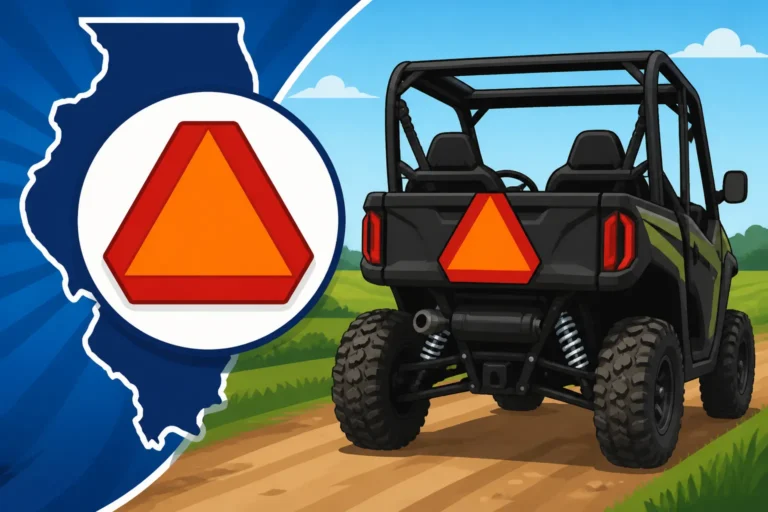
Typically, an ordinance will stipulate that a UTV must have functional headlights, taillights, brake lights, turn signals, a horn, a rearview mirror, and often a slow-moving vehicle emblem. These aren't just suggestions; they are usually mandatory safety features designed to make your UTV more visible and predictable to other drivers. Many UTVs don't come from the factory with all these features, meaning owners might need to purchase aftermarket kits. Companies like SuperATV offer a wide range of accessories, including mirrors, turn signal kits, and horn kits, that can help bring your machine up to spec for local street use. Beyond equipment, many ordinances also require proof of insurance, a valid driver's license for the operator, and often a local permit or sticker. Understanding these requirements, detailed in resources like [Illinois Non-Highway Vehicle Equipment List], is crucial before you even consider approaching your village board.
The Village Board Process: From Idea to Ordinance
So, you want your village to allow UTVs on its streets. How does that actually happen? It’s not an overnight process, and it definitely requires more than just wishing for it. It involves engaging with your local government, understanding their concerns, and working through a structured democratic process.
Initiating the Discussion: Residents, Petitions, and Research
The journey to a UTV ordinance often begins with an individual resident, or a small group of enthusiastic riders, bringing the idea forward. This isn't just a casual chat; it usually means formally presenting the concept to the village board during a public comment period at a regular meeting. This initial contact is your chance to explain why you believe this is a good idea for the community. Are there specific benefits, like easier access to local businesses, reduced need for trailering, or enhanced recreational opportunities? Clearly articulating these points is crucial.
Many communities find strength in numbers. Organizing a petition, gathering signatures from other residents who support the idea, can demonstrate widespread community interest. This isn't just about showing up; it's about showing up with data. Beyond petitions, residents might also undertake initial research, looking at what neighboring villages have done, what their ordinances look like, and what challenges they've faced. This groundwork can be incredibly helpful for the village staff, who will likely be tasked with digging deeper if the board shows interest. This initial push from the community is often the spark that ignites the formal process of [Illinois Municipalities That Pass Ordinances].
Public Hearings and Community Input
Once the village board expresses interest, the next critical step usually involves public hearings. This is where the rubber truly meets the road, as it opens the floor for both supporters and detractors to voice their opinions formally. These hearings are essential because they allow the board to gauge the broader community sentiment and identify potential issues that might not have been considered.
During a public hearing, you might hear concerns about increased noise, potential safety risks for pedestrians and children, or the impact on road maintenance. It's not uncommon for [Neighbors Who Complain to a Board] to voice their apprehension, citing perceived dangers or disruptions. This is your opportunity, as an advocate, to address these concerns respectfully and offer solutions. For instance, you might discuss strict enforcement of speed limits, the installation of proper lighting on UTVs (which can be sourced from brands like SuperATV), or designated routes to avoid sensitive areas. The more prepared you are to address these objections with reasonable solutions, the better the chances of a positive outcome. This phase is all about listening, learning, and finding common ground.
Drafting and Reviewing the Proposed Ordinance
If the public hearings indicate sufficient support and the board feels comfortable moving forward, the next step is the actual drafting of the ordinance. This is typically handled by the village attorney, working in conjunction with village staff and potentially local law enforcement. The goal is to create a clear, enforceable law that outlines exactly what is allowed, what is prohibited, and what conditions must be met.
A well-drafted ordinance will specify:
- Which types of vehicles are covered (e.g., UTVs only, or ATVs as well).
- Which streets are open to UTVs (often excluding state highways or major thoroughfares).
- Operating hours (e.g., sunrise to sunset).
- Required safety equipment (lights, mirrors, signals – again, aftermarket solutions from a company like SuperATV can be a big help here).
- Insurance requirements.
- Driver's license requirements.
- Permit fees and application procedures.
- Penalties for violations.
This draft will then go through several rounds of review, often involving committees, before being presented to the full board for a vote. It's a meticulous process, ensuring that the ordinance is legally sound and addresses all the practical implications for the community.
Key Considerations for a Village Board Vote
When it comes time for the final vote, village board members weigh many factors. Their primary responsibility is to the safety and well-being of all residents, so their decision-making process is often complex and multi-faceted.
Safety Concerns and Traffic Impact
Top of mind for any village board member will be safety. They’ll be asking: "How will allowing UTVs impact pedestrians, cyclists, and other motorists?" This includes worries about vehicle speed, the ability of UTVs to navigate safely in traffic, and the potential for accidents. Board members are acutely aware that [Towns Must Weigh Traffic Volume Before Allowing UTVs], especially on narrow residential streets or roads near schools and parks.
They'll consider:
- Visibility: Are UTVs easily seen by other vehicles, especially at dusk or dawn? This reinforces the need for proper lighting.
- Driver Experience: While UTV operators need a valid driver's license, their experience on public roads with an off-road machine may be limited.
- Road Condition: Are local roads suitable for UTV use? Are there areas with heavy pedestrian traffic that should be excluded?
- Enforcement: Can local police effectively enforce speed limits and other safety regulations specific to UTVs?
Addressing these concerns with concrete plans, such as mandatory safety equipment checks (e.g., ensuring all UTVs have functional turn signals and mirrors, easily sourced from aftermarket providers like SuperATV) and clearly defined routes, can go a long way in reassuring board members.
Enforcement and Administration
Another significant hurdle for any village board is the practical aspect of enforcement and administration. Passing an ordinance is one thing; making it work effectively is another. Village police departments need to be educated on the new rules, equipped to identify violations, and able to issue citations. This often involves additional training and resources.
Beyond law enforcement, the village needs a system to administer permits. This includes:
- Application Process: How do residents apply for a UTV permit? What documentation is required?
- Permit Fees: What are the [Illinois Permit Fees Set by a Town], and how are they collected? Are they sufficient to cover administrative costs?
- Vehicle Inspections: Many ordinances require a basic safety inspection before a permit is issued. This might be handled by the police department or a designated village official. This is where [The Inspection a Village Runs Before Issuing a Permit] comes into play, ensuring machines meet the necessary safety standards.
- Permit Display: Where will the permit sticker go on the UTV to ensure easy identification by law enforcement? (Consider [Where to Put a Village Permit Sticker on a UTV].)
The board will want assurance that the administrative burden isn't excessive and that the system is fair, transparent, and sustainable.
Financial Implications and Community Benefits
Finally, village boards will also consider the financial implications and the overall benefits to the community. There are costs associated with drafting ordinances, administering permits, and potentially increased enforcement. These costs need to be balanced against potential revenues (from permit fees) and intangible community benefits.
- Potential Revenue: Permit fees can generate some income for the village, which might offset administrative costs or even contribute to road maintenance.
- Local Economy Boost: Allowing UTVs on streets can potentially benefit local businesses. Riders might be more inclined to patronize local shops, restaurants, and gas stations if they can easily access them via their UTVs.
- Recreational Opportunities: For many residents, the ability to legally ride their UTVs on local streets enhances their quality of life and provides new recreational avenues within their own community.
- Attraction for New Residents: For some, a UTV-friendly community could even be a factor in choosing where to live.
The board's decision will ultimately hinge on a careful balance of these safety, administrative, and community-focused considerations.
After the Vote: Living with the Ordinance
Once the village board has cast its votes, the outcome directly impacts UTV owners. Whether the ordinance passes or fails, understanding the next steps is crucial for all community members.
Understanding the Approved Ordinance
If your village board successfully passes an ordinance allowing UTVs on local streets, congratulations! This is a significant step, but it's not a free-for-all. It's absolutely critical that every UTV owner understands the specifics of the new law. As discussed, these ordinances come with conditions, and failing to adhere to them can lead to citations and even the repeal of the ordinance if violations become widespread.
Typically, an approved ordinance will require:
- Permit Application: You'll likely need to apply for an annual permit at Village Hall, paying a fee as detailed in [Illinois Permit Fees Set by a Town]. This usually involves filling out paperwork and presenting proof of ownership, insurance, and a valid driver's license.
- Vehicle Inspection: As part of the permit process, your UTV will probably undergo a safety inspection to ensure it has all the required equipment, such as working headlights, taillights, brake lights, turn signals, mirrors, and a horn. Many owners utilize aftermarket parts from companies like SuperATV to ensure their machines meet these specifications.
- Permit Display: Once issued, you’ll receive a sticker or decal that must be prominently displayed on your machine, often front and center, so law enforcement can easily verify your compliance. [Where to Put a Village Permit Sticker on a UTV] usually specifies the exact location.
- Adherence to Rules: You must follow all posted speed limits, traffic laws, and any specific UTV restrictions outlined in the ordinance, such as operating hours or restricted streets. Remember that [Illinois Rules for Riding a Village Street] are specific and must be learned. Also, ensure you carry your proof of [Illinois Requires Insurance for Street Use] and [Illinois Requires a Driver's License] at all times.
Familiarize yourself with every detail to ensure a smooth and legal riding experience. Ignorance of the law is never an excuse.
What to Do When a Village Board Says No
Sometimes, despite all your efforts, a village board might vote against a proposed UTV ordinance. This can be incredibly disappointing, but it doesn't necessarily mean the dream is dead forever. It means the board, at that moment, wasn't convinced, or that concerns outweighed perceived benefits.
If this happens, it's time to regroup and reassess.
- Request Feedback: Try to understand why the ordinance failed. Was it safety concerns? Enforcement issues? Lack of community support? Financial implications? Getting clear, specific feedback from board members is crucial.
- Address Specific Concerns: Once you know the reasons, you can work to address them. Perhaps you need to gather more data on accident rates in similar communities, propose stricter equipment requirements, or find ways to fund enforcement without burdening taxpayers.
- Modify Your Proposal: Based on feedback, you might need to revise your proposed ordinance to be more restrictive initially, such as limiting UTVs to certain roads or specific times, before advocating for broader access later.
- Re-engage the Community: If a lack of support was an issue, you might need to do more outreach to educate residents on the benefits and address their fears.
- Wait and Try Again: Political landscapes change, as do community attitudes. Sometimes, waiting for a new election cycle or for other communities to successfully implement UTV ordinances can provide valuable precedents. For specific strategies on how to respond to a denial, refer to [What to Do When a Village Board Says No].
It's a process of persistence, education, and finding common ground.
Summary of Common UTV Ordinance Elements
To give you a clearer picture, here's a table summarizing common elements you might find in a village UTV ordinance in Illinois. Remember, these can vary by municipality, so always check your local ordinance!
| Element | Typical Requirement |
|---|---|
| Eligible Vehicles | UTVs (Side-by-Sides) primarily; ATVs sometimes included. |
| Roads Permitted | Roads posted 35 mph or less, excluding state highways, interstates, or heavily trafficked routes. |
| Operator Age | 16 years or older with a valid driver's license. |
| Insurance | Proof of liability insurance, often matching state minimums for motor vehicles. |
| Required Equipment | Headlights, taillights, brake lights, turn signals, horn, rearview mirror, slow-moving vehicle emblem. |
| Operating Hours | Often limited to sunrise to sunset; some may allow night operation with proper lighting. |
| Permit | Annual permit sticker issued by the village, displayed on the machine. |
| Permit Fee | Varies by village; typically an annual fee to cover administrative costs. |
| Inspection | Pre-permit safety inspection by village police or designated official. |
| Passenger Rules | Limited to manufacturer's seating capacity; all passengers must be seated with seatbelts (if equipped). |
| Penalties | Fines for violations; repeated violations could lead to permit revocation. |
| Local Enforcement | Village Police Department enforces ordinance. |
Getting your village board to vote in favor of a UTV ordinance is a grassroots effort that combines advocacy, education, and a deep understanding of local governance. It requires patience, persistence, and a willingness to compromise. By engaging constructively with your community leaders and addressing their concerns with thoughtful solutions, you can pave the way for a more UTV-friendly environment in your Illinois village.
Disclaimer
This article is for general informational purposes only and does not constitute professional advice. Laws, prices and regulations vary by location and change over time. Consult a qualified professional for guidance on your specific situation.