Illinois Requires a Slow-Moving Vehicle Emblem
It's incredibly frustrating when you're just trying to enjoy your ATV or UTV, maybe even use it for some practical work around the property, only to run into a wall of confusing rules about what you can and can't do on public roads. One of the biggest head-scratchers for many Illinois riders is the requirement for a slow-moving vehicle (SMV) emblem. This guide is going to cut through the confusion, explaining exactly why, when, and how your off-road machine needs this bright orange triangle to stay legal and safe on Illinois streets.
The Essential Role of the Slow-Moving Vehicle Emblem in Illinois
Picture this: you're driving your car down a rural Illinois road, and up ahead, you see a bright, fluorescent orange triangle with a dark red border. Immediately, your brain registers "slow vehicle ahead," and you adjust your speed, preparing to pass safely. That's the power of the Slow-Moving Vehicle (SMV) emblem, and it's not just for tractors anymore. For Illinois ATV and UTV owners who wish to operate their machines on designated public roads, this little reflective sign is a non-negotiable part of the safety toolkit. It's a critical visual cue designed to prevent rear-end collisions, especially in areas where speeds vary widely.
What Makes an SMV Emblem "Slow-Moving"?
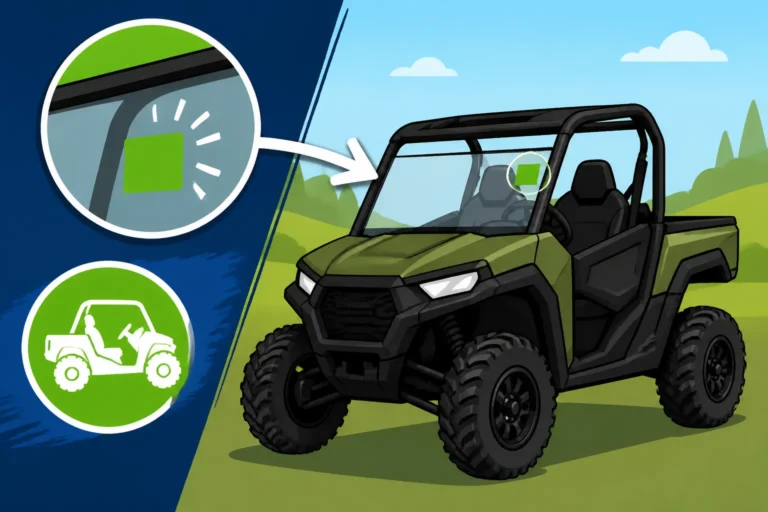
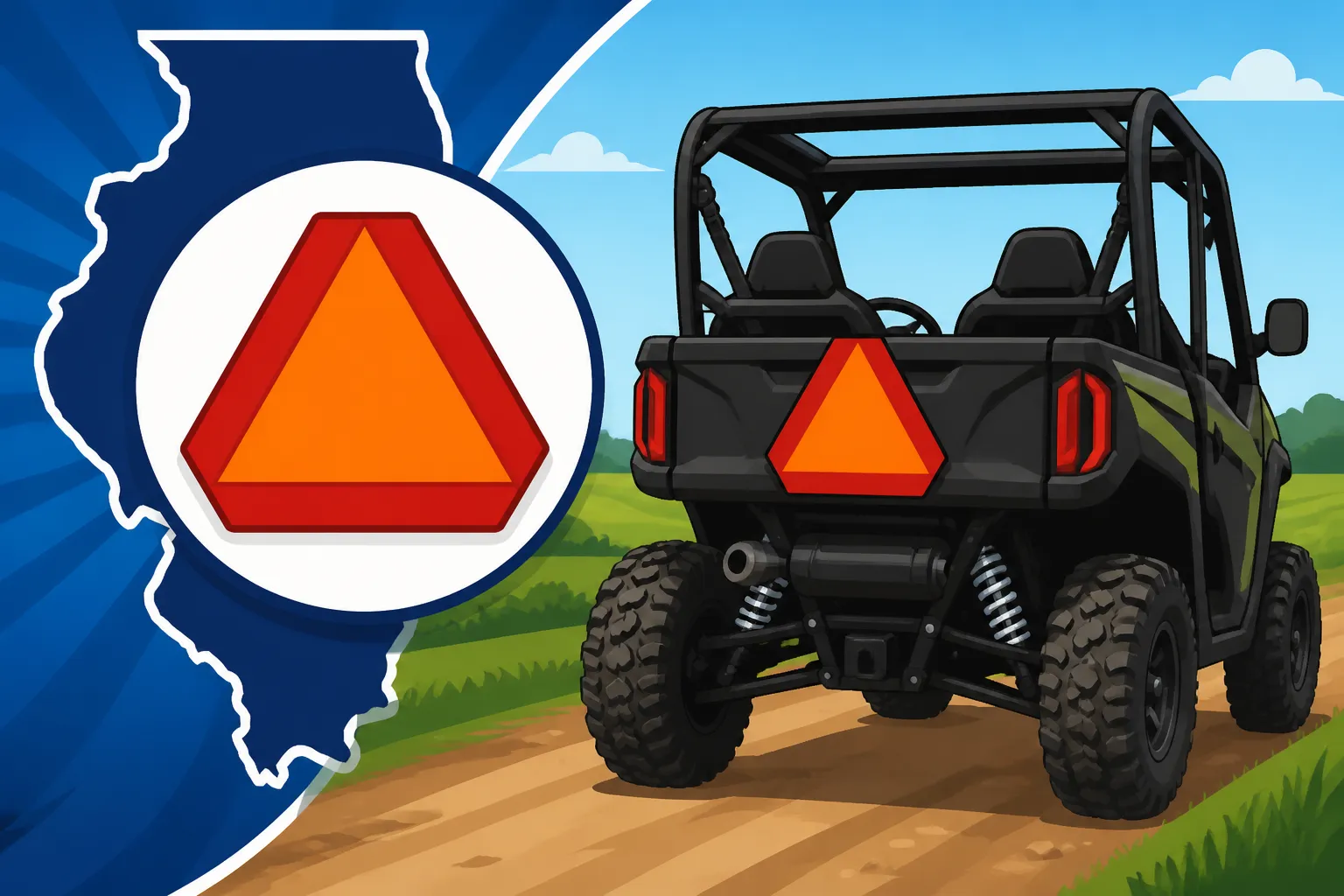
The SMV emblem isn't just any old reflector; it's a very specific, standardized piece of safety equipment. It's a reflective, fluorescent orange triangle with a reflective red border, designed to be highly visible both day and night. The fluorescent orange center ensures it pops during daylight hours, while the reflective red border catches headlights in the dark. Its distinct shape and color immediately communicate a universal message to other drivers: "Caution, this vehicle is moving significantly slower than the posted speed limit." This is crucial when you consider the speed differential between a typical passenger vehicle traveling 55 mph and a UTV or ATV that might only be capable of 35 mph, or even less, especially on agricultural machines. Without this visual warning, drivers might not realize the speed difference until it's too late, leading to dangerous situations.
The specific design and material are regulated to ensure maximum effectiveness. It's not something you can just make yourself; it needs to meet certain standards for reflectivity and durability. Think about a farmer pulling equipment down a county road at dusk – that SMV emblem is often the first thing you see, giving you precious seconds to react. Your ATV or UTV, while perhaps a bit faster than some farm equipment, still falls into this category when sharing roads with cars and trucks, making the emblem just as vital for your safety and the safety of others.
The Illinois Statute Mandating SMVs for Off-Road Machines
Illinois law is pretty clear on this. When you take your non-highway vehicle – which includes most ATVs and UTVs – onto public roads where permitted, it's generally required to display an SMV emblem. The state statute recognizes that these machines, while incredibly useful and fun, aren't built for highway speeds and therefore pose a unique hazard if not properly marked. The intent isn't to make things difficult for riders, but to standardize safety measures across all types of vehicles that might be sharing the road but operating at reduced speeds.
This requirement typically comes into play when local municipalities pass ordinances allowing ATVs and UTVs on their streets. While the specific local ordinance might detail speed limits, helmet requirements, or insurance minimums, the underlying state law regarding slow-moving vehicles still applies. The state views the SMV emblem as a baseline safety feature for any vehicle that won't keep up with typical traffic flow. So, even if your local village passed an ordinance to allow UTVs, don't assume you can skip this important step. Many Illinois local ordinances regarding street-legal UTVs, for example, will explicitly state that the vehicle must meet all state requirements for slow-moving vehicles, including the emblem. This ensures a consistent safety standard regardless of which local road you're on.
Beyond ATVs: Other Vehicles That Rely on the SMV
While we're focused on ATVs and UTVs, it's helpful to remember that the SMV emblem serves a much broader purpose on Illinois roads. Tractors, combines, road construction equipment, horse-drawn buggies, and even certain types of specialized vehicles all fall under the umbrella of machines that typically need to display an SMV emblem when traveling on public ways. This broad application highlights the emblem's universal importance as a safety signal. It's not singling out off-road enthusiasts; it's a standard applied to anyone operating a vehicle that presents a significant speed differential on the road.
Consider a farmer moving machinery between fields down a rural county road. Their equipment is often wide, heavy, and moves at a snail's pace compared to a car. The SMV emblem is their primary warning device to alert faster traffic. The same principle applies to your UTV or ATV. While more nimble than a tractor, it still presents a slower profile than a passenger car or truck. By understanding this broader context, it becomes clearer why the [The Orange Farm Emblem Your UTV Must Carry] is a crucial piece of safety gear for your machine, reinforcing that you're part of a larger group of road users who prioritize safety through clear communication of speed differences.
When Your ATV or UTV Requires an SMV Emblem on Illinois Roads
So, you've got your shiny new side-by-side or a trusty old quad, and you're wondering when exactly that bright orange triangle needs to be bolted onto the back. It's not always straightforward, as Illinois has a layered approach to off-road machine use, combining state laws with local ordinances and specific exemptions. Generally speaking, if your off-road machine is going to touch any public road, even for a short distance, the SMV emblem is likely a requirement. It's all about making sure that other drivers are alerted to your slower speed, minimizing the risk of a dangerous encounter.
Street-Legal Use Under Local Ordinances
This is perhaps the most common scenario where the SMV emblem becomes mandatory. While Illinois state law generally restricts ATVs and UTVs from public roads, it grants local municipalities (villages, cities, and counties) the power to pass ordinances allowing their use on specific streets. When a town decides to become "UTV friendly," they'll outline a set of rules – speed limits, insurance requirements, times of day, and, almost universally, equipment mandates. Among these mandates, you will almost certainly find the requirement for a slow-moving vehicle emblem.
For example, a town might allow UTVs on roads posted 35 mph or less, but only if they have working headlights, tail lights, turn signals, and a prominent SMV emblem. These local rules, like [Illinois UTV Street Legal Rules by Town], are designed to integrate off-road machines into traffic safely. The SMV emblem is a cornerstone of this safety plan, providing that instant visual cue to drivers who might not be expecting a UTV on the road. Without it, even if you meet all the other requirements, you could be in violation and putting yourself and others at risk. It’s important to remember that these local ordinances build upon, rather than replace, state safety guidelines, making the SMV emblem a foundational element of legal street use.
Crossing Public Roadways and the "Incidental Use" Clause
Even if your town hasn't passed a full-blown ordinance allowing UTVs on all their streets, there are often allowances for crossing public roads. Maybe your favorite trail is split by a county road, or you need to get from one part of your property to another that's divided by a public lane. In these "incidental use" or crossing scenarios, the SMV emblem often still applies. Illinois law understands that sometimes, a brief moment on a public road is unavoidable, but it insists on safety precautions.
Think about it: even a quick crossing means your machine is briefly sharing space with faster-moving traffic. The speed differential, albeit for a short time, is still a risk. Therefore, displaying an SMV emblem during these crossings is a vital safety measure. It alerts oncoming and पीछे (behind) traffic that a slow-moving vehicle is entering or traversing the roadway. You might be focused on traffic flow and getting across quickly, but that SMV is working silently to communicate your presence and slower speed. Always assume that if any part of your machine touches a public road, the SMV emblem is a wise, and often legally required, addition. Always be aware of [Illinois Crossing Rules at Intersections] even for brief interactions with public thoroughfares.
Farm, Field, and Private Property Exceptions
Now, let's talk about when you might not need an SMV emblem. The most common exemption comes into play when your ATV or UTV is used exclusively for agricultural purposes or entirely on private land. If your machine never leaves your farm fields, your private hunting ground, or your own yard, then the SMV emblem requirement typically doesn't apply. The logic here is simple: if you're not interacting with public road traffic, the need to warn other motorists about your slower speed is negated.
For example, if you use your side-by-side solely to haul feed on your cattle farm or to check fences on your land, you generally wouldn't need an SMV emblem. The same goes if your quad is strictly for recreational riding on private trails you own or have permission to use. However, the moment that machine rolls onto a public road, even if it's just to get from one part of your farm to another, the rules shift. It's a key distinction: [Illinois Machines Used Only on a Farm] are often exempt from many road-use requirements, but crossing or traveling on public roads, even briefly, changes the game. Always verify the specific rules for your situation, especially if you think your use case falls under an exemption, as misinterpreting the law can lead to fines.
Mounting and Maintaining Your SMV Emblem for Maximum Visibility
Having an SMV emblem is one thing, but ensuring it's properly mounted and visible is another. It's not just a decoration; it's a critical safety device, and its effectiveness hinges entirely on being seen clearly by other drivers. Imagine tucking it away behind a cooler or letting it get caked in mud – it completely defeats the purpose. The Illinois statute, along with common sense, dictates that the emblem must be placed in a specific way to maximize its warning power. Taking a few moments to properly install and maintain your SMV emblem can make a huge difference in your safety on the road.
Official Placement Guidelines and Best Practices
The general rule of thumb for SMV emblem placement is simple: it needs to be on the rearmost part of your ATV or UTV, as close to the center as possible, and at a height that is clearly visible to drivers behind you. Typically, this means mounting it somewhere between 2 and 6 feet above the ground. You want it high enough to clear most bumpers but low enough that it's within the common line of sight for passenger vehicles and trucks. Many UTVs have a factory-designated spot or accessories that help with this. For ATVs, you might need to get creative, often using a small bracket off the rear rack or frame.
It's crucial that the triangle is mounted with the point facing upwards, just as it's designed. This specific orientation is part of its universal recognition as an SMV. Avoid mounting it at an angle or sideways, as this can confuse other drivers or diminish its effectiveness. Use sturdy hardware that can withstand vibrations, bumps, and weather, especially if your machine sees a lot of trail time. A loose or rattling emblem is not only annoying but could also fall off, leaving you unprotected and non-compliant. When considering aftermarket solutions for mounting, make sure they adhere to these guidelines; many accessory manufacturers like SuperATV offer robust mounting solutions for various UTV models.
Ensuring Year-Round Clarity and Compliance
The SMV emblem is made to be durable, but it's not indestructible, especially with the abuse an off-road machine can take. Over time, exposure to sun, mud, dust, and pressure washing can cause the fluorescent orange to fade and the reflective red border to dull. A faded or dirty emblem loses much of its warning capability, essentially rendering it useless. It's vital to regularly inspect your SMV emblem, especially before any road use.
Make it a habit to wipe down your emblem every time you clean your machine. If you notice the orange color isn't as vibrant as it once was, or the red border doesn't reflect light sharply, it's time for a replacement. Think of it like a safety feature in your car – you wouldn't let your headlights get so dim they're ineffective. The same proactive approach applies here. Investing in a new emblem every few years, or after significant wear and tear, is a small price to pay for ensuring your visibility and compliance. A well-maintained emblem ensures you're sending the clearest possible signal to other drivers, day or night.
Avoiding Obstructions: Cargo, Accessories, and Mud
One of the biggest pitfalls riders fall into is unknowingly obstructing their SMV emblem. You've gone through the trouble of mounting it correctly, but then you load up your rear rack with camping gear, a cooler, or a spare tire, completely blocking the emblem from view. This is just as bad as not having one at all, as far as safety and the law are concerned. The emblem must have a clear, unobstructed view from the rear of your machine at all times when on public roads.
Before you head out, do a quick visual check. Is that new tool box blocking it? Is the mud from your last trail ride caked so thick that the orange is hidden? Did you strap a hunting blind to the back, inadvertently covering your vital safety warning? If so, you need to adjust your cargo or clean your emblem. When choosing aftermarket accessories for your ATV or UTV, always consider how they might impact the visibility of your SMV emblem and other required lights like [Illinois Requires a 100-Foot Tail Lamp]. Look for accessories that integrate around these safety items or offer alternative mounting points to maintain clear sightlines. Planning ahead can save you a citation and, more importantly, a potential accident.
The SMV Emblem as Part of a Complete Street-Legal Package
While the slow-moving vehicle emblem is undoubtedly important, it's just one piece of a much larger puzzle when it comes to making your ATV or UTV street-legal in Illinois. Think of it as part of a symphony of safety features that work together to make your machine as visible and predictable as possible to other road users. Relying solely on the SMV emblem without the other necessary equipment would be like trying to drive a car with only brake lights – clearly insufficient. To truly be safe and compliant, you need to consider all the components that allow your off-road vehicle to share the road responsibly.
Complementary Lighting Requirements
When your UTV or ATV is operating on public roads, especially during dawn, dusk, or night, proper lighting becomes paramount. The SMV emblem works wonders during the day and reflects headlights at night, but it doesn't generate light. That's where your machine's other lights come into play. Illinois law, and most local ordinances, will mandate a full suite of functional lighting for any street-legal off-road vehicle. This includes a bright headlight visible for hundreds of feet, and a red tail lamp that can be seen from a significant distance behind you.
Specifically, you'll need at least one white headlamp on the front, capable of revealing persons and vehicles at a distance of 500 feet. At the rear, you'll need a red tail lamp, visible from at least 100 feet. And, of course, brake lights that illuminate brightly when you apply the brakes are non-negotiable for signaling your intentions to traffic behind you. Without these, even the brightest SMV emblem won't protect you in low-light conditions. Many aftermarket lighting kits are available, some from reputable brands like SuperATV, that can upgrade your machine to meet or exceed these requirements, enhancing both safety and compliance. Remember, the [Illinois Requires a 500-Foot Headlight] and [Illinois Requires a 100-Foot Tail Lamp] are not optional for street use.
Mirrors, Turn Signals, and Other Safety Gear
Beyond lights, there's a host of other equipment that transforms your off-road beast into a road-worthy machine. Visibility isn't just about being seen; it's also about you seeing what's around you. A functional rearview mirror is essential for monitoring traffic approaching from behind. Without it, changing lanes or making turns becomes incredibly dangerous. Most UTVs can easily accommodate aftermarket mirrors that clip onto the roll cage, while ATVs might require handlebar-mounted options.
Then there are turn signals – an absolute must for communicating your intentions to other drivers. Hand signals might suffice for bicycles, but on a motor vehicle, especially one sharing the road with cars, dedicated amber turn signals on both the front and rear are typically required. A working horn, for alerting pedestrians or other drivers to your presence, also makes the list. These seemingly small additions, like those offered by SuperATV in their street-legal kits, contribute massively to the overall safety and functionality of your machine on public roads. They transform an off-road vehicle into one that can interact predictably and safely with standard road traffic, further proving that the SMV emblem is part of a larger, interconnected system of safety. Don't forget, [Illinois Requires a Rearview Mirror] for any street-legal machine.
Why a Comprehensive Approach to Safety is Non-Negotiable
It's easy to get caught up in checking off one box at a time – "Got the SMV? Check! Got a headlight? Check!" – but true road safety for your ATV or UTV demands a holistic view. The SMV emblem warns of your speed, but your headlights illuminate the path, your tail lights mark your presence, your brake lights signal slowing, and your turn signals communicate directional changes. Without all these pieces working in concert, you're leaving gaps in your safety profile.
Consider a scenario where you're turning left on a busy county road. The SMV emblem tells drivers behind you that you're slow. Your bright tail lights show your presence. Your brake lights flash as you slow down. And critically, your turn signal clearly indicates your intention to turn. If any one of these elements is missing or non-functional, the risk of a collision goes up dramatically. The [Illinois Non-Highway Vehicle Equipment List] is there for a reason – to ensure a baseline of safety for everyone on the road. Don't skimp on any of these requirements; your safety and the safety of others depend on a fully equipped, fully compliant machine.
Penalties and Perils of Operating Without a Required SMV Emblem
Ignoring the requirement for a slow-moving vehicle emblem isn't just about risking a ticket; it's about putting yourself and others in genuine danger. While the thought of a fine might be enough to motivate some riders, understanding the broader consequences – from direct legal penalties to the grave safety implications and even potential insurance headaches – paints a much clearer picture of why this small, reflective triangle is so crucial. It’s an easy rule to follow, with significant repercussions if you don’t.
Understanding Fines and Citations
Let's start with the immediate financial sting. If you're operating your ATV or UTV on a public road where an SMV emblem is required, and you don't have one (or it's improperly displayed/obstructed), you're looking at a traffic citation. The exact cost of these tickets can vary depending on the local jurisdiction and the discretion of the issuing officer, but expect it to be a nuisance. A basic moving violation can carry a fine of well over a hundred dollars, not including any court costs that might be added on if you choose to contest it or if the violation is tied to other infractions.
Beyond the initial fine, such a citation could appear on your driving record, potentially affecting your insurance rates, even though it's technically for an off-road machine. While it might not be a major offense, it's an unnecessary one. The cost of an SMV emblem is minimal, often just a few dollars, especially compared to the expense and hassle of dealing with a traffic ticket. It’s a classic case of an ounce of prevention being worth a pound of cure. Understanding [Illinois Ticket Costs for Street Riding] makes it clear that avoiding these penalties is a smart move for your wallet and your peace of mind.
Elevated Safety Risks for Riders and Other Motorists
This is where the true gravity of neglecting the SMV emblem comes into play. The emblem's entire purpose is to prevent accidents by giving other drivers ample warning. Without it, your slower-moving ATV or UTV blends in with regular traffic until another driver is much closer. On a fast rural road, at dusk, or in less-than-ideal weather, this reduced warning time can be catastrophic. A driver traveling at 55 mph needs a certain amount of distance to react and slow down when they encounter a vehicle moving at 25 mph. Without that bright orange triangle, they simply won't have that crucial heads-up.
Rear-end collisions are among the most common and often severe types of accidents, and the speed differential created by an unmarked ATV or UTV significantly increases that risk. For the rider, this means potentially being struck from behind by a much larger, faster vehicle, leading to severe injuries or worse. For the other motorist, it means an unexpected collision, property damage, and potentially severe emotional distress. The SMV emblem isn't just about adhering to a rule; it's about actively protecting lives by clearly communicating your presence and speed. It's a fundamental part of sharing the road safely with vehicles that aren't designed for highway speeds.
Insurance Coverage and Liability Implications
While an SMV emblem violation might not directly cause an accident, its absence could have significant ramifications for your insurance coverage and liability in the event of a collision. Insurance policies often have clauses related to operating vehicles in compliance with all applicable laws. If you're involved in an accident while operating your UTV or ATV on a public road without a legally required SMV emblem, your insurer could potentially argue that you were not operating the vehicle in a compliant manner.
This might lead to complications with your claim, potentially reducing payouts for damages to your machine or even affecting coverage for medical expenses or liability claims from the other party. Even if the lack of an SMV emblem wasn't the direct cause of the accident, a lawyer for the other party could certainly use it to argue that you were negligent or contributing to the hazard, increasing your liability. It's an unnecessary risk to take. Ensuring full compliance with all street-legal equipment requirements, including the SMV emblem and proper [Illinois Insurance Minimums for Street Use], is the best way to protect yourself financially and legally if an accident ever occurs.
Local Ordinances and the Unspoken Necessity of the SMV
Navigating the rules for riding your ATV or UTV on public roads in Illinois can feel like a trek through a legal maze. State laws provide a baseline, but local municipalities have the power to create their own ordinances, adding layers of complexity. While some towns explicitly mention the slow-moving vehicle emblem in their local rules, others might not. However, it’s a mistake to assume that if a local ordinance doesn’t spell it out, you don’t need it. The SMV emblem often stands as an unspoken, yet absolutely critical, requirement, tied to broader state statutes and a universal understanding of road safety.
How Local Rules Adopt or Reinforce State SMV Mandates
Most local ordinances that permit UTVs on village or county roads don't exist in a vacuum. They are typically drafted with state law in mind. When a village board passes a resolution to allow side-by-sides on its streets, they don't rewrite all traffic laws; instead, they often stipulate that UTVs must comply with all applicable state statutes for vehicles operating on public roadways. This is where the SMV emblem requirement quietly, yet powerfully, comes into play.
Even if a specific ordinance for a town, like Ramsey's Recreational Vehicle Code in Illinois, focuses on speed limits, driver's licenses, and insurance, it almost always defaults to the state's comprehensive vehicle code for other equipment. The state of Illinois generally mandates SMV emblems for any vehicle operating at speeds significantly lower than standard traffic. Therefore, by simply saying "all state laws apply," a local ordinance effectively adopts the SMV emblem requirement, even if it's not a bullet point in their local flyer. You are expected to know and follow both local and state laws.
Resources for Checking Your Local Area's Rules
Given the patchwork nature of these ordinances, how do you find out what applies in your specific area? The best approach is always to check directly with the local authorities where you plan to ride. Start with the village hall or county clerk's office. Many municipalities now publish their ordinances online, often on their official village or county websites. Look for sections related to "recreational vehicles," "non-highway vehicles," or "UTVs/ATVs."
Don't be afraid to make a phone call to the local police department or sheriff's office; they are the ones who will be enforcing these rules and can provide clarity. Websites like Municode or specific state government portals can also be helpful resources for finding codified ordinances. Always prioritize current information, as ordinances can be updated. Remember that [Illinois Ordinance Lookups Before You Ride] are your best friend here. A little research upfront can save you a lot of grief, and potential fines, later on.
The Universal Expectation of Slow-Moving Vehicle Safety
Beyond the specific letter of the law, there's a universal expectation of safety on the road that the SMV emblem helps fulfill. It's about common sense and courtesy to other drivers. When you're operating a machine that doesn't blend seamlessly with regular traffic flow, it's your responsibility to make that known. The bright, unmistakable symbol of the SMV emblem is a clear, unambiguous signal that everyone on the road understands, regardless of the specific local rules.
Even if, by some obscure legal loophole, a specific road technically didn't require an SMV emblem, would you really want to risk it? The safety benefits far outweigh the minimal effort and cost of displaying one. When a local community opens its roads to UTVs, it's often done with the understanding that riders will act responsibly and adhere to all safety practices, both explicitly stated and implicitly understood. By displaying the SMV emblem, you're not just complying with a rule; you're actively participating in creating a safer environment for yourself and everyone else sharing the road. It shows that you're a responsible rider who understands the unique challenges of operating an off-road machine in a road environment.
Disclaimer
This article is for general informational purposes only and does not constitute professional advice. Laws, prices and regulations vary by location and change over time. Consult a qualified professional for guidance on your specific situation.