Illinois Rules for Crossing a State Highway
One of the most nerve-wracking parts of trying to ride your ATV or UTV on public roads in Illinois is figuring out how to deal with those bigger, busier state highways. It's easy to feel lost and anxious, caught between wanting to connect your local routes and the fear of breaking a major rule or, worse, causing an accident. This guide is here to untangle the specific Illinois rules surrounding crossing a state highway with your off-road machine, helping you understand what's allowed and what's absolutely necessary to stay safe and legal.
The Baseline: Why Illinois Law Starts with a Ban on State Highways
Let's get one thing clear right from the start: Illinois law generally bans the operation of ATVs and UTVs on public roads. This isn't just some suggestion; it's the default legal stance. However, that's where things get interesting, because the state also gives local units of government – your villages, cities, townships, and counties – the power to pass ordinances that allow these machines on their specific roads. It's a patchwork quilt of regulations across the state, and what's okay in one county might be strictly forbidden in the next town over. This local control means you absolutely have to do your homework for every area you plan to ride. [The Illinois Law Behind Every Local UTV Ordinance] breaks this down further.
The General Prohibition and Its Rationale
The reason for this general ban isn't to be difficult; it's rooted in safety. ATVs and UTVs are designed for off-road use. They handle differently, often lack many of the safety features found on conventional street-legal vehicles, and their speed and maneuverability characteristics aren't always suited for sharing space with cars, trucks, and semi-trailers. State highways, in particular, are built for higher speeds, heavier traffic, and long-distance travel, making them fundamentally different from a quiet township road. The potential for serious accidents increases dramatically when these machines are introduced into such environments without proper controls. This is why the state sets a high bar for any kind of street access.
Local Ordinances and Their Limits
While your village or county might pass an ordinance allowing UTVs on certain local roads, it's crucial to understand that their authority usually has limits, especially when it comes to state-maintained routes. A town can't just declare a state highway within its limits open to UTVs without the blessing of the Illinois Department of Transportation (IDOT) or without adhering to specific state statutes. These local ordinances are usually focused on municipal streets, county roads, and township roads. They often contain specific provisions about speed limits, times of day, and even the types of UTVs allowed. Never assume that because you can ride your UTV on Main Street, you can also hop onto a nearby state route. Always check the specific wording of any local ordinance, and remember that [Illinois Rules for Riding a County Road] or [Illinois Rules for Riding a Village Street] are distinct from state highway rules.
Understanding the "Crossing" Exception
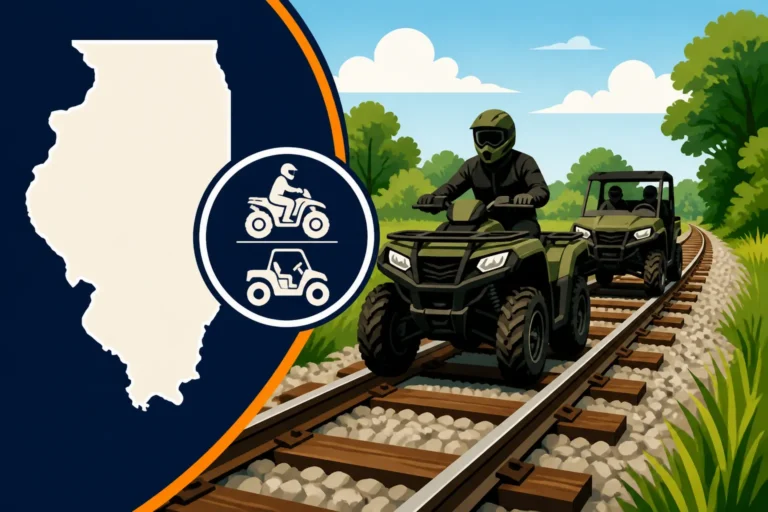
Now, here's where the specific question of state highways comes into play. Even if a local jurisdiction has opened up its roads to ATVs or UTVs, the overarching state law on highways usually remains. However, there's a critical exception: crossing a state highway. This isn't permission to ride on it, but rather to get from one permitted road to another when a state highway forms a barrier.
What Constitutes a Legal Crossing?
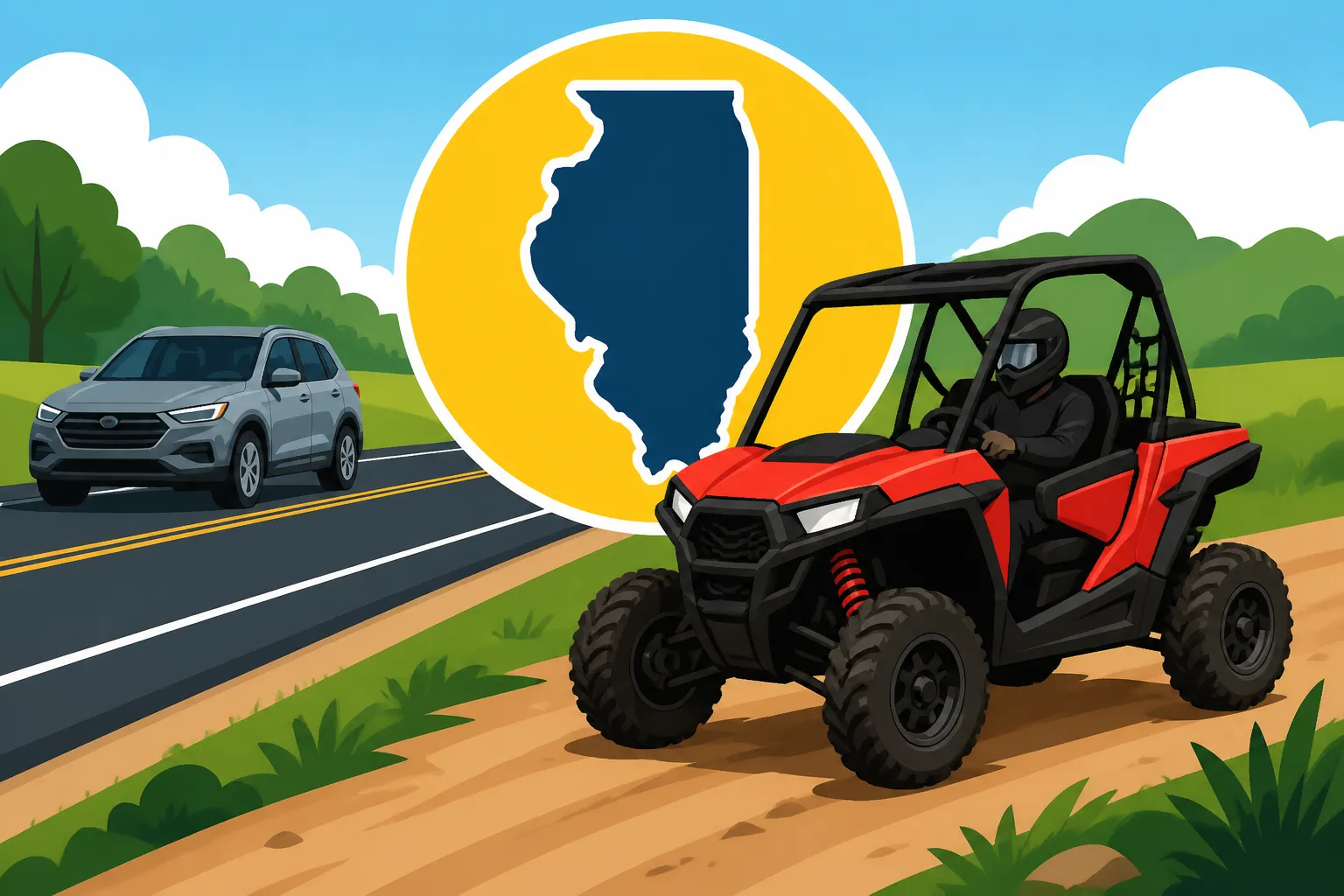
A legal crossing is very specific and limited. It means you are going directly across the state highway, perpendicular to the flow of traffic, to immediately access another road that you are otherwise legally allowed to ride on. Think of it as bridging a gap, not driving a stretch. You cannot travel down the state highway for any distance, even a short one, to reach your next turn. The intent is to minimize the time your off-road machine spends in the active lanes of a high-speed road. This usually means crossing only at an intersection and doing so with extreme caution, treating it much like a pedestrian crossing a busy street, but with a machine.
This exception is designed for practicality, acknowledging that sometimes a state highway is the only geographical barrier between two segments of a legal riding route. It's a privilege, not a right, and it comes with very strict expectations regarding rider behavior and machine readiness. For instance, [State Highways May Be Crossed Only at an Intersection] is a fundamental principle here, emphasizing that this isn't about creating new intersections but using existing, designated ones.
The "Directly Across" Rule
The "directly across" rule is paramount. Imagine you're riding your UTV on a permitted county road that ends at a state highway, and on the other side, another county road continues your route. You can cross the state highway from one county road to the other, moving as straight as possible. You cannot turn left or right and travel along the state highway for any distance. The goal is minimal exposure to highway traffic. This means if your desired route continues a quarter-mile down the state highway on the other side, you cannot take it. You would need to find an alternative route that avoids using the state highway itself as a travel lane, or you'd need to trailer your machine to the next legal access point. This can be a huge frustration for riders trying to connect trails or farm fields, but it's a non-negotiable safety measure.
Equipment You Absolutely Need for a State Highway Crossing
Even for a brief crossing, your ATV or UTV must be equipped to meet certain safety standards to be legally allowed on any public road, including the short distance over a state highway. These aren't suggestions; they are legal requirements designed to ensure you are as visible and predictable as possible to other motorists. Failing to have this equipment can result in a citation, even if you're otherwise riding legally.
Mandatory Lighting and Signaling
First and foremost, your machine needs to be seen and understood. This means proper lighting and signaling.
- Headlights: You must have at least one headlight that emits a white light visible from 500 feet to the front during darkness or when visibility is limited. Most modern ATVs and UTVs come with headlights, but ensure they are in good working order and clean. [Illinois Requires a 500-Foot Headlight] emphasizes the visibility standard.
- Tail Lamps: A red tail lamp visible from 100 feet to the rear is mandatory. Again, check your factory lights.
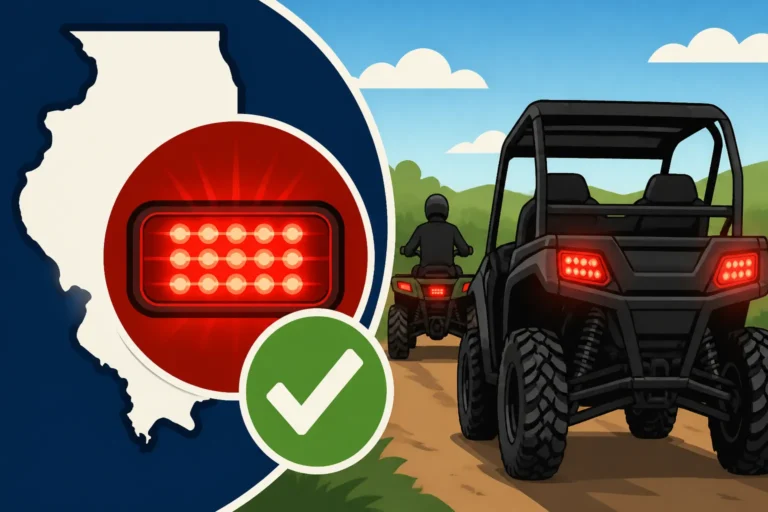
- Brake Lights: These are crucial for signaling your intentions to traffic behind you. They must illuminate when the brakes are applied. [Illinois Requires Brake Lights] is a non-negotiable.
- Turn Signals: While not all ATVs have them from the factory, UTVs often do. For road use, including crossings, you absolutely need turn signals. They must be amber or white to the front and red, amber, or white to the rear. If your machine doesn't have them, you'll need to install an aftermarket kit. Many riders turn to suppliers like SuperATV for their street-legal kits, which often include turn signals, mirrors, and horns. [Illinois Requires Turn Signals] is another critical component.
Visibility Aids and Safety Devices
Beyond lights, other equipment ensures you are visible and identifiable as a slow-moving vehicle.
- Rearview Mirror: You must have at least one mirror that gives you a clear view of the road to the rear for a distance of at least 200 feet. A single left-side mirror is typically sufficient, but many riders opt for a center rearview mirror or both side mirrors for enhanced safety. [Illinois Requires a Rearview Mirror] is a standard piece of equipment for road use.
- Slow-Moving Vehicle Emblem: This is the bright orange triangle with a red border you see on farm equipment. It's designed to warn other drivers that your vehicle will be moving slower than typical road traffic. It must be mounted on the rear of your machine, pointing upwards, and visible from a specific distance. This is absolutely critical for highway crossings where speed differentials are highest. [Illinois Requires a Slow-Moving Vehicle Emblem] is a key safety requirement.
Table of Essential Equipment for State Highway Crossings
To make it easier, here's a quick rundown of what your machine absolutely needs for a legal crossing:
| Equipment Feature | Requirement | Importance |
|---|---|---|
| Headlight | White light, visible 500 ft to front (night/low visibility) | See the road and be seen by oncoming traffic. |
| Tail Lamp | Red light, visible 100 ft to rear (night/low visibility) | Be seen from behind, especially at dusk or dawn. |
| Brake Lights | Red light, illuminates when brakes applied | Signal your deceleration or stop to trailing vehicles. |
| Turn Signals | Front: amber/white; Rear: red/amber/white | Clearly communicate your intent to turn or change direction. |
| Rearview Mirror | Clear view of 200 ft to the rear | Monitor traffic approaching from behind for safe maneuvering. |
| Slow-Moving Vehicle Emblem | Orange triangle with red border, mounted on rear | Alert faster-moving vehicles to your slower speed, preventing rear-end collisions. |
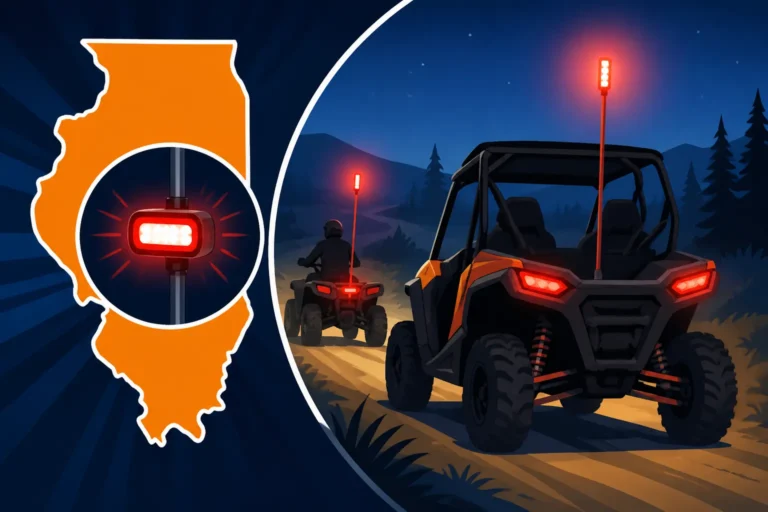
Remember, this is a minimum. Many riders choose to add additional safety features, such as LED light bars for extra visibility, more robust mirrors, or even high-visibility flags, especially if they are frequently near public roads. When considering upgrades for safety and compliance, brands like SuperATV offer a wide array of options designed to help make your machine more visible and street-legal ready.
Navigating the Crossing Itself: Best Practices and Precautions
Once your machine is properly equipped and you're certain you're at a legal intersection, the act of crossing a state highway requires extreme caution and skill. This is where your judgment and defensive riding habits come into play. It's not just about what's legal, but what's safe.
Timing and Visibility: Your Best Allies
Before you even approach the intersection, slow down and assess the situation.
- Look Both Ways, Multiple Times: This isn't just for grade school anymore. Look far down the highway in both directions. Don't just glance; scan thoroughly for approaching vehicles. Consider if there are any blind spots, curves, or hills that might obscure oncoming traffic.
- Gauge Speed and Distance: Estimate the speed of approaching vehicles. A car going 55 or 65 mph covers ground very quickly. Do not attempt a crossing unless you are absolutely sure you have ample time to clear all lanes of travel safely. It's always better to wait for a larger gap in traffic than to rush and put yourself in danger.
- Maximize Your Visibility: Position your machine so other drivers can see you clearly. Turn on your headlights and any auxiliary lights you have. If you're at a stop sign or traffic light, ensure you're not hidden behind a larger vehicle. Wave an arm if you feel it helps signal your presence, but remember your turn signals are the primary communication method.
These are moments when a second of hesitation or misjudgment can have severe consequences. If you are ever in doubt about the safety of a crossing, do not proceed. Wait for an opening, no matter how long it takes, or find an alternate route.
Signaling Intentions and Maintaining Awareness
Communication is key when sharing the road, even briefly.
- Clear Signals: Use your turn signals well in advance to indicate which direction you intend to cross. If you're going straight across, a right or left signal might be confusing; instead, be deliberate with your head turns and body language, and try to make eye contact with any drivers you can. While some UTVs may not have these factory installed, [Illinois Turn Signal Requirements] mean you should have an aftermarket solution installed.
- Constant Situational Awareness: Your focus should be 100% on the highway traffic. Do not check your phone, adjust your gear, or chat with a passenger. Be ready to react immediately. This isn't the time to be distracted by the scenery or your destination. Listen for approaching vehicles you might not see, like semi-trucks whose engine brakes might give you an early warning.
- Anticipate Others: Unfortunately, not all drivers are paying full attention. Assume that other drivers might not see you, especially given the smaller profile of an ATV or UTV compared to a car. Be prepared for sudden stops or accelerations from other vehicles.
Remember that even a perfect crossing still involves inherent risk. While [Illinois Requires a Driver's License] for street-legal operation, and many municipalities require proof of insurance, it's about more than just legal compliance. It’s about exercising maximum prudence every single time. [Illinois Insurance Minimums for Street Use] should be thought of as a baseline, and many riders choose to carry more robust coverage for peace of mind when operating near public roads.
Penalties for Non-Compliance
Operating your ATV or UTV on a state highway, or crossing it without the proper equipment or in a manner inconsistent with state law, can lead to significant penalties. These aren't just minor infractions. You could face fines, court costs, and potentially even impoundment of your machine. A conservation officer or state trooper is well within their rights to stop you and ticket you for violations. [Illinois Penalties for Illegal Street Riding] can be steep, and ignorance of the law is rarely an acceptable defense. Beyond the legal consequences, the risk of a serious accident, with potential injury to yourself, your passengers, or others, is the most severe penalty of all. Always prioritize safety and legal compliance to ensure your rides are enjoyable and free from worry.
Disclaimer
This article is for general informational purposes only and does not constitute professional advice. Laws, prices and regulations vary by location and change over time. Consult a qualified professional for guidance on your specific situation.