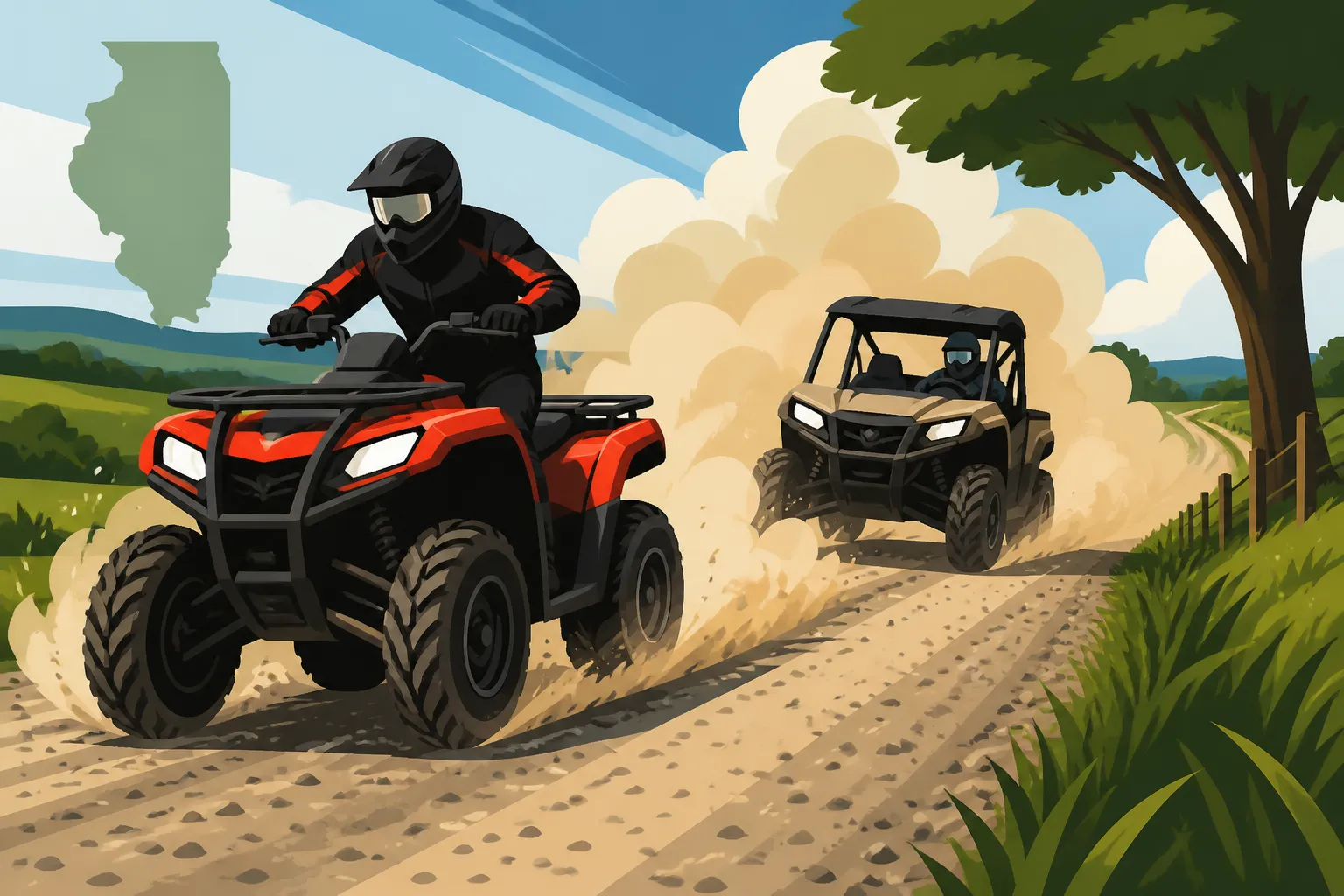
Dust on a Gravel Township Road
There's nothing quite like the freedom of exploring Illinois's rural landscape on your ATV or UTV. You envision open fields, winding trails, and the wind in your hair. But for many riders, that idyllic picture quickly gets covered in a choking cloud of dust, especially when you venture onto those gravel township roads that crisscross the state. It's not just a minor inconvenience; it can be a real safety hazard, a source of conflict with neighbors, and a nightmare for your machine's longevity. This guide is here to tackle that gritty reality head-on, offering insights into why dust is such a problem and practical strategies to minimize its impact so you can enjoy your ride without feeling like you've been caught in a sandstorm.
The Real Annoyance of Dust: Why It's More Than Just a Nuisance
When you hear "dust," you might just think of a minor annoyance, something you brush off your clothes. But on a gravel township road, especially during dry spells, the dust stirred up by your ATV or UTV can be a significant problem, extending far beyond a quick wipe-down. We're talking about real safety concerns, potential health impacts, and the kind of mechanical wear and tear that can prematurely age your beloved machine. It’s a multi-faceted issue that every off-road enthusiast in Illinois needs to understand and address.
First and foremost, let's talk about visibility. Imagine cruising down a country road, enjoying the scenery, only to find yourself engulfed in a thick, opaque cloud of dust. If you're riding with friends, the machine in front of you can quickly disappear, making it incredibly difficult to see their brake lights or anticipate sudden stops. This isn't just an inconvenience; it's a serious hazard that can lead to collisions. For riders on their own, the risk extends to oncoming traffic, farm equipment, or even unexpected wildlife. A cloud of dust reduces your reaction time dramatically, turning a pleasant ride into a high-stakes gamble with safety. When you encounter a [Meeting a Grain Truck on a Narrow Township Road], the dust can make an already tight situation even more perilous.
Beyond immediate safety, dust poses long-term health risks. Breathing in particulate matter, especially the fine silica dust often found on gravel roads, isn't good for your lungs. Prolonged exposure can lead to respiratory issues over time, a concern often overlooked in the thrill of the ride. Think about how much dust gets into your gear, your clothes, and inevitably, into your lungs. It's a silent threat that can accumulate, making dust control not just about courtesy but about personal well-being. Keeping a good quality bandana or dust mask in your gear bag is always a wise move, particularly if you know you'll be hitting unpaved routes.
Then there's the toll it takes on your machine. Fine dust acts like sandpaper, working its way into every nook and cranny. Your air filter, the first line of defense, gets clogged much faster, reducing engine performance and potentially leading to more serious engine damage if not regularly maintained. Dust also infiltrates bearings, bushings, and suspension components, accelerating wear and tear. This means more frequent maintenance, more money spent on replacement parts, and a shorter lifespan for your ATV or UTV. Anyone who's had to replace a set of wheel bearings after a particularly dusty season knows exactly what I mean. Protecting your engine by ensuring proper filtration is paramount, and it’s something often overlooked until problems arise. Neglecting this aspect can lead to costly repairs down the road, literally.
Navigating Local Ordinances and Neighborly Relations on Gravel Roads
Riding your ATV or UTV on Illinois township roads isn't always as simple as just hitting the gas. While some municipalities and counties have passed ordinances allowing off-road vehicles on certain public roads, many others haven't, or they come with specific conditions. And even where it's legal, the dust you kick up can quickly sour relations with local residents, potentially leading to complaints that could jeopardize future riding access. Understanding the intricate dance between local laws, community expectations, and your responsibilities as a rider is crucial for a harmonious and penalty-free experience. This goes far beyond just understanding [Illinois Rules for Riding a Township Road].
First, you absolutely need to know the specific regulations in your area. Illinois law starts by generally prohibiting off-road vehicles on public roads, but it also provides a framework for local governments—townships, villages, and counties—to open their roads to ATVs and UTVs through ordinances or resolutions. This means what's legal in one township might be strictly forbidden in the next. You might find that [Illinois Municipalities That Pass Ordinances] have different rules than [Illinois Counties That Pass Resolutions] or what is decided by [Illinois Townships and Their Authority]. It's not uncommon for these local laws to include stipulations about speed limits, times of day when riding is allowed, and even equipment requirements like rearview mirrors or turn signals. Some may even have specific provisions regarding excessive dust or noise, reflecting the concerns of residents. Ignorance of these laws is no excuse, and a ticket for [Illinois Penalties for Illegal Street Riding] can quickly put a damper on your weekend. Always check with the local township or county clerk's office before you ride a new area.
Even if you're legally permitted to ride, the dust you create can be a major point of contention with residents who live along those gravel roads. Imagine having a window open on a beautiful summer day, only for a plume of dust to coat everything inside your home as a machine passes by. Or think about the farmer trying to keep dust out of their crops or livestock areas. These are real concerns, and they often lead to [Neighbors Who Complain to a Board]. These complaints can put pressure on local officials to revoke or restrict ATV/UTV access, even if you’re riding legally. It’s a delicate balance, and responsible riding plays a huge role in maintaining access for everyone. Showing consideration means everything.
This is where good neighborly relations come into play. If you're frequently riding a particular gravel road, consider ways to minimize your impact. Slowing down when passing homes, especially if they have open windows or children playing outside, can make a huge difference. The slower you go, the less dust you generally kick up. Some riders even make an effort to communicate with residents, letting them know when they plan to ride and asking if there are times that would be less disruptive. It might seem like an extra step, but a little courtesy can go a long way in ensuring continued access to these roads. Remember, it's often the cumulative effect of many riders creating dust that leads to community frustration, not just one isolated incident.
Practical Solutions to Manage Dust from Your ATV or UTV
Dealing with dust isn't just about complaining; it's about proactively taking steps to mitigate its effects. Whether it's through careful riding habits, thoughtful machine modifications, or engaging with your local community, there are many ways to reduce the dust footprint of your ATV or UTV on those Illinois gravel township roads. It requires a bit of planning and perhaps some investment, but the benefits—increased safety, better machine longevity, and happier neighbors—are well worth the effort.
One of the most immediate and impactful solutions is simply adjusting your riding style. Speed is the biggest culprit when it comes to dust production on gravel roads. The faster you go, the more air you move, and the more finely ground material gets lifted into the atmosphere. Consciously slowing down, especially when passing homes, other vehicles, or in areas with poor visibility, dramatically reduces the dust cloud. It’s a simple change, but it makes a world of difference not just for dust but for overall safety. If you're riding in a group, spacing out more can also help dissipate dust between riders, preventing that "dust tunnel" effect where everyone is constantly in a cloud. Consider the impact when you're [Meeting a Grain Truck on a Narrow Township Road]; reducing speed here is critical for everyone's safety and to minimize dust.
Machine modifications can also play a significant role. For UTVs, adding a rear windshield or dust panel can help prevent dust from swirling back into the cab, keeping you and your passengers more comfortable and breathing cleaner air. While it won't stop dust from being created, it will make your personal experience much better. For both ATVs and UTVs, maintaining a pristine air filter is non-negotiable. After a dusty ride, take the time to clean or replace your air filter. Some riders even opt for pre-filters or particle separators, like those offered by SuperATV, which can significantly extend the life of your main air filter by centrifugally removing larger dust particles before they reach the filter housing. These add-ons are particularly effective for riders who frequently traverse dusty conditions. Additionally, [Radiator Screens for Corn Dust] or other fine mesh can help keep larger debris and some dust from clogging your radiator fins, which is crucial for engine cooling.
Another often-overlooked area is tire choice and pressure. Aggressive, open-tread tires tend to kick up more dust than those with a tighter, less aggressive pattern. While you might need certain treads for mud or extreme terrain, for gravel road use, a less aggressive tire can be beneficial. Similarly, tire pressure can impact the amount of dust generated. While going too low can be unsafe and cause damage, finding the optimal pressure for your machine and the terrain can sometimes help reduce the amount of gravel and dust thrown. It’s a bit of experimentation, but worth exploring. Some riders even look into specialized dust-reducing tire compounds or designs, though these are less common for general recreational use.
Finally, don't underestimate the power of community engagement. If dust is a persistent problem on certain township roads, consider reaching out to your local township officials. Sometimes, townships apply dust suppression treatments to gravel roads, especially near residences, using water or calcium chloride products. While these treatments are often for vehicle traffic in general, advocating for responsible ATV/UTV use and explaining your willingness to cooperate can sometimes encourage such measures. Participating in local community meetings or joining an ATV/UTV club can provide a collective voice to address these issues constructively.
| Dust Management Strategy | Description | Benefits | Considerations |
|---|---|---|---|
| Reduce Speed | Slow down, especially near homes or other vehicles. | Significantly less dust, increased safety. | Requires rider discipline, may prolong travel time. |
| Install Rear Windshield/Panel | For UTVs, blocks dust from entering the cab. | Improves rider comfort, cleaner cab environment. | Only for UTVs, doesn't stop dust creation, may affect airflow. |
| Maintain Air Filter | Regularly clean or replace your engine's air filter. | Protects engine, maintains performance. | Requires consistent attention, can be messy. |
| Add Pre-Filter/Particle Separator | Traps larger dust particles before the main filter. | Extends main air filter life, better engine protection. | Upfront cost, may require specific installation, products from brands like SuperATV are available. |
| Optimize Tire Choice/Pressure | Use less aggressive tires; adjust pressure for terrain. | Reduces dust expulsion, potentially better grip. | May compromise performance in other terrains (e.g., mud), requires experimentation. |
| Engage with Local Officials | Advocate for dust suppression treatments on roads. | Long-term road improvement, community goodwill. | Requires time and effort, no guarantee of action, treatments may have environmental impacts. |
Your Machine and Dust: Maintenance and Modifications for a Cleaner Ride
Dust isn't just an external layer; it's an insidious enemy that works its way into the very heart of your ATV or UTV. While prevention is key, understanding how dust affects your machine and what specific maintenance and modifications you can implement is crucial for extending its life and ensuring reliable performance. Think of it as building a stronger defense system for your investment, allowing you to ride those gravel township roads with less worry about internal damage.
The air intake system is perhaps the most vulnerable component to dust. Your engine needs a constant supply of clean air to operate efficiently. The air filter is designed to trap dust and debris, preventing it from entering the combustion chamber where it can cause abrasive wear to pistons, cylinders, and valves. In dusty conditions, a standard air filter can quickly become saturated, restricting airflow and causing your engine to run rich or even overheat. This is why meticulous air filter maintenance is non-negotiable. After every dusty ride, inspect your filter. If it's heavily soiled, clean it thoroughly if it's a reusable type, or replace it if it's disposable. Using quality aftermarket filters, some from brands like SuperATV, designed for better filtration in extreme conditions can also offer an extra layer of protection. Furthermore, considering solutions like [Washing Clay Out of a Radiator and Frame] is important not just for clay, but for the fine dust that builds up and can cause cooling issues.
Beyond the air filter, dust can wreak havoc on moving parts. Bearings, bushings, and pivot points in your suspension and steering systems are all susceptible to dust intrusion. Once dust gets into these areas, it acts as an abrasive, grinding away at metal surfaces and leading to premature wear, looseness, and ultimately, failure. Regularly greasing all accessible zerk fittings is vital. This pushes out old, contaminated grease and replaces it with fresh lubricant, creating a barrier against dust and moisture. Inspecting rubber boots on CV joints and tie rod ends is also critical; a tear allows dust and water to rapidly destroy the joint. If you notice any play or squeaking, it's time for inspection and likely replacement of parts. These small, often overlooked components contribute significantly to the overall lifespan and ride quality of your machine.
Modifications aren't just for performance; many are designed specifically to combat dust. We touched on pre-filters and particle separators for air intakes, which are excellent investments for serious dust riders. Another often-considered modification, especially for UTVs, is a sealed cab system. While not always feasible or desired for an open-air experience, a well-sealed cab with a filtered fresh-air intake can dramatically improve the rider's environment, keeping dust out of your face, eyes, and lungs. While a full cab might be overkill for occasional gravel road use, even simple additions like door seals and a good roof can make a noticeable difference. Beyond comfort, preventing dust from settling on your electronics can also prolong their life, as fine particles can interfere with connections and components over time.
Finally, don't forget about your radiator. While [Radiator Screens for Corn Dust] are excellent for preventing larger debris, fine dust can still accumulate between the cooling fins, insulating them and reducing their efficiency. This can lead to your engine running hotter than it should, especially during demanding rides. Regularly hosing off your radiator (from the inside out, if possible, to push debris through rather than embedding it further) is a simple but effective maintenance step. Compressed air can also be used, but be careful not to bend the delicate fins. Addressing these areas of your machine means you're not just ready for the next gravel road, but you're also protecting your investment for countless rides to come.
Disclaimer
This article is for general informational purposes only and does not constitute professional advice. Laws, prices and regulations vary by location and change over time. Consult a qualified professional for guidance on your specific situation.