Neighbors Who Complain to a Board
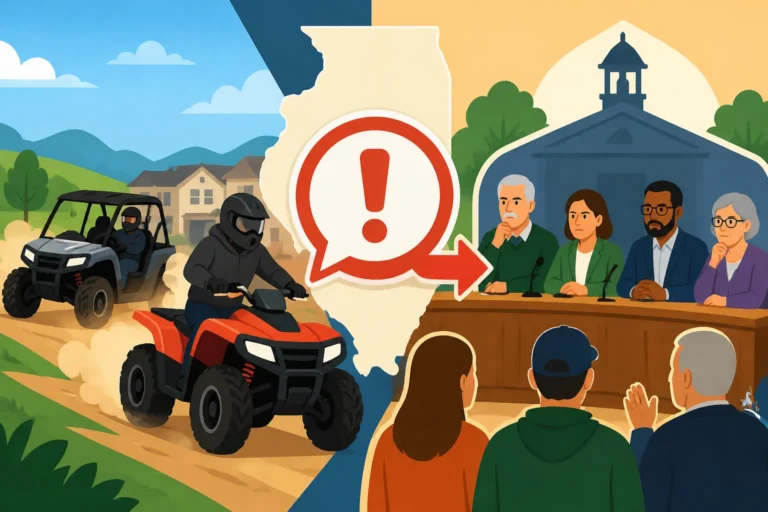
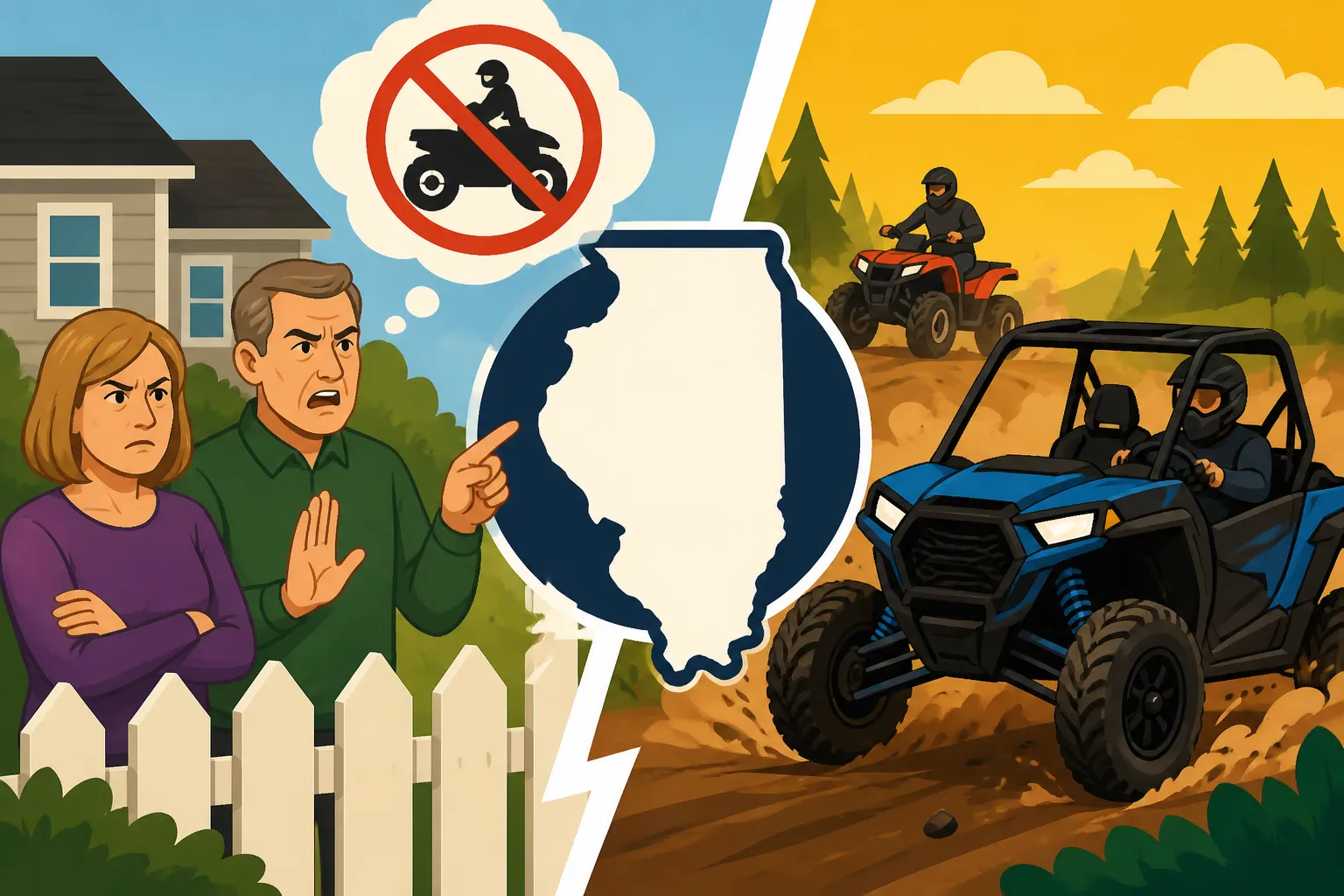
It's incredibly frustrating when all you want to do is enjoy your ATV or UTV, whether it's for work around your property, hitting a local trail, or even just a quick cruise down an allowed street, and then you find yourself facing opposition from neighbors. These disputes can quickly escalate from hushed whispers to official complaints filed with your local village, county, or township board, potentially jeopardizing your riding privileges. This guide is here to help you understand why these complaints arise, how local governments in Illinois handle them, and what proactive steps you can take to protect your passion for off-road machines.
Understanding Why Neighbors Complain
The sound of a powerful engine, the sight of a machine kicking up dust, or simply the presence of an ATV or UTV where some residents feel it doesn't belong can all trigger complaints. It's rarely about a personal vendetta against you; more often, it stems from genuine concerns, even if they're based on misconceptions or lack of understanding. Understanding these underlying reasons is the first step toward finding common ground or, at the very least, preparing a robust defense for your riding rights.
Noise Concerns and Perceived Disturbances
Let's be honest, ATVs and UTVs aren't whisper-quiet machines. While some are designed to be quieter than others, especially utility models, the distinct rumble of an engine can carry, particularly in residential areas or quiet rural settings. Neighbors who aren't accustomed to these sounds might perceive them as excessive noise pollution, even if your machine meets legal sound limits or you're operating it entirely within permitted hours. Aftermarket exhausts, while popular for performance or aesthetic reasons, can exacerbate this issue, turning an already noticeable sound into a full-blown nuisance complaint.
The perception of "loud" is highly subjective. What one rider considers a healthy engine note, another neighbor might hear as a constant, grating disturbance. These concerns often increase in warmer months when windows are open, or people spend more time outdoors. The frequency and duration of your riding also play a huge role. A quick pass by your home is one thing; prolonged idling or repetitive laps can quickly push even tolerant neighbors to their breaking point. This is why you often hear about [Illinois Noise Complaints About Quads] reaching local authorities, driven by residents who simply want peace and quiet in their homes.
Safety Worries and Property Values
For many non-riders, ATVs and UTVs conjure images of reckless driving, high speeds, and potential accidents. They might not differentiate between a responsible adult rider operating a machine safely and the stereotypical image of someone tearing up property or endangering others. Concerns often center around children operating these machines, even if they are properly supervised and meet age requirements. A neighbor seeing a UTV being driven by a teenager might immediately jump to conclusions about safety, regardless of the rider's experience or adherence to rules.
These safety fears can translate into worries about children, pets, or even pedestrians being hit, especially if your riding involves crossing or using public roads, however briefly. Beyond immediate safety, some neighbors might worry about the impact of off-road vehicle activity on their property values. They might believe that the presence of ATVs and UTVs in the area detracts from the quiet, residential, or rural character they value, potentially making their homes less desirable to future buyers. These aren't always rational fears, but they are deeply held and often fuel complaints to local boards.
Dust, Mud, and Property Damage
Another common complaint, particularly in areas with gravel roads or during wet conditions, revolves around the physical impact of riding. ATVs and UTVs can kick up significant amounts of dust, coating nearby homes, vehicles, and landscaping. This isn't just an annoyance; it can be a genuine cleanliness issue, requiring extra washing and maintenance for neighbors. In turn, you might encounter objections like [Dust on a Gravel Township Road] when you ride. When it rains, the issue flips to mud. Tires can track mud onto paved surfaces, driveways, or even into homes, creating another source of friction.
Beyond dust and mud, there can be concerns about actual property damage. While most responsible riders are careful, there's always the potential for a machine to inadvertently stray onto private property, damage a lawn, or contribute to ruts and erosion on shared access roads. Even if no direct damage occurs, the fear of it, or the perception that a road is being degraded by off-road vehicle traffic, can be enough for neighbors to voice their displeasure to a board. These types of complaints often gain traction because they involve tangible impacts that affect multiple households, making them seem less subjective than noise complaints.
Navigating Local Ordinances and Your Rights
Illinois's legal framework for ATVs and UTVs on public roads can be a bit of a maze. What's perfectly fine in one town might lead to a ticket in the next, and this patchwork of rules often creates confusion and leads to neighborly disputes. When a complaint reaches a local board, understanding the specific laws and ordinances in your area is paramount. Ignorance of the law is rarely an excuse, and being well-informed is your best defense.
Illinois Law and Local Authority
It's crucial to start with the foundational understanding that, by default, [Illinois Law Starts by Banning Street Riding] for off-highway vehicles (OHVs) like ATVs and UTVs. The state views these machines primarily as off-road recreational vehicles, not street-legal conveyances. However, Illinois law also includes provisions that grant local units of government—like villages, cities, townships, and counties—the authority to create their own ordinances to permit the use of UTVs (and sometimes ATVs, though less commonly) on specific public roads within their jurisdiction. This means that while the state sets the general prohibition, local elected officials have the power to create exceptions tailored to their community's needs and desires.
This local discretion is why you see such varied rules across Illinois. One village might embrace UTVs as a legitimate mode of transportation for its residents, while a neighboring community might strictly enforce the state's general ban. When a neighbor complains, the board will first look to its own ordinances. If no ordinance exists allowing UTVs on streets, then the state's general ban applies, and the complaint is likely valid. If an ordinance does exist, the board will then evaluate whether your riding complies with all the specifics of that local law. This is a vital distinction, and it highlights why understanding your local government's stance is so important. You can learn more about which entities have this authority in [Illinois Municipalities That Pass Ordinances].
Checking Your Local Village or County Rules
Given the local control over UTV access, your first and most critical step when facing complaints is to determine exactly what the rules are in your specific location. This isn't always as straightforward as it sounds, as not all municipalities advertise their ordinances widely. You'll need to research your village, city, township, or county's official website for their municipal code or ordinances. Look specifically for sections related to "recreational vehicles," "off-highway vehicles," or "utility vehicles" on public roads. If you can't find anything online, a phone call or visit to your local village hall, county clerk's office, or township office is in order. Ask politely for information on [Illinois UTV Street Legal Rules by Town].
Be prepared that some smaller townships or rural counties may not have any specific ordinance, meaning the statewide ban still applies. If an ordinance does exist, read it carefully. Pay close attention to definitions (does it cover ATVs, UTVs, or both?), designated streets (are certain roads or speed limits excluded?), and specific operating conditions. It's not enough to know that you can ride; you need to know how and where. Keep a copy of any relevant ordinance for your records, as this can be a crucial document if you need to defend your riding practices before a board.
Common Ordinance Requirements
Local ordinances that permit ATV or UTV use on public roads almost always come with a laundry list of requirements designed to ensure safety and minimize nuisance. These aren't arbitrary rules; they're often put in place specifically to address the kinds of complaints that neighbors raise. Common requirements you'll encounter include:
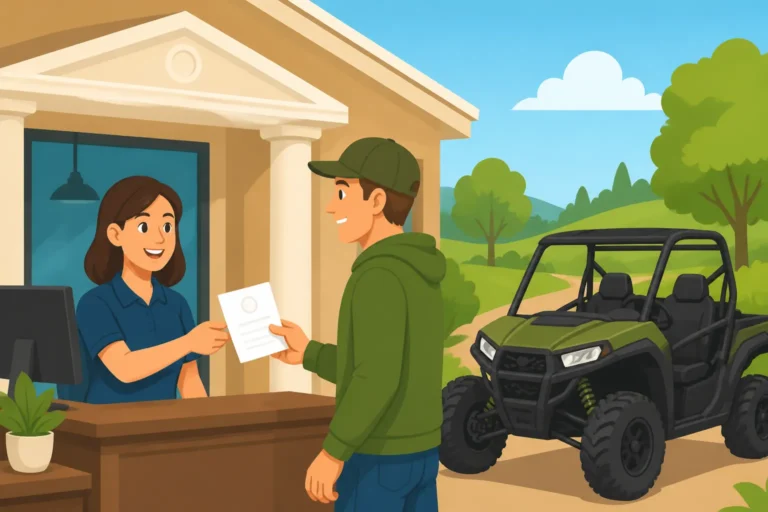
- Permits and Fees: Many towns require you to obtain an annual permit from the village hall, often for a fee. This helps the municipality track who is riding and ensures riders are aware of the rules. For example, [Illinois Permit Fees Set by a Town] can vary widely, from a small administrative charge to a more substantial annual fee.
- Equipment Standards: Your machine will likely need specific street-legal equipment, even if it's not a highway-legal vehicle. This can include working headlights, taillights, brake lights, turn signals, a rearview mirror, and a slow-moving vehicle (SMV) emblem. Some ordinances might even specify tire types or require spark arrestors. The [Illinois Non-Highway Vehicle Equipment List] gives a good overview of what's typically expected. Aftermarket parts from companies like SuperATV can often help you meet these equipment requirements, providing necessary mirrors, turn signal kits, or lighting upgrades to ensure compliance.
- Time and Place Restrictions: Ordinances often specify hours of operation (e.g., no riding after dark or before certain morning hours), speed limits (usually limiting UTVs to roads with posted speed limits of 35 mph or less), and may even designate specific roads where UTVs are not allowed (e.g., state highways or busy arterial roads).
- Insurance and Licensing: Proof of liability insurance and a valid driver's license are almost universally required for anyone operating an OHV on public roads. These requirements address safety and financial responsibility concerns from the community.
If you are riding on authorized roads, but fail to meet any of these specific requirements, you could still be in violation of the ordinance, giving a neighbor's complaint more weight.
Proactive Strategies to Prevent Complaints
While you can't control what your neighbors think or feel, you can control your own actions and how you present yourself as a responsible ATV or UTV owner. Taking proactive steps to address potential issues before they become formal complaints can go a long way in fostering good relationships within your community and protecting your right to ride. Think of it as investing in your riding future by being a considerate member of your neighborhood.
Being a Good Neighbor: Communication and Courtesy
Often, neighbor complaints stem from a feeling of being unheard or disregarded. A little proactive communication can make a huge difference. If you know you'll be riding frequently, especially on a route that passes by homes, consider having a friendly chat with your closest neighbors. Explain what you're doing, assure them you'll be mindful of noise, and let them know you're open to feedback. This simple gesture can humanize you and your machine, turning a potential antagonist into an understanding acquaintance.
Beyond direct communication, consistent courteous riding habits are key. This means no excessive speeding on residential streets, avoiding loud acceleration or "blipping" the throttle, especially near homes, and adhering strictly to any posted speed limits or common-sense slow zones. Be mindful of dust on dry days and mud on wet ones. If you're on a gravel road, slow down when passing houses to minimize kicking up dust. Acknowledging pedestrians, cyclists, or other vehicles with a friendly wave goes a long way. Remember, you're not just representing yourself, but all ATV and UTV riders in your community. Every act of courtesy chips away at negative stereotypes.
Equipment Modifications for Quieter Operation
Sometimes, the machine itself is a significant contributor to complaints, even if it's legally compliant. While you might love the roar of your engine, your neighbors might not. Consider modifications that can reduce noise levels without sacrificing performance too much. A stock exhaust system is usually the quietest option, but if you have an aftermarket exhaust that's particularly loud, researching quieter alternatives or adding a silencer insert could be a wise investment.
Beyond noise, consider other modifications that enhance safety and reduce nuisance. Investing in good quality fenders and mud flaps can help contain mud and debris, especially if you're frequently riding on wet or dusty roads. Proper lighting and mirrors, which might be required by local ordinance anyway, also contribute to perceived safety. Even something as simple as a clear horn or a "quiet mode" on newer UTVs can be utilized to minimize disturbance. Many companies, like SuperATV, offer a range of accessories designed to improve safety, reduce environmental impact, and help riders comply with local regulations, from robust windshields that keep dust down to quiet exhaust systems.
Adhering Strictly to Local Rules
This point cannot be stressed enough: if your local government has an ordinance allowing ATVs or UTVs on public roads, you must know every detail of it and adhere to it without exception. Any deviation, no matter how minor, provides ammunition for a neighbor's complaint and makes your position much harder to defend. This means:
- Operating only on approved roads: Don't take shortcuts through prohibited areas or venture onto streets that are explicitly off-limits.
- Respecting speed limits: Even if your machine can go faster, stick to the posted limits, especially in residential zones.
- Observing hours of operation: If the ordinance says no riding after 9 PM, put your machine away at 8:59 PM.
- Ensuring proper equipment: Double-check that all your required lights, mirrors, and other safety gear are functional before every ride. This might involve an [Illinois Equipment Inspections by a Village] before you even get a permit.
- Carrying all required documentation: Always have your permit, insurance card, and driver's license with you when riding on public roads.
Being a model citizen on your machine demonstrates respect for your community and significantly weakens any neighbor's claim that you are a nuisance or a safety hazard. If you are consistently following all the rules, it becomes much harder for a board to side against you, even in the face of persistent complaints.
What to Do When Neighbors Complain to a Board
Despite your best efforts to be a good neighbor and follow all the rules, sometimes complaints still arise. When neighbors take their grievances to a local board—whether it's the village board, county commission, or township trustees—it's crucial to take the situation seriously. Panicking or becoming defensive won't help; instead, a calm, informed, and prepared approach is your best strategy.
Attending Board Meetings and Understanding the Process
When a complaint is filed, the local board will typically add it to their agenda for discussion during a public meeting. Your first step should be to find out when this meeting is and plan to attend. Most local governments publish their meeting agendas in advance on their websites or at the municipal building. Attending these meetings offers several benefits:
- Hearing the complaints directly: You can listen to your neighbors' concerns firsthand, which might give you insight into specific issues you can address.
- Understanding the board's perspective: You'll see how the board members react to the complaints and what questions they ask. This can indicate their general leaning on the issue.
- Having a chance to speak (if allowed): Many public meetings have a "public comment" or "citizen remarks" section where you might be able to offer your perspective. If you do speak, be respectful, factual, and concise. Avoid emotional outbursts or personal attacks. Focus on how you comply with ordinances and are a responsible rider. For specific guidance, review [Speaking at a Board Meeting About UTV Access].
Boards typically follow established procedures for handling complaints. They may gather information, consult with legal counsel, or even schedule a site visit. Understanding [How a Village Board Votes to Allow UTVs] (or disallow them) will help you anticipate the process. Their goal is usually to find a solution that balances the rights and concerns of all residents. This might mean stricter enforcement, amending an existing ordinance, or even, in rare cases, repealing an ordinance that allows OHV use. Being present and engaged shows you are serious about the issue and willing to be part of a solution.
Documenting Your Riding Practices
Should complaints escalate, having a clear record of your riding habits and machine maintenance can be invaluable. This isn't about being paranoid; it's about having objective evidence to counter subjective complaints. Consider keeping a log that includes:
- Dates and times of rides: Note when you ride, especially if you're careful to stay within permitted hours.
- Routes taken: Map out your typical routes to show you're not venturing into prohibited areas.
- Maintenance records: Document any modifications you've made (e.g., quieter exhaust) and routine maintenance, especially if it relates to keeping your machine in good working order and within sound limits.
- Photos/videos: If possible, take pictures or short videos of your machine demonstrating compliance (e.g., working lights, proper permit decal placement) or even showing road conditions that might contribute to dust (e.g., very dry gravel).
- Copies of permits and insurance: Always have proof that you're legally permitted to operate your machine on the road.
This documentation allows you to provide concrete facts to the board, rather than just your word against a neighbor's. It demonstrates responsibility and can quickly dismantle claims that you are reckless or disregard local rules. For example, if a neighbor claims you ride at all hours, your log can show you only ride between 10 AM and 4 PM. If they claim your machine is excessively loud, a record of a stock exhaust or recent muffler service can be presented.
Seeking Community Support and Rider Advocacy
You're likely not the only ATV or UTV owner in your area, and you might not be the only one affected by these complaints. Building a network of like-minded riders can turn individual complaints into a collective voice, which often carries more weight with local boards. Reach out to other riders in your community, perhaps through local online groups or word-of-mouth. Discuss common concerns and strategies.
Consider forming a local rider advocacy group or attending meetings together. A unified front can demonstrate to the board that this isn't just one person causing trouble, but a community of responsible riders who wish to enjoy their hobby lawfully. This collective action can also facilitate sharing information about local ordinances, best practices, and even coordinating efforts for community outreach, such as organizing a clean-up day or a charity ride that positions riders in a positive light. When a board sees a group of organized, responsible citizens, they are far more likely to engage in constructive dialogue than if they only hear isolated complaints and individual defenses.
Summary of Best Practices for Illinois ATV/UTV Owners
Navigating neighbor complaints and local boards as an ATV or UTV owner in Illinois requires a combination of awareness, responsibility, and proactive engagement. The path to peaceful coexistence with your neighbors and local government hinges on understanding the rules, anticipating common grievances, and demonstrating a commitment to safe and respectful riding.
- Know Your Local Laws: Do your homework. Find out exactly what your village, city, township, or county says about ATV/UTV use on public roads. The general state law bans street riding, but local ordinances can create exceptions.
- Be a Model Rider: Adhere strictly to speed limits, hours of operation, and any designated routes. Drive courteously and responsibly, recognizing that your actions reflect on all riders.
- Maintain Your Machine: Ensure your ATV or UTV is well-maintained, meets all equipment requirements (lights, mirrors, etc.), and consider modifications to reduce noise if it's a concern in your area. Companies like SuperATV offer a range of products to help with compliance and noise reduction.
- Communicate with Neighbors: A friendly conversation can prevent many complaints. Be open to feedback and show that you're willing to be a considerate member of the community.
- Document Everything: Keep records of your riding times, routes, and any maintenance or modifications. This provides objective evidence if you need to defend your practices before a board.
- Engage with Your Local Board: Attend meetings, understand the process, and present your case calmly and factually. A united front with other local riders can be highly effective.
By following these best practices, you increase your chances of resolving neighborly disputes amicably and ensuring your right to enjoy your ATV or UTV in Illinois remains secure.
Disclaimer
This article is for general informational purposes only and does not constitute professional advice. Laws, prices and regulations vary by location and change over time. Consult a qualified professional for guidance on your specific situation.