Illinois Roads Under Two Jurisdictions
It's incredibly frustrating, isn't it? You've got your UTV all set up, ready to hit the local roads, only to find yourself staring at a map wondering if the stretch of pavement ahead is governed by the village, the county, or both. The truth is, navigating off-highway vehicle (OHV) laws in Illinois can feel like a bureaucratic maze, especially when a single road or intersection falls under the watchful eye of two or even three different governmental jurisdictions. This guide is here to shed some light on these complex scenarios, helping you understand how to ride legally and confidently when Illinois roads are under two jurisdictions.
Understanding Illinois's Multi-Layered Road System
Illinois, like most states, operates with a hierarchical and sometimes overlapping system for its public roads. This isn't just a fun fact for civics class; it has very real implications for where and how you can ride your ATV or UTV. When a road is under the authority of two different government bodies, it means two sets of rules could potentially apply, or, more often, two sets of approvals are needed before you can even think about driving your off-road machine on it.
State, County, Township, and Municipal Roads
Let's break down the basic layers first. At the top, you have state highways, maintained by the Illinois Department of Transportation (IDOT). These are generally off-limits for ATVs and UTVs, except for very specific crossings. Below that, you have county roads, managed by the individual county highway departments. Then there are township roads, under the jurisdiction of township road commissioners, and finally, municipal streets within cities, towns, and villages, managed by those local governments. Each of these layers has the potential to set its own rules regarding the use of OHVs on their roads. For example, a county might pass a resolution allowing UTVs on certain [Illinois Rules for Riding a County Road], while a neighboring village might pass an [Illinois Rules for Riding a Village Street] with entirely different stipulations for the same types of machines.
The general hierarchy often implies different levels of traffic volume, maintenance standards, and regulatory scrutiny. A quiet township road might be seen as less hazardous for UTV use than a bustling county artery. However, this perception doesn't automatically grant access. Every single stretch of public road you intend to ride on must be explicitly opened to OHV use by the specific government entity responsible for it. This isn't a "permission by absence of prohibition" situation; it's the opposite. The state law starts by banning street riding, and then local governments can carve out exceptions.
The Challenge of Overlapping Authority
Here's where it gets truly tricky for off-road enthusiasts: what happens when a road segment literally crosses a boundary between two jurisdictions? Imagine a county road that suddenly becomes a village street as you enter town, or a township road that runs along the boundary of two different townships. In Illinois, these situations are common, especially in rural and suburban areas. When a road is under two jurisdictions, it means that for your ATV or UTV to be legally operated on that specific segment, both governmental bodies must have an ordinance or resolution in place allowing such use. It’s not enough for just one of them to say yes; if the other says no, or simply hasn’t addressed it, you’re out of luck.
This dual oversight can create a lot of headaches. Riders might assume that because they're on a county road that has been "opened" to UTVs, they're good to go. But if that county road briefly dips into a village that hasn't passed its own enabling ordinance, you could find yourself in violation without even realizing it. The line between jurisdictions isn't always marked clearly, and a friendly wave from a farmer doesn't substitute for legal permission. Understanding this concept is crucial because ignorance of the law is never an excuse, and fines for illegal street riding can quickly add up.
When Local Ordinances Collide or Coincide
The dream scenario for UTV and ATV riders is clear, consistent rules across all local governments. The reality, however, is often a patchwork of ordinances that can sometimes feel like they're working against each other, or at least failing to work together. This creates specific challenges that riders need to be acutely aware of.
The Need for Agreement from All Parties
When a road falls under the authority of two separate governmental bodies—for instance, a road that forms the boundary between a village and a township, or a county road that becomes a village street at the municipal limits—the rules are very clear: both jurisdictions must have an ordinance or resolution in place specifically permitting OHV use. It's not a matter of one jurisdiction trumping the other; it's about mutual agreement. If [Illinois Townships and Their Authority] allow UTVs on a road, but the [Illinois Municipalities That Pass Ordinances] it borders do not, then that specific stretch of road cannot be legally ridden by your off-road machine. This is a common pitfall for riders who might diligently research one set of rules but overlook the second, equally important set.
Consider a rider approaching a small town on a designated county road. The county passed a resolution allowing UTVs on its roadways. But as the rider reaches the "Welcome to Pleasantville" sign, the road transitions from county jurisdiction to village jurisdiction. If Pleasantville hasn't passed its own [Illinois Rules for Riding a Village Street] specifically opening up its roads to UTVs, then the rider is now illegally operating their machine, even though they were perfectly legal just moments before. This often means carefully planning your routes, knowing exactly where jurisdictional lines are drawn, and being prepared to detour or trailer your machine if the continuity of legal access breaks down.
Navigating Conflicting Rules
Even if both jurisdictions agree to allow UTVs, you might run into another perplexing problem: conflicting requirements. One county might mandate certain safety equipment, while a township on the other side of a shared road might have slightly different standards. For example, a [Illinois Counties That Pass Resolutions] might require only a slow-moving vehicle emblem and mirrors, while the adjacent village might demand additional items like [Illinois Turn Signal Requirements] and specific headlight visibility. These nuances can make it a nightmare for riders to ensure they are fully compliant at all times.
You might find yourself needing to meet the higher standard of all jurisdictions you intend to cross. If one village requires a full set of turn signals and brake lights, and the county only requires a slow-moving vehicle emblem, you're best served by having the full lighting package on your UTV. This means outfitting your machine for the "most restrictive" set of rules you might encounter. Companies like SuperATV offer a range of aftermarket kits, from full street-legal packages to individual components like mirrors and turn signals, that can help you meet these varying demands, ensuring your machine is ready for whatever jurisdiction you roll into. It’s a proactive approach that saves you the stress (and potential expense) of a roadside stop and subsequent citation.
Practical Steps for Riders: Researching Road Status
Given the intricate web of jurisdictions and ordinances, doing your homework before you head out is not just recommended—it's essential. Relying on assumptions or hearsay can lead to costly tickets and potential impoundment of your machine. A little bit of legwork upfront can save you a lot of grief down the road.
Engaging with Local Government Offices
The most reliable way to figure out the legal status of a road is to go straight to the source: the local government offices. This means contacting the village hall, county clerk's office, or township road commissioner for the specific areas you plan to ride. Don't be shy! These offices are there to serve the public, and they often get questions about ATV and UTV access. When you call or visit, be specific about the roads you're interested in. Ask:
- "Has your [Illinois Rules for Riding a Village Street] or resolution been passed to allow ATVs/UTVs on public roads?"
- "If so, which specific roads are open, and are there any restrictions (e.g., speed limits, time of day, equipment requirements)?"
- "If the road borders another jurisdiction, has there been an intergovernmental agreement or a similar ordinance passed by both parties?"
- "Where can I get a copy of the specific ordinance or resolution?"
It's always a good idea to get answers in writing if possible, or at least note down the name of the person you spoke with and the date. This kind of diligent inquiry ensures you have accurate information and can help clarify any ambiguities. Remember, the road commissioner for a township might have a different understanding of the law than a village clerk, so confirming with all relevant parties is key to avoiding an [Illinois Penalties for Illegal Street Riding].
Utilizing Online Resources and Maps
Many Illinois counties, cities, and townships now publish their ordinances and resolutions online. A quick search for "[Your Village Name] UTV ordinance" or "[Your County Name] OHV resolution" can often yield a wealth of information. However, a word of caution: make sure the information is current. Ordinances can be amended or repealed, so always check for the most recent version. Some local governments even provide maps detailing which roads are open to OHVs, but these are still relatively rare.
Another valuable tool is a good mapping application. While these won't tell you the legal status of a road, they can help you identify jurisdictional boundaries. By overlaying property lines or municipal limits on a map, you can get a clearer picture of where one jurisdiction ends and another begins. This becomes particularly useful when you're planning a route and need to avoid sections where access is prohibited. While I can't recommend specific apps, you can find many online and through your device's app store. Just remember, these are aids for navigation and planning, not definitive legal declarations. Always double-check with the local authorities.
Common Scenarios and Their Implications for Riders
Understanding the general principles of multi-jurisdictional roads is one thing, but seeing how they play out in real-world riding scenarios is another. Let's look at a couple of common situations that often trip up riders in Illinois.
Crossing Jurisdictional Borders
This is perhaps the most frequent scenario where two jurisdictions come into play. You’re riding on a county road that has been legally opened for UTVs through an [Illinois Counties That Pass Resolutions]. You’re having a great time, enjoying the scenery, but then you see a sign indicating you're entering a small village. What happens next?
The critical implication here is that the county's permission typically ends at its border. Once you cross into the village limits, you are now subject to the village's ordinances. If the village has not passed its own ordinance allowing UTVs on its streets (an [Illinois Rules for Riding a Village Street]), then you are immediately operating your machine illegally. This can be a rude awakening for riders who assume state or county permission extends universally. The problem is compounded if the village has no interest in allowing UTVs, or perhaps hasn't even considered the issue. In such cases, your ride must end at the village line, requiring you to trailer your machine through or around the village. This means careful route planning and knowing exactly which parts of your proposed journey are covered by appropriate local laws. If a significant part of your planned route takes you through multiple municipalities, you might need to consult [Illinois UTV Street Legal Rules by Town] for each one.
Roads Maintained by One, Owned by Another
Another nuanced situation arises when a road is physically maintained by one governmental entity, but its regulatory authority, or "ownership," rests with another. This often occurs with township roads that might receive some maintenance assistance from the county, or vice-versa. While a county crew might be patching potholes on a township road, that doesn't necessarily transfer the regulatory power for OHV use to the county. The township might still be the sole authority empowered to open that road to ATVs and UTVs.
This distinction can be incredibly confusing for riders. You might see a county highway department truck working on a particular road and mistakenly assume it's a county road, therefore falling under county OHV regulations. However, if that road is officially a township road, then only the [Illinois Townships and Their Authority] can authorize UTV or ATV use on it. This highlights the importance of not just looking at who maintains the road, but understanding the official designation and jurisdiction. A quick call to the township clerk or road commissioner, as mentioned earlier, is the safest bet to clarify these distinctions and avoid any missteps.
Equipping Your Machine for Multi-Jurisdictional Riding
Since you might encounter varying requirements as you traverse different jurisdictions, equipping your ATV or UTV with the necessary safety gear is paramount. It’s not just about compliance; it’s about safety and peace of mind. Thinking ahead can save you from being turned around or ticketed.
Meeting the Strictest Common Denominator
When you're dealing with multiple jurisdictions, the smartest approach is to outfit your machine to meet the most stringent requirements you might encounter. If one village requires [Illinois Turn Signal Requirements], [Illinois Mirror Requirements for an ATV], and a [Illinois Slow-Moving Vehicle Emblem Rules], while an adjacent county only requires the emblem, you should equip your UTV with all of those items. It's better to be over-prepared than under-prepared. This philosophy ensures that no matter which village street, county road, or township lane you find yourself on (assuming it's legally open), your machine is compliant.
Think about it this way: installing a complete street-legal kit from a company like SuperATV, which might include mirrors, turn signals, a horn, and a license plate bracket, can cover a wide array of potential municipal and county requirements. These kits are designed to bring off-road machines into compliance with basic road-use standards, making your life much easier. Investing in these upgrades not only protects you legally but also enhances your safety, making your machine more visible and maneuverable among other road users. Don't forget about [Illinois Headlight Requirements for an ATV] and brake lights; these are often standard but vary in required visibility.
Documentation and Proof of Compliance
Having your machine properly equipped is only half the battle. You also need to be able to prove its compliance, as well as your right to operate it, to any law enforcement officer who might stop you. This means keeping all your essential documents readily accessible, preferably in a waterproof bag or container on your machine.
Your documentation should include:
- Proof of Insurance: [Illinois Insurance Proof for Street Use] is often mandatory for street-legal OHVs. Keep your insurance card or policy declaration handy.
- Permits and Licenses: Any local permits issued by villages or counties, along with your driver's license (which is required for street use in Illinois), should be on hand.
- Copies of Ordinances: This might seem extreme, but having a printout or digital copy of the specific ordinances from the jurisdictions you are riding in can be incredibly helpful. If an officer is unsure about a particular rule, being able to point to the relevant section of the ordinance can clarify the situation quickly.
- Title and Registration (if applicable): While Illinois is a "title only" state for ATVs, proof of ownership is always good to have.
Being prepared with proper documentation shows that you are a responsible rider who has done their due diligence. It can de-escalate potential issues and help you continue your ride without unnecessary delays or citations.
| Item to Verify | Description for Riders | How to Verify |
|---|---|---|
| Jurisdiction | Identify which governmental body (village, township, county) governs the specific road segment. | Check online maps, county plat books, or contact local government offices. |
| Ordinance Status | Confirm that all relevant jurisdictions have explicitly passed an ordinance or resolution allowing OHV use on that road. | Call village hall, township commissioner, or county clerk. Get written confirmation if possible. |
| Specific Roads Open | Ensure the particular road you intend to ride is listed in the approved ordinance, not just a general permission for "all roads." | Review the ordinance document or ask specific questions during inquiry calls. |
| Equipment Requirements | Understand all mandatory equipment (mirrors, turn signals, slow-moving vehicle emblem, headlights, etc.) for each jurisdiction. | Compare ordinances from all relevant parties; equip for the strictest requirement. |
| Permit/License Needs | Check if special local permits are required in addition to your Illinois driver's license. | Inquire with local government offices about permit fees and application processes. |
| Time/Day Restrictions | Some ordinances limit OHV use to certain hours or days of the week. | Read the full ordinance carefully for any operational constraints. |
| Speed Limits | Be aware of any specific speed limits for OHVs, which may differ from posted vehicle speed limits. | The ordinance will specify; assume standard speed limits apply unless otherwise stated. |
Advocating for Clearer UTV/ATV Road Access
The current landscape of UTV and ATV road access in Illinois is fragmented, which makes it challenging for riders to enjoy their machines legally and without constant worry. While navigating existing rules is crucial, an equally important aspect is working towards a clearer, more consistent future for all riders.
Working with Local Officials and Riding Clubs
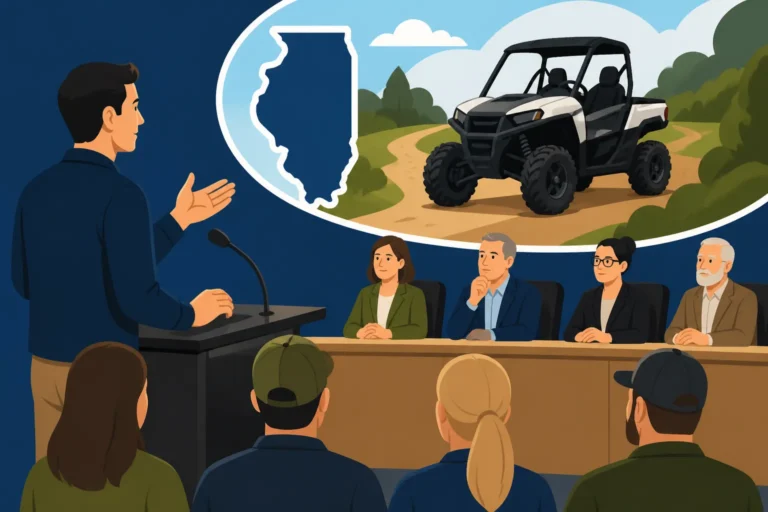
One of the most effective ways to improve the situation is through active engagement with your local government and by joining or forming riding clubs. Local officials often make decisions based on community input and what they perceive as public interest. If they hear from organized groups of responsible riders, they are more likely to consider passing or amending ordinances to allow OHV access. Attend village board meetings, county board meetings, and township meetings when these topics are on the agenda. Present well-researched arguments about the economic benefits, recreational opportunities, and safe riding practices your group promotes.
Riding clubs can pool resources, share knowledge about local laws, and present a unified voice. These groups can also educate new riders on proper etiquette and the importance of compliance, fostering a positive image for the OHV community. For example, if a [Illinois Village Board Votes to Allow UTVs], it's often because a dedicated group of locals made a compelling case. By demonstrating a commitment to safety and adherence to rules, clubs can help build trust with local authorities and pave the way for more widespread and clearer access.
The Long-Term Goal: Statewide Clarity
While local efforts are vital, many riders dream of a more uniform, statewide approach to OHV road access. The current system, where [Illinois Law Starts by Banning Street Riding] and then allows local governments to permit exceptions, creates immense complexity. A state-level framework that provides clearer guidelines, perhaps categorizing certain types of roads uniformly across counties and townships, would greatly simplify things for riders. This wouldn't necessarily mean opening every road, but rather creating a more predictable and consistent regulatory environment.
Achieving statewide clarity is a long-term goal that requires continuous advocacy at both local and state levels. Supporting organizations that lobby for OHV rights, participating in surveys, and making your voice heard to state representatives are all ways to contribute. Imagine a future where you don't need to consult a dozen different ordinances to plan a single ride, because the overarching state rules provide a clear, easy-to-understand roadmap. While that future might be some time off, every rider who educates themselves and advocates responsibly helps move the needle closer to that ideal.
Disclaimer
This article is for general informational purposes only and does not constitute professional advice. Laws, prices and regulations vary by location and change over time. Consult a qualified professional for guidance on your specific situation.