Illinois Rules for Riding a County Road
Riding your ATV or UTV on Illinois county roads can feel like navigating a legal maze, leaving many riders scratching their heads and worried about getting a ticket. You just want to enjoy the open air and connect with the landscape, but the rules often feel murky and inconsistent from one area to the next. It’s incredibly frustrating when you’re trying to be a responsible rider but the information isn't clear. This guide is designed to cut through the confusion and explain the specific rules for operating your off-road machine on Illinois county roads, helping you understand where you can legally ride and what you need to do to stay compliant.
The Default Ban and Local Authority on Illinois Roads
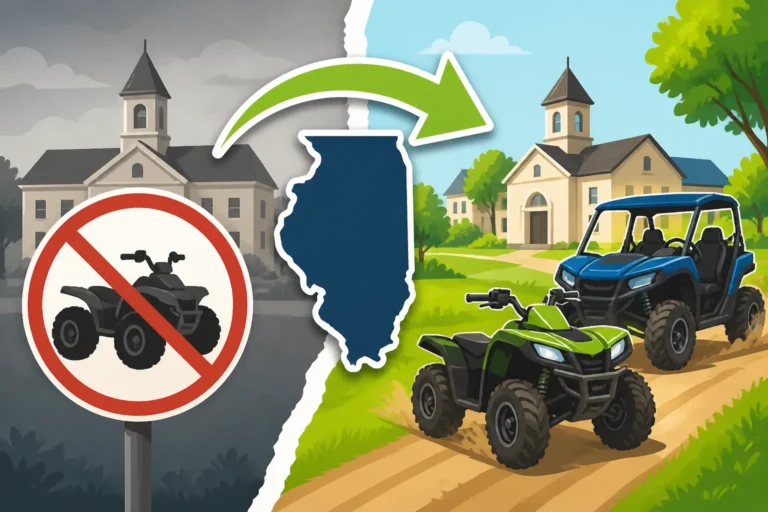
Let's get straight to the heart of the matter: Illinois law starts by generally prohibiting ATVs and UTVs from being driven on public roads. That's right, the default position is "no." This can be a real shock to new riders or those moving from states with more permissive laws. You might see others riding on rural county roads and assume it’s always okay, but that’s a dangerous assumption to make without understanding the local nuances. This statewide ban means that unless a specific unit of local government has passed an ordinance or resolution to allow it, your off-road machine is not permitted on public roads, including county roads. It’s a classic case of needing explicit permission, rather than assuming it's allowed until told otherwise.
The Foundation: Illinois Law Starts by Banning Street Riding
The Illinois Vehicle Code lays out the basic framework, and for off-highway vehicles (OHVs) like ATVs and UTVs, it essentially says they are not designed for, and therefore generally not allowed on, public roads. This initial prohibition is in place for safety reasons, as these machines typically lack the full suite of safety features, such as crumple zones, advanced braking systems, and comprehensive lighting, that are standard on street-legal cars and trucks. For many riders, this can be incredibly vexing. You might own a perfectly capable side-by-side that feels safer than some smaller cars, but the law makes a blanket distinction. It's not about your specific machine, but about the category it falls into according to state statute.
The reason for this overarching ban often comes down to the design intent of these vehicles. ATVs and UTVs are built for off-road terrain, where they excel. Their suspensions, tire choices, and handling characteristics are optimized for dirt, mud, and uneven ground, not for paved or graveled public roadways with other traffic. When you consider the varied landscape of Illinois, from bustling city streets to quiet rural routes, a universal ban makes a degree of sense from a legislative perspective, even if it feels restrictive to the individual rider. This is why the power to override this ban rests with local authorities who can assess their specific road conditions and traffic volumes.
Who Has the Authority to Open County Roads to OHVs?
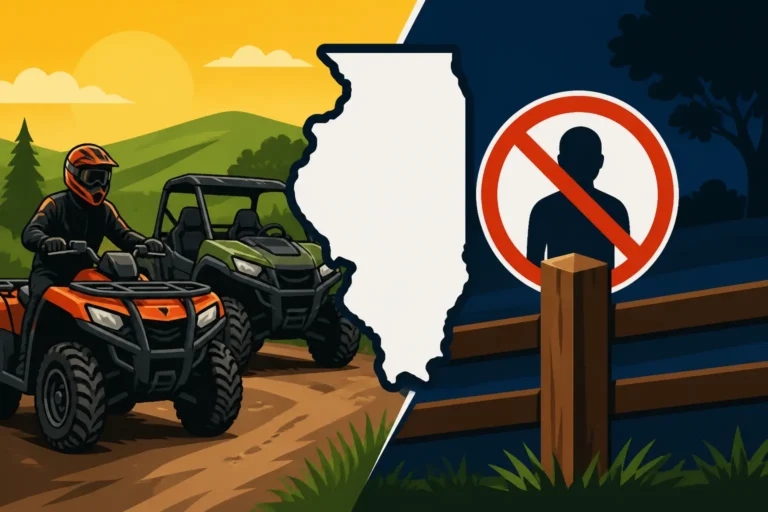
While the state sets the initial ban, it also provides a pathway for local governments to create exceptions. This means that counties, townships, and municipalities have the power to pass their own ordinances or resolutions allowing the operation of ATVs and UTVs on specific public roads within their jurisdiction. It's crucial to understand that not all local governments choose to do this, and even those that do may set strict conditions. [Which Units of Government Can Open a Road] covers this in more detail. For county roads, the authority rests with the county board.
This decentralized approach means that the rules can vary significantly from one county line to the next. You might be perfectly legal riding on a county road in one part of Illinois, only to cross into an adjacent county and instantly be in violation of the law. This patchwork of regulations is one of the biggest headaches for riders, especially those who travel across different counties. It necessitates diligent research on your part to know the specific rules for every area you plan to ride through. Don't assume that because your neighbor's county allows it, yours does too.
Distinguishing County Roads from Township Roads
Another common point of confusion for riders is differentiating between county roads and township roads. Both are typically rural routes, often gravel or paved, and they can look very similar. However, the distinction is critical because the authority to permit OHV use rests with the specific governmental body that maintains them. County roads are maintained by the county highway department, and their use is governed by the county board's resolutions. Township roads, on the other hand, fall under the jurisdiction of the township road commissioner and board of trustees.
You might ride a township road that allows UTVs, only to turn onto a county road that does not, or vice versa. The signage isn't always clear, and it requires a keen eye or prior knowledge to distinguish. Understanding this difference is key to knowing which local government's rules you need to research. Some riders find it helpful to look at local road maps that delineate these jurisdictions, or even consult with county and township clerks' offices directly. The rule of thumb here is: never assume. Always verify which jurisdiction controls the road before you ride.
Navigating County Ordinances and Resolutions
So, how does a county actually go about permitting ATV and UTV use on its roads? It's not as simple as a wave of a hand. There’s a formal process, and riders need to understand how these decisions are made and where to find the relevant information. This often involves resolutions passed by the county board, which can specify everything from the types of machines allowed to the hours of operation and specific equipment requirements.
How a County Board Passes a Resolution
For a county road to become open to ATVs or UTVs, the county board must pass a resolution. This process typically involves public discussion, review of safety concerns, and often input from law enforcement, residents, and even local riding groups. It's not uncommon for these resolutions to be quite detailed, outlining specific speed limits, permissible roads (sometimes excluding state-aid roads or higher-traffic routes), and even restrictions on the age of operators or passengers.
The passage of such a resolution demonstrates that the county has deliberated on the matter and decided that, under certain conditions, OHV use can be safely integrated into its road system. However, these resolutions can also be amended or even repealed if issues arise, making it important for riders to stay informed. If you're passionate about opening more roads in your county, getting involved in local government meetings or advocating through a local ATV/UTV club can be an effective way to have your voice heard during this process.
Checking for Existing Ordinances in Your Area
This is perhaps the most critical step for any rider considering hitting the county roads. Before you even think about putting tires to pavement or gravel, you must check if your specific county has an ordinance or resolution in place that permits OHV use. This information is usually available through the county clerk's office, on the county's official website, or by contacting the county highway department. Don't rely on word-of-mouth or what you see other riders doing; laws can change, and interpretations vary.
Many counties will publish their resolutions online, often under a "County Ordinances" or "Public Safety" section. Look for terms like "non-highway vehicles," "ATV," "UTV," or "recreational vehicles." Pay close attention to the effective date of the resolution and any subsequent amendments. A common frustration is finding an outdated ordinance, so always try to confirm with the county directly if you have any doubts. Knowing the exact text of the law will save you a lot of potential headaches and tickets.
What to Do When Roads Cross Jurisdictions
Illinois is a patchwork of overlapping jurisdictions, especially in rural areas. It’s not uncommon for a county road to intersect with a state highway, or for a route to briefly dip into a municipality that has different rules. This is where things get genuinely complex. Even if your county allows UTVs on its roads, you still face restrictions when it comes to crossing state highways or entering incorporated village or city limits. [Illinois Crossings of State Highways] details these specific rules.
When riding, you need to be constantly aware of your surroundings and any signs indicating a change in jurisdiction. If a county road suddenly becomes a state highway, you generally must cross it directly at an intersection and then immediately return to an authorized county or township road. You cannot ride along state highways. Similarly, if you approach a town's limits, you need to know if that municipality has its own ordinance permitting UTVs. Without it, you must bypass the town or trailer your machine through it. It’s a constant mental map you need to maintain to avoid legal trouble, and often requires careful pre-planning of your routes.
Equipment Requirements for County Road Use
Even if your county has passed a resolution allowing ATVs or UTVs on its roads, that permission invariably comes with a list of mandatory equipment your machine must have. These requirements are primarily for safety and to ensure your OHV is visible and controllable in a mixed-traffic environment. Failing to equip your machine properly is a sure way to incur a citation, even if you’re otherwise riding legally.
Mandatory Lighting and Signaling Gear
When you take your ATV or UTV onto a county road, it needs to be seen and understood by other drivers, especially at dawn, dusk, or in less-than-ideal weather. This means proper lighting is non-negotiable. Typically, you'll need:
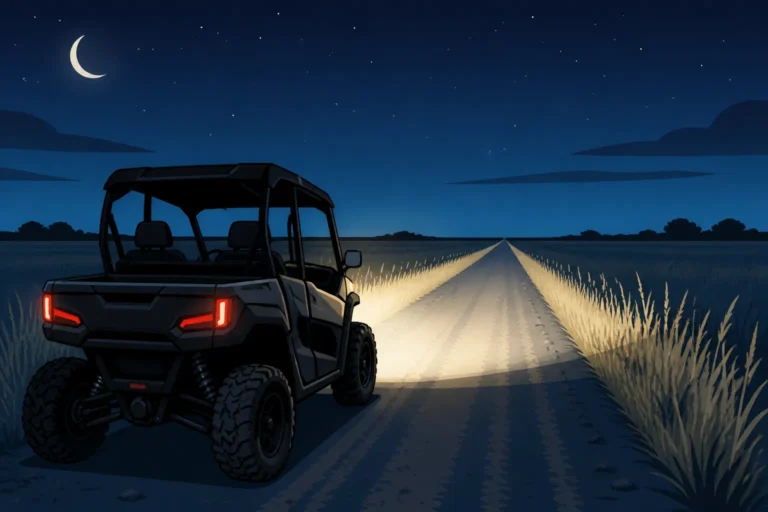
- Headlights: At least one, producing a white or amber light, visible from 500 feet to the front. Many stock ATVs have a single headlight, but UTVs often come with two. Ensure they are functional and properly aimed. [Illinois Requires a 500-Foot Headlight]
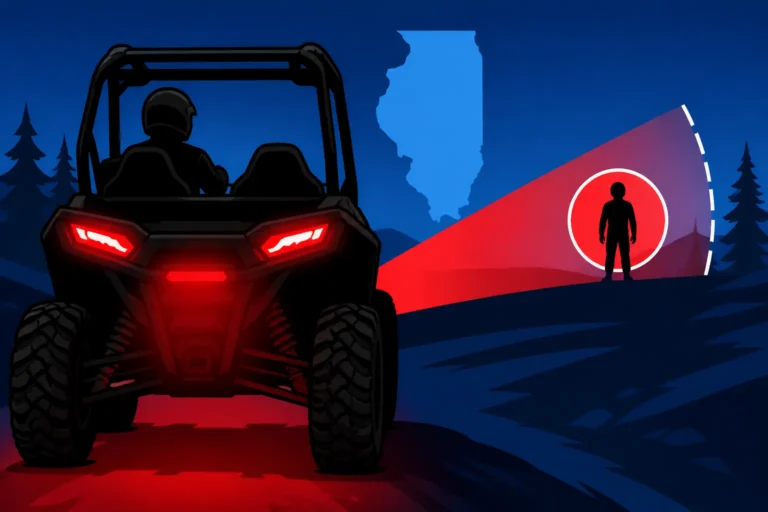
- Tail Lamps: At least one, emitting a red light visible from 100 feet to the rear. This is crucial for preventing rear-end collisions. [Illinois Requires a 100-Foot Tail Lamp]
- Brake Lights: Operational stop lamps that illuminate red when the brakes are applied. These are vital for signaling your intentions to traffic behind you. [Illinois Requires Brake Lights]
- Turn Signals: While some county ordinances might be vague on ATVs, UTVs almost universally require turn signals for street use. These need to be visible from both front and rear. If your machine doesn't have them stock, you'll need to add an aftermarket kit. Companies like SuperATV offer comprehensive street-legal kits that include everything you need, from turn signals to horns.
These lighting requirements are not just suggestions; they are legal necessities. Before every ride, conduct a quick check to ensure all your lights are working. A burnt-out bulb or a broken lens can quickly turn a legal ride into an illegal one.
Visibility Aids: Mirrors and Emblems
Beyond lighting, other equipment helps your machine be more visible and allows you to be more aware of your surroundings.
- Rearview Mirror: Illinois law requires at least one rearview mirror, positioned to give the operator a clear view of the highway to the rear for a distance of 200 feet. This is absolutely essential for safely navigating roads with other vehicles. Many ATVs come with no mirrors, or very small ones, necessitating an upgrade for street legality. UTVs often have side mirrors, but ensure they meet the visibility standard. [Illinois Requires a Rearview Mirror]
- Slow-Moving Vehicle (SMV) Emblem: If your UTV or ATV operates at speeds less than 25 mph, you'll likely be required to display a slow-moving vehicle emblem. This distinctive orange triangle with a red border must be mounted on the rear of the machine, positioned to be clearly visible to approaching traffic. It warns faster-moving vehicles that you are traveling at a significantly reduced speed, helping to prevent accidents. [Illinois Requires a Slow-Moving Vehicle Emblem]
- Reflectors: Many local ordinances also stipulate the need for reflectors, typically red to the rear and amber to the front and sides, to enhance visibility, especially at night or in low-light conditions. These simple additions can make a huge difference in how quickly other drivers perceive your presence. [Illinois Requires Red Reflectors]
Ensuring your machine is fully equipped to meet these visibility standards isn't just about avoiding a ticket; it's about your personal safety and the safety of everyone else on the road. Investing in good quality, reliable equipment, perhaps from a reputable aftermarket supplier like SuperATV, is always a smart move.
Insurance and Driver's License for Street-Legal Operation
Two other critical requirements for operating any vehicle on Illinois roads, including legally permitted ATVs and UTVs, are proper insurance and a valid driver's license.
- Driver's License: You must possess a valid driver's license to operate an ATV or UTV on any public road in Illinois, even if it's a county road where OHV use is permitted. This means no provisional licenses, no learner's permits, and definitely no riding if your license is suspended or revoked. The expectation is that you are a competent, licensed driver capable of sharing the road safely with other vehicles. [Illinois Requires a Driver's License]
- Insurance: Just like with cars and trucks, Illinois law mandates minimum liability insurance coverage for any motor vehicle operating on public roads. This applies to your ATV or UTV if you're riding it on a county road. The typical minimums are often referred to as "25/50/20" coverage: $25,000 for bodily injury per person, $50,000 for bodily injury per accident, and $20,000 for property damage. Always carry proof of insurance with you when you ride. Your standard off-road insurance policy might cover private land use, but check with your provider to ensure it extends to legal street use as well. [Illinois Insurance Minimums for Street Use]
Operating without a valid license or insurance can lead to significant penalties, including fines, suspension of driving privileges, and even impoundment of your machine. It’s a risk simply not worth taking.
Safety and Practical Considerations for County Road Riding
Even with all the legal boxes checked and your machine properly equipped, riding an ATV or UTV on county roads presents its own unique set of safety challenges. These machines handle differently than cars, and the rural road environment can be unpredictable. Being prepared and riding defensively are paramount.
Speed Limits and Road Conditions
County roads, especially in rural Illinois, often have posted speed limits, and you are expected to adhere to them. While your UTV might be capable of higher speeds, the conditions of many rural county roads – gravel, potholes, blind curves, or narrow shoulders – often necessitate slower travel. It’s not just about what the law says, but what common sense and safety dictate. You might encounter slow-moving farm equipment, loose gravel that can affect traction, or even wildlife crossing the road.
Furthermore, many county ordinances that permit OHV use will specify a maximum speed limit for ATVs and UTVs, which is often lower than the posted limit for cars. For example, some might restrict OHVs to 35 mph or less, even on a road posted for 45 mph. Always look for these specific stipulations in the county's resolution. Riding responsibly means adjusting your speed to both the legal limit and the prevailing road and traffic conditions.
Crossing State Highways Safely
As mentioned before, even if you're legally riding on a county road, you almost universally cannot ride along state highways. However, county ordinances often allow for crossing state highways at intersections. This maneuver requires extreme caution. State highways carry faster-moving traffic, and your ATV or UTV is smaller and less visible.
When crossing, approach the intersection as you would in a car, stopping completely and yielding to all traffic. Make sure you have ample time and space to cross safely without impeding the flow of traffic. Your machine's acceleration might not be as quick as a car, so factor that into your decision-making. If there's heavy traffic, it's often safer to wait for a substantial gap rather than trying to dart across. Always remember that crossing rules are usually very strict, and failure to follow them can result in severe penalties.
Enforcement and Penalties for Violations
Ignoring the rules for riding on Illinois county roads can lead to serious consequences. Law enforcement, including county sheriffs, state police, and even local village police if you stray into their jurisdiction, can issue citations for violations. These can range from fines for improper equipment or operating on unauthorized roads to more severe penalties for reckless driving, driving without a license, or operating uninsured. [Illinois Penalties for Illegal Street Riding] discusses these consequences in detail.
Penalties often include significant fines, court costs, and points on your driver's license. Repeated offenses or serious infractions could even lead to your machine being impounded or your driving privileges being suspended. The best approach is always to be proactive: know the rules, make sure your machine is compliant, and ride defensively. It's far easier and cheaper to do your homework and equip your machine properly than to deal with the aftermath of a ticket or an accident.
It’s also important to remember that even if you have permission to ride on county roads, courtesy and respect for other road users are paramount. Excessive noise, dust, or reckless driving can quickly lead to community complaints, which in turn can pressure county boards to revise or even repeal their ordinances. So, ride smart, ride safe, and be a good ambassador for the off-road community.
| Requirement for County Road Use | Description | Legal Source |
|---|---|---|
| Valid Driver's License | Required for all operators. | Illinois Vehicle Code |
| Liability Insurance | Minimum coverage as required for motor vehicles. | Illinois Vehicle Code |
| Headlights (White/Amber) | Visible from 500 feet. | Illinois Vehicle Code & Local Ordinances |
| Tail Lamp (Red) | Visible from 100 feet. | Illinois Vehicle Code & Local Ordinances |
| Brake Lights | Operational, red, activated by brakes. | Illinois Vehicle Code & Local Ordinances |
| Turn Signals | Front & rear, required for UTVs, often for ATVs. | Illinois Vehicle Code & Local Ordinances |
| Rearview Mirror | One, clear view 200 feet to rear. | Illinois Vehicle Code & Local Ordinances |
| SMV Emblem | For vehicles under 25 mph, mounted on rear. | Illinois Vehicle Code & Local Ordinances |
| Local Ordinance/Resolution | Explicit permission from County Board required. | County Board Resolutions |
| Adherence to Speed Limits | Often lower for OHVs than posted auto limits. | Local Ordinances |
| Direct Crossing of State Hwys | Only at intersections, cannot ride along. | Illinois Vehicle Code & Local Ordinances |
Disclaimer
This article is for general informational purposes only and does not constitute professional advice. Laws, prices and regulations vary by location and change over time. Consult a qualified professional for guidance on your specific situation.