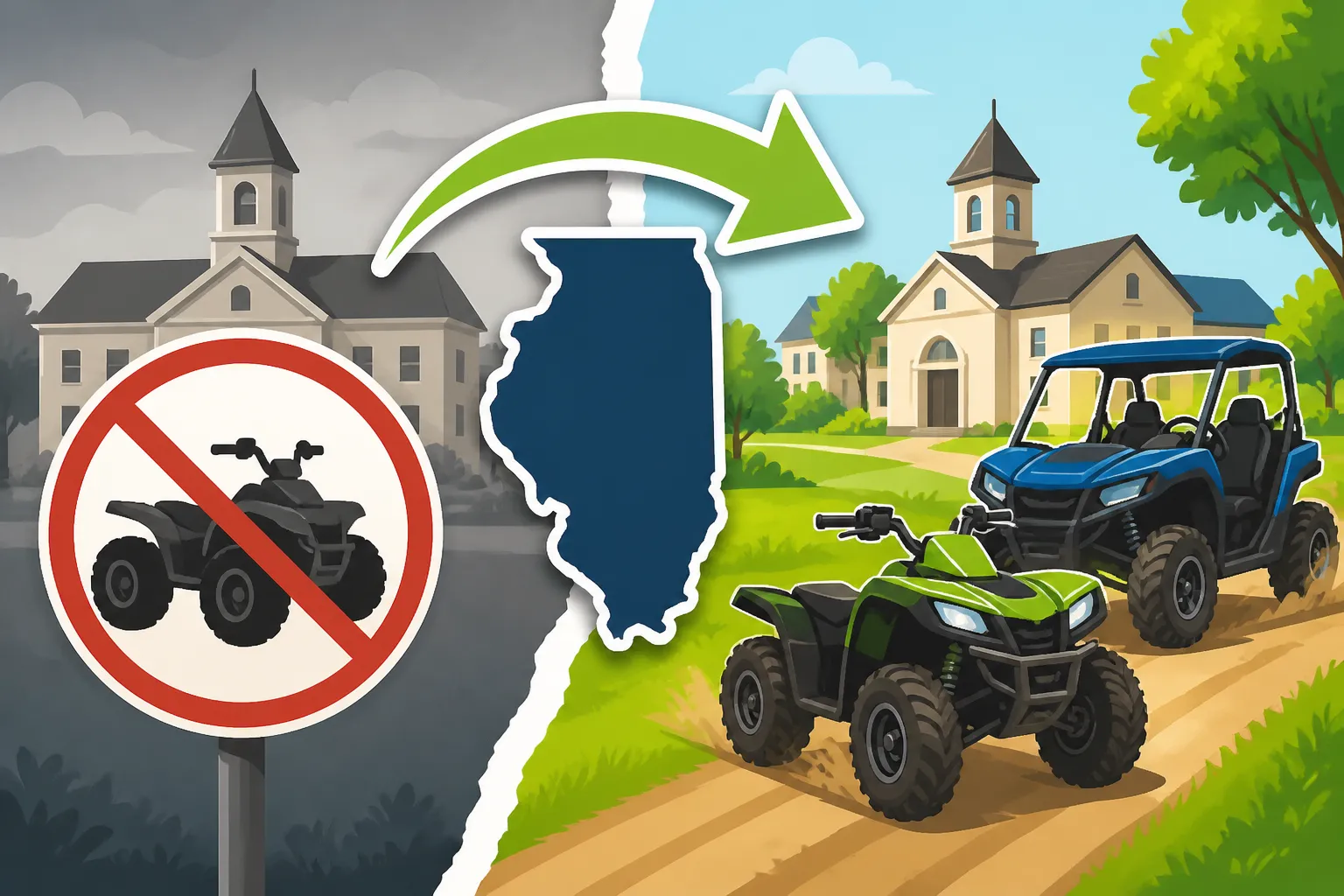
When a Village Repeals the Ordinance It Passed
Imagine this: you've finally got your side-by-side street-legal in your small Illinois village, you're riding to the local store for groceries, or just enjoying a cruise on a sunny afternoon. Then, seemingly out of nowhere, you hear whispers, then rumors, and finally, an official announcement: the village board is considering — or has already voted to — repeal the very ordinance that allowed your machine on the streets. This guide is here to walk you through why a village might reverse course on UTV street legality, what that means for you as a rider, and what steps you can take to navigate this frustrating situation.
The Initial Promise: Why Villages Pass UTV Ordinances
Before a village decides to take away street access, it first had to grant it. For many Illinois communities, the decision to allow UTVs and ATVs on local streets was a big step, often driven by a genuine desire to serve residents or boost the local economy. It doesn't just happen on a whim; there's a process and usually a good reason behind it.
The Local Authority to Permit Street Use
It's crucial to remember that [Illinois Law Starts by Banning Street Riding] for ATVs and UTVs. This means that if you want to legally operate your machine on public roads, a local unit of government—like a village, city, or county—must pass its own specific ordinance to allow it. These ordinances don't just spring up; they're the result of elected officials weighing the pros and cons, often after hearing from their constituents. Many villages choose to exercise this authority, and [Illinois Municipalities That Pass Ordinances] do so to give residents more freedom and to potentially draw in tourism. They carefully draft rules regarding equipment, permits, and hours of operation, all within the framework of state law.
Community Benefits and Motivations
So, why would a village board go through the trouble of creating such an ordinance in the first place? Often, it's about community spirit and practical benefits. For residents in rural or semi-rural areas, a UTV can be a convenient mode of transport for short errands, visiting neighbors, or commuting to a nearby job if the village isn't too large. For others, it's about recreation and enjoying their property. Small towns might also see an opportunity to attract visitors who bring their machines, patronize local businesses, and contribute to the tax base. [How a Village Board Votes to Allow UTVs] often involves public hearings where residents express their support, highlighting how street access would improve their quality of life or the town's economic vibrancy. It's a hopeful moment when these ordinances pass, reflecting a shared vision for community enjoyment.
The Reversal: Why Ordinances Get Repealed
Now, let's get to the heart of the matter: why would a village, after all that effort and positive intent, decide to repeal an ordinance that allows UTVs on its streets? It's rarely a sudden, spiteful act. More often, it's a gradual accumulation of issues, complaints, or a change in circumstances that leads to a re-evaluation of the original decision. This can be incredibly frustrating for riders who have invested in their machines and permits, but understanding the underlying causes can help make sense of the situation.
Common Triggers for Board Reconsideration
One of the most frequent reasons for an ordinance repeal stems from negative experiences and increasing public friction. Noise complaints, for instance, can quickly become a major issue. While your machine might be within legal sound limits, repeated passes through quiet neighborhoods can still grate on residents, especially those without UTVs. Similarly, dust can become a serious problem. If UTVs are regularly traveling on unpaved village roads, [Dust on a Gravel Township Road] can irritate homeowners, dirty their property, and raise concerns about air quality.
Another significant trigger is a perception of unsafe driving. Even if the vast majority of riders are responsible, a few bad apples can spoil it for everyone. Reckless operation, excessive speed, or riding underage can lead to a sense of danger, especially where children play or along busy stretches. When residents start to feel that their safety or peace is being compromised, they often turn to the village board. And those [Complaints That Reach a Village Board] can accumulate quickly, painting a picture that might be unfair to most riders but is still compelling to elected officials. Unfortunately, it's often a case where the actions of a vocal minority (both riders and complainants) dictate the policy for the many.
Public Sentiment and Political Pressure
Beyond specific incidents, a general shift in public sentiment or a change in the political landscape can also lead to an ordinance repeal. Perhaps when the ordinance was initially passed, there was widespread support, but over time, as more UTVs started using the streets, a segment of the population became increasingly unhappy. [Neighbors Who Complain to a Board] about noise, speed, or perceived nuisance can exert significant pressure, especially if they are organized and persistent.
Furthermore, village board elections can introduce new members with different perspectives or priorities. A board that once enthusiastically supported UTV access might, after an election cycle, have a new majority that is more cautious or even actively opposed. They might feel obligated to respond to the concerns of constituents who voted them in, even if it means reversing a previous decision. It's a constant balancing act for local governments, trying to cater to different interests within the community.
Unforeseen Consequences and Safety Concerns
Sometimes, a village implements an ordinance with the best intentions, but then discovers unforeseen consequences. For example, while the ordinance might have specified equipment requirements, perhaps not all riders comply. Or maybe there's a perception that ATVs and UTVs are being used on roads that are simply not safe for them, such as those with heavy traffic or poor sight lines, increasing the risk of accidents. Even with advanced equipment from reputable brands like SuperATV, which manufactures robust accessories like enhanced lighting, mirrors, and turn signals, not every machine on the road will be equipped to the same high standard, or riders may still operate them recklessly.
Consider the potential for accidents. If there's an increase in collisions involving UTVs, even minor ones, it can raise alarms about liability and public safety. A village might feel it's in the best interest of all residents to restrict UTV access rather than face potential lawsuits or widespread public outcry after a serious incident. Encountering a grain truck on a narrow road, as discussed in [Meeting a Grain Truck on a Narrow Township Road], highlights the real-world dangers that officials must consider, especially if these machines are sharing roads with larger, faster vehicles. Ultimately, the village's primary responsibility is often perceived as ensuring the safety and well-being of all its citizens, and if UTVs on streets are seen as undermining that, a repeal can become inevitable.
The Fallout: What Happens After an Ordinance is Repealed
The moment an ordinance is repealed, the landscape for UTV riders in that village changes dramatically. What was once a legal, convenient activity becomes illegal, carrying significant penalties. It's a sudden and often harsh reality check for those who relied on their machines for transportation or recreation within the community.
Immediate Impact on Riders
The most immediate and obvious impact is that riding your ATV or UTV on public streets within that village becomes illegal. Period. This means no more quick trips to the hardware store, no leisurely cruises through town, and no using your machine as a primary mode of transport on those roads. All the freedom and convenience you once enjoyed are gone. This can be a huge disruption, especially for those who don't have alternative vehicles or who purchased their UTV specifically with street use in mind.
It also means that any local permits you might have paid for, like village-specific UTV stickers or registrations, are now essentially worthless for street riding within that jurisdiction. While the village might offer some guidance or even partial refunds in certain cases, don't count on it. The focus shifts entirely from enabling access to enforcing the new prohibition. Your well-equipped machine, perhaps even boasting heavy-duty parts from SuperATV designed for durability and safety, is now restricted to off-road use only within that village's limits.
Enforcement and Consequences
Once an ordinance is repealed, enforcement by local authorities can become strict, often to re-establish control and send a clear message. Village police or sheriff's deputies will be tasked with pulling over UTVs and ATVs seen on public roads. The penalties for riding illegally can range from significant fines to vehicle impoundment, as outlined in [Illinois Penalties for Illegal Street Riding]. Imagine having your machine towed away, incurring not only the initial fine but also towing and storage fees. This can quickly add up to hundreds, if not thousands, of dollars.
Furthermore, a conservation officer or other law enforcement personnel, often seen as focused on off-road sites, can also enforce these rules. [What a Conservation Officer Can Ask to See] might now include proof that you are not on a public road within the village's jurisdiction. It's a shift from compliance with an ordinance to enforcement of a ban, and the authorities will likely be proactive in ensuring the new rules are understood and followed by everyone.
Alternative Riding Options
While the repeal of a village ordinance is undoubtedly a setback for street riding, it doesn't mean the end of all ATV and UTV enjoyment in Illinois. It's a good time to remember that there are many dedicated off-road areas in the state. Instead of navigating village streets, you might need to shift your focus to designated riding parks and trails.
Illinois offers options like grant-assisted sites and private parks where you can still enjoy your machine. Familiarize yourself with places like Sahara Woods, The Cliffs Insane Terrain, or Little Egypt Off Road. These locations provide miles of trails, diverse terrain, and a community of fellow riders. Checking out resources like [Illinois ATV Trails: Where You Can Actually Ride] can help you discover new places. While it might require trailering your machine to these locations, it ensures you're riding legally and safely in environments designed for off-road recreation. It's a pivot, not a complete stop, to your riding adventures.
Navigating the Change: What Riders Can Do
A repealed ordinance is a tough pill to swallow, but it doesn't mean riders are powerless. While you might not be able to immediately reverse the decision, there are proactive steps you can take to stay informed, advocate for responsible riding, and explore alternative solutions.
Staying Informed and Engaged
The first and most critical step is to stay informed. Once an ordinance is repealed, it's essential to understand the new rules and their effective date. Don't rely on word-of-mouth; directly consult official sources. Check the village's website or contact the clerk's office for the official resolution or ordinance text. Knowing [Where to Find Your Village's UTV Ordinance Online] is key to ensuring you have the most current and accurate information. This will help you avoid accidental violations and potential fines.
Beyond just knowing the rules, active engagement with your local government is vital. Attend village board meetings. Even if the ordinance has been repealed, being present, listening to discussions, and understanding the board's rationale can provide valuable insight. When appropriate, consider [Speaking at a Board Meeting About UTV Access] to politely and constructively voice your concerns, ask questions, or offer solutions for future consideration. Your presence demonstrates that UTV owners are engaged and care about their community.
Advocating for Responsible Riding
If there's any hope of future reconsideration or preventing similar repeals in other communities, it hinges on demonstrating responsible riding. This isn't just about following the law; it's about being a good neighbor and an exemplary community member. Encourage all riders to strictly adhere to speed limits, especially in residential areas, and to be mindful of noise levels. Using aftermarket exhaust systems that are quieter, or simply riding courteously, can make a huge difference in public perception.
Emphasize safety equipment. Ensure machines are properly equipped with all required lights, mirrors, and turn signals. Parts from companies like SuperATV can help riders meet or exceed these standards, providing both safety and durability. If an ordinance specified permits or inspections, uphold those standards even if they're no longer enforced for street use, to show commitment to safety. Organize local riding groups that promote safe practices, perhaps even coordinating community clean-up efforts or charity rides. Showing that UTV riders are a positive force in the community can help change negative stereotypes that often lead to these repeals.
Looking for Alternatives
Finally, if the repeal seems permanent, or if you simply want to broaden your riding horizons, actively seek out alternative, legal riding opportunities. Illinois has a growing number of designated off-road parks and trails. While these might require trailering your machine, they offer a dedicated space for fun and adventure without the worries of local street regulations.
Explore private riding clubs or public grant sites. Many of these locations offer varying terrain, from beginner-friendly paths to challenging mud pits, ensuring there's something for every rider. Look into camping options at some of these sites if you want to make a weekend out of it. Connect with other riders online or through local clubs to discover hidden gems or get recommendations. While the disappointment of a repealed street ordinance is real, focusing on these alternative avenues can open up new and exciting ways to enjoy your ATV or UTV.
Here’s a quick overview of reasons for ordinance repeal and potential rider responses:
| Reason for Repeal | Impact on Riders | Rider Response / Action |
|---|---|---|
| Noise Complaints | Increased friction with non-riding residents | Encourage quieter operation, consider quieter exhausts (if legal), advocate for respectful riding times. |
| Safety Concerns / Accidents | Perceived risk, increased enforcement | Promote strict adherence to safety rules, proper equipment (lights, mirrors), and responsible driving habits. |
| Reckless Driving | Negative public image for all UTV owners | Actively discourage irresponsible behavior, educate fellow riders on safe practices. |
| Dust / Environmental Issues | Damage to property, health concerns | Encourage dust-reducing practices, support road maintenance efforts, avoid excessive speeds on unpaved roads. |
| Political Pressure / New Board | Change in local government priorities | Stay engaged in local politics, attend meetings, present a unified and responsible front to elected officials. |
| Unforeseen Problems | Ordinance not working as intended | Seek dialogue with the board, offer constructive solutions, highlight advancements in UTV technology and rider responsibility. |
Disclaimer
This article is for general informational purposes only and does not constitute professional advice. Laws, prices and regulations vary by location and change over time. Consult a qualified professional for guidance on your specific situation.