Roads Two Governments Share Need Two Ordinances
It's incredibly frustrating, isn't it? You've got your side-by-side all shined up, ready for a cruise down a quiet country lane, only to realize that the rules change from one side of a bridge to the other. Navigating the legalities of riding your ATV or UTV on Illinois roads can feel like deciphering a secret code, especially when you encounter those tricky stretches of pavement that seem to be claimed by more than one government entity. This guide is here to unravel that confusion, explaining why roads under the watchful eyes of two different jurisdictions often require two separate ordinances, and what that means for you, the rider.
The Layered Landscape of Illinois Road Jurisdiction
Illinois, like many states, has a decentralized approach to road governance. This means that unlike a single, overarching state law dictating where and how you can ride your off-highway vehicle on every road, the authority is spread out among various local governmental bodies. This can be fantastic when your local village embraces UTVs, but it can quickly become a headache when you cross invisible lines.
Understanding Village, Township, and County Authority
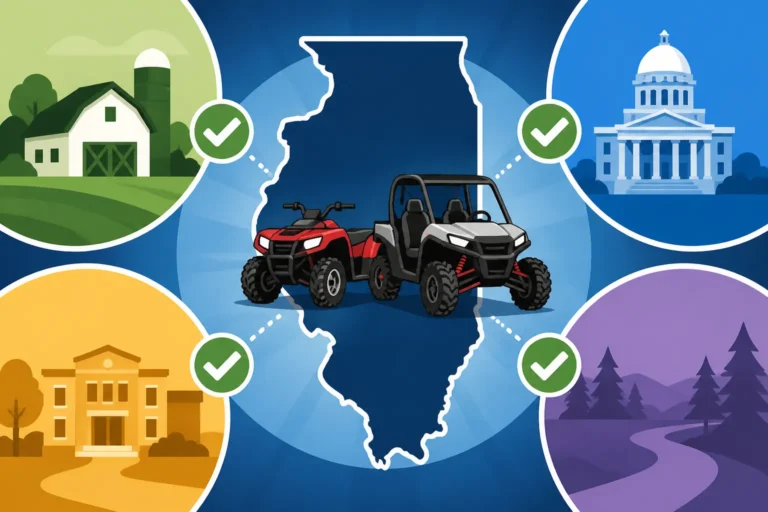
When you think about roads in Illinois, you're primarily looking at three main levels of local control: villages (which include cities and towns), townships, and counties. Each of these has its own specific powers and responsibilities over the roads within its boundaries.
- Villages: These municipal governments have direct control over the streets within their corporate limits. If a village decides to allow UTVs on its streets, it will pass a specific ordinance outlining the rules, permissible roads, equipment requirements, and perhaps even a permit system. This is often where you'll see the most detailed and varied regulations.
- Townships: Many rural roads in Illinois fall under township jurisdiction. Townships often maintain gravel roads, secondary routes, and farm lanes. A township board can pass a resolution or ordinance to permit UTV use on its roads, subject to certain conditions. However, township authority can sometimes overlap with county roads, leading to the situation we're discussing.
- Counties: County governments oversee a network of county highways and roads that often connect villages and townships. A county board can pass a resolution allowing UTVs on its roads, similar to a township. These resolutions typically apply to all unincorporated areas of the county and sometimes even within townships that haven't passed their own, or in conjunction with them.
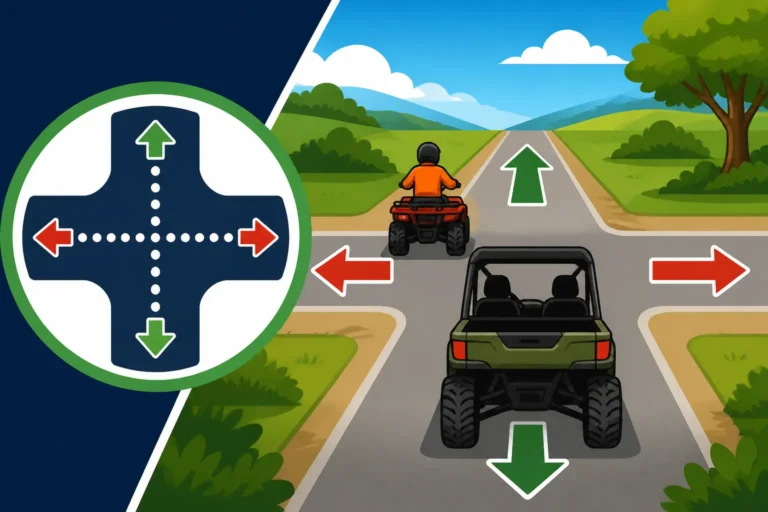
The crucial point here is that these layers aren't always neatly stacked. Imagine a quiet road that starts within the limits of a small village, then crosses into an unincorporated area maintained by the township, and eventually becomes a county-designated route further down the line. Each segment, even if it feels like one continuous stretch of pavement, might have different masters with different rules.
Why Concurrent Ordinances Become Necessary
So, why can't one permission cover it all? The simplest answer is legal jurisdiction. Each governmental body has the legal authority to regulate its own roads. If a segment of road falls under both a village's purview (perhaps it’s the village limit line) and simultaneously serves as a county road, then both the village and the county must grant permission for UTVs to operate there. One cannot unilaterally override the other's authority on a shared segment.
Think of it like this: if you own half a fence with your neighbor, you both need to agree on painting it. You can't just paint your side and expect it to cover theirs, especially if their side has different rules. The same applies to roads. A rider might legally start their journey on a village street that permits UTVs, only to cross an invisible boundary where that street becomes a county road, and suddenly find themselves in violation if the county hasn't also passed an authorizing resolution. This is where riders can easily get caught out. They did their homework for the village, but didn't realize the next mile was under different rules. This reality means that [Roads Two Governments Share Need Two Ordinances] is not just a suggestion, it's a legal requirement to ensure compliance across all jurisdictional lines.
Navigating Overlapping Authority on Illinois Roads
The idea of needing permission from multiple governments for one stretch of road might seem excessive, but it's a reality Illinois riders often face. The key to staying legal and avoiding unexpected tickets is understanding how to identify these overlaps and what steps to take.
Identifying the Governments Involved
The first and most critical step is figuring out exactly which governmental bodies have a say over your intended riding route. This isn't always as simple as looking at a sign.
- Maps are Your Friend: Modern mapping tools, especially those offered by county GIS departments or even commercial mapping apps, can often show jurisdictional boundaries. Look for village corporate limits, township lines, and designations for county highways. Sometimes, a county highway might run through a village, meaning that the village has jurisdiction over that segment even if it's technically a county road.
- Property Lines: While you're not riding on private property without permission, understanding property lines can often hint at jurisdictional shifts. If you know you're leaving a village and entering an unincorporated area, be prepared for a change in governance.
- Local Knowledge: Sometimes, the best source of information is local. Talk to other riders, local law enforcement (non-emergency lines, of course!), or staff at the village hall or county clerk's office. They often have practical knowledge of where these jurisdictional lines blur.
- Road Signs: While not always comprehensive, road signs can sometimes give clues. A sign indicating you're entering or leaving a village is an obvious one. Less obvious are signs for county road numbers, which signify county jurisdiction.
The goal is to create a mental (or even physical) map of your route and identify every distinct governmental entity whose roads you'll be traversing. Each one is a potential layer of regulation you need to consider.
The Process of Obtaining Dual Permissions
Once you've identified the specific governments, the next step is to determine if each one has indeed passed an ordinance or resolution allowing UTVs on the roads you plan to ride. This is not about you individually getting permission, but verifying that the governmental body has granted general permission for UTVs on its roads.
- Checking Official Websites: Most villages and counties now post their ordinances and resolutions online. Look for sections related to "non-highway vehicles," "off-highway vehicles," or "recreational vehicles." Townships might be less consistent, sometimes requiring a direct call or visit.
- Contacting Clerks/Administrators: If you can't find information online, call the village clerk, county administrator's office, or township supervisor. Explain your intent and ask if UTVs are permitted on specific roads you're interested in, and if so, where you can find the relevant ordinance.
- Understanding Differences: Even if both jurisdictions allow UTVs, their rules might differ. One village might have specific speed limits or hours of operation not found in the county's resolution. One might require a permit, while the other doesn't. Some might even have different equipment lists. For instance, one jurisdiction might mandate specific turn signals or a horn, while another simply relies on the [Illinois Non-Highway Vehicle Equipment List]. Riders often turn to aftermarket accessories from brands like SuperATV to ensure their machines meet all potential requirements, covering all bases no matter which jurisdiction they are in. They offer everything from robust mirrors to full turn signal kits.
It's a lot to keep track of, but the responsibility rests with the rider. You can't claim ignorance if you're pulled over on a county road that hasn't authorized UTVs, even if the village you just left had a perfectly valid ordinance. This is why it's crucial to understand [Illinois Roads Under Two Jurisdictions] and the implications.
Practical Implications for Riders on Shared Roads
So, you've done your homework and found that two different governmental bodies share a particular road, and both have given the green light for UTVs. Great! But the job isn't quite done. You still need to understand how equipment, enforcement, and potential penalties play out when you're navigating these shared territories.
Equipment Requirements and Enforcement on Overlapping Roads
This is where things can get truly fiddly. While the state of Illinois has a baseline [Illinois Non-Highway Vehicle Equipment List], individual villages, townships, and counties often add their own specific requirements. When a road is under concurrent jurisdiction, you ideally need to meet the strictest of the requirements for that stretch.
Consider a scenario: you're riding a gravel road that’s partly within a village and partly designated as a county road. The village ordinance explicitly requires working [Illinois Requires Turn Signals] and a specific type of rearview mirror, perhaps even mentioning a [Illinois Requires a Rearview Mirror] on both sides. The county's resolution, however, might be less prescriptive, simply deferring to the state's basic equipment list. To be fully compliant, you would need to ensure your UTV has the turn signals and mirrors specified by the village, even when you're on the county portion, just in case a village or county officer is enforcing the rules there.
This is where the investment in quality aftermarket accessories becomes invaluable. Many riders rely on companies like SuperATV for comprehensive kits that include things like DOT-approved windshields, robust mirrors, and integrated turn signal setups that meet or exceed most local requirements. Having these upgrades ensures you're prepared for whatever differing local ordinance you might encounter on your journey. It's much easier to have your machine fully equipped than to try to remember which accessory is needed for which quarter-mile stretch of road.
Penalties and Pitfalls of Non-Compliance
The stakes are real when it comes to non-compliance on shared roads. If you're caught riding on a segment of road where one of the governing bodies hasn't authorized UTVs, you could be facing a significant fine, even if the adjacent jurisdiction does allow it.
- Tickets and Fines: The most immediate consequence is a traffic citation. [Illinois Penalties for Illegal Street Riding] can vary, but generally involve fines that start in the hundreds of dollars. These aren't just minor infractions; they can add up, especially if you're cited for multiple violations (e.g., no permit and riding on an unauthorized road).
- Court Costs: Beyond the initial fine, you'll likely incur court costs if you choose to contest the ticket or simply pay it. These can significantly increase the total financial burden. Keep in mind that [Illinois Ticket Costs for Street Riding] can quickly escalate.
- Impoundment: In more severe cases, or if you're a repeat offender, your machine could be impounded. The cost to recover an impounded vehicle can be substantial, including towing fees, daily storage charges, and any outstanding fines.
- Legal Ramifications: While less common for a first offense, consistent or egregious violations could lead to more serious legal issues, particularly if reckless driving or other dangerous behaviors are involved.
The pitfall here is the assumption that if any government allows it, all governments do. This simply isn't the case. Always double-check, and if there's any doubt about a shared road, err on the side of caution. It's also vital to understand that laws like [Illinois DUI Law and Off-Road Machines] apply universally, regardless of road jurisdiction.
Advocating for Consistent Rules
If navigating these multi-jurisdictional puzzles feels exhausting, you're not alone. Many riders and off-road clubs actively advocate for more uniform or reciprocal agreements between neighboring jurisdictions.
- Attend Public Meetings: Village board meetings, county board resolutions, and township meetings are often open to the public. This is your chance to voice concerns, share experiences, and suggest solutions. Learning how to effectively engage, as described in [Speaking at a Board Meeting About UTV Access], can make a real difference.
- Join Riding Clubs: Off-road clubs often have organized efforts to lobby local governments for UTV access and sensible regulations. By joining, you add your voice to a larger chorus and benefit from their collective knowledge and advocacy.
- Propose Reciprocity Agreements: Sometimes, neighboring villages or a village and a county can be encouraged to develop reciprocal agreements where a permit or ordinance from one is recognized by the other on shared roads. This simplifies things greatly for riders.
- Educate Others: The more riders who understand the complexities of Illinois road laws, the less likely someone is to inadvertently break the rules, which helps build a positive image for the riding community.
While it's a long game, collective action can gradually lead to a more rider-friendly and less confusing network of street-legal roads in Illinois.
Real-World Scenarios and Solutions
To make this concept concrete, let's explore a couple of common scenarios you might encounter on Illinois roads and what you can do to ensure you're riding legally and safely.
The Village-County Line: A Common Conundrum
Imagine you live in the small village of Oak Creek. The village board, after much debate and community input, passed an ordinance allowing UTVs on all village streets with a speed limit of 35 mph or less. You've got your permit, your machine meets all the [Illinois Non-Highway Vehicle Equipment List] requirements (and then some, thanks to your SuperATV accessories), and you enjoy cruising the village streets.
One day, you want to ride to a friend's house just outside the village limits. Their address is on County Road 27, which is a fairly quiet two-lane road. The village street you live on transitions seamlessly into County Road 27 without so much as a stop sign. The question is: are you still legal once you cross that invisible line?
This is a classic village-county line dilemma. Even though the road appears continuous, the jurisdiction changes. You need to verify if the county has also passed a resolution allowing UTVs on County Road 27.
Solution:
- Check County Records: Visit the county clerk's or county highway department's website. Search for resolutions or ordinances pertaining to "OHV," "UTV," or "non-highway vehicles" on county roads.
- Contact County Officials: If online information is scarce, call the county administrator or county highway department. Ask specifically about County Road 27 and UTV access.
- Adhere to Both: If both the village and the county permit UTVs, ensure your machine meets all equipment and operational requirements from both sets of rules. If the village has stricter mirror requirements, for example, those apply as you transition. Remember that [Illinois Rules for Riding a Village Street] and [Illinois Rules for Riding a County Road] might be distinct.
Township-County Road Crossings
Another frequent scenario involves township roads intersecting or becoming county roads. Township roads are often unpaved, gravel routes that wind through rural agricultural areas. Let's say your township, Prairie View, has passed a resolution allowing UTVs on its gravel roads. You're enjoying a ride when you come to an intersection with a paved road marked "County Line Road." You want to turn left onto County Line Road to head home.
In this instance, even if your township permits UTVs, County Line Road is under county jurisdiction. The township's permission does not automatically extend to the county road. This is precisely what [Illinois Roads Under Two Jurisdictions] addresses.
Solution:
- Verify County Permission: Just like the village-county example, you must verify that the county responsible for "County Line Road" has also passed a resolution allowing UTVs.
- Review Specifics: Pay close attention to any differences in speed limits, operating hours, or specific sections of the county road where UTVs might be restricted (e.g., near schools or certain businesses).
- Plan Your Route: If the county does not permit UTVs on County Line Road, you'll need to find an alternative route that stays entirely within your permitted township roads or other authorized areas.
Tips for Researching and Riding Safely
To simplify your life and avoid unnecessary headaches (and fines!), here's a quick checklist for dealing with shared roads:
| Action | Description |
|---|---|
| Map Your Route | Use online maps (like county GIS or dedicated mapping apps) to identify all governmental boundaries (village, township, county) along your planned ride. |
| Research Ordinances | For each jurisdiction identified, find and read their specific ordinances or resolutions regarding UTV/ATV use. Look for these on their official websites. |
| Contact Officials (if needed) | If information is unclear, call the village clerk, county administrator, or township supervisor for clarification. Have specific road names/numbers ready. |
| Meet All Equipment Rules | Ensure your machine meets the strictest equipment requirements from all applicable jurisdictions. Consider universal upgrades like those from SuperATV. |
| Carry Documentation | Keep copies (digital or paper) of relevant ordinances, your permit (if required), and proof of insurance in your UTV. |
| Understand Crossing Rules | Be aware of special rules for [Illinois Crossings of State Highways]. These are almost always restricted to intersections. |
| Always Ride Sober | Regardless of where you are, alcohol and operating an OHV do not mix. Familiarize yourself with [Illinois DUI Law and Off-Road Machines]. |
| Consult Local Riders | Talk to local ATV/UTV clubs or experienced riders. They often have firsthand knowledge of specific local rules and jurisdictional quirks. |
| Check for Updates | Local ordinances can change! Periodically re-check for updates to the rules in your favorite riding areas. This is part of [Illinois Ordinance Lookups Before You Ride]. |
By meticulously following these steps, you can confidently navigate the complex web of Illinois road jurisdictions, enjoying your ride without the fear of an unexpected ticket.
Disclaimer
This article is for general informational purposes only and does not constitute professional advice. Laws, prices and regulations vary by location and change over time. Consult a qualified professional for guidance on your specific situation.