Complaints That Reach a Village Board
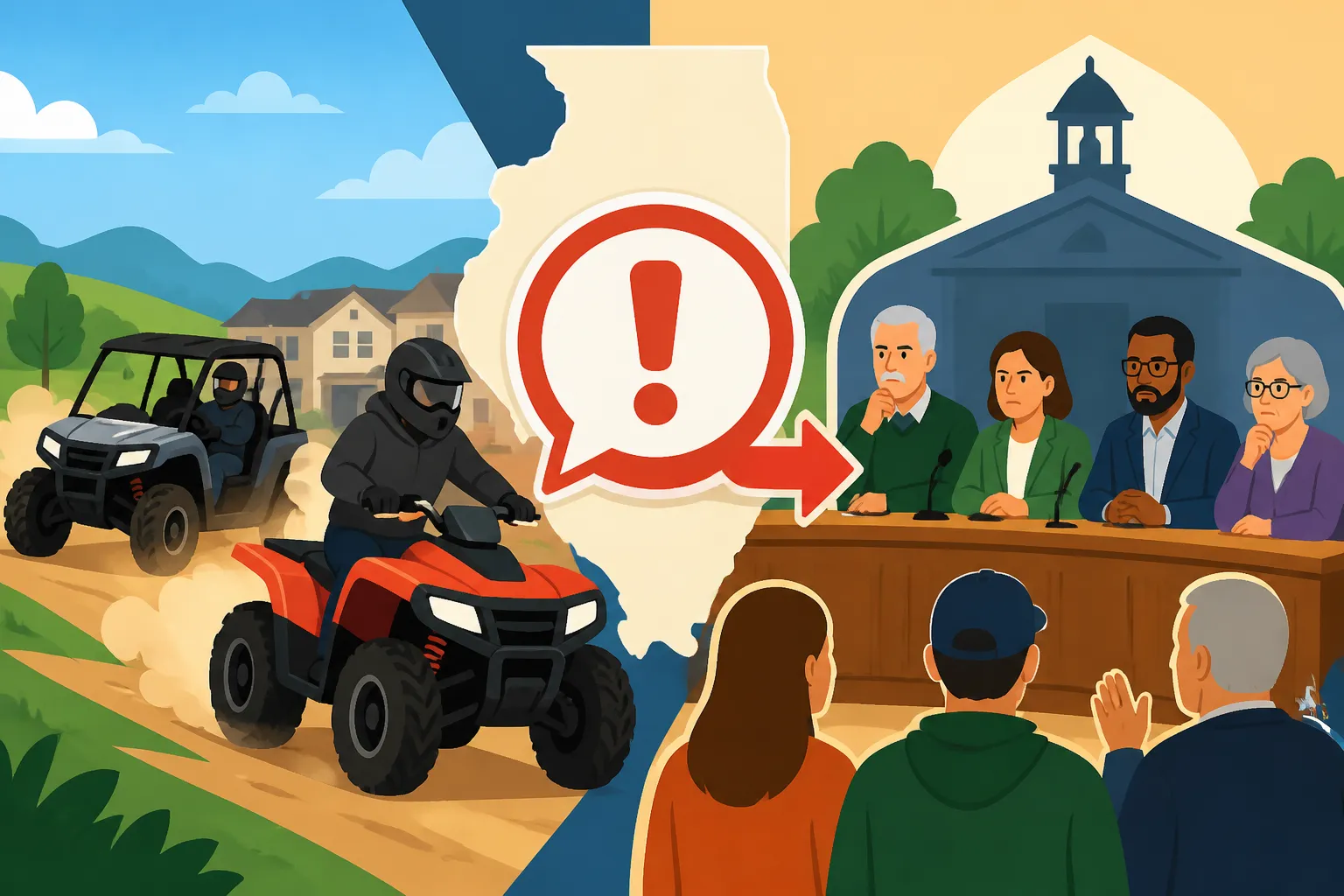
It's an unfortunate reality that as more folks discover the joy of riding their ATVs and UTVs on approved village streets and county roads across Illinois, there's sometimes a backlash. What starts as an exciting new freedom for riders can quickly turn into a source of frustration for non-riding residents, leading to formal complaints that land squarely on the desks of village board members. This guide aims to shed light on the common types of grievances that often reach your local village board, what happens next, and, most importantly, how riders can proactively prevent these issues from escalating and jeopardizing their hard-won street access.
Understanding Why Village Boards Hear UTV Complaints
The enthusiasm for riding ATVs and UTVs on public roads in Illinois is understandable. For many, it's about convenience, recreation, and making the most of their investment. However, for residents who don't share this passion, the presence of these machines can introduce new challenges, sparking concerns that they feel compelled to bring to their elected officials.
The Underlying Tension: Community vs. Recreation
At its heart, the dynamic often comes down to a tension between the recreational pursuit of off-road enthusiasts and the desire for peace, quiet, and safety within residential communities. Many village streets were simply not designed with UTVs in mind. They were built for passenger cars, quiet neighborhood strolls, and children playing. When UTVs are introduced, even legally, they can disrupt the established rhythm and expectations of a community. Residents might feel that their quiet enjoyment of their property is being infringed upon, or that the character of their neighborhood is changing in ways they didn't anticipate. It's not always about outright opposition to UTVs, but sometimes a genuine concern about maintaining a certain quality of life in their town.
This push and pull can be a delicate balance for village boards, who are tasked with representing all constituents. They want to support local businesses and recreational opportunities, but they also have a duty to address the concerns of homeowners. When a resident feels strongly enough to file a formal complaint, it signals that the issue has moved beyond casual grumbling and into an area where the board feels obligated to take action. Understanding this fundamental tension is the first step in appreciating why your village board might be hearing more about UTVs than you might expect.
Noise, Dust, and Perceived Safety Concerns
Beyond the philosophical clash of community expectations, there are very tangible issues that often fuel complaints. Noise is perhaps the most frequent and impactful. The rumble of an engine, the whine of a transmission, or the loud exhaust of a modified UTV can carry quite a distance, especially in quiet residential areas. What might sound exhilarating to a rider can be an intrusive din to someone trying to enjoy their backyard or put a baby down for a nap. Dust is another major culprit, particularly on gravel township roads where UTVs can kick up significant plumes that coat homes, cars, and landscaping, creating a nuisance and even a health concern for some.
Then there's the perception of safety. Even if riders are operating legally and cautiously, UTVs can look and sound more aggressive than a typical car. Their open design, knobby tires, and the general association with off-road environments can lead to residents feeling that they are inherently more dangerous, especially when children or pets are present. [Illinois Rules for a Child Passenger] are strict, but the visual of a side-by-side speeding past a park can still raise alarms. When residents observe what they perceive as excessive speed, aggressive driving, or a disregard for traffic laws – even if it's just a misinterpretation – these concerns quickly translate into official complaints. These specific, tangible issues are often the direct drivers behind calls and letters to the village board.
Common Grievances That Spark Official Action
When village board members open their emails or answer phone calls about UTVs, certain complaints crop up again and again. These are the flashpoints, the specific issues that tend to draw the most attention and can lead to towns reevaluating or even repealing their UTV ordinances.
Noise Violations and Exhaust Woes
Without a doubt, noise is one of the most consistent and problematic complaints. Many UTVs, especially those with aftermarket exhaust systems, can be significantly louder than standard passenger vehicles. That deep growl or throaty roar that sounds fantastic out on the trail can be deeply irritating when echoing down a residential street. Neighbors might complain about machines starting up early in the morning, running late at night, or simply the constant drone throughout the day. Some riders might not even realize how much noise their machine generates until they hear it from a distance, or after a neighbor points it out.
Village boards often have existing noise ordinances that apply to all vehicles, and UTVs can easily exceed these limits. Residents will specifically call out loud exhausts, the sound of engines revving, or even the cumulative noise of multiple machines passing by. This is why some local ordinances, like Byron's, include specific language about sound levels or even mandate stock exhaust systems. If your machine is louder than a typical car, it's a prime target for a complaint. Brands like SuperATV offer a huge range of aftermarket parts, and while many are fantastic for performance, riders need to be mindful of how certain exhaust systems impact community noise levels.
Dust Clouds and Road Degradation
For villages with gravel roads, dust is another significant complaint. UTVs, with their wider stances and aggressive tires, can kick up a tremendous amount of dust, especially in dry conditions. This isn't just an aesthetic issue; dust can settle on houses, cars, outdoor furniture, and can even become a respiratory irritant for some. Homeowners spend time and money keeping their property clean, and having it coated in road dust by passing vehicles is a major annoyance that quickly leads to phone calls to village hall.
Beyond dust, there are sometimes concerns about road degradation. While UTVs are generally lighter than many passenger cars, repeated passes, especially if riders are driving aggressively or spinning tires, can contribute to washboarding and potholes on gravel surfaces. This adds to maintenance costs for the village and can create an uncomfortable ride for everyone else. Residents might report that UTVs are "tearing up the roads," even if the damage is minor or primarily due to other factors. These types of complaints directly impact the perceived quality of life and infrastructure in a community.
Perceived Reckless Driving and Speeding
Even if most UTV riders are obeying traffic laws, the perception of reckless driving can be a huge problem. UTVs often look fast, even at legal speeds, due to their open design and association with off-road racing. When a machine passes through a residential area, especially near parks or schools, any perceived speed over the limit, even if it's not actually speeding, can trigger alarm. [Illinois Law Starts by Banning Street Riding], and municipalities must specifically vote to open their roads. With that comes a heightened sense of scrutiny from residents.
Common complaints in this category include:
- Excessive Speed: Riders going over the posted limit, or appearing to.
- Aggressive Driving: Quick acceleration, sharp turns, or driving behavior that seems "showy."
- Disregard for Stop Signs/Signals: Even a rolling stop can be seen as a serious offense.
- Driving on Lawns or Off-Road: Any deviation from the paved or graveled road surface.
- Driving Too Close to Pedestrians/Cyclists: Creating a sense of danger for vulnerable road users.
These perceptions, whether entirely accurate or not, are powerful. They can quickly lead residents to believe that UTVs are a danger to their community, particularly to children and pets, prompting urgent calls to the village board and local law enforcement.
Parking, Property Damage, and Trespassing Concerns
While less common than noise or dust, complaints related to parking, property damage, and trespassing can be incredibly frustrating for residents and carry significant weight with a village board. For instance, if UTV riders are regularly parking their machines in ways that obstruct sidewalks, block driveways, or take up multiple spots in public parking areas, it can quickly become an issue. Residents might feel that their access is being impeded or that parking rules are being ignored.
More serious complaints arise when UTVs are accused of causing property damage. This could range from tire marks on lawns from accidental off-road excursions to more deliberate acts of vandalism. The "open" nature of some UTVs can make it easy to accidentally clip a mailbox or landscaping if not driven with extreme care. [Illinois Trespass Law for Riders] is clear: riding on private property without permission is illegal, and when this happens, landowners are quick to contact authorities and their village board. These incidents, even if isolated, create a negative impression of UTV riders as a whole and erode trust within the community, making it harder for boards to maintain existing ordinances or consider new ones.
What Happens When a Complaint Reaches the Board?
So, a resident has picked up the phone or sent an email, and their complaint about UTVs has landed at village hall. What's the process from there? It's not usually an immediate revocation of UTV access, but it does set a series of events in motion that riders should understand.
The Board's Initial Response and Investigation
When a complaint comes in, the village board typically doesn't act immediately with drastic measures. Instead, their initial response usually involves gathering more information. This might mean the village clerk logs the complaint, and it's then shared with specific board members or the village manager. Depending on the severity and frequency, the board might ask their police chief or public works director to investigate. This investigation could involve increased police patrols in areas where complaints are frequent, observing UTV traffic, or even setting up temporary speed monitoring devices. They might also assess road conditions if dust or degradation is the primary concern.
Sometimes, the initial response is simply a conversation among board members, putting the issue on their agenda for a future meeting. They might review the existing ordinance, looking for any loopholes or areas that are unclear. [Illinois Municipalities That Pass Ordinances] often include specific language about hours of operation, equipment, and areas where UTVs are permitted. The board will want to know if the complaints stem from riders breaking the rules or if the rules themselves are insufficient to address community concerns. This fact-finding stage is critical, as it informs how the board will approach the issue moving forward.
Public Meetings, Hearings, and Community Input
If complaints continue to mount, or if the initial investigation uncovers widespread issues, the village board will often escalate the matter to a public forum. This usually takes the form of a discussion item on a regular village board meeting agenda, or even a dedicated public hearing specifically about UTVs. These meetings are crucial because they allow both residents and riders to voice their opinions directly to the board. Residents will often use this opportunity to share their frustrations, sometimes with vivid examples or even petitions. This is where you might hear about [Complaints That Reach a Village Board] in raw detail.
For riders, these public meetings are a vital chance to represent their interests. It's an opportunity to share personal experiences of responsible riding, highlight the economic benefits UTVs bring to the community, or offer solutions. It's not the time for an argument or an emotional outburst, but for calm, well-reasoned advocacy. The board listens to all sides, trying to gauge the overall sentiment of the community. They might ask questions, listen to proposals, and sometimes even table the issue for further consideration, asking staff to explore options like increased enforcement, signage, or ordinance amendments.
Potential Outcomes: From Fines to Ordinance Changes
After hearing public input and conducting their investigation, the village board will weigh their options. The outcomes can vary widely depending on the nature and severity of the complaints, and the board's overall stance.
Here are some potential actions:
- Increased Enforcement: Often, the first step is to direct local law enforcement to strictly enforce the existing ordinance. This could mean more traffic stops, citations for speeding, noise violations, or improper equipment. [Illinois Penalties for Illegal Street Riding] can be substantial, and consistent ticketing often sends a clear message.
- Ordinance Amendments: The board might decide to amend the current UTV ordinance. This could involve stricter rules on noise, hours of operation, age limits, or even equipment requirements. For example, they might mandate [Illinois Requires a Rearview Mirror] or [Illinois Requires Turn Signals] if they weren't already explicit.
- New Permit Fees or Inspections: Some villages might introduce new permit fees or require regular inspections to ensure machines meet compliance standards. [Byron's UTV Permit Fees in Illinois] is an example of a town with specific permit requirements.
- Partial Restrictions: A board might decide to restrict UTV access on certain streets (e.g., those next to schools or parks) or during specific hours.
- Repeal of the Ordinance: In the most extreme cases, if complaints are overwhelming and solutions seem unworkable, a village board might vote to repeal the UTV ordinance entirely, banning them from village streets. This is usually a last resort but highlights the importance of proactive rider responsibility.
Comparison of Complaint Outcomes
| Complaint Type | Initial Board Action | Potential Enforcement Response | Potential Ordinance Change |
|---|---|---|---|
| Noise | Staff investigation, sound checks | Increased noise citations | Stricter decibel limits, stock exhaust mandate |
| Dust | Public works assessment | Warnings, discussion with riders | Speed limits on gravel roads, watering schedule for roads |
| Reckless Driving/Speeding | Police patrols, speed traps | Increased traffic citations, fines | Lower speed limits, increased patrols |
| Trespassing/Damage | Police investigation, property owner reports | Arrests, fines, restitution for damages | Stricter penalties, increased surveillance |
| Parking Issues | Parking enforcement, signage review | Parking tickets, towing | Designated UTV parking, clearer parking rules |
Ultimately, the goal of the board is to strike a balance, and how riders conduct themselves significantly influences these decisions.
How Riders Can Proactively Address and Prevent Complaints
As a UTV or ATV rider in Illinois, you have a powerful role to play in protecting your access to village streets. Waiting for complaints to pile up and then reacting is a losing battle. A proactive approach, focusing on responsible behavior and community engagement, is far more effective.
Equipping Your UTV for Community Harmony
One of the most direct ways to mitigate common complaints is to ensure your machine is equipped and maintained with community harmony in mind. This means going beyond the minimum legal requirements and thinking about how your UTV impacts others.
- Noise Reduction: If your UTV has an aftermarket exhaust, consider whether it's truly street-friendly. Many manufacturers, and even accessory providers like SuperATV, offer quieter exhaust options or muffler inserts that can significantly reduce sound levels without totally choking performance. Regular maintenance of your engine can also help reduce unnecessary rattles or vibrations that contribute to noise. When driving through residential areas, be mindful of your throttle input; avoid unnecessary revving.
- Dust Control: While you can't eliminate dust on gravel roads, you can minimize its impact. Reducing your speed on unpaved surfaces is the most effective method. Slowing down not only cuts dust but also reinforces a perception of responsible driving. For serious dust problems, some UTV owners even explore dust skirts or rear panels that can help contain kick-up, though this is less common for street use. Remember, [Dust on a Gravel Township Road] is a major source of friction.
- Safety Equipment and Visibility: Ensure your UTV is fully compliant with all [Illinois Non-Highway Vehicle Equipment List] requirements, and then some. This includes working headlights, tail lights, brake lights, turn signals, and a rearview mirror. Consider adding extra reflective tape or brighter LED lights (within legal limits) to enhance your visibility, especially when riding after dark. A working horn is also essential. Making your machine clearly visible and signaling your intentions goes a long way in calming safety fears.
- Tires: While aggressive off-road tires are great for mud and rocks, they can be louder on pavement and may contribute more to dust kick-up on gravel. If your primary use is street riding, consider a more all-terrain or even a street-specific tire that offers a quieter, smoother ride and less surface disruption.
By taking these steps, you not only make your ride more pleasant but also demonstrate to your neighbors and the village board that you are a considerate and responsible member of the community.
Advocating for Responsible Riding Practices
Beyond your machine itself, your riding behavior is the most crucial factor in preventing complaints. Every time you ride on village streets, you are an ambassador for the entire UTV community.
- Obey All Traffic Laws: This is non-negotiable. Stick to posted speed limits, come to a complete stop at all stop signs, use your turn signals, and yield right-of-way. [Illinois Crossing Rules at Intersections] are critical. The perception of reckless driving is often more damaging than actual speeding, so even appearing to follow the rules diligently is important.
- Be Respectful of Neighbors: Avoid riding during early morning or late-night hours when noise is most disruptive. Be mindful when passing homes, especially if you see children playing or people outside. A friendly wave can go a long way in building goodwill.
- Stay on Designated Roads: Never, ever ride on private property without explicit permission. Avoid cutting across lawns, vacant lots, or fields. Stick strictly to the roads that the village ordinance has opened. Trespassing is a sure-fire way to create an enemy and jeopardize everyone's access.
- Educate Other Riders: If you see fellow UTV riders behaving irresponsibly, gently remind them of the local rules and the importance of good conduct. It benefits everyone to have a community of responsible riders. Share resources like [Illinois UTV Street Legal Rules by Town] to help others stay informed.
- Join a Local Club: Many ATV/UTV clubs advocate for responsible riding, organize group rides, and serve as a collective voice for riders. They can be a great resource for learning about local rules and engaging with the community constructively.
Remember, every bad interaction casts a shadow on all riders. By consistently demonstrating responsible behavior, you build trust and show your community that UTVs can coexist peacefully with residential life.
Engaging with Your Local Village Board
Don't wait for a crisis to interact with your village board. Proactive engagement can prevent issues from escalating and help build a positive relationship between riders and local government.
- Know Your Ordinance: Read your village's UTV ordinance thoroughly. Understand where you can ride, when you can ride, and what equipment is required. Being knowledgeable allows you to advocate effectively and correct misinformation. [Where to Find Your Village's UTV Ordinance Online] is a great starting point.
- Attend Meetings (Even When There's No Issue): Show up to a village board meeting occasionally, even if UTVs aren't on the agenda. This demonstrates that you're an engaged resident. When UTV issues do come up, your face will be familiar, and your input will carry more weight.
- Offer Solutions, Not Just Complaints: If you hear about problems or concerns, think about practical solutions you can offer. For example, if dust is an issue, you might suggest community-led initiatives for road maintenance or offer to educate riders on reducing speed on gravel.
- Form a Rider's Group: Consider organizing local riders into an informal group. This can provide a unified voice for the UTV community and make it easier to communicate with the village board. A formal group can also help enforce a code of conduct among its members.
- Build Relationships: Get to know your village trustees, mayor, and local police chief. A friendly relationship built on mutual respect can be invaluable when issues arise. They're more likely to listen to someone they know and trust.
Ultimately, your village board is there to represent the community. By being a visible, responsible, and engaged member of that community, you strengthen the position of all UTV riders and help ensure that your street legal access remains intact. Being proactive and considerate is the best long-term strategy for preserving and expanding your riding opportunities in Illinois.
Disclaimer
This article is for general informational purposes only and does not constitute professional advice. Laws, prices and regulations vary by location and change over time. Consult a qualified professional for guidance on your specific situation.