Night Visibility on a Flat Prairie Road
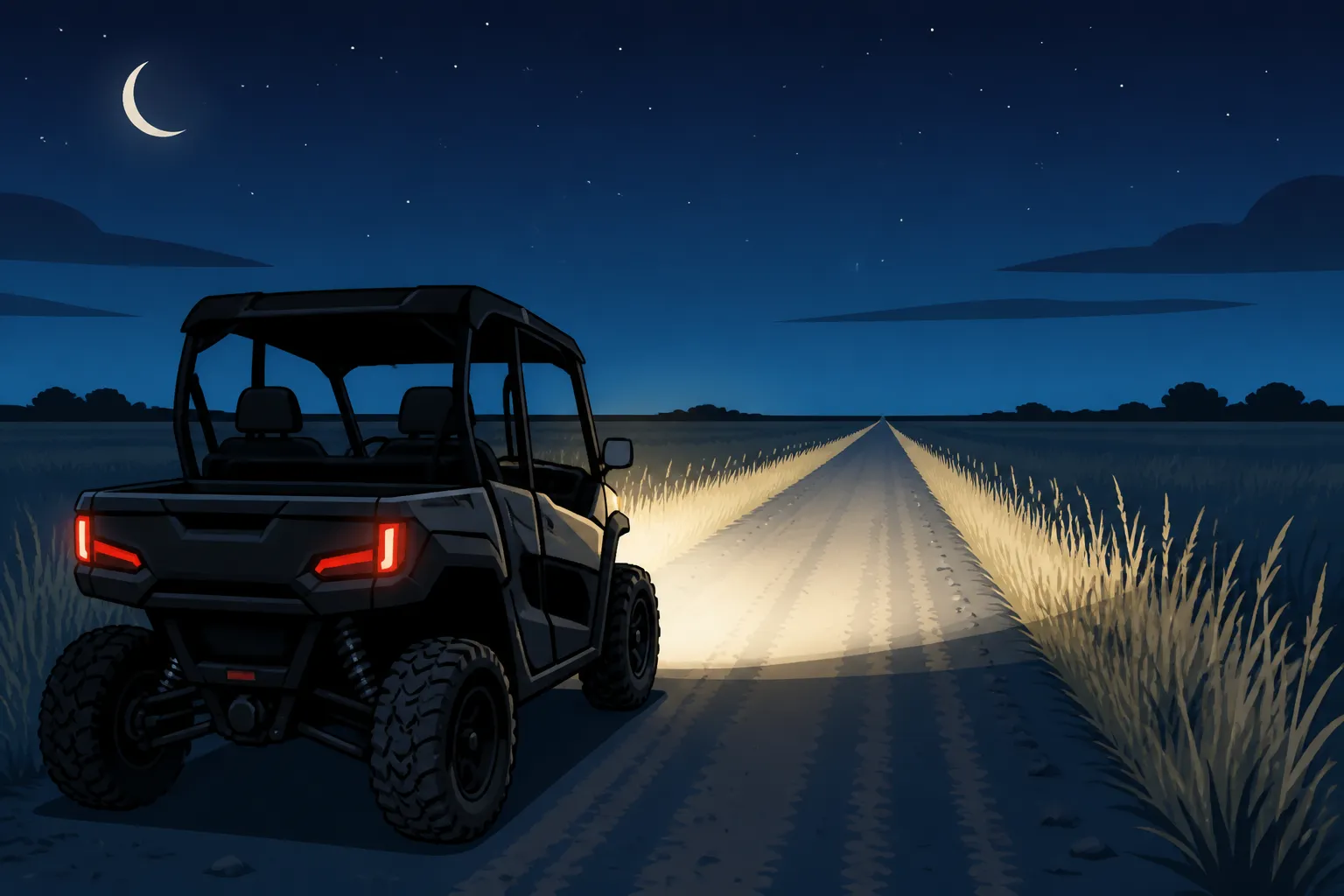
Riding your ATV or UTV after the sun dips below the horizon on Illinois's vast, flat prairie roads presents a unique set of challenges. Without the ambient glow of city lights or the shielding of dense forests, the darkness can feel all-encompassing, making obstacles invisible until you're right upon them. This guide will walk you through the critical considerations for enhancing night visibility, both for you and your machine, ensuring safer and more confident rides when daylight fades.
The Unique Challenges of Night Riding on Illinois Prairie Roads
When you're out on a county road or a remote township path in Illinois, especially one cutting through miles of farmland, riding at night isn't just a matter of flipping on your headlights. The environment itself throws up obstacles that you might not even consider during daylight hours. The wide-open spaces, while beautiful by day, can become disorienting voids at night, where distances are hard to judge and familiar landmarks disappear.
Imagine you're cruising down a gravel road that seems perfectly straight and flat in the daylight. At night, without adequate lighting, that same road can suddenly present unexpected dips, washouts, or even large potholes that appear out of nowhere. The flat topography means there's often nothing to break up the darkness on the horizon, creating a tunnel vision effect from your headlights that can strain your eyes and make it hard to perceive the full width of the road or upcoming turns. This lack of visual cues makes depth perception incredibly difficult.
Then there's the ever-present concern of wildlife. On those prairie roads, deer, coyotes, raccoons, and even smaller critters like rabbits and opossums are far more active after dark. They can dart out from ditches or field edges with little to no warning, and their eyes reflecting your limited headlights are often the first sign you get. A collision with a deer, especially at speed, can be incredibly dangerous for both the animal and the rider, causing serious damage to your machine or worse, significant injury. [Illinois Accident Reporting for a UTV Crash] is a topic you never want to face, but it's a real possibility if you're not adequately prepared for night encounters.
Dust is another often-overlooked challenge. Even on a seemingly calm night, a dry gravel road can kick up a significant amount of dust from your own machine or from other vehicles. This dust hangs in the air, creating a hazy curtain that dramatically reduces the effectiveness of your lights and your overall visibility. It can turn your bright headlight beams into a diffuse glow that illuminates very little beyond your immediate front bumper, making it impossible to see far down the road or react to sudden changes.
Boosting Your Machine's Lighting for Optimal Night Vision
Relying solely on factory-installed lights for serious night riding on Illinois prairie roads is often a recipe for frustration, if not danger. While they meet minimum legal requirements, they're rarely designed for the intense demands of off-road or rural nighttime conditions. Upgrading your lighting system isn't just about adding more bulbs; it's about intelligent placement, appropriate beam patterns, and reliable power.
Upgrading Headlights and Taillights
Your machine's primary lights are your first line of defense. Many stock headlights offer a fairly narrow, often yellowish beam that might be fine for the occasional quick trip down a paved street, but it's wholly inadequate for piercing the deep darkness of a prairie night. Replacing these with higher-intensity LED or HID bulbs can make a world of difference. LEDs, in particular, offer a much brighter, whiter light and draw less power from your battery, which is a huge plus. They also tend to last much longer than traditional halogen bulbs. Look for bulbs designed for off-road use, as they often have more robust construction to handle vibrations and impacts. [Illinois Requires a 500-Foot Headlight] and [Illinois Requires a 100-Foot Tail Lamp] are legal minimums, but you'll want to exceed them for real safety.
For taillights, the goal is not just to see, but to be seen. Brighter LED taillights, especially those with integrated brake lights that illuminate more intensely when you slow down, are crucial. Consider adding a third brake light, especially on UTVs, for an extra layer of visibility to anyone behind you. Many riders also install reflective tape or additional red reflectors on the rear of their machine. [Illinois Requires Red Reflectors] is a basic requirement, but more is better when it comes to night visibility.
Auxiliary Lighting: Light Bars and Pod Lights
This is where you can truly transform your night riding experience. Auxiliary lighting comes in many forms, but light bars and LED pod lights are popular choices for their incredible output and versatility. A good quality LED light bar, especially a larger one mounted on your roof or front bumper, can turn night into day. When selecting a light bar, consider the beam pattern. Combo beams, which offer both flood and spot lighting, are often ideal for prairie roads, providing a wide spread to illuminate ditches and field edges (for wildlife spotting) alongside a focused beam for long-distance visibility. SuperATV, for instance, offers a range of robust light bars and pod lights designed to withstand the rigors of off-road use, giving you that critical extra illumination.
Pod lights are smaller, more focused lights that can be mounted in various locations for specific purposes. You might use them as ditch lights, mounted near your A-pillars to shine sideways and reveal hazards hidden by your main headlight beam. Or, consider mounting a pair of amber pod lights low on your front bumper; amber light often cuts through dust and fog better than white light, which can be a game-changer on a dusty prairie road. Rear-facing pod lights can also serve as invaluable scene lighting if you need to stop and work on your machine or as reverse lights.
Strategic Placement and Wiring
The effectiveness of your auxiliary lighting depends heavily on its placement and proper wiring. Mount light bars high for maximum throw, but be mindful of glare off your hood or windshield. Pod lights can be aimed to fill in dark spots or provide specific area illumination. Always use a dedicated wiring harness with a relay and fuse to protect your electrical system and ensure your lights get adequate power. Running multiple high-draw lights directly off your machine's stock wiring can lead to blown fuses, dim lights, or even damage to your electrical components. Many aftermarket light kits come with their own wiring harnesses, simplifying the installation process.
Making Yourself Visible: Reflective Gear and Machine Markings
While seeing where you're going is paramount, being seen by others is just as, if not more, important when riding at night on roads. Even on a deserted prairie road, you might encounter another vehicle, a jogger, or even a slow-moving farm implement. Ensuring you and your machine are highly visible can prevent serious accidents.
Rider Apparel and Headwear
Your clothing choices make a huge difference. Ditch the dark colors for night rides. Opt for bright, fluorescent colors if possible, especially those with integrated reflective strips. A reflective vest worn over your riding gear is an excellent, inexpensive way to significantly increase your profile. Remember, reflective materials work by bouncing light back to its source, so they're incredibly effective when illuminated by another vehicle's headlights.
Your helmet is another key piece of gear. Choose a helmet with reflective decals or add them yourself. Many modern helmets come with subtle reflective elements built into the design. Even a small reflective strip on the back or sides of your helmet can make you much more noticeable to drivers approaching from behind or from side roads. Consider a helmet-mounted light, even a small one, as it moves with your head, illuminating whatever you're looking at and providing an additional light source for others to see.
Reflective Markings on Your Machine
Beyond the legal requirements for [Illinois Requires Red Reflectors], consider adding extra reflective tape to your ATV or UTV. The more surface area that reflects light, the better. Apply high-quality reflective tape in strategic locations: along the sides of your fenders, on the front and rear bumpers, and even on the wheels. White or silver reflective tape can be particularly effective on the front and sides, while red is best reserved for the rear to maintain consistency with road conventions.
For UTVs, which are often larger, you have even more surface area to work with. Consider outlining the vehicle's perimeter with reflective tape. Some riders also use reflective vinyl wraps or decals that stand out dramatically when hit by light. The goal is to make your machine as identifiable as possible from all angles, even if its main lights are temporarily obscured by dust or terrain.
The Slow-Moving Vehicle Emblem
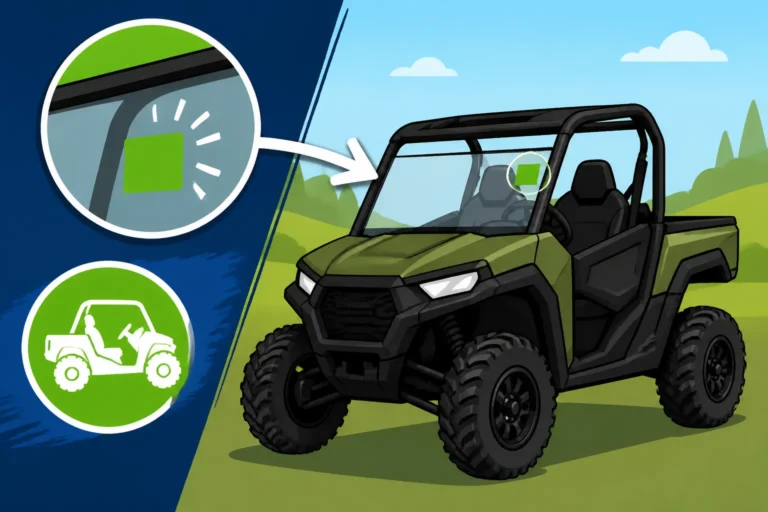
If you're operating your ATV or UTV on public roads in Illinois, you will likely need to display a slow-moving vehicle (SMV) emblem. This orange triangle with a red reflective border is specifically designed to alert other drivers that your machine will be traveling at speeds significantly lower than typical road traffic. [Illinois Requires a Slow-Moving Vehicle Emblem] is not just a suggestion; it's a critical safety device for machines operating on shared roadways, especially after dark. Ensure it's clean, clearly visible, and mounted on the rear of your machine at an appropriate height.
Navigating Illinois Road Rules and Night Operations
Understanding and adhering to Illinois's specific regulations for ATVs and UTVs on public roads is crucial, especially when operating at night. Ignoring these rules can lead to citations, fines, or even more serious consequences if an accident occurs. While the focus here is on visibility, it's intertwined with legal compliance.
Legal Lighting Requirements
As mentioned, Illinois has specific requirements for headlights, taillights, and reflectors. For any machine legally permitted on a public road, your headlight must be visible from at least 500 feet, and your taillamp must be visible from at least 100 feet. You must also have working [Illinois Requires Brake Lights]. Beyond these, many local ordinances (which are the only way ATVs/UTVs are typically allowed on roads) will specify additional lighting. For UTVs, [Illinois Requires Turn Signals] and a [Illinois Requires a Rearview Mirror] are common requirements for street legality, both of which aid in safe night operations by allowing you to signal your intentions and see what's behind you.
It's important to remember that these are minimums. As discussed in the lighting section, exceeding these minimums greatly enhances safety. Before you even think about night riding on public roads, thoroughly check your machine's equipment against the [Illinois Non-Highway Vehicle Equipment List] and any local ordinances that apply to your specific riding area. What's legal for daylight might not be sufficient for dark conditions.
Local Ordinances and Permissions
Illinois law starts with a general ban on ATV/UTV use on public roads. However, individual villages, cities, townships, and counties can pass their own ordinances to permit such use. This patchwork of rules means you must know the specific regulations for the area you plan to ride in. [Illinois UTV Street Legal Rules by Town] vary wildly. Some towns might allow night riding, others might restrict hours, and still others might not permit it at all.
Before heading out after dark, check with the local municipality for their specific rules on equipment, hours of operation, and any permit requirements. Many local police or sheriff's departments will perform [Illinois Equipment Inspections by a Village] before issuing a permit, and they will be scrutinizing your lighting setup. If you're pulled over without proper lighting or permits, the penalties can be significant.
Rider Conduct and Preparedness
Even with the best lights and reflective gear, rider conduct plays a huge role in night safety. Reduce your speed significantly after dark. Your reaction time is diminished, and visibility is compromised, so giving yourself more time to react to unexpected obstacles or wildlife is critical. Maintain a safe following distance from other vehicles, and be extremely cautious at intersections and when turning.
Avoid riding under the influence. [Illinois DUI Law and Off-Road Machines] applies to ATVs and UTVs, just as it does to cars. Your judgment and reaction time are impaired by alcohol or drugs, which are already compromised by darkness, creating a deadly combination. Always carry your proof of insurance, especially if riding on roads where [Illinois Insurance Minimums for Street Use] apply, and any required permits. Being prepared means you're not just safer, but also compliant.
Here's a quick comparison of basic vs. enhanced night visibility for Illinois prairie road riding:
| Feature | Basic (Legal Minimums) | Enhanced (Recommended for Safety) |
|---|---|---|
| Headlights | 1 white light, 500 ft visible | Bright LED/HID, wide/spot combo beam, auxiliary ditch lights |
| Taillights | 1 red light, 100 ft visible, brake lights | Brighter LED, multiple brake lights, rear-facing pods for task |
| Reflectors | Red on rear | Red on rear, white/amber on sides/front, reflective tape |
| Turn Signals | Not always required for ATVs, common for UTVs | Front and rear, bright LED, highly visible |
| Mirror | Not always required for ATVs, common for UTVs | Good quality, wide-angle rearview and side mirrors |
| Rider Gear | Basic helmet, any clothing | Reflective vest, bright helmet with reflective decals, headlamp |
| SMV Emblem | Required for road use | Clean, clear, correctly mounted, possibly supplemented with lights |
| Visibility Cone | Narrow, forward-focused | Wide, deep, illuminates periphery and distant hazards |
| Dust Penetration | Poor | Improved with amber or specialized fog lights |
Riding after dark on Illinois's flat prairie roads can be an incredibly peaceful and rewarding experience, but only if you take the necessary precautions. By upgrading your machine's lighting, making yourself and your vehicle highly visible, and understanding the local regulations, you can transform a potentially dangerous ride into a safe and enjoyable adventure. Always prioritize safety, and when in doubt, pull over and wait for conditions to improve.
Disclaimer
This article is for general informational purposes only and does not constitute professional advice. Laws, prices and regulations vary by location and change over time. Consult a qualified professional for guidance on your specific situation.