Meeting a Grain Truck on a Narrow Township Road
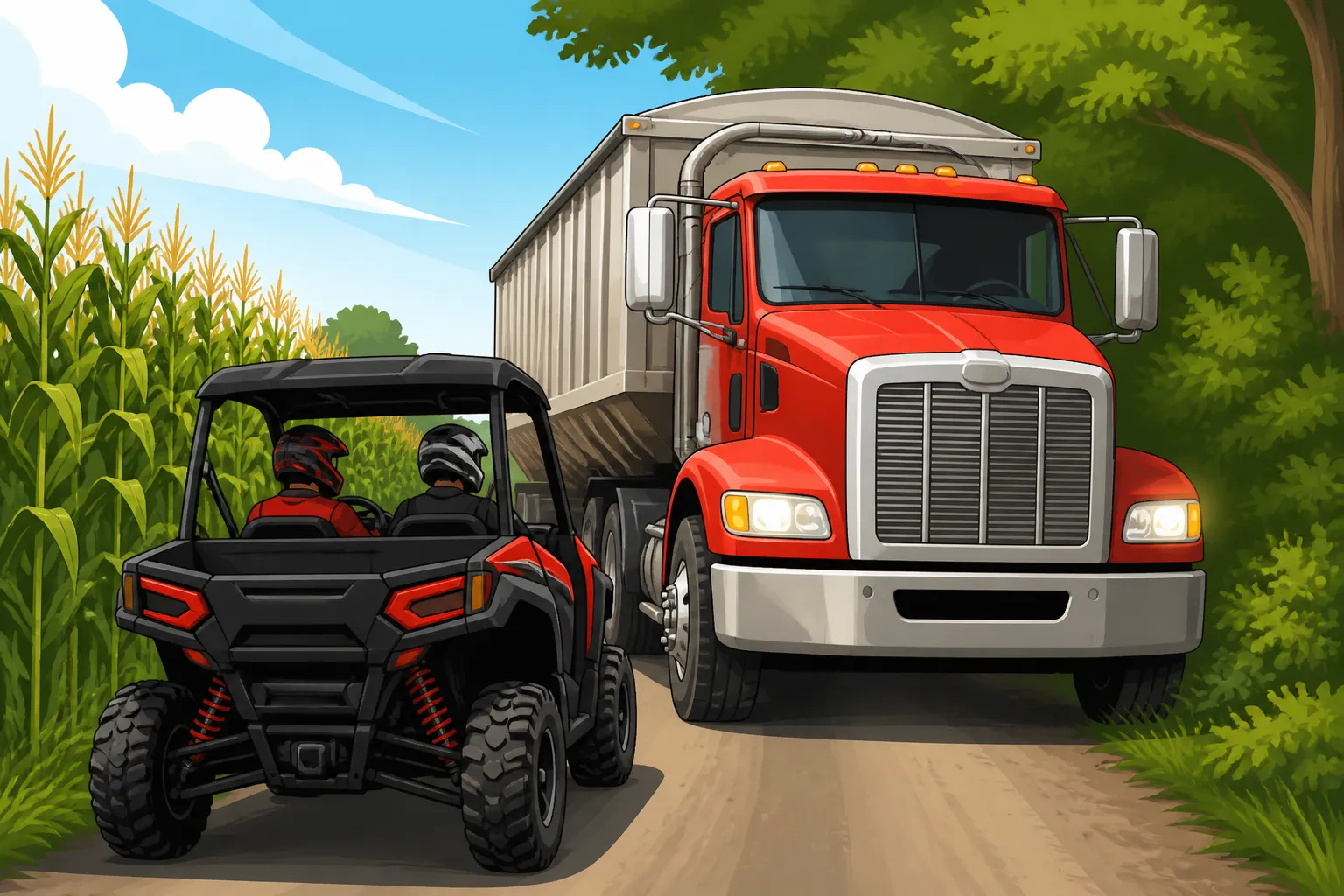
Picture this: you're enjoying a peaceful ride on your side-by-side down a quiet Illinois township road, taking in the scenery. Suddenly, over a rise or around a bend, a massive grain truck, laden with harvest, looms into view, taking up nearly the entire lane. Your heart might just skip a beat, and you're left wondering: "What do I do now?" This exact scenario is a common, and very real, concern for ATV and UTV riders in our state. This guide is here to walk you through the ins and outs of legally and safely navigating Illinois' rural roads, particularly when those unexpected, larger vehicles appear.
The Illinois Landscape of ATV and UTV Road Use
Riding your off-road machine on public roads in Illinois can feel like navigating a minefield of regulations. It's not as simple as just firing it up and heading out. Our state has specific laws that govern where and how you can ride, and understanding these is the crucial first step to avoiding tickets and ensuring your safety.
The Baseline Ban and Local Exceptions
Let's start with the fundamental truth that often catches new riders off guard: by default, Illinois law generally prohibits off-highway vehicles, like ATVs and UTVs, from being operated on public roads and highways. This isn't unique to Illinois, but it's a critical starting point to grasp. The state's primary concern is safety, given the design differences between these machines and traditional road vehicles. They aren't built to the same highway standards for things like crash protection, braking distances, or maximum speeds, which is why a blanket ban makes sense from a legislative perspective.
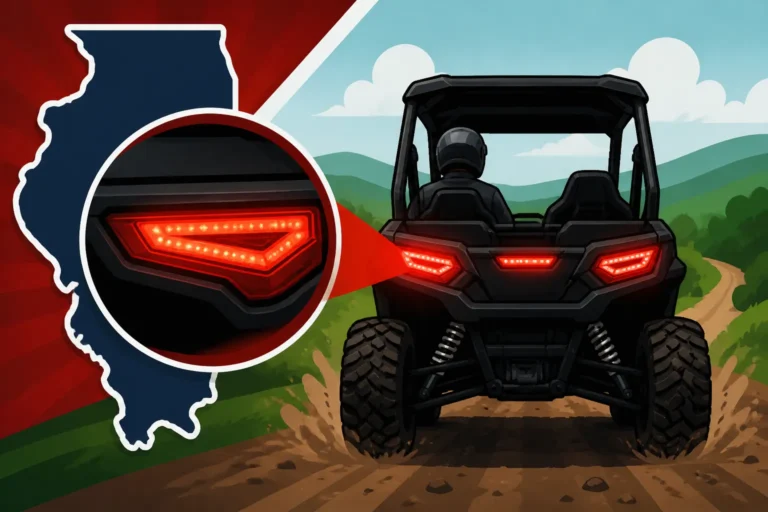
However, this isn't the end of the story, and it's where the waters get a little murky for many riders. The good news is that the state allows local units of government—think villages, cities, counties, and even townships—to create their own ordinances or resolutions that do permit the use of ATVs and UTVs on certain local roads. This means that while the state sets the general rule, your ability to ride on a particular road often boils down to the decisions made by your local officials. This patchwork of regulations means that what's legal in one town just a few miles down the road might be strictly prohibited in another. Always, always check the specific ordinances for the area you plan to ride in, because [Illinois Law Starts by Banning Street Riding] until a local government says otherwise.
Why Township Roads Present Unique Rules
Township roads are a special breed in Illinois, especially when it comes to ATV and UTV access. These are typically the quieter, often unpaved or lightly paved roads that crisscross our rural landscapes, connecting farms, small communities, and isolated residences. Because they fall under the jurisdiction of township highway commissioners and township boards, they can have their own distinct set of rules for off-road vehicles. This adds another layer of complexity to the already intricate legal framework.
What makes township roads particularly interesting, and sometimes frustrating, is that their governance can sometimes overlap with county or even municipal boundaries, leading to situations where a single stretch of road might require agreement from multiple government bodies. Imagine a township road that forms the boundary between two townships, or one that runs through the edge of a small village. Both jurisdictions might need to pass an ordinance or resolution for that road to be legally accessible. This means that relying on general knowledge or assumptions can lead to trouble. Riders need to be diligent in researching the specific rules for [Illinois Rules for Riding a Township Road] they intend to use. It's not uncommon for a rider to be perfectly legal on one township road, only to cross an invisible boundary onto another that prohibits OHV use, often with different equipment requirements or permit structures.
Navigating Narrow Township Roads: Safety First
Now, let's get to the heart of the matter: the practical realities and inherent dangers of sharing those often-narrow township roads with larger vehicles. This isn't just about legality; it's about staying safe in real-world scenarios that can change in a heartbeat.
The Realities of Rural Traffic: Grain Trucks and Farm Equipment
When we talk about "traffic" on a township road, it's a completely different beast than what you'd encounter on a state highway or in a suburban development. Here, traffic largely consists of agricultural vehicles: massive tractors, combines, sprayers, and, yes, those imposing grain trucks. These machines are essential to the lifeblood of rural Illinois, but they present unique challenges for smaller, lighter ATVs and UTVs. Farm equipment is often slow-moving, wide, and incredibly heavy. Their operators are focused on their work, and their visibility can be significantly limited, especially from high cabs or when towing large implements.
Encountering a grain truck, as described in our opening scenario, is perhaps one of the most nerve-wracking experiences. These trucks are typically at their heaviest and widest during harvest season, often exceeding the width of a single lane. When you're on a narrow, two-lane road (or even just what feels like one and a half lanes), the sheer size difference can be daunting. The truck's momentum means it cannot stop or swerve quickly, and the driver might not even see you immediately, particularly if you blend into the background or are approaching from a blind spot. Add to that the dust kicked up on a gravel road, and visibility can drop significantly, turning a simple encounter into a high-stakes moment. Just imagine [Dust on a Gravel Township Road] obscuring both your view and the truck driver's.
Visibility and Maneuverability Challenges
Township roads, by their very nature, often lack the wide shoulders, clear sightlines, and ample passing zones of major highways. They twist and turn, climb slight hills, and descend into hollows, all of which can create blind spots. You might round a corner, only to find an oversized farm implement or a grain truck already well into your lane. The lack of maneuverability for both you and the larger vehicle, combined with limited space, means that quick decisions and defensive riding are absolutely paramount.
Your ATV or UTV, while nimble off-road, is still a relatively small presence on these routes. Drivers of larger vehicles might not expect to see you, especially during busy planting or harvest seasons when their focus is often on the fields or getting their cargo to the elevator. This makes your ability to be seen, and your awareness of your surroundings, incredibly important. Even in broad daylight, shadows, sun glare, or dense roadside vegetation can conspire to obscure your presence. This is where investing in visibility upgrades becomes not just an enhancement but a critical safety measure. Consider aftermarket lighting options or enhanced mirror systems, like those you might find from a brand like SuperATV, to boost your presence on the road and help you see what's coming up behind you. These roads demand your full attention, and a proactive approach to safety can make all the difference.
Equipping Your Machine for Road-Shared Safety
Before you even think about rolling your ATV or UTV onto a township road, whether it's for a quick trip to the neighbor's or a leisurely ride, you need to ensure your machine is properly equipped. Illinois law, where it permits road use, lays out specific requirements. But beyond the legal minimums, there are smart additions that can significantly enhance your safety.
Essential Equipment for Illinois Street-Legal Compliance
If your local ordinance allows your off-road vehicle on public roads, it will almost certainly come with a list of mandatory equipment designed to make your machine more visible and safer for shared use. These aren't suggestions; they are legal requirements that, if not met, can result in fines and getting pulled over. First and foremost, you'll need a rearview mirror, mounted to provide a clear view of the road behind you. This is non-negotiable for monitoring traffic, particularly if you're pulling a small trailer or just need to keep an eye on vehicles approaching from the rear. [Why Your UTV Needs a Working Rearview Mirror] is not just a question of convenience, but of legal compliance and critical safety.
Next up is a slow-moving vehicle (SMV) emblem. This bright orange, triangular sign is absolutely vital for machines that travel at 25 mph or less, which often applies to ATVs and UTVs on rural roads. It signals to faster-moving traffic that you are a slow vehicle, giving them more time to react and safely pass. Proper placement is key; it should be [Bolting a Slow-Moving Vehicle Emblem to the Rear] of your machine, clearly visible. Headlights, taillights, and brake lights are also mandatory. Your headlight must be visible from at least 500 feet, and your tail lamp must show red from 100 feet to the rear. Additionally, functional turn signals are usually required, especially on UTVs, to clearly communicate your intentions to other drivers. [Turn Signals on a Side-by-Side] are not optional; they are a standard safety feature that helps prevent collisions. These fundamental pieces of equipment form the bedrock of [Illinois Non-Highway Vehicle Equipment List] for street-legal operation.
Beyond the Basics: Recommended Safety Upgrades
While meeting the legal minimums is crucial, smart riders often go a step further to enhance their visibility and safety, especially when frequently encountering large farm vehicles. Think of it as investing in your peace of mind and the well-being of those you share the road with. One excellent addition is extra reflective tape applied to the front, sides, and rear of your machine. This passive measure significantly boosts your visibility, particularly in low-light conditions or when light from another vehicle's headlights hits your machine. It's a low-cost, high-impact safety upgrade.
Another wise investment is an aftermarket horn. While some machines come with basic horns, a louder, more assertive horn can be invaluable for alerting distracted drivers or pedestrians to your presence in situations where they might not see you. When it comes to lighting, consider upgrading your stock headlights to brighter LED units. Many riders also add auxiliary LED light bars or cube lights, especially if they ride at dawn, dusk, or night. Companies like SuperATV offer a wide range of robust lighting solutions that can dramatically improve your ability to see and be seen. Just ensure any additional lights comply with local laws regarding on-road use, as some high-output lights are intended only for off-road applications. Lastly, always ensure your brakes are in top working order and your tires are suitable for varied terrain, including paved and gravel roads, to maintain optimal control and stopping power.
Best Practices for Sharing the Road with Farm Vehicles
Riding on township roads in Illinois means you're almost guaranteed to encounter farm equipment. Knowing how to react in these situations, especially when faced with large vehicles like grain trucks, is vital for your safety and the safety of others.
Defensive Riding Strategies
The core principle of safe road riding on an ATV or UTV, especially in rural areas, is defensive driving. This means constantly anticipating potential hazards and assuming other drivers might not see you. Always maintain a reduced speed appropriate for the road conditions, visibility, and traffic. These roads can be narrow, sometimes have unseen dips or potholes, and often lack clear shoulders. Staying further to the right side of the lane than you might in a car gives you a bit more buffer space from oncoming traffic and allows faster vehicles to pass you more easily if they deem it safe.
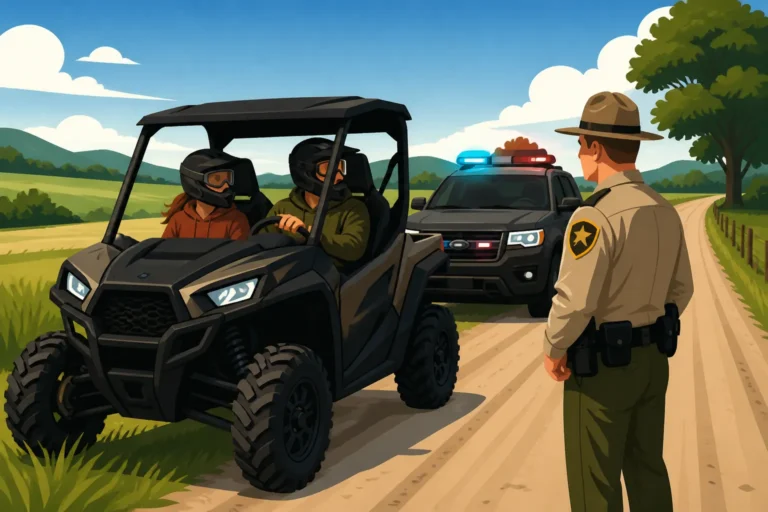
Be prepared to yield. Farm equipment, due to its size and often limited speed, has restricted maneuverability. It's almost always easier for you to move over or stop than for a massive tractor with a planter or a loaded grain truck. Anticipate that farm vehicles might turn suddenly into a field or farm lane without much warning, or that they might need to swing wide to navigate a tight corner. Always try to make eye contact with the operator of a larger vehicle if possible; a nod or wave can confirm that they've seen you. If your turn signals aren't clearly visible to other drivers, or if you don't have them, use clear and assertive hand signals to communicate your intentions. Remember, the goal is always to minimize risk. You never want to find yourself in a situation where you might get [Being Pulled Over on a Rural County Road] because of unsafe practices.
Encountering an Oncoming Grain Truck or Tractor
This is the moment we've been building towards: the direct encounter with a large farm vehicle. When you spot an oncoming grain truck, combine, or large tractor, your immediate response needs to be calm and decisive. First, slow down significantly. This buys you precious seconds to assess the situation. Next, and this is critical, move as far to the right side of the road as safely possible. If there's a shoulder, utilize it, but be mindful of soft ground, ditches, or uneven terrain that could cause you to lose control.
If the road is particularly narrow, or if the oncoming vehicle is exceptionally wide, be prepared to stop. Sometimes, pulling completely off the road and coming to a halt is the safest option. The operator of the large vehicle will appreciate your caution and your effort to provide them with as much room as possible. Remember, a fully loaded grain truck cannot swerve quickly or stop on a dime. Its trajectory is relatively fixed. By giving them ample space and time, you're not just ensuring your own safety, but also helping to prevent a potentially disastrous incident. Never assume the truck or tractor will move over for you; it might simply be physically impossible for them. While it's important to be polite, safety is paramount, and avoiding a collision is always the top priority to prevent an [Illinois Accident Reporting for a UTV Crash].
Passing and Being Passed by Farm Equipment
Passing farm equipment on a narrow township road requires extreme caution and good judgment. Farm vehicles can be deceivingly long, especially with towed implements, and their speed might vary. Never attempt to pass if you can't clearly see far enough ahead to complete the maneuver safely, or if you're approaching a hill or curve. Pass only when it's legal, safe, and you have ample room, ensuring you're not cutting off the farm vehicle or endangering oncoming traffic. Use your turn signals (or hand signals) clearly and move past quickly but smoothly.
When a larger, faster vehicle wants to pass you, the dynamic reverses. Continue to stay as far to the right as safe, maintaining a consistent speed. Do not speed up or make sudden movements that could confuse the driver behind you. If the road is particularly narrow or curvy, and you notice a vehicle behind you that can't safely pass, it might be courteous and safer to find a wide spot or a driveway where you can briefly pull over to let them go by. This is not typically a legal requirement on an ATV/UTV, but it's a good practice for maintaining safe and harmonious road sharing, especially with local residents who are likely just trying to get their work done.
Here’s a quick overview of key equipment and actions:
| Category | Required Equipment (Check Local Laws) | Recommended Safety Upgrades | Best Practices for Encountering Large Vehicles |
|---|---|---|---|
| Visibility | Headlight (500ft) | Brighter LED headlights | Maintain appropriate speed for conditions |
| Tail lamp (100ft) | Auxiliary LED light bars/cubes | Make eye contact with operators if possible | |
| Brake lights | Reflective tape on all sides | Be predictable in your movements | |
| Signaling | Turn signals (often required for UTVs) | Louder aftermarket horn | Use clear hand signals if turn signals are hard to see |
| Slow-Moving Vehicle (SMV) emblem | |||
| Awareness | Rearview mirror | Larger mirrors (e.g., from SuperATV) | Pull as far right as safely possible for oncoming traffic |
| Stop if necessary to allow large vehicles to pass or clear | |||
| Control | Functional brakes | Never assume a larger vehicle will yield or see you | |
| Appropriate tires for road use | When passing, ensure extreme caution, clear visibility, and ample space |
Disclaimer
This article is for general informational purposes only and does not constitute professional advice. Laws, prices and regulations vary by location and change over time. Consult a qualified professional for guidance on your specific situation.