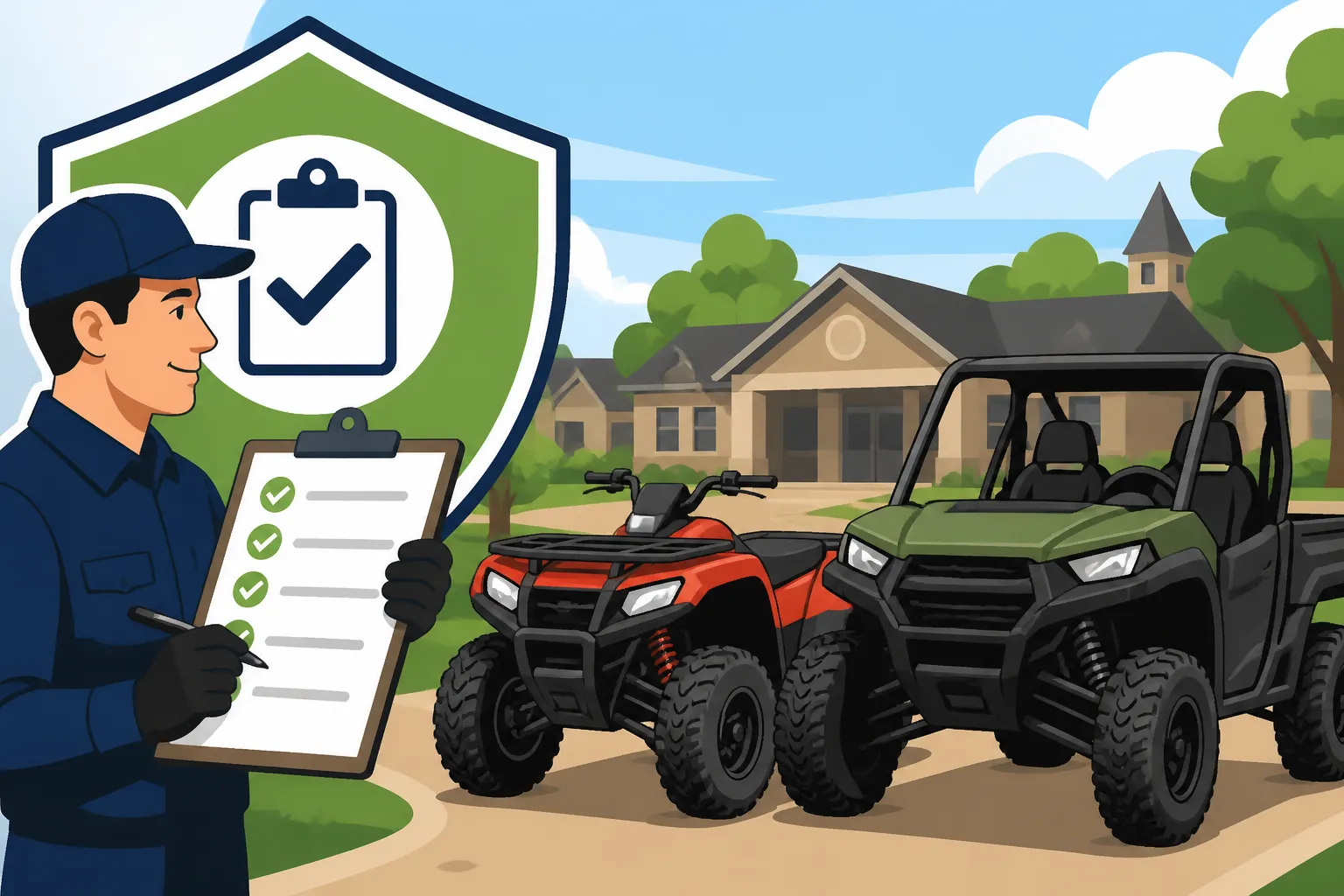
The Inspection a Village Runs Before Issuing a Permit
Trying to get your UTV or ATV street-legal in Illinois can feel like navigating a maze, especially when it comes to the local village ordinances that allow you to ride. One of the biggest hurdles many riders encounter is the actual inspection process a village requires before they'll hand over that coveted permit. This guide is going to walk you through exactly why these inspections happen, what villages are looking for, and how you can make sure your machine is ready to pass with flying colors.
Why Villages Inspect Your Machine Before Granting a Permit
It’s completely understandable to feel a bit frustrated when you've already bought your UTV, gone through the title process, and now a village wants to put your machine under the microscope just to get a permit to drive on local roads. Many riders assume that if they own it, they can ride it. However, the state of Illinois generally bans off-highway vehicles (OHVs) from public roads. It's up to individual villages, cities, townships, and counties to pass their own ordinances to permit street use. When they do, they take on a significant responsibility for public safety, and that's where the inspection comes in.
Ensuring Public Safety and Roadworthiness
Villages aren't just trying to make your life difficult with these inspections; they're genuinely concerned about the safety of everyone on their streets. Think about it: UTVs and ATVs, by their very nature, aren't designed for highway speeds or typical road traffic. They often lack the standard safety equipment found on cars and trucks. The inspection is the village's way of ensuring that any off-road machine they permit on their roads has been properly equipped and maintained to minimize risks to both the operator and other motorists, cyclists, and pedestrians. This is a crucial step in fulfilling the responsibilities laid out in [Illinois Municipalities That Pass Ordinances].
Upholding Local Ordinances and State Statutes
When a village passes an ordinance allowing UTVs or ATVs on its streets, it's not just a free-for-all. That ordinance must align with certain state statutes that define what constitutes a "non-highway vehicle" and what basic equipment it must carry to be allowed on a public way, even at low speeds. The inspection ensures your machine adheres to these specific requirements. It's a localized application of [The Illinois Law Behind Every Local UTV Ordinance]. Without this compliance check, the village could be opening itself up to liability or even having its ordinance challenged. This is especially true for equipment like lights, mirrors, and safety emblems, which are directly tied to visibility and accident prevention.
What Equipment Villages Check For During an Inspection
Okay, so you've pulled your UTV up to the village hall or maintenance garage, ready for the big check. What exactly are the inspectors going to be scrutinizing? The core of any village inspection will revolve around the specific equipment requirements outlined in state law for non-highway vehicles. These are generally focused on making your machine visible and controllable, ensuring it can safely share the road with other vehicles. It’s not just about having the parts; it’s about having them in proper working order.
Mandatory Lighting and Visibility Components
Your UTV or ATV needs to be seen, plain and simple. Villages will rigorously check all lighting and visibility components. This includes:
- Headlights: You must have at least one, but usually two, functional headlights that can illuminate the road ahead for a specified distance, typically 500 feet. The beams should be properly aimed and clean. [Illinois Requires a 500-Foot Headlight] means that bulb needs to be bright and clear.
- Tail Lamp: A red tail lamp is mandatory, visible from at least 100 feet to the rear. This is absolutely critical for night riding and even in low-light conditions during the day. [Illinois Requires a 100-Foot Tail Lamp] emphasizes its importance.
- Brake Lights: These are non-negotiable. When you apply the brakes, bright red lights must illuminate at the rear of your machine, clearly signaling to anyone behind you that you are slowing down or stopping.
- Turn Signals: While not always standard on every ATV, turn signals are typically required for street use by village ordinances, ensuring you can clearly indicate your intentions to turn or change lanes. Many riders opt for aftermarket kits from companies like SuperATV to add this crucial functionality. [Illinois Turn Signal Requirements] is a common village stipulation.
- Red Reflectors: Beyond powered lights, your machine needs passive visibility. Red reflectors must be mounted on the rear of your machine, easily seen in the dark when hit by other vehicles' headlights.
Essential Safety and Control Features
Beyond lighting, villages will also look at features that enhance your ability to control the machine and alert others to your presence.
- Rearview Mirror: A working rearview mirror is essential. It allows you to monitor traffic behind you without constantly turning your head, which can be dangerous. It should be securely mounted and provide a clear, unobstructed view to the rear. [Illinois Requires a Rearview Mirror] applies here.
- Slow-Moving Vehicle (SMV) Emblem: This is that bright orange triangle with a red reflective border that you often see on farm equipment. It's a critical safety device for vehicles traveling under 25 mph, warning faster-moving traffic to slow down and approach with caution. It must be securely attached to the rear of your UTV. [Illinois Requires a Slow-Moving Vehicle Emblem] is a key part of the inspection checklist.
- Horn: A working horn is necessary to alert pedestrians or other drivers to your presence in situations where visual cues might not be enough.
- Muffler and Spark Arrestor: While often more related to trail riding rules, some villages might check for a functional muffler to ensure noise levels are reasonable within residential areas. A spark arrestor, designed to prevent engine sparks from igniting flammable materials, is also a good idea and might be checked if the village is particularly stringent or near open lands.
- Tires: The tires should be in good condition, with adequate tread depth, and free from significant cracks or damage. They don't typically need to be DOT-rated unless specified by the local ordinance, but they need to be safe for road use.
- Brakes: The braking system must be fully functional, including both front and rear brakes (if applicable), ensuring you can stop safely and effectively.
Proof of Insurance and Registration
While not a physical inspection of the machine itself, proof of financial responsibility is almost universally required. Most villages will require you to show proof of liability insurance that meets the state's minimum requirements for street use, typically 25/50/20 coverage. This demonstrates that you can cover damages in the event of an accident. They'll also likely verify your [Illinois Title Certificates Explained] and ensure you have any necessary [Illinois OHV Usage Stamp Explained] or [Illinois Public Access Decal Explained] if those are relevant to their local rules or your intended riding areas.
Preparing Your UTV for a Village Inspection
The inspection doesn't have to be a stressful experience. With a little preparation and attention to detail, you can increase your chances of passing on the first try. Thinking ahead about what the inspectors are looking for will save you time and potential headaches.
Pre-Inspection Checklist and Maintenance
Before you even load up your machine to take it for inspection, run through your own comprehensive checklist.
- Test All Lights: This is paramount. Turn on your machine, test the headlights (high and low beams), taillights, brake lights, and turn signals. Have a friend stand behind you while you press the brake pedal to ensure those brake lights illuminate. If you've installed an aftermarket turn signal kit, perhaps from SuperATV, double-check all connections and confirm every light is flashing correctly. Replace any burnt-out bulbs.
- Verify Reflectors and SMV Emblem: Make sure all required red reflectors are present, clean, and securely attached to the rear of your machine. The slow-moving vehicle emblem should also be clearly visible, not faded, and firmly mounted. A loose SMV emblem can easily be missed or damaged, so give it a good tug to ensure it's not going anywhere.
- Check Mirrors and Horn: Sit on your UTV and adjust your rearview mirror. Can you see clearly behind you? Is it stable? Give the horn a quick blast to confirm it's working.
- Brake Functionality: Take your UTV for a short, slow test ride in a safe area to confirm your brakes engage smoothly and effectively. You don't want any surprises when the inspector asks you to demonstrate them.
- Tire Condition: Visually inspect your tires. Look for deep cracks, excessive wear, or any bulges. Ensure they are properly inflated.
- Cleanliness: While not directly a safety item, presenting a clean, well-maintained machine shows the inspector that you take pride in your UTV and are likely to maintain its safety features. A mud-caked machine might give a poor first impression.
Gathering Required Documentation
The inspection isn't just about the machine; it's also about you, the operator, and the machine's legal standing.
- Proof of Insurance: Have your current insurance card or declaration page readily available. Make sure the policy number, effective dates, and coverage limits are clear.
- Certificate of Title: Bring your official Illinois Certificate of Title. This proves ownership and ensures the VIN matches the machine you're presenting. This is especially important for [Illinois Title Transfer After a Sale] scenarios.
- Driver's License: You'll need to show a valid driver's license. [Do You Need a License for a UTV in Illinois?] The answer is almost always yes for street use.
- Application Forms: If the village requires a specific permit application form, have it filled out completely and accurately, ready to submit. This is usually the final piece of paperwork that ties everything together.
- Payment for Permit: Don't forget any fees associated with the permit itself. While the inspection may be free, the permit rarely is. [Illinois Permit Fees Set by a Town] can vary widely.
What Happens After a Successful Inspection?
Passing your village inspection is a fantastic step, but it’s not quite the end of the road. There are a few more steps to ensure you’re fully compliant and can legally enjoy riding your UTV on local streets.
Receiving Your Permit and Displaying It
Once your machine passes the inspection and all your paperwork is in order, the village will typically issue your UTV permit. This often comes in the form of a sticker or decal that needs to be prominently displayed on your machine. Each village will have specific instructions for [Where to Put a Village Permit Sticker on a UTV], but it's usually on the front fender, a visible part of the dash, or somewhere easily seen by law enforcement. This sticker is your visible proof that you've met all local requirements.
Understanding the Limitations and Rules of the Road
Just because you have a permit doesn't mean every road is open to you. Your permit will only be valid for the specific streets and within the jurisdiction of the village that issued it. It's crucial to understand [Illinois Rules for Riding a Village Street] and the exact boundaries and rules outlined in their ordinance. This might include:
- Speed Limits: Most village ordinances will restrict UTVs to streets with speed limits of 35 mph or less. [Only Streets Posted 35 mph or Lower Qualify] is a common restriction.
- Time of Day Restrictions: Some villages might have curfews for UTV use, especially at night or during early morning hours.
- Road Types: You might be restricted from state highways, interstates, or tollways, even within the village limits. [Illinois Crossing Rules at Intersections] usually permits crossing a state highway at an intersection, but not riding along it.
- Occupancy Rules: The number of passengers allowed might be limited to the manufacturer's design or local ordinance. [Illinois Rules for Passengers on a UTV] vary.
Always carry your permit, proof of insurance, and driver's license with you when riding. A conservation officer or local police officer may ask to see them at any time.
Annual Renewals and Re-inspections
Most village UTV permits are not perpetual. They typically require annual renewal. This might mean another inspection, or it could simply be a paperwork renewal if your machine passed a thorough inspection recently. Keep track of your permit's expiration date to avoid any lapsing in coverage or potential fines. [When a Resident Access Decal Needs Renewing] for grant sites is similar in concept to village permit renewals – stay on top of those dates! Regular maintenance, even between official inspections, will ensure your machine remains safe and compliant year after year, avoiding situations like [Paperwork Mistakes That Delay an Illinois Title] or permit renewal.
Disclaimer
This article is for general informational purposes only and does not constitute professional advice. Laws, prices and regulations vary by location and change over time. Consult a qualified professional for guidance on your specific situation.