Illinois Counties That Pass Resolutions
It can be incredibly confusing to figure out where you're actually allowed to ride your ATV or UTV on the road in Illinois. Many folks assume that if a small town nearby has an ordinance, that covers all the roads, but it’s just not that simple. This guide will walk you through the distinct role Illinois counties play in opening up road access for off-highway vehicles and what you need to know to ride legally and confidently.
The Foundation: Illinois's Statewide Road Ban
Let's start with the hard truth: Illinois law, at its core, bans ATVs and UTVs from public roads. This isn't just a suggestion; it's a foundational principle that all local regulations work around. For many new riders, or even seasoned veterans moving from other states, this can be a real shocker. You buy your machine, you're excited to use it, and then you realize you might not be able to even drive it down the street to your friend's house without potentially breaking the law.
This blanket ban exists to ensure public safety, considering that ATVs and UTVs are primarily designed for off-road use and often lack the same safety features, visibility, and handling characteristics of traditional road vehicles. It's a pragmatic approach to prevent mishaps on busy thoroughfares. So, when you think about riding on the road, always remember that you're operating under an exception to a general rule, not an inherent right. Understanding this core principle is key to appreciating why local governments have to jump through specific hoops to allow even limited street access.
The state provides the framework, but it doesn't leave riders entirely without options. It understands that rural communities, in particular, often rely on these machines for daily tasks or just getting around. Because of this, the law includes provisions that allow local units of government—like counties, townships, and incorporated municipalities—to create their own rules. However, these local rules cannot contradict the fundamental safety principles laid out by the state; they can only grant specific permissions where the state otherwise prohibits. It’s a delicate balance, and it’s why understanding the specific wording of any local ordinance or resolution is so critical before you ever turn the key.
Understanding County Resolutions for OHV Access
When we talk about counties and road access for ATVs and UTVs in Illinois, we're specifically looking at something called a "resolution." This isn't just a casual agreement; it's a formal declaration by a county board that decides to permit the operation of off-highway vehicles on certain county roads within their jurisdiction. It's a big deal for riders because it opens up significant stretches of roads that might otherwise be off-limits.
What a County Resolution Entails
A county resolution is essentially the county board's way of exercising the authority granted to them by the state to regulate OHV use on roads under their control. It’s a legal document, debated and voted upon by elected officials, that outlines the specific conditions under which ATVs and UTVs can be operated. This means that if you live in or plan to ride through a county that has passed such a resolution, you have a much clearer path to legal road use, at least on the roads managed by the county. It's a proactive step by the county to address the needs and desires of its residents, recognizing the practical role these machines play in many rural areas.
These resolutions aren't just a free pass, though. They always come with caveats and conditions. A resolution will typically specify things like which roads are included or excluded, what times of day riding is allowed, and what safety equipment is required. For instance, a resolution might allow UTVs on all county roads with a speed limit of 35 mph or less, but explicitly ban them from major arteries. It might also require riders to have a valid driver's license and insurance, even if the state's basic titling requirements for off-road machines don't include registration. Always remember that the goal of these resolutions is to balance rider access with public safety, so they're designed to be protective.
Furthermore, a resolution will often delineate specific operating rules. This could include requirements for visibility, such as a brightly colored flag, or restrictions on passenger numbers. Some counties might also impose age limits for operators, even if the state has general guidelines for off-road riding. Riders need to be incredibly diligent in checking the exact language of any county resolution. Ignorance of the law is never an excuse, and county police or sheriff’s deputies will enforce these rules just as they would any other traffic law. Taking the time to read the full text of a resolution, usually available on the county's website, can save you a lot of hassle and potential fines down the road.
How a County Board Passes a UTV Resolution
The process of a county passing a UTV resolution isn't always quick or easy, and it often involves significant public input. Typically, it starts with citizens, often groups of riders, farmers, or business owners, petitioning their county board for consideration. They might highlight the benefits of allowing OHV access, such as increased recreational opportunities, easier farm-to-field travel, or boosting local tourism. This initial outreach is crucial for getting the issue on the board's agenda. Understanding [How a Village Board Votes to Allow UTVs] can give you a good parallel for how a county process often works, just on a larger scale.
Once the issue is on the agenda, the county board will usually conduct public hearings or workshops. This is where residents on both sides of the issue—those in favor and those opposed—can voice their opinions. Concerns might range from noise complaints to potential traffic hazards on shared roads. Board members then weigh these perspectives, often consulting with local law enforcement, highway departments, and legal counsel to draft a proposed resolution. The drafting stage is critical as it defines the scope and limitations of the proposed OHV access. The details really matter here, like [Illinois Rules for Riding a County Road] compared to a village street.
Finally, after all discussions and revisions, the resolution goes to a vote by the full county board. If it passes, it becomes law within that county's jurisdiction, affecting all county-maintained roads. It's a democratic process, and the outcome often reflects the unique needs and concerns of that particular county's population and landscape. For riders, it means that advocacy and participation in local government can genuinely make a difference in where and how they can legally operate their machines. Keep in mind that a resolution only applies to roads maintained by the county, so it won't impact state highways or township roads without additional action from those specific authorities.
County Resolutions Versus Village Ordinances
This is where things can get a little bit tricky for riders, as Illinois has multiple layers of local government, and each has its own jurisdiction. It's crucial to understand the difference between a county resolution and a village or city ordinance, because mistaking one for the other can lead to unexpected tickets and fines. Imagine thinking you’re covered because the county said yes, only to find yourself cited by a village police officer within an incorporated area.
Jurisdictional Nuances for Riders
The key distinction lies in jurisdiction: what roads each governmental body actually controls. A county resolution applies only to roads maintained by the county. These are typically the larger, numbered roads that connect different towns or traverse unincorporated areas. When you're driving through a rural stretch of Illinois, often on a gravel or two-lane asphalt road, you're likely on a county road. If that county has passed a resolution, your UTV or ATV might be legal there, assuming you meet all the other conditions. This can be a huge benefit for farmers needing to cross from one field to another or for recreational riders who want to access different parts of their property without trailering.
However, once you enter an incorporated city, village, or town, a county resolution usually ceases to apply to the streets within that municipality. Those streets fall under the authority of the city or village council, which can pass its own specific ordinances. This means you could be legally riding on a county road, turn onto a village street, and suddenly be in violation of local law if that village hasn't passed its own ordinance. It's like stepping into a different legal zone without even realizing it. This is why knowing [Illinois Towns That Allow UTVs on Streets] is just as important as knowing county rules.
This layered approach means riders need to do their homework. You can't assume that because County A allows UTVs, every single road within County A is fair game. You must specifically check if the particular road you intend to ride is a county road, and then, if you plan to enter any incorporated areas, you must verify their specific ordinances. For example, a county resolution might allow you to ride from your property to a nearby fishing spot on a county road, but if that spot involves going through a small village, you’ll need to confirm that village’s specific rules. It's a bit of a patchwork, but understanding these jurisdictional lines is paramount for legal and safe riding.
Why Roads Under Two Jurisdictions Need Two Ordinances
This is a common point of confusion and frustration for riders in Illinois. You might encounter a road that serves as a boundary between a county and a village, or perhaps a road that a county maintains but runs through an unincorporated area that still has its own set of rules, or even a section of a state route that is controlled by both local and state authorities. When a road effectively falls under the purview of two different governmental entities, you generally need two agreements or permissions for OHV access. This situation often arises with township roads as well, where the township commissioner has a say.
Consider a county road that happens to form the main street of a small, unincorporated community. Even though the county maintains the physical road, the residents of that small community might have their own local informal rules or expectations about traffic. More formally, if that road is part of a larger state route, both the Illinois Department of Transportation (IDOT) and the local government would need to coordinate. While counties can open up their roads, they cannot override state highway laws without specific agreements. This often means that even if a county allows UTVs, you still can't cross a state highway unless specifically permitted by the state. This is an important consideration when planning your route and understanding [Illinois Crossing Rules at Intersections].
So, if you’re riding on a county road that then passes through an incorporated village, both the county and the village would need to have passed their respective permissions. The county resolution would cover the parts of the road outside the village limits, while the village ordinance would cover the stretch inside. This is why you often hear people talking about the "patchwork" of laws in Illinois. It necessitates a hyper-local approach to planning your rides, double-checking every segment of your route, and being prepared to trailer your machine if necessary to navigate areas without appropriate permissions. It's an extra layer of complexity, but it’s the reality of navigating Illinois’s road network on an OHV.
Riding Legally on Permitted County Roads
So, your county has passed a resolution, and you're ready to hit those county roads! That's great news, but holding a piece of paper that says "yes" is only the first step. You still have a host of responsibilities, from ensuring your machine is properly equipped to understanding the actual rules of the road. It's not a free-for-all; it's about responsible integration into existing traffic.
Essential Equipment for Street Use
Even if a county resolution permits OHVs on certain roads, it will almost certainly specify a list of required equipment to make your machine "street legal." This isn't just arbitrary; it's about making your ATV or UTV as visible and safe as possible for other motorists. Think of it as preparing your machine to operate in an environment it wasn't originally designed for. Many riders turn to aftermarket providers like SuperATV for street-legal kits that bundle many of these necessary items. These kits often include components such as a horn, mirrors, and turn signals, simplifying the compliance process.
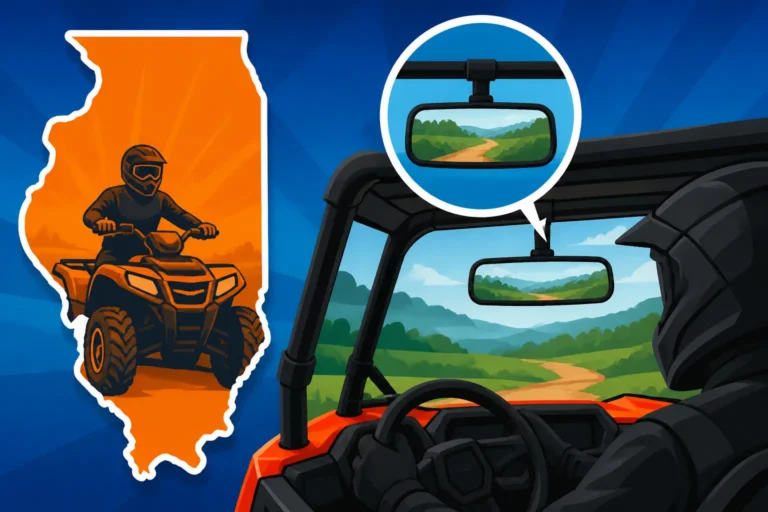
Typically, you'll need working headlights and taillights that are visible at specific distances, much like a car. Your UTV or ATV will also need brake lights that illuminate when you apply the brakes. Turn signals, both front and rear, are usually a non-negotiable item, allowing you to clearly signal your intentions to other drivers. Many street-legal kits from brands like SuperATV also include a license plate bracket and light, preparing you for other potential municipal requirements. A functional horn is also a standard requirement, as it's a critical safety device for alerting others. Finally, a rearview mirror is almost always required, giving you visibility of traffic behind you. Without these basic safety features, even if the county says "yes," your machine isn't ready.
Beyond the basics, some resolutions might specify additional equipment. For instance, a slow-moving vehicle (SMV) emblem, the bright orange triangle, is often required on the rear of your machine, especially if it's operating at slower speeds than typical road traffic. This is a critical visual cue for drivers approaching from behind, giving them ample warning to slow down. Reflectors, often red in the rear and amber on the sides, can also be mandatory to enhance nighttime visibility. It’s not just about what you think you need; it’s about what the resolution explicitly states. Before you venture onto county roads, make a detailed checklist and ensure your machine meets every single specification.
Rules of the Road and Operator Requirements
Just like driving a car, operating an ATV or UTV on a county road comes with a specific set of rules and operator requirements. You can’t just ride wherever and however you please; you must adhere to standard traffic laws and specific OHV regulations. For instance, a valid driver's license is almost always a requirement. This isn't just about being able to operate the machine; it's about demonstrating you understand the rules of the road. Even if [Illinois Requires a Driver's License] for street use, there might be specific age requirements in the county resolution too.
Speed limits are another critical factor. Most county resolutions will restrict OHV speeds to 35 mph or lower, even if the posted speed limit for cars is higher. This reflects the different handling characteristics and stability of ATVs and UTVs compared to traditional vehicles. You’re expected to follow all traffic signs, signals, and right-of-way rules. Lane usage is also important; generally, you’re expected to stay as far to the right as safely possible to allow other traffic to pass. You must ride with the flow of traffic, not against it, and avoid unsafe maneuvers.
Furthermore, most resolutions will stipulate that operators must have proof of liability insurance. This is a common requirement across all vehicles sharing public roads, ensuring that if an accident occurs, there’s financial coverage for damages or injuries. While Illinois has specific minimums for street use, a county might require you to carry [Illinois Insurance Minimums for Street Use] for UTVs. This isn't just a suggestion; it’s a legal obligation designed to protect everyone on the road. Always carry your driver's license, proof of insurance, and any specific permits or documentation required by the county with you when riding. A conservation officer or county sheriff can and will ask to see these documents, and not having them can lead to significant penalties.
Finding and Understanding Your County's Rules
Okay, so you understand the basics. But how do you actually find out if your specific county, or a county you plan to visit, has passed a resolution? And once you find it, how do you make sense of all the legal jargon? It can feel like digging for treasure, but with the right approach, you can get the answers you need.
Resources for Local Ordinance Lookups
The best place to start your search for county resolutions is usually the county’s official website. Most Illinois counties maintain a website where they publish their ordinances, resolutions, and meeting minutes. Look for sections labeled "County Board," "Ordinances," "Resolutions," "Code of Ordinances," or "Public Records." You might need to use the site's search function, typing in terms like "OHV," "ATV," "UTV," or "off-highway vehicle." This direct approach is generally the most reliable way to find the official, current documentation.
If the information isn't readily available online, don't hesitate to reach out to the County Clerk's office or the County Administrator's office. These departments are typically responsible for maintaining official county records and can point you to the correct documents or even provide copies. You might also find a wealth of information by attending county board meetings, especially if you know the topic of OHV access has been or will be discussed. Sometimes, local law enforcement agencies, like the Sheriff's Department, might also have summaries or guidance on local OHV rules, as they are the ones enforcing them. They might even have insights into [Who Writes the Ticket at a Grant Site] or on county roads.
Beyond official channels, local ATV/UTV clubs and community forums can be invaluable resources. Experienced riders in your area often know the ins and outs of local regulations and can share their knowledge about where to find specific ordinances or whom to contact. However, always verify information obtained from unofficial sources with official county documents. While community wisdom can be helpful, it should never replace directly checking the legal text. A simple phone call to the county clerk could save you a lot of headache and potential fines if you get outdated or misinterpreted advice.
Deciphering the Legal Language
Once you get your hands on a county resolution, it might feel like you're reading a foreign language. Legal documents are often written in precise, formal language that isn't always easy for the average person to understand. Don't get discouraged! Take your time, read it carefully, and look for key phrases. Pay close attention to definitions: how the resolution defines an "off-highway vehicle," a "county road," or "daylight hours." These definitions set the precise scope of the rules.
Look for specific sections that grant permission ("shall be allowed," "may operate") and sections that impose restrictions ("shall not operate," "prohibited"). Pay particular attention to any enumerated lists of requirements, such as equipment lists (mirrors, turn signals, horn) or operating conditions (speed limits, age restrictions, insurance requirements). If the resolution references state statutes, it’s a good idea to look up those statutes as well, as they provide the broader legal context. Sometimes, a county resolution will simply state "all provisions of the Illinois Vehicle Code shall apply," which means you're expected to know those broader state laws.
If you're still struggling to understand a specific point, consider contacting the County Clerk or even a local attorney who specializes in vehicle or property law. They might be able to clarify ambiguities. While this guide aims to simplify, legal texts are complex for a reason—they need to cover all possible interpretations. The most important thing is to ensure you genuinely understand what the resolution permits and, more importantly, what it restricts. Don't guess; if in doubt, err on the side of caution or seek clarification. Being thorough here is your best defense against inadvertently breaking the law.
The Broader Impact of County Resolutions
The existence of county resolutions allowing OHV access is more than just a convenience for individual riders; it has broader implications for communities, tourism, and even the future of off-road recreation in Illinois. These resolutions reflect a changing landscape where off-road vehicles are becoming more integrated into rural life.
Economic and Community Benefits
When counties pass resolutions permitting OHV use on their roads, it can bring a significant economic boost to local communities. Imagine a small town in a rural county that now sees increased traffic from riders who might stop for gas, grab a bite to eat, or even book a night at a local bed and breakfast. This can be especially impactful in areas that traditionally rely on agriculture but are looking for ways to diversify their local economy. It’s not just about recreational riders; businesses that sell or service ATVs and UTVs can also see increased demand, creating local jobs and supporting the tax base.
These resolutions also foster a stronger sense of community for riders. When legal access is provided, it encourages responsible riding and reduces the perception that OHV enthusiasts are always "breaking the rules." It can lead to the formation of more riding clubs, organized events, and even poker runs or charity rides, further integrating the OHV community into the local social fabric. This kind of integration helps to dispel stereotypes and build positive relationships between riders and non-riders.
Furthermore, for farmers and agricultural workers, these resolutions can be incredibly practical. Using a UTV to quickly traverse county roads between different fields, transport tools, or check on livestock can save significant time and fuel compared to hitching up a truck and trailer. It makes daily tasks more efficient and less cumbersome. So, while you might just see it as a way to enjoy your machine, these resolutions often serve multiple, vital functions within rural Illinois counties, going far beyond simple recreation.
Advocacy and Future Considerations
The existence of county resolutions is often a direct result of effective advocacy by riders and local stakeholders. If your county doesn't currently allow OHVs on its roads, or if the current resolution is too restrictive, there’s always an opportunity to engage with your county board. This means attending meetings, speaking during public comment periods, writing letters, and organizing fellow riders. Presenting a well-researched case, highlighting the economic benefits, safety measures, and positive community impact, can sway opinions and lead to new or revised resolutions. Remember, the county board members are your elected representatives, and they are there to listen to their constituents.
However, ongoing vigilance is also necessary. Resolutions, like any local law, can be amended or even repealed. Issues like noise complaints, reckless riding, or increased accidents can lead local governments to reconsider their stance. This is why responsible riding is paramount. Every rider on a county road is an ambassador for the entire OHV community. Adhering to speed limits, riding respectfully, maintaining proper equipment (perhaps checking out SuperATV for upgrades), and being mindful of other road users helps maintain the privilege of road access.
The future of OHV road access in Illinois counties will likely continue to evolve. As machines become more sophisticated and demand grows, more counties may explore creating their own resolutions. It's a testament to the power of local governance and community engagement. By staying informed, riding responsibly, and actively participating in the democratic process, riders can help shape a positive and sustainable future for OHV use on Illinois's county roads. Always remember that the rules are there for a reason, and respecting them ensures that these opportunities remain open for everyone.
Common Questions About County Road Access
Navigating the rules for riding your ATV or UTV on Illinois county roads can bring up a lot of specific questions. Let's tackle some of the most common ones that riders often ask, helping to clear up some lingering confusion.
How Do County Road Rules Interact with Township Roads?
This is a fantastic question because township roads are another layer of complexity in Illinois's road system, distinct from both county roads and municipal streets. Generally speaking, a county resolution only applies to the roads that are explicitly maintained by the county. It does not automatically extend to township roads. [Illinois Rules for Riding a Township Road] are governed by the township itself. Just as a county board passes resolutions for county roads, a township board (or often the township road commissioner) must pass its own specific resolution or ordinance to allow OHVs on township roads.
This means you could be legally riding on a county road, make a turn onto a township road, and suddenly be in an area where OHV use is prohibited, even if it's in the same geographic county. It’s a common mistake for riders to assume "county-wide" means "every public road in the county," but that's rarely the case. Township roads are typically the smaller, often gravel or dirt roads that serve localized areas, connecting farms and residences within a township. It's critical to identify the specific jurisdiction of each road segment you plan to travel. If you're unsure, consulting a county highway map or contacting the appropriate township office is always the safest bet.
So, for truly expansive road access, you might need not only a county resolution but also specific ordinances from multiple townships within that county. This highlights the importance of truly hyper-local research. Don't rely on general assumptions; dig into the specifics for every type of road you intend to use. This detailed understanding will prevent unwanted encounters with law enforcement and ensure your rides are always legal and hassle-free.
What Happens If a County Resolution Conflicts with a State Law?
This is a critical point that underscores the hierarchy of laws in Illinois. In general, state law always trumps local law if there is a direct conflict. The Illinois Vehicle Code (IVC) sets the baseline for what's permissible on public roads. Local governmental bodies, including counties, are granted specific authority by the state to create exceptions to the general state prohibition on OHV use on roads. However, they cannot pass a resolution that contradicts a standing state law.
For example, if the state mandates certain minimum insurance requirements for any vehicle operating on public roads, a county resolution cannot simply waive that requirement. Similarly, if state law prohibits riding on interstates or tollways, a county resolution cannot allow it, even if the interstate passes through that county. The county's authority is to allow what the state might otherwise prohibit, not to forbid what the state expressly allows, or to allow what the state expressly forbids in terms of fundamental safety or vehicle operation. This is why you'll often see resolutions explicitly stating that OHVs must comply with "all applicable state laws and regulations."
Therefore, when reviewing a county resolution, you should always assume that any state-mandated safety equipment (like brake lights or headlights) or operator requirements (like a valid driver's license) still apply, even if they aren't explicitly reiterated in the county's document. The county resolution provides the permission for street use, but the manner of that use is still heavily influenced by overarching state regulations. It's not an "either/or" situation; it's a "both/and." Always ensure you're compliant with both the local resolution and the relevant state laws.
What if I'm from Out of State and My County Has a Resolution?
If you're visiting Illinois from another state and plan to ride your ATV or UTV on county roads where a resolution permits it, you generally need to comply with all the requirements set forth in that Illinois county's resolution. While your home state's title or registration might be recognized for ownership purposes, it's the Illinois county's specific operating rules that will dictate your ability to ride on their roads. [Illinois Rules for a Visiting Missouri Rider] or any other out-of-state rider largely hinge on meeting local Illinois requirements.
This means ensuring your machine meets the Illinois county's equipment standards (mirrors, turn signals, etc.), even if those aren't required in your home state. You'll also need a valid driver's license, and likely proof of insurance that meets Illinois minimums, as specified in the resolution. Some counties or municipalities might also have specific permit fees for visitors or require you to purchase a temporary local permit. Always check the resolution for any specific stipulations for non-residents.
The fundamental principle here is that when you operate a vehicle on public roads within Illinois, you are subject to Illinois laws and any applicable local ordinances or resolutions. Your out-of-state status doesn't exempt you from these local rules. It's always best practice to contact the county clerk's office or sheriff's department in the county you plan to visit before you travel, explaining your situation as an out-of-state rider, to get the most accurate and up-to-date information. Being proactive can prevent an otherwise enjoyable trip from ending in a costly ticket.
| Aspect | County Resolution (Typical) | Village Ordinance (Typical) | State Law (Baseline) |
|---|---|---|---|
| Jurisdiction | County-maintained roads (rural, connecting towns) | Streets within incorporated city/village limits | All public roads, interstates, tollways (general prohibition) |
| Governing Body | County Board | City/Village Council | Illinois General Assembly |
| Effect on OHVs | May permit OHV use on specific county roads under conditions | May permit OHV use on specific municipal streets under conditions | Generally prohibits OHV use on public roads unless exception applies |
| Common Requirements | Driver's license, insurance, basic safety equipment (lights, horn, mirror, turn signals, SMV emblem), speed limits | Same as county, often with local permit/fee, specific hours of operation | Basic vehicle code requirements, insurance minimums for street use |
| Overlap | Does NOT override village ordinances or state laws | Does NOT override county resolutions (outside limits) or state laws | Local laws cannot contradict state law; only create exceptions |
| How to Find | County Clerk's office, county website, county board minutes | Village/City Clerk's office, municipal website, council minutes | Illinois General Assembly website (Illinois Vehicle Code) |
Disclaimer
This article is for general informational purposes only and does not constitute professional advice. Laws, prices and regulations vary by location and change over time. Consult a qualified professional for guidance on your specific situation.