Winnebago’s UTV Ordinance in Illinois
It can feel incredibly frustrating to own a UTV in Illinois, dreaming of taking it on local roads for quick errands or leisurely cruises, only to be met with a confusing patchwork of regulations. Every town and county seems to have its own set of rules, leaving you scratching your head about what's actually allowed. If you're a UTV owner in Winnebago County, trying to decipher your local ordinance can feel like a full-time job. This guide is here to untangle the specifics of Winnebago's UTV ordinance, helping you understand precisely where, when, and how you can legally operate your machine on public roads.
Understanding the Local Landscape for UTVs in Winnebago
Let's be real, the idea of driving your UTV right from your driveway to the local store sounds amazing, doesn't it? But the reality in Illinois is often far more complicated than that simple dream. Many UTV owners move to the state or buy their first machine only to find out that it's not as straightforward as they hoped.
The General Ban on Street Riding in Illinois
First and foremost, it's crucial to understand that Illinois law generally restricts off-highway vehicles (OHVs), including UTVs, from operating on public roads. This isn't just a suggestion; it's the baseline. The state's default position is that your UTV belongs off-road, whether that's on private property, a dedicated trail system, or your own land. This overarching ban can feel like a major roadblock for enthusiasts who see the practical utility of their machines for short trips or connecting to trails. You might wonder why the state is so restrictive, and it often comes down to safety concerns, traffic flow, and the different design specifications of UTVs compared to traditional cars. For more on this, check out [Illinois Law Starts by Banning Street Riding].
This general prohibition means that if a local municipality or county hasn't specifically passed an ordinance allowing UTVs on its roads, then you simply cannot ride them there. It's not a gray area; it's a "no." This is why it's so important to know your local rules inside and out, especially when considering a machine for mixed-use purposes. Many riders have learned this the hard way, receiving citations for simply driving down a quiet country road they thought was permissible.
How Local Ordinances Create Exceptions
Here's where it gets interesting, and a little hopeful. While the state law sets a general ban, it also provides a mechanism for local units of government—like counties, villages, and cities—to create exceptions. These exceptions come in the form of local ordinances or resolutions that specifically permit UTV operation on certain roads within their jurisdiction. It’s a bit of a workaround, allowing communities to decide what makes sense for their unique traffic patterns and resident needs. [Which Units of Government Can Open a Road] delves into this governmental authority.
For us in Winnebago County, this means the County Board has the power to pass a resolution or ordinance to allow UTVs on specific county-maintained roads. This isn't a blanket permission for all roads in the county, nor does it necessarily cover roads within incorporated villages or cities that might have their own separate rules. It's a granular approach, and it requires vigilance on your part to stay informed. A local ordinance is often the result of community advocacy, showing that when residents speak up, change can happen. However, it also means that the rules can vary dramatically from one county line to the next, or even from a county road to a village street within that same county.
Key Provisions of the Winnebago UTV Ordinance
Okay, let's zoom in on Winnebago County itself. If you're looking to ride your UTV on public roads here, you need to understand the specifics. This isn't just about avoiding a ticket; it's about being a responsible, informed rider who contributes positively to the community.
Who Can Operate a UTV on Winnebago Roads
The Winnebago County ordinance, like most others across Illinois, sets clear stipulations on who can actually get behind the wheel. Typically, you'll need a valid driver's license. This isn't optional; it’s a non-negotiable requirement. The county wants to ensure that anyone operating a UTV on public roads has demonstrated basic driving competence and understands traffic laws, just like they would for a car. This means no provisional licenses or learner's permits will suffice for street operation.
Beyond the license itself, there are often age restrictions. While many UTVs are used by younger riders off-road, operating on public roads usually aligns with state driving age laws. If you have a teenager who loves to ride their UTV, they generally won't be able to drive it on Winnebago County roads until they're old enough to hold a full driver's license. This is a safety measure designed to protect both the UTV operator and other motorists. It's also important to remember that these rules apply to all operators, whether you own the machine or are just borrowing it for the afternoon.
Where UTVs Are Allowed to Ride
This is often the trickiest part for riders. The Winnebago County ordinance won't typically open up every single road to UTVs. Instead, it designates specific types of roads or specific road segments where UTVs are permitted. Often, this includes county-maintained roads that are not part of the state highway system and have speed limits below a certain threshold—usually 35 mph. You won't be cruising down major arteries or state routes. The ordinance is designed to keep UTVs on less-trafficked, lower-speed roads where they can integrate more safely.
It's absolutely essential to consult the official Winnebago County ordinance map or description of approved roads. Don't rely on hearsay or what a friend says. What might be allowed in one rural township might not be in another, even within the same county. Some ordinances explicitly list roads by name, while others define them by category (e.g., "unmarked county roads with a posted speed limit of 30 mph or less"). Always remember that these ordinances typically don't apply to state highways, interstates, or tollways—those are almost always off-limits to UTVs statewide. For broader context, see [Illinois UTV Street Legal Rules by Town].
When UTVs Can Be Operated on Public Roads
The "when" can be as important as the "where." Many county ordinances, including Winnebago's, impose restrictions on the hours of operation. It's common to see rules that limit UTV street riding to daylight hours, for instance. This is a practical safety measure, as UTVs, even with proper lighting, can be less visible to other vehicles during dusk, dawn, or nighttime hours.
There might also be seasonal restrictions, though these are less common for general road access and more tied to specific trail systems. However, weather conditions could implicitly limit when it's safe or practical to ride. Always check if the ordinance specifies any particular days of the week or times of day when UTVs are permitted. Ignoring these timeframes can lead to citations, even if you’re otherwise perfectly compliant. Understanding [When a County Board Passes a UTV Resolution] can give insight into why these specific restrictions are put in place.
Mandatory Equipment for Street-Legal UTVs in Winnebago
Getting your UTV street-legal in Winnebago County isn't just about having the right papers; it's also about equipping your machine properly. Local ordinances typically demand a suite of safety features to ensure your UTV is as visible and controllable as possible when sharing the road with other vehicles. Think of it as making your off-road warrior a little more civilized for public pavement.
Lighting and Reflective Gear Requirements
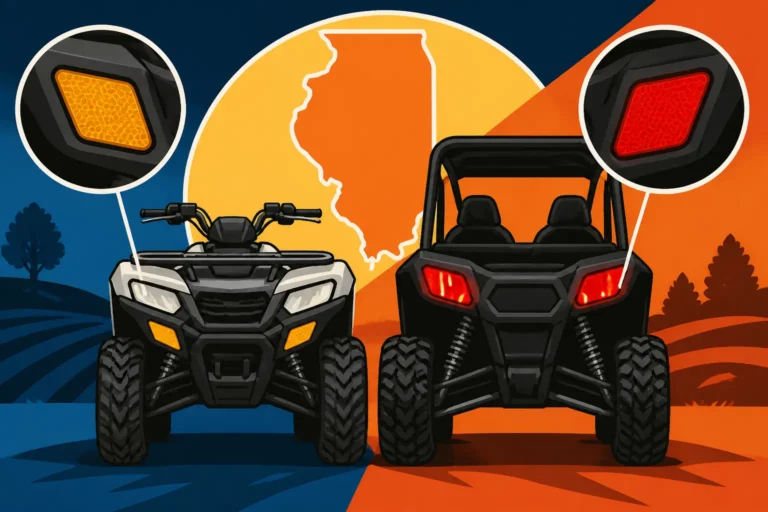
One of the most critical aspects of street legality is lighting. You're going to need more than just your factory headlights. The Winnebago ordinance will require specific lighting for daytime and nighttime visibility. This usually includes functioning headlights that are visible from a certain distance—often 500 feet—and a tail lamp that shows red from 100 feet. But it doesn't stop there. You'll likely also need brake lights that illuminate when you hit the pedal, turn signals for indicating lane changes or turns, and potentially even amber lights on the front and rear. For specifics, remember that [Illinois Requires a 500-Foot Headlight] and [Illinois Requires a 100-Foot Tail Lamp].
Beyond active lighting, reflective gear is almost always a must. This means red reflectors on the rear of your machine, strategically placed to catch the light from other vehicles. Sometimes, ordinances may specify white or amber reflectors for the front or sides as well. Upgrading your lighting with robust LED light bars, often found from companies like SuperATV, can significantly improve visibility and exceed minimum requirements, making your ride safer for everyone. Ensure all your lights are in good working order before every ride on public roads.
Mirrors, Horns, and Other Safety Features
To safely operate your UTV alongside cars and trucks, you need to be aware of your surroundings, and that includes what's behind you. A functional rearview mirror is a non-negotiable item, as highlighted in [Illinois Requires a Rearview Mirror]. Some ordinances might even require side mirrors in addition to a central rearview mirror. These aren't just for convenience; they are vital for checking blind spots and safely merging or turning.
Then there's the horn. A working horn is essential for alerting other drivers or pedestrians to your presence, especially in situations where a visual cue might be missed. It doesn't have to be a loud, obnoxious air horn, but it does need to be clearly audible. Beyond these, you might find requirements for a muffler to keep noise levels reasonable (no excessively loud exhausts!), and potentially even a windshield to protect the operator from debris. Brands like SuperATV offer a range of UTV accessories, including robust mirrors and full windshield kits, that can help you meet these local ordinance requirements while enhancing your riding experience.
The Slow-Moving Vehicle Emblem and Its Importance
Because UTVs typically operate at lower speeds than most passenger vehicles, especially on roads with higher speed limits (even if you're only allowed on 35 mph roads, you're likely slower than the general flow of traffic), a slow-moving vehicle (SMV) emblem is often required. This is the familiar orange triangle with a red border that you see on farm equipment or horse-drawn carriages. Its purpose is clear: to warn approaching drivers that your vehicle is moving at 25 mph or less, giving them ample time to react and reduce speed.
The placement of this emblem is also usually specified, typically on the extreme rear of the UTV, mounted at a height that is easily visible to traffic behind you. It should be clean and unobstructed. Ignoring this small but crucial detail could not only lead to a ticket but, more importantly, put you at a higher risk of a rear-end collision. It's a simple, inexpensive piece of equipment that provides a huge safety benefit. Remember that [Illinois Requires a Slow-Moving Vehicle Emblem] for these types of machines.
Permitting, Fees, and Enforcement in Winnebago
You've got your UTV properly equipped, you know who can drive it, and you understand where it's allowed. Now comes the official part: getting permission. Navigating the permitting process, understanding the associated costs, and knowing what to expect from law enforcement are key steps to legal UTV operation in Winnebago County.
The Application Process for a UTV Permit
Unlike state-level titling or usage stamps, the UTV permit process for street legality happens at the local level, specifically with Winnebago County. This means you won't be heading to a Secretary of State facility for this. Instead, you'll likely need to go to a county office, perhaps the County Clerk's office or another designated department. The application typically requires information about you (the owner/operator), your UTV (make, model, VIN), and proof that you meet the necessary requirements. This might include showing your valid driver's license, proof of insurance, and possibly even a physical inspection of your UTV to verify all required equipment is installed and functioning.
It's common for counties to require that your UTV's VIN (Vehicle Identification Number) matches the ownership documents, and that there are no outstanding issues with the machine. Some applications might be available online for download, but you'll almost certainly need to submit them in person to ensure all checks are completed. Don't procrastinate on this; it's the official gateway to legal street riding.
Understanding Permit Fees and Renewals
Operating a UTV on public roads in Winnebago County isn't usually free. Most local ordinances come with a permit fee, which helps cover the administrative costs of the program and potentially contributes to road maintenance. These fees can vary, but generally, they are an annual cost. You might pay a flat fee for the initial permit, and then a slightly lower fee for subsequent renewals. It's essential to understand the fee structure, including when the permit expires and how far in advance you can or should renew it.
A common scenario is that permits expire annually, perhaps on a specific date like December 31st or on the anniversary of issuance. Missing a renewal date means your permit is no longer valid, and you could face penalties if caught riding on county roads. Always budget for this annual expense and keep track of your permit's expiration date. It's a small price to pay for the peace of mind and legal access to the roads.
What to Expect from Local Law Enforcement
Winnebago County Sheriff's deputies and other local law enforcement agencies are responsible for enforcing the UTV ordinance. This means if you're pulled over while operating your UTV on a county road, you should be prepared to present your valid driver's license, proof of insurance, and your Winnebago County UTV permit. They will also likely do a visual check of your machine to ensure all required equipment is present and functioning.
It’s important to remember that law enforcement officers are just doing their job. Being cooperative and polite goes a long way. If you are found to be in violation—perhaps you don't have a permit, or your lights aren't working, or you're on a prohibited road—you could face fines and penalties. [Illinois Penalties for Illegal Street Riding] outlines the types of consequences you might incur. The best way to avoid these situations is to be fully compliant with the ordinance. Know the rules, follow them to the letter, and always carry your necessary documentation.
Navigating Winnebago County Roads Safely and Responsibly
Riding a UTV on Winnebago County roads isn't just about legality; it's about safety. Operating a machine designed primarily for off-road use in a mixed-traffic environment demands extra caution and adherence to all traffic laws, just as you would in a car. Being a responsible rider benefits everyone and helps maintain UTV access in the community.
Crossing State Highways and Intersections
While Winnebago County's ordinance might open up certain county roads, it almost certainly does not allow continuous travel on state highways. State routes and major thoroughfares are generally off-limits for UTVs across Illinois. However, many local ordinances do make provisions for crossing a state highway at an intersection to get from one permitted county road to another. This is a critical distinction. You can't ride down the state highway, but you might be able to go across it.
When crossing a state highway, extreme caution is paramount. Treat it like you would any other vehicle crossing a busy road: yield to all traffic, wait for a clear opening, and make your crossing quickly and efficiently. Don't assume other drivers see you, even if your lights are blazing. Remember that larger vehicles might not be expecting a UTV. Always obey all traffic signals and signs. This careful approach helps avoid serious accidents and keeps UTVs from becoming a hazard on busier roads.
Rules for Passengers and Youth Operators
The fun of a side-by-side often comes with sharing the experience with passengers. However, Winnebago County's ordinance will likely have specific rules about who can ride along. This often means all passengers must have a designated seat and wear a seatbelt, if equipped. Overloading your UTV beyond its manufacturer's capacity is not only dangerous but likely a violation of the ordinance.
For youth operators, as mentioned earlier, the general rule is that they need a valid driver's license to operate on public roads. Even if a younger child is riding as a passenger, ensure they are secured safely and meet any age or height requirements for passengers that the ordinance or UTV manufacturer specifies. It’s always best to err on the side of caution when it comes to children's safety, whether on the road or off.
Insurance and Accident Reporting
Just like any other vehicle on the road, your UTV needs to be insured if you're operating it on public roads in Winnebago County. The county ordinance will require proof of financial responsibility, typically in the form of liability insurance. This isn't just a suggestion; it’s a legal mandate to protect you and others in the event of an accident. The minimum coverage amounts often mirror those required for cars, which in Illinois, are usually 25/50/20 (meaning $25,000 for bodily injury per person, $50,000 for bodily injury per accident, and $20,000 for property damage). [Illinois Requires Insurance for Street Use] gives the statewide view.
In the unfortunate event of an accident while riding your UTV on Winnebago County roads, you must report it according to Illinois law and any specific county requirements. This means notifying law enforcement, exchanging information with other involved parties, and notifying your insurance company. Treat a UTV accident just like you would a car accident. Proper reporting is crucial for insurance claims and legal protection. For details, see [Illinois Accident Reporting for a UTV Crash].
Common Pitfalls and Misconceptions for Winnebago Riders
Even with a clear ordinance, there are always those tricky areas, common misunderstandings, and evolving situations that can trip up even the most well-intentioned UTV owner. Being aware of these common pitfalls can save you a lot of headache, and potentially a hefty fine.
The Difference Between County and City Ordinances
One of the biggest sources of confusion for UTV riders in Illinois, and certainly in Winnebago County, is the jurisdictional maze. A Winnebago County ordinance for UTVs applies specifically to roads maintained by the county. It generally does not automatically apply to roads within incorporated villages or cities that lie within Winnebago County. This means that even if you're legally riding on a county road, the moment you cross into the municipal limits of, say, Rockford, Loves Park, or Belvidere, you might be entering an area with an entirely different set of rules—or no rules allowing UTVs at all.
This means you need to do your homework for each jurisdiction you plan to ride in. Just because the county allows it, doesn't mean your specific village does. Some villages might have their own UTV ordinances, while others might stick to the statewide ban. Always check the local municipal code before venturing into an incorporated area. This fragmented approach is a classic example of local control, but it certainly puts the onus on the rider to be hyper-informed.
Why Riding on Private Property is Different
Sometimes, the allure of an ordinance can overshadow the simplicity of private land. It's crucial to remember that all these street-legal discussions and permit requirements are for public roads. Riding your UTV on your own private property, or on someone else's private property with their explicit permission, is an entirely different matter. Generally, the state's equipment requirements, licensing laws, and permitting processes for street legality do not apply to private land use.
However, that doesn't mean anything goes. Noise ordinances, trespass laws, and reckless endangerment laws still apply, even on private land. But in terms of what lights, mirrors, or permits you need to just cross your own field, those rules are typically suspended. This distinction is important for riders who primarily use their UTVs for agricultural work or recreational riding on their own property, as they might not need to worry about the Winnebago County street-legal permit at all if they never leave private land. For farm exemptions, you might find more information in [Illinois Farm Use Exemptions From Insurance].
Staying Up-to-Date with Ordinance Changes
Local ordinances, like all laws, are not static. They can change, be amended, or even be repealed. A county board might pass an ordinance one year, and then revisit it a few years later to add new restrictions, expand permitted areas, or even tighten enforcement. Relying on information you heard five years ago is a recipe for trouble.
It's a smart practice to periodically check the official Winnebago County website, particularly the Sheriff's department or County Clerk's section, for updates to their UTV ordinance. Local news outlets might also cover debates or changes to such regulations. Staying informed is your responsibility as a UTV owner and operator. Joining a local ATV/UTV club can also be a fantastic way to keep abreast of changes, as club members often share information and advocate for rider rights.
Essential Equipment for Winnebago County UTV Street Legality
When it comes to outfitting your UTV for legal street use in Winnebago County, understanding the specific requirements is paramount. Here's a quick rundown of what you'll typically need, alongside some recommended additions for enhanced safety.
| Required Equipment | Description | Recommended Additions |
|---|---|---|
| Headlights | Visible from at least 500 feet, often requiring both low and high beams. | LED light bars (e.g., from SuperATV) |
| Tail Lamp | Shows red from at least 100 feet. | Brighter LED tail lights |
| Brake Lights | Must illuminate when brakes are applied. | Additional rear strobes/flashing lights |
| Turn Signals | Front and rear, amber in color, to indicate turns. | Integrated mirror-mounted signals |
| Rearview Mirror | Provides a clear view of the road behind the UTV. [Illinois Requires a Rearview Mirror] | Side mirrors for wider visibility |
| Horn | Audible from 200 feet, for signaling intent or warning. | Louder, more distinct horn |
| Slow-Moving Vehicle (SMV) Emblem | Orange triangle with red border, mounted on the rear, for vehicles moving 25 mph or less. | Reflective tape on all sides |
| Muffler | Ensures exhaust noise is within legal limits and not excessively loud. | Quieter aftermarket exhaust |
| Seatbelts | For all occupants, matching manufacturer's specifications. | 4 or 5-point harnesses for safety |
| Valid Driver's License | Required for the operator. | Proof of UTV safety course completion |
| Liability Insurance | Minimum coverage as required by Illinois law. [Illinois Requires Insurance for Street Use] | Comprehensive/collision coverage |
| Winnebago County UTV Permit | Official permit issued by the county for street-legal operation. | Digital copy of permit on phone |
Disclaimer: This article is for general informational purposes only and does not constitute professional advice. Laws, prices and regulations vary by location and change over time. Consult a qualified professional for guidance on your specific situation.