Riding in a Large Group on a Busy Weekend
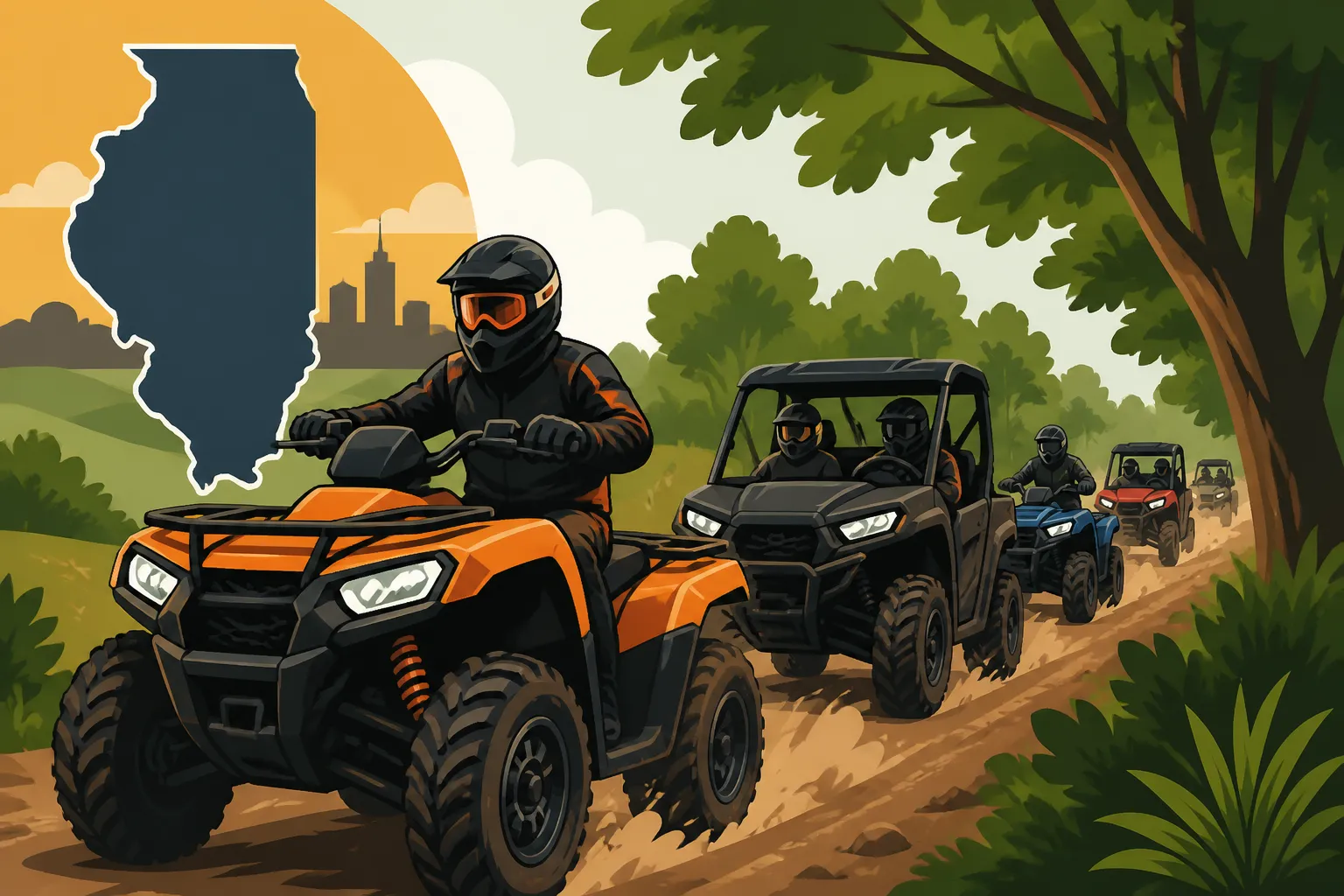
A large ATV or UTV group can turn a good Illinois riding day into a long wait at the gate if permits, reservations, or arrival plans are out of sync. Busy weekends add crowding, limited capacity, and more pressure to keep the group together. A little coordination before you leave helps everyone get checked in, ride at a suitable pace, and avoid preventable delays.
Confirm the site, permits, and group rules
Start by choosing a riding area that can handle your group’s size and mix of machines. A route that works for a few experienced riders may be a poor fit for a large group with different vehicles, skill levels, or passengers. Check the site’s current rules before making plans; capacity, reservations, permitted machine types, and check-in procedures can vary.
Do not assume that a public riding area is open to off-highway vehicles just because it has trails or public land. Illinois has specific designated riding areas, and a permit or sticker does not open every public road or tract of land. Review Illinois Land You May Not Ride and Illinois Grant Site Rules for Riders before settling on a destination.
Then sort out what each rider and machine needs. At a grant-assisted site, the required access decal is generally tied to the machine, not to the group’s lead rider. An annual usage stamp and an access decal serve different purposes, so one should not be treated as a substitute for the other. Check Illinois Stamp and Decal Together and One Access Decal Covers Every Grant-Assisted Site to understand which requirement applies to your planned ride.
Make a machine-by-machine checklist. Ask each participant to confirm their own paperwork rather than relying on one person’s memory. A borrowed or rented vehicle may have different details to check, and visitors should not assume an out-of-state registration replaces Illinois site requirements. For more on the distinction, see Illinois Usage Stamp vs Access Decal and Illinois Rules for an Out-of-State Machine.
| Planning item | What to verify before the weekend | Why it matters for a group |
|---|---|---|
| Site access | Whether the area is open to the machines in your group | One unsuitable vehicle can delay or disrupt the ride |
| Reservations and capacity | Whether advance booking is required and whether space remains | A full site may turn away late arrivals |
| Permits and decals | Which items apply to each machine and rider | A group reservation does not necessarily cover individual requirements |
| Waivers and check-in | Who must sign, and what participants need to show | Missing paperwork can create a queue at the entrance |
| Trail fit | Machine limits, terrain, and difficulty | The group needs routes that suit its least experienced riders |
| Arrival plan | Meeting point, time, and late-arrival procedure | Staggered arrivals can complicate check-in and departure |
Treat the group’s reservation as a coordination tool, not as proof that every machine is ready to ride. Confirm what the site requires for the reservation holder, individual riders, and vehicles. For a state site, review Illinois Booking Windows for a Weekend and Illinois Daily Caps and Sell-Outs. Some sites have a daily limit, so having a long convoy is no guarantee that everyone can enter if the group has not arranged access properly.
A practical approach is to appoint one organizer to communicate with the site and one person in each vehicle to verify their own documents. Share the site’s instructions with everyone well before departure. If the venue has a published contact method, ask about group-size limits, check-in timing, machine restrictions, and whether the group must arrive together. For a checklist of questions, see Questions Worth Asking a Vendor.
Set a plan before the group reaches the gate
A busy weekend is a poor time to work out who is bringing what, where everyone should park, or which machines still need a permit. Create a short written plan and share it in a group message. Include the exact site entrance, arrival time, organizer’s contact details, reservation information, and what each participant needs to bring.
Ask participants to arrive with enough time to handle check-in, unloading, and any required inspection. A convoy can take longer to park and unload than a few individual vehicles, particularly when trailers are involved. If the site has a daily capacity or a reservation window, arriving late may cause more than inconvenience. Confirm the site’s own arrival policy rather than assuming staff can hold a place for the group.
The group should also agree on what happens if someone is delayed. Decide whether the main party will wait, whether a smaller subgroup will enter first, and how the late rider can meet up without entering an unauthorized area. Do not send a rider onto a trail alone simply to catch up. If plans change, follow the site’s instructions and use a designated meeting point.
A useful pre-ride message can cover:
- The meeting time and exact location, including a backup meeting point outside the riding area.
- The reservation holder’s name and how participants will identify the group at check-in.
- The permits, decals, identification, and vehicle documents each rider should verify.
- The site’s waiver and check-in process, including any requirements for minors.
- The route plan, group pace, planned stops, and regroup locations.
- Who to contact if a rider is late, separated, or has a machine problem.
Large groups should avoid creating a bottleneck at the entrance. Have paperwork ready before reaching the check-in point, and follow staff directions about where to queue, unload, or park. If participants are arriving in separate vehicles, make sure each person knows whether to check in independently or wait for the organizer. Review Illinois Waivers Signed Before You Ride and Carrying Papers at a Grant Site for related preparation.
If a machine is borrowed, rented, newly purchased, or registered outside Illinois, check its paperwork and site eligibility in advance. Do not leave those questions for a busy gate attendant to resolve while the rest of the group waits. For a rented vehicle, see Illinois Permit for a Rented Machine; for a visiting rider, What a Visiting Rider Brings Besides an Illinois Decal can help identify common items to confirm.
Keep the ride manageable on crowded trails
Once the group is on the trails, riding safely means resisting the urge to keep every vehicle in one long, tight line. Larger groups take up more trail space, can be harder to see around bends, and may catch up with other riders at narrow points. Follow the site’s rules, leave room between machines, and do not block a trail while waiting for the back of the group.
Before setting off, choose a pace that works for the least experienced rider who is expected to join that route. Agree on a leader and a sweep rider who stays behind the group. The leader should avoid pulling away from the group at forks or intersections; the sweep should know the route and have a way to contact the leader. If the group is too spread out to communicate safely, split it into smaller riding parties that each have a leader and a sweep.
Pick regroup points that are easy to identify and do not obstruct trail traffic. A junction, staging area, or other approved stopping place is usually more practical than stopping on a blind turn or narrow section. Tell everyone what to do if they miss a turn: stop in a safe location, avoid improvising a route, and contact the group if possible. Use the park’s map and follow its marked routes rather than relying on one person’s memory.
Set expectations for passing, stopping, and helping another rider. Avoid bunching up at trail intersections or crowding a machine that has stopped. If someone needs assistance, move the group to a safe place and keep the route clear. A rider who needs to return early should not feel pressured to keep up with a pace that is uncomfortable. See Illinois Trail Etiquette Locals Expect and Illinois Trail Difficulty Ratings when matching a route and group pace.
| Group size or condition | A sensible approach |
|---|---|
| A few experienced riders on familiar trails | Stay together if visibility, trail width, and communication make it practical |
| A larger group with varied experience | Use a leader and sweep, agree on regroup points, and consider smaller subgroups |
| Riders on different machine types | Check site limits and choose routes suitable for every vehicle |
| A participant who needs to leave early | Agree on a safe return plan before the group starts |
| Busy trails or poor visibility | Increase spacing, reduce speed, and avoid stopping in the riding line |
Do not assume that a large group can ride as a single unit just because everyone arrived together. Site rules may set limits on group size or require particular conduct. Check Illinois Group Size at a Park and Illinois Private Park Waivers and Rules, and ask the site directly if the rule is unclear.
Use a simple plan for weather, delays, and ride changes
Busy weekends leave less room for last-minute improvisation. Check trail conditions and the site’s operating information before loading the machines. Rain can change how manageable a route is, and a closure or capacity issue can affect the whole trip. Review Illinois Trail Conditions Before You Tow and Illinois Trail Closures After Rain before committing to a long drive.
Make sure someone has the site’s contact information and the group’s reservation details. Keep a paper or offline copy of key information in case phone service is unreliable. Do not depend on every participant being able to read a message while riding. Agree on a clear signal for stopping and a procedure for a mechanical problem, injury, or separation.
If the group becomes too large to manage comfortably, divide it before setting out rather than on a narrow trail. Each subgroup should have its own leader, sweep, route plan, and meeting time. Keep the separation within the site’s rules, and do not use a split-group plan to bypass capacity, reservation, or permit requirements. When the day’s conditions are crowded or the riders have very different experience levels, a shorter route or smaller group may make for a better ride.
A smooth group weekend depends less on having a perfect itinerary than on making sure everyone knows the basic plan. Confirm access requirements for each machine, reserve or register as required, arrive with time to check in, and set a pace the whole group can handle. If the site’s rules or current conditions are uncertain, ask the operator before leaving home.
Disclaimer
This article is for general informational purposes only and does not constitute professional advice. Laws, prices and regulations vary by location and change over time. Consult a qualified professional for guidance on your specific situation.