Carrying Papers at a Grant Site
One of the most common anxieties for any ATV or UTV rider heading out to a public riding area, especially a grant-assisted site here in Illinois, is that little voice in your head asking, "Do I have all my papers?" It's a valid concern! Nobody wants to be turned away at the gate or, even worse, get a ticket when all you want to do is enjoy the trails. This guide is here to put those worries to rest by detailing exactly what documents you need to carry when you ride at an Illinois grant site.
Why Carrying the Right Papers is Non-Negotiable at Illinois Grant Sites
Let's be real, after all the effort you put into loading up your machine, driving to a remote trailhead, and gearing up, the last thing you want is for your day to be cut short because of missing paperwork. Illinois grant-assisted riding sites, like Sahara Woods or Mill Creek Park, operate with state funding, which means they come with a specific set of rules and a higher level of oversight. These sites aren't just open land; they're managed areas with staff and conservation officers who are there to ensure everyone is riding safely and legally.
The reason they're so particular about documentation boils down to accountability and safety. The state wants to know that the machines on these trails are legally owned, that operators meet age requirements, and that everyone has paid their fair share to support the trail system. When you ride at a grant site, you're not just a guest; you're participating in a program that depends on compliance. Skipping out on the necessary papers can lead to a range of unpleasant outcomes, from a stern warning to being denied entry, or even getting hit with a fine. Imagine pulling up to the gate at Sahara Woods, ready for an epic day, only to be told you can't unload because you forgot a critical sticker or proof of ownership. It's a gut punch no rider wants to experience. Ignorance of the rules, unfortunately, isn't usually a valid excuse.
The Essential Document Checklist for Every Illinois Grant Site Rider
Navigating the various rules and requirements for off-road riding in Illinois can sometimes feel like trying to solve a puzzle. But when it comes to riding at a grant-assisted site, there's a clear checklist of documents you should always have with you. Think of this as your rider's survival kit for paperwork.
Proof of Machine Ownership
This is fundamental. Just like you wouldn't drive your car without proof of ownership, your ATV or UTV needs it too.
- The Illinois ATV Title: This is the ultimate proof that the machine belongs to you. Since 1998, all off-highway vehicles (OHVs) in Illinois have been required to be titled. Your title certificate will have your name on it, proving you are the legal owner. This document is crucial not just for riding, but for selling your machine or proving ownership if it's ever stolen. While you don't always need the original title physically with you on the trail (it's often safer at home), knowing where to find your [Illinois ATV Title Certificates Explained] and understanding [Applying for an Illinois Off-Road Title] is vital. Some riders carry a clear, readable photocopy.
- Bill of Sale (if pending title): Let's say you just bought your awesome new-to-you side-by-side from a private seller last week, and you're still waiting for the title to be processed. In this scenario, a dated and signed bill of sale is incredibly important. It serves as temporary proof of ownership until your official title arrives. A clear, comprehensive bill of sale, perhaps drafted using a template from a service like LawDepot, can make all the difference if you're questioned. It should clearly state the buyer, seller, date, purchase price, and VIN. If you're navigating the process of [Illinois Title Without a Bill of Sale], you know it can be a headache, so having one for recent purchases is a smart move.
Proof of Riding Permission
Just because you own the machine doesn't mean you automatically have permission to ride it everywhere. Grant sites have specific requirements.
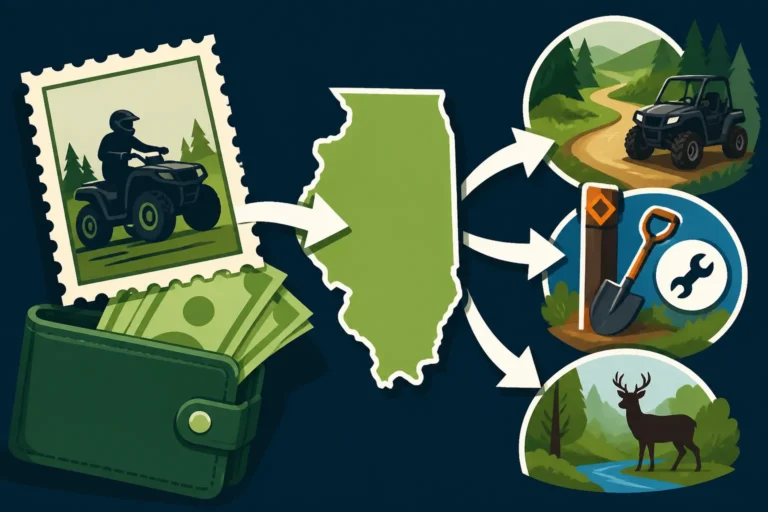
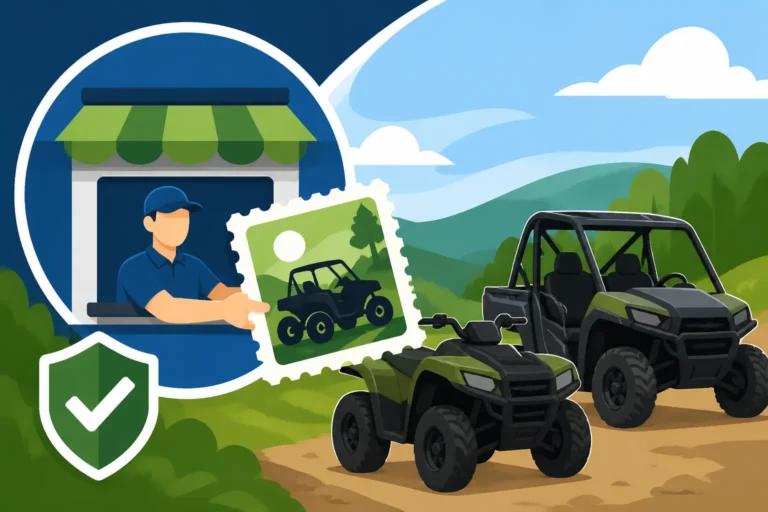
- The Illinois Public Access Decal: This is your golden ticket for riding at Illinois grant-assisted sites. The [Illinois Public Access Decal Explained] is specifically designed to fund and maintain these trails. You'll mount this decal prominently on the front of your machine, usually front and center. It's an annual sticker, and without it, you're not supposed to be on those trails. The cost varies slightly by residency; for residents, you're looking at the [Illinois Access Decal Cost for Residents].
- The Illinois OHV Usage Stamp: This is another state sticker, but it serves a slightly different purpose. The [Illinois OHV Usage Stamp Explained] is generally for riding on public land that isn't specifically a grant-assisted site. Here's the key: at a grant-assisted site, your Public Access Decal usually takes precedence. In most cases, if you have a valid Access Decal, you don't also need a Usage Stamp for that particular site. The state doesn't want you to pay for two stickers that essentially cover similar ground. It's a common point of confusion, but remember [Why an Access Decal Cancels the Usage Stamp]. If you only ever ride at grant sites, the Access Decal is your focus. The [Illinois Charges $15 for a Usage Stamp] when you do need it.
- Site-Specific Permits (e.g., Sahara Woods): Some larger or more popular grant sites, like Sahara Woods in Southern Illinois, may require an additional, site-specific permit on top of your state Access Decal. These permits often help manage rider numbers, especially on busy weekends, and might require advance booking. For example, knowing the details of [Illinois Sahara Woods Permits] and how to go about [Booking a Sahara Woods Permit Through ExploreMoreIL] is crucial if that's your destination. These permits often come with a wristband you wear while riding, serving as visible proof you're cleared to be there.
Personal Identification
Just like driving a car, you need to prove who you are.
- Driver's License or State ID: For adult riders, a valid government-issued photo ID is essential. This verifies your identity and age, which is important for any age restrictions that might be in place for certain trails or machines.
- Youth Identification: If you're riding with younger enthusiasts, make sure they have some form of identification that verifies their age, like a school ID or a copy of a birth certificate. Many grant sites have specific [Illinois Rules for Young Riders], and often require [Parents Must Sign the Waiver for a Child] before a minor can ride. Site staff need to verify that children are within permissible age ranges for the machines they are operating.
Waivers and Release Forms
Almost every organized riding area, especially grant sites, will require you to sign a liability waiver. This is a standard procedure to protect the site from legal issues in case of an accident. You'll usually sign these at the check-in gate, and they cover you, your passengers, and your machine. Make sure you read them carefully and understand what you're signing. Sometimes, these can be completed online in advance, saving you time at the gate.
Document Summary Table
Here's a quick overview of what you should consider bringing:
| Document Type | Purpose | Where to Get It / What It Looks Like | Notes |
|---|---|---|---|
| Proof of Ownership | Illinois ATV/UTV Title | Illinois Secretary of State | Original title often best kept at home; carry photocopy. |
| Bill of Sale (if pending title) | Private seller or dealer; LawDepot template | Crucial if title transfer is in progress. | |
| Riding Permissions | Illinois Public Access Decal | DNR Direct Vendor, online | Annual sticker, mount front & center. Required for grant sites. |
| Site-Specific Permit (e.g., Sahara Woods) | Park's website (e.g., ExploreMoreIL) | Varies by park; may be digital confirmation or wristband. | |
| Personal ID | Driver's License/State ID (adults) | Secretary of State | Photo ID to verify age and identity. |
| Youth ID (minors) | School ID, birth certificate copy | To verify age for age-restricted riding. | |
| Other | Signed Waiver / Release Form | At site check-in, or online prep | Mandatory for liability. |
Practical Tips for Keeping Your Papers Safe and Accessible on the Trail
Having your papers is one thing; keeping them safe and accessible while you're bouncing down a dusty trail or splashing through mud is another challenge entirely. You don't want your precious documents getting soaked, torn, or flying out of your pocket.
- Physical vs. Digital Copies: While physical copies of things like your Access Decal (which is a sticker on your machine) and your ID are mandatory, for other documents like your title or bill of sale, a clear photocopy is often acceptable to carry on the trail. Keep the originals in a safe place at home. Digital copies on your phone (photos of your title, permit confirmation emails) can serve as a backup, but always be prepared for areas with no cell service or a dead phone battery. A good rule of thumb: physical for proof of permission (decals, wristbands) and ID, and either physical copies or high-quality digital backups for ownership documents.
- Waterproofing and Protection: This is huge! Illinois weather can be unpredictable, and trails are often wet. Invest in proper waterproofing for any paper documents you carry. Heavy-duty Ziploc bags are a simple start, but a dedicated dry bag or a waterproof document holder designed for outdoor use is even better. Some riders use a small, hard-shell waterproof case that can be securely stowed.
- Where to Store Them on Your Machine: Accessibility is key. You don't want to be fumbling through a giant duffel bag while a conservation officer waits. Many ATVs and UTVs come with glove boxes or small, sealed compartments perfect for this. If your machine doesn't have one, a small, attached dry box or a fanny pack worn by the rider are good options. Just make sure whatever you choose is secure and won't get lost on a bumpy ride.
- Creating a "Trail Packet": Consider assembling a single, compact "trail packet" with all your necessary documents. This could be a small waterproof pouch containing your photocopied title, insurance card (if applicable), permit confirmations, and a copy of your ID. It's also smart to include emergency contact information and any critical medical alerts for yourself or your riding partners. This way, everything important is in one spot.
What Happens When Your Papers Aren't in Order at a Grant Site
It's every rider's nightmare: you're out on the trail, having a great time, and you see a conservation officer or park staff member ahead, signaling for you to stop. While most interactions are friendly and for safety checks, if your papers aren't in order, things can get uncomfortable quickly.
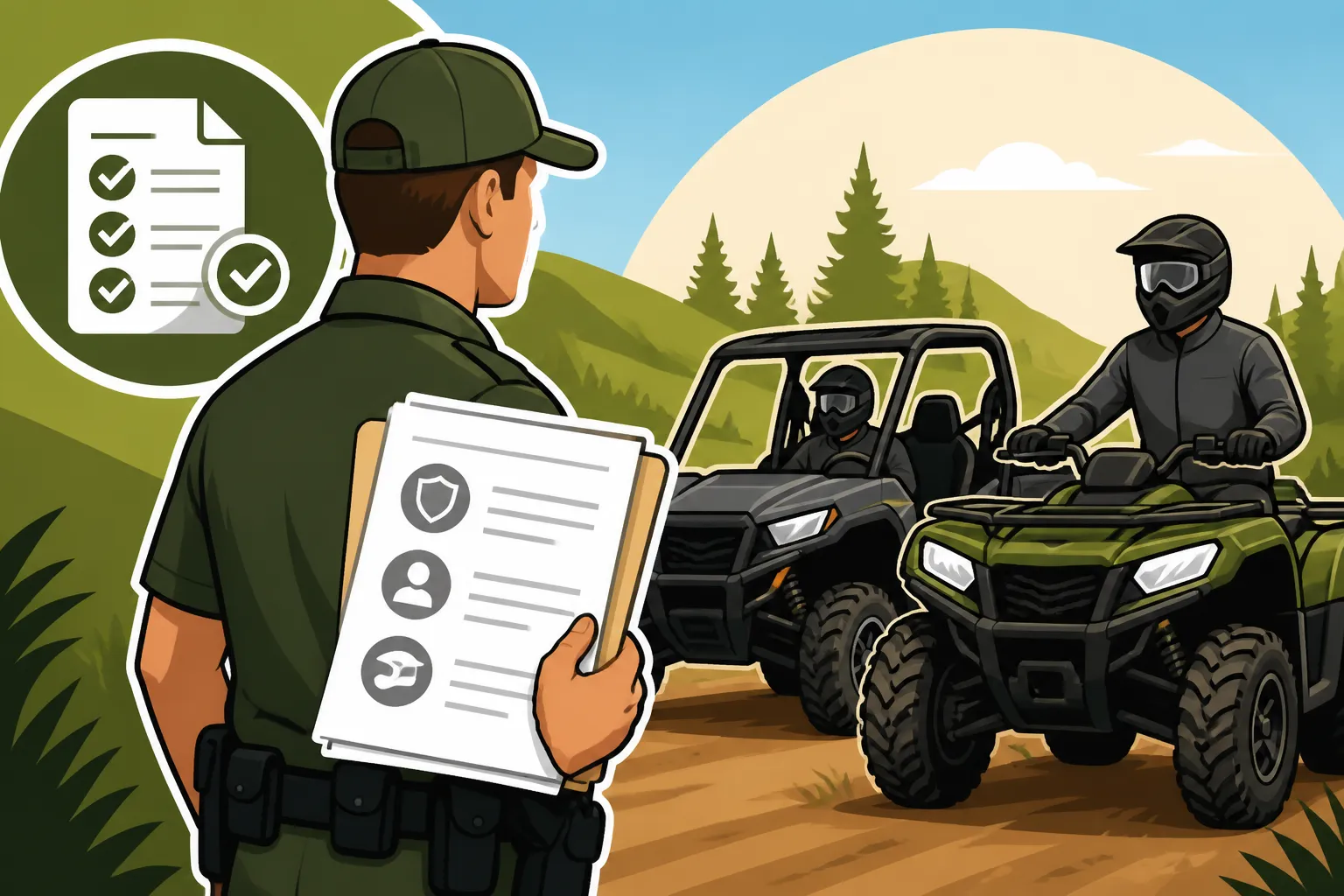
- Initial Stop and Request for Documents: Typically, an officer will ask to see your identification, proof of ownership for your machine, and your access permit or decal. They might also check your machine for required safety equipment or sound limits. Your responsibility is to be polite, cooperative, and produce the requested documents promptly. Most officers are simply doing their job to ensure everyone's safety and compliance.
- Consequences of Missing or Incorrect Documents:
- Denial of Entry: This is the most common outcome if you arrive at a grant site and are missing a required decal or permit. You'll simply be turned away at the gate, and your riding day will be over before it even begins. Imagine the frustration of hauling your machine hours to [Sahara Woods Sits 5 Miles West of Harrisburg] only to be denied access.
- Fines and Citations: If you're already on the trail and found to be riding without the proper access decal or usage stamp, you could face a significant fine. The [Illinois Penalties for No Decal] can be steep, and nobody wants to deal with court costs or explaining to a judge why they didn't have a simple sticker. Knowing [Who Writes the Ticket at a Grant Site] (often a conservation officer) is a good reminder that these aren't just suggestions.
- Machine Impoundment: While less common for simple paperwork infractions, in severe or repeated cases, or if there's a serious question of ownership, your machine could potentially be impounded. This is an absolute worst-case scenario and comes with significant costs and headaches to recover your vehicle.
- Dealing with the Situation: If you find yourself in a situation where your papers aren't in order, the best course of action is always to remain calm and cooperative. Explain your situation clearly. Sometimes, if it's an honest mistake and you can acquire the correct stamp or decal nearby, you might be given a chance to do so. However, don't count on leniency. It's far better to ensure all your documents are squared away before you leave home. If you do receive a citation, make sure you understand the charges, the fine amount, and the deadline for payment or contesting the ticket.
By understanding what's expected and preparing thoroughly, you can ride Illinois's fantastic grant-assisted trails with confidence, knowing you've got all your ducks (and your papers!) in a row.
Disclaimer
This article is for general informational purposes only and does not constitute professional advice. Laws, prices and regulations vary by location and change over time. Consult a qualified professional for guidance on your specific situation.