Buying a Quad at a Farm Estate Auction
Buying an off-road machine at a farm estate auction can feel like hitting the jackpot – the potential for a great deal on a well-maintained quad or side-by-side often draws many hopeful buyers. However, the unique nature of these sales, combined with Illinois's specific titling and ownership laws, can quickly turn a potential bargain into a significant headache if you're not prepared. This guide will walk you through everything you need to know to confidently navigate an Illinois farm estate auction, ensuring you don't end up with a machine you can't legally ride or title.
The Unique Appeal and Realities of Estate Auctions
There's something inherently exciting about an estate auction. The air hums with anticipation, and the possibility of uncovering a hidden gem, whether it's an antique tractor, a sturdy farm implement, or a rugged ATV, is a big draw. For many, these auctions offer a chance to purchase a machine directly from an estate, often implying it was well-cared for by its previous owner. But it's crucial to understand that estate auctions operate under different rules than buying from a dealership or even a private seller on an online marketplace.
What Makes an Estate Auction Different?
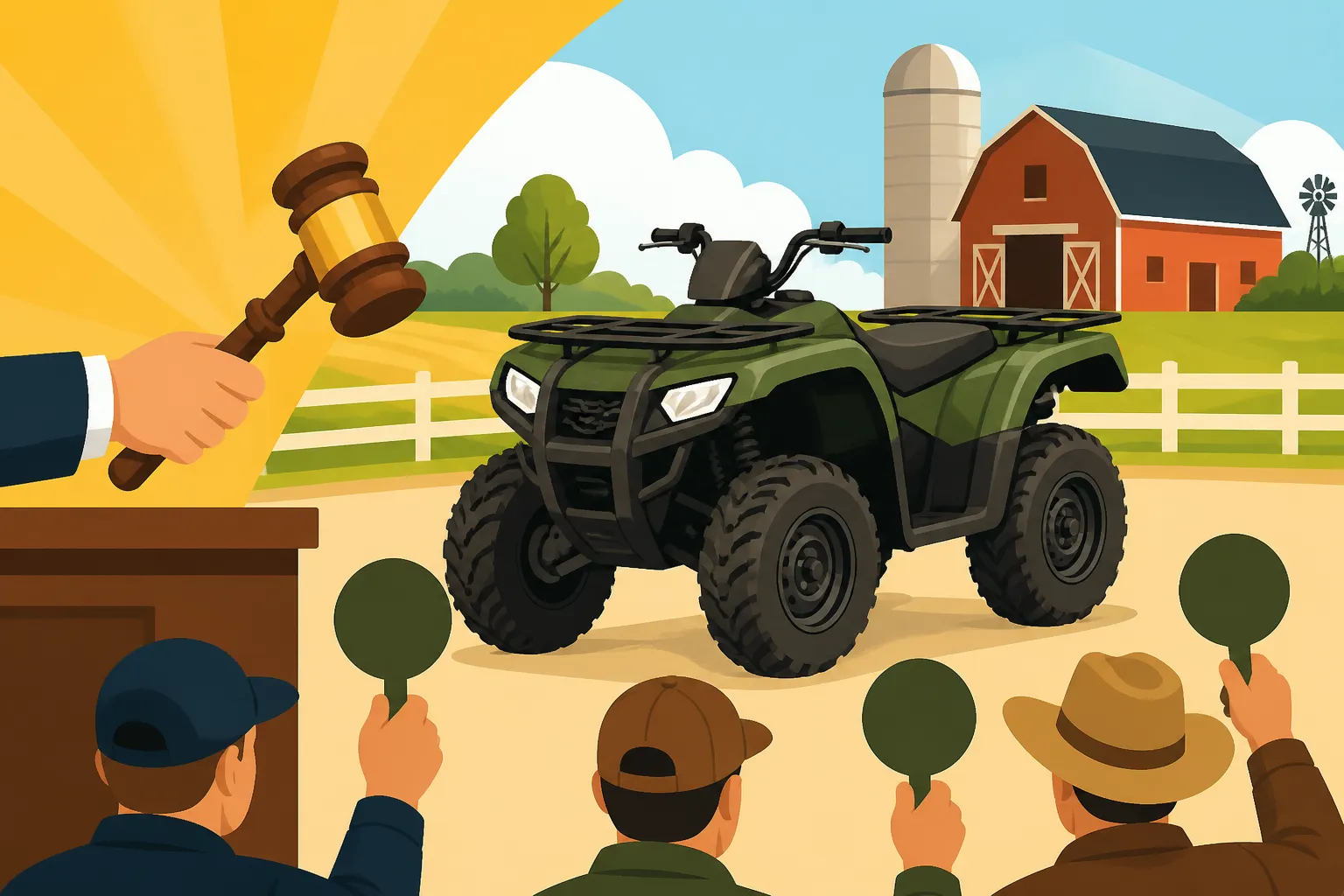
Unlike a retail environment where you have salespeople, warranties, and clear-cut financing options, an estate auction is a direct, often rapid-fire, transaction. The estate's goal is usually to liquidate assets efficiently, which means most items are sold without a minimum price, known as "no reserve." This can lead to incredible deals, but it also means there's little room for negotiation once the hammer falls. The auctioneer acts as a facilitator, not a guarantor, and their primary duty is to the seller – the estate. You're often buying a piece of history, complete with its quirks and unknowns, and that's part of the adventure for many buyers.
The "As-Is, Where-Is" Reality
The golden rule of auctions, especially estate sales, is "as-is, where-is." This phrase means exactly what it sounds like: you're buying the item in its current condition, wherever it currently sits, with no warranties or guarantees from the seller or the auction house. For an ATV or UTV, this can be a significant gamble. You won't get a test drive, and your inspection time might be limited to a quick walk-around and perhaps starting the engine (if they allow it). Any mechanical issues, hidden damage, or missing components become your problem the moment you become the high bidder. It’s an environment that rewards careful pre-inspection and a solid understanding of potential risks.
Essential Pre-Auction Homework in Illinois
Before you even think about raising your bidder number, thorough preparation is absolutely critical. This isn't just about spotting a good deal; it's about making sure that "good deal" doesn't turn into a financial black hole. When it comes to off-road machines in Illinois, this homework involves scrutinizing the vehicle itself and, perhaps most importantly, verifying its legal paperwork.
Scrutinizing the Machine's Condition
When you arrive at the auction site, make a beeline for the ATV or UTV you're interested in. Your goal is to conduct as thorough an inspection as possible within the given timeframe. Look beyond the shiny exterior. Check the tires for wear and tear, paying attention to any uneven patterns that might suggest alignment issues. Inspect the frame for cracks, bends, or signs of welding, which could indicate past accidents or heavy use. Pull the dipstick to check the oil level and color – clean oil suggests regular maintenance, while dark, sludgy oil might point to neglect. If possible, check the coolant levels and brake fluid.
Don't forget the electrical system. Are the headlights and taillights working? If allowed, try to start the machine. Listen for any unusual noises from the engine or transmission. Test the brakes, if safe to do so. Look at the hour meter, if equipped, as it can give you a rough idea of how much the machine has been used, though it's not always a perfect indicator. Even a low-hour machine can be neglected, and a high-hour one could be meticulously maintained. This quick but critical once-over can help you spot immediate red flags and avoid a money pit.
The All-Important Title Check
In Illinois, titling for off-highway vehicles (OHVs) like ATVs and UTVs has been mandatory since 1998. This means any machine sold in the state after that year must have an [Illinois ATV Title Certificates Explained]. A machine purchased at an estate auction, even a very old one, will require a clear title for you to legally own and transfer it. Before you bid, ask the auctioneer or estate representative to see the title. They should have it on hand, or at least be able to confirm its existence and condition.
Here's what to look for:
- The Title Itself: Is it a physical, paper title? Does it clearly identify the ATV or UTV with its Vehicle Identification Number (VIN)?
- Matching VIN: Crucially, compare the VIN on the title to the VIN physically stamped on the machine's frame. These must match exactly. Don't proceed if they don't. You should also take a moment to consider [Where the Serial Number Hides on an Older Quad] so you know exactly where to look.
- Lienholders: Does the title show any active liens? If so, the lienholder would need to release their interest before the title can be transferred to you. This is a big red flag and often a deal-breaker at an auction.
- Seller's Name: Does the name on the title match the estate or the deceased owner? If the estate is selling, they typically need documentation showing their legal authority to transfer the title.
If the title is missing, or if there are any discrepancies, proceed with extreme caution. Buying a machine without a clear title in Illinois can lead to significant headaches down the road, potentially making it impossible to legally register or ride. It's often better to walk away than to inherit someone else's titling problem. You should also take the VIN and run a stolen vehicle check before you pay. This simple step can save you immense grief, as you certainly don't want to inadvertently purchase a hot machine.
Navigating the Auction Day and Post-Sale Steps
Auction day can be a whirlwind of activity, from the final pre-bid inspections to the flurry of bidding and the rush of paperwork afterward. Being prepared for each stage will help you stay calm, make smart decisions, and ensure a smooth transaction once you're the winning bidder.
Bidding Wisely and Knowing Your Limit
Before the bidding starts, establish a firm maximum price you're willing to pay for the ATV or UTV, and stick to it. This price should account for the machine's condition, the presence (or absence) of a clear title, and any estimated repair costs. Factor in Illinois's flat private-party tax rate, which applies even to auction purchases, and any auctioneer fees or buyer's premiums that might be added to the final bid price. These can add a surprising amount to the total cost.
When the lot you're interested in comes up, bid confidently but don't get swept up in the emotion of the moment. It's easy to get into a bidding war and exceed your budget. If the bidding goes past your pre-set limit, let it go. There will always be other opportunities. Remember, the goal is a good deal, not just winning the bid. Paying too much for a machine, especially one with potential unknowns, defeats the purpose of an auction.
Securing Your Purchase and Paperwork
Once the auctioneer declares "Sold!" and points to you, congratulations! You're now the proud (and potentially stressed) owner of an off-road machine. The very next step is to head to the auction office or designated area to settle up. You'll typically pay for your purchase immediately, often with cash, check, or a pre-approved credit card. Be sure you understand the accepted payment methods before the auction.
This is also the critical time to secure your paperwork. You'll need:
- Bill of Sale: The auction house should provide a detailed bill of sale. This document is crucial as proof of purchase and will be necessary for titling your machine. It should include your name, the seller's (estate's) name, the machine's description (make, model, VIN), the purchase price, and the date. While you might expect the auction house to have their own form, it's always smart to be prepared. If you're concerned about having all the right information, resources like LawDepot offer templates for bills of sale that you can adapt if needed.
- The Original Title: This is paramount. Ensure the auction house or estate representative hands over the original, properly signed-off title. The estate's executor or administrator will need to sign it as the seller. This usually means they will sign their name and then add "Executor" or "Administrator" after it. Make sure the odometer reading (if applicable to the machine) is recorded on the title.
- Payment for Fees and Taxes: You'll likely pay any auctioneer fees or buyer's premiums directly to the auction house. However, in Illinois, the [Illinois's Flat Private-Party ATV Tax] will be paid to the Illinois Department of Revenue when you title the machine, not to the auctioneer. Keep accurate records of your purchase price for tax purposes.
Getting these documents correct on auction day is vital for a smooth [Illinois Title Transfer After a Sale] process later on. You'll be taking these documents to a Secretary of State facility to apply for your new title. Always review everything before you leave the auction site, making sure all fields are filled out completely and accurately. Think of it as your [Illinois Title Paperwork Checklist] to ensure nothing is missed.
Common Pitfalls and How to Avoid Them
Even with careful preparation, buying at an auction can present unique challenges. Knowing what these common pitfalls are and how to navigate them can save you a lot of grief and money.
The Missing Title Headache
This is perhaps the biggest pitfall when buying an off-road machine at an estate auction. If you purchase an ATV or UTV without a clear, transferable title, you're in for a significant challenge. Illinois requires a title for all off-road machines purchased after 1998, and without one, you simply cannot legally transfer ownership to your name. While there are sometimes convoluted processes for [Illinois Title Without a Bill of Sale] or for [Illinois Machines With No Paperwork], these are often lengthy, expensive, and not guaranteed to succeed. You might need to jump through hoops like getting a bond, proving previous ownership through old registration documents (which an estate might not have), or even contacting the manufacturer. This is why checking for the title before you bid is so crucial. If you find yourself in this situation, it’s best to consult with an attorney to understand your options, which might include trying to get a duplicate title if the original owner can be tracked down (and assuming it was previously titled in Illinois).
Unexpected Fees and Taxes
Beyond the final hammer price, several costs can surprise buyers at an estate auction. Many auction houses charge a "buyer's premium," which is an additional percentage (often 10-15%) of the winning bid. So, a $1,000 quad might actually cost you $1,100 to $1,150. Always ask about buyer's premiums and other auction house fees before you register to bid.
Then there are the Illinois taxes. As mentioned, even private-party sales (which an auction technically is) are subject to a flat tax in Illinois. This is not sales tax in the traditional sense, but a flat fee that you pay to the Department of Revenue when you apply for your title. For most machines, this will be a set amount, not a percentage of the purchase price. However, local taxes can sometimes apply. It's a good idea to factor this into your budget and know exactly what you'll owe to the state after the auction.
Post-Auction Logistics
Once you've paid and received your paperwork, the machine is yours, and you're responsible for removing it from the property. Estate auctions often have strict pickup windows, sometimes just a few hours or a day or two after the sale. You'll need appropriate transportation – a truck and trailer – to haul your new acquisition home. Don't assume you can leave it there indefinitely.
Consider how you'll store the machine once you get it home. If it's going into a shed or garage, ensure it's secure. If it's going to sit outside for a while, consider a cover to protect it from the elements. Don't forget that if you're not riding it immediately, proper storage during colder months is important. You might want to review tips for [Storing a Quad Through an Illinois Winter] to keep your investment safe and ready for spring.
Finally, remember that you'll need to head to a Secretary of State facility or utilize the [Illinois Electronic Registration and Title System] to get your new title and eventually your [Illinois OHV Usage Stamp Explained] or [Illinois Public Access Decal Explained] if you plan to ride on public land or grant-assisted sites. This is a separate step that must be completed after your auction purchase.
| Aspect | Dealership Purchase | Private Seller Purchase | Farm Estate Auction Purchase |
|---|---|---|---|
| Price Negotiation | Often possible, but fixed MSRP. | Direct negotiation with seller. | No negotiation; highest bid wins. |
| "As-Is" Status | New machines have warranties; used may have limited. | Usually "as-is" but sometimes more flexible. | Always "as-is, where-is" with no guarantees. |
| Title Verification | Dealer handles; always clear. | Seller provides; needs buyer verification. | Estate provides; critical for buyer to verify onsite. |
| Inspection | Test rides possible; professional inspection. | Test rides often possible; thorough personal inspection. | Limited time for visual/auditory inspection only. |
| Financing Options | Dealer financing, bank loans. | Personal loans, cash. | Cash, pre-approved loan; no auction house financing. |
| Paperwork Process | Dealer handles all title/tax/registration. | Buyer & seller complete forms; buyer files. | Buyer responsible for securing title, bill of sale; buyer files. |
| Unexpected Fees | Doc fees, freight, setup, sales tax. | Negotiated price, Illinois private party tax. | Buyer's premium, Illinois private party tax. |
| Pickup Logistics | Drive home or arrange delivery. | Drive home or arrange pickup. | Strict, short pickup window; buyer provides transport. |
Buying a quad at a farm estate auction in Illinois can be a rewarding experience, offering unique opportunities to find well-loved machines at a good value. However, it’s not a transaction for the unprepared. By understanding the "as-is" nature, diligently checking for a clear title, knowing your budget, and being ready for the post-sale logistics, you can successfully navigate the process and enjoy your new off-road adventure without unnecessary complications.
Disclaimer
This article is for general informational purposes only and does not constitute professional advice. Laws, prices and regulations vary by location and change over time. Consult a qualified professional for guidance on your specific situation.