Who Pays the Title Fee in a Private Sale
Buying or selling an ATV or UTV in a private transaction here in Illinois can feel a bit like navigating a maze, especially when it comes to figuring out who's responsible for what costs. One of the most common head-scratchers is the title fee: does the buyer pay it, or is it the seller's burden? This guide is here to clear up that confusion, outlining exactly what you can expect when transferring ownership of an off-road machine in the Prairie State.
Understanding the Illinois ATV Title Fee in Private Sales
When you're dealing with a private sale of an off-road vehicle in Illinois, the process for transferring the title is different from buying from a dealership. It puts more responsibility on both parties to ensure all the necessary steps are followed correctly. One of the primary points of confusion often centers around who actually ponies up the money for the title itself.
The Buyer's Burden: Why It Falls on You
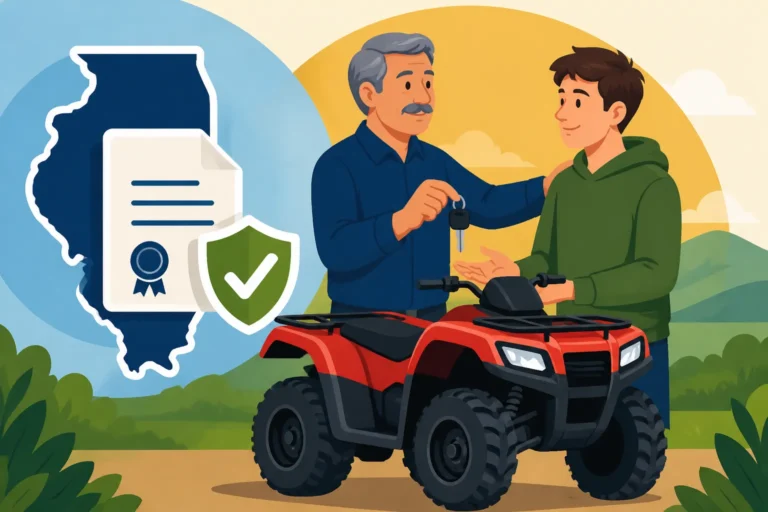
Here in Illinois, when you purchase an ATV or UTV from a private seller, the responsibility for paying the title fee almost always falls squarely on the buyer. Think of it this way: you, as the new owner, are the one applying to have the vehicle's title put into your name. The state sees this as your initiative to legally establish ownership. It's not the seller renewing their existing title; it's you obtaining a brand-new one that reflects you as the rightful owner. This is a common practice across many vehicle types and states, and off-road vehicles in Illinois are no exception. You'll be filling out the application, gathering your paperwork, and ultimately handing over the required fee to the Secretary of State or a designated vendor.
This responsibility can sometimes catch first-time buyers off guard, especially if they're used to a dealership handling all the paperwork and just rolling the fees into the overall price. In a private sale, you're essentially becoming your own "dealership" when it comes to the administrative tasks. It's crucial to factor this fee into your budget when negotiating a price, so you're not hit with an unexpected cost when you go to finalize the legal transfer. Without this step, even if you have a signed bill of sale, the machine isn't legally yours in the eyes of the state.
The Seller's Role: Preparing for a Smooth Transfer
While the buyer typically pays the actual title fee, the seller has absolutely critical responsibilities to ensure the title transfer can happen smoothly and legally. Their main job is to properly endorse and hand over the existing certificate of title. This involves signing in the designated "seller" portion of the title, often requiring a clear, legible signature and sometimes the printing of their name as well. If there's a lien recorded on the title, the seller is also responsible for getting that lien released before or at the time of sale; otherwise, the buyer won't be able to get a clear title. You can read more about what the seller needs to do in [Selling a Titled Machine in Illinois].
Beyond the title itself, the seller should also be prepared to provide a comprehensive bill of sale. Even though Illinois law has specific requirements for title transfers, a well-documented bill of sale protects both parties by clearly stating the purchase price, date of sale, VIN, and other pertinent details. This document can be incredibly useful for the buyer when they go to apply for their new title, especially for calculating any applicable sales tax. It's about more than just money; it's about clear communication and making sure there are no loose ends that could cause headaches for either party down the road.
Breaking Down the Costs Beyond the Title Fee
When you're budgeting for a private ATV or UTV purchase in Illinois, it's easy to focus solely on the machine's price tag. However, there are several other costs that will come into play, with the title fee being just one piece of the puzzle. Understanding all these potential expenses upfront will help you avoid any surprises and ensure you're fully prepared for the financial aspect of becoming a new off-road vehicle owner.
Illinois Off-Road Title Costs
As we've discussed, the title fee is typically the buyer's responsibility. In Illinois, there is a specific, generally low fee for titling an off-road vehicle. This is a fixed amount, regardless of the machine's value or age, though it can change over time. It's important to check the current fee with the Illinois Department of Natural Resources (DNR) or Secretary of State (SOS) before you head in to complete your paperwork. This fee covers the administrative cost of processing your application and issuing you a new title certificate. Remember, this applies whether you're titling a new-to-you used machine or if you've recently moved to Illinois with an off-road vehicle from another state. You can find out more about this specific charge in [Illinois ATV Title Cost]. Also, if you ever lose your title down the line, you'll need to pay a similar fee for a replacement, as outlined in [Illinois Duplicate Title Cost].
Other Fees the Buyer Should Anticipate
Beyond the basic title fee, there are a few other financial considerations that buyers in Illinois should absolutely keep in mind when purchasing an ATV or UTV in a private sale:
- Sales Tax: This is a big one. Unlike many common private vehicle sales (like cars or trucks) where the seller might be responsible for collecting and remitting sales tax in some scenarios, Illinois has a unique flat tax for private-party ATV sales, which the buyer is responsible for remitting directly to the state. This is separate from the title fee and is usually based on the purchase price. Additionally, local taxes can sometimes stack on top of this state-level tax, depending on where the buyer resides. This means your total tax burden might be higher than just the state rate. For more details on this, look into [Illinois Private Party Tax on an ATV] and [Illinois Local Tax on a Private Sale].
- Usage Stamps and Access Decals: If you plan on riding your newly acquired machine at an Illinois DNR grant-assisted site or on designated public lands, you'll need to purchase an Illinois OHV Usage Stamp and potentially an Illinois Public Access Decal. These are annual fees that contribute to the upkeep and development of riding areas. The usage stamp is generally a flat fee, and the decal also has its own cost, which can vary based on your residency. These aren't part of the title transfer itself, but they are essential for legal riding in many popular spots. Don't forget to budget for these! You can learn more about these requirements in [Illinois OHV Usage Stamp Cost] and [Illinois Access Decal Cost for Residents].
- Plate/Registration (If Applicable): While Illinois titles off-road vehicles, it doesn't register them for street use in the same way it does cars and trucks. However, if you plan to operate your UTV on public roads in a municipality that has passed an ordinance allowing it, you might need to obtain a local permit or registration from that specific village or county. This would be a separate fee levied by the local government, not the state.
Here's a quick overview of some potential costs a buyer might face:
| Cost Type | Buyer Responsibility | Description |
|---|---|---|
| Off-Road Title Fee | Yes | Fee paid to the state to transfer title into your name. |
| Illinois Private Sale Tax | Yes | A specific flat tax based on the purchase price for private sales. |
| Local Sales Tax | Yes | Additional tax depending on your residency, stacked on state tax. |
| OHV Usage Stamp | Yes (if riding) | Annual fee for riding on specific public/grant-assisted lands. |
| Public Access Decal | Yes (if riding) | Annual fee for riding on specific public/grant-assisted lands. |
| Local Street Permit | Yes (if street legal) | Required by some towns for UTVs on local streets. |
Navigating the Paperwork: Forms and Deadlines
The maze of paperwork can be one of the most frustrating parts of a private ATV or UTV sale. It's not just about signing the title; there are specific forms, supporting documents, and crucial deadlines you need to hit to ensure your new machine is legally titled in your name without a hitch. Getting this right saves you a lot of potential headaches and penalties down the road.
The Illinois Title Application Form
As the buyer, your journey to becoming the legal owner starts with the title application form. In Illinois, the primary form used for titling off-road vehicles (ATVs, UTVs, dirt bikes) is typically the VSD-190, Application for Vehicle Transaction. You'll need to fill this out completely and accurately. It asks for information about the vehicle, the seller, and you, the new owner. Missing a signature, miswriting a VIN, or forgetting a date can all lead to your application being rejected and sent back, delaying your title. Make sure you have the vehicle's full Vehicle Identification Number (VIN) correctly recorded, as this is the unique identifier for your machine. Proper completion of this form is paramount to a successful title transfer. More information on this specific form can be found in [Filling Out VSD-190 for an Off-Road Machine].
When you're completing the VSD-190, pay close attention to sections asking for the purchase price and sales tax information. This is where the state determines the tax you owe. Double-checking every detail before submission is a small effort that can prevent significant delays and potential fines. If you have any questions, it's always best to consult the instructions provided with the form or contact the Illinois DNR or Secretary of State's office directly.
Essential Documents for the Buyer
Besides the completed title application, you'll need a few other crucial documents to prove your purchase and identity:
- The Original Certificate of Title: This is non-negotiable. The seller must provide you with the original, properly signed-over title certificate. Without it, you cannot title the machine in your name. Ensure the VIN on the title matches the VIN on the machine itself.
- A Bill of Sale: While not always strictly required by the state for the title transfer itself if you have the original title, a comprehensive bill of sale is highly recommended. It serves as your proof of purchase, the agreed-upon price, and protects both buyer and seller. It's also often necessary for calculating the private-party sales tax. You'll want to make sure it includes the date of sale, buyer and seller information, the VIN, and the final purchase price. If you don't have a bill of sale, [Illinois Title Without a Bill of Sale] might shed some light on alternative documentation. For help creating a professional and legally sound bill of sale, resources like LawDepot offer customizable templates that can be tailored to your specific transaction, ensuring all necessary details are covered and protecting both parties.
- Proof of Identity and Residency: When you submit your application, you'll need to provide identification, usually a valid Illinois driver's license or state ID. If you've just moved to Illinois, you may need additional proof of residency.
Having all these documents organized and ready will make your visit to the Secretary of State facility or DNR office much more efficient. Check out [Illinois Title Paperwork Checklist] for a detailed list.
Meeting the Filing Deadline
Illinois has strict deadlines for filing your title application after purchasing an off-road vehicle in a private sale. Generally, you have a specific number of days from the date of purchase to submit your application and all accompanying fees and documents. Missing this deadline can result in late fees or penalties, adding an unnecessary cost and hassle to your new ownership experience.
It’s easy for the excitement of a new quad to make you forget about the administrative tasks, but procrastination here can be costly. If you buy a machine on a weekend, make it a priority to gather your paperwork and plan your visit to the appropriate office as soon as possible. Don't assume you can just ride it for a while and title it later; you could be caught without proper documentation. Being proactive ensures you avoid any legal issues or financial penalties. Always confirm the current filing deadline, but typically, you're looking at a 30-day window from the date of sale. More details can be found in [Illinois's 30-Day Filing Deadline].
Tips for a Seamless Private Sale Transaction
A private sale, while often offering better deals than a dealership, also places more responsibility on both buyer and seller to ensure everything goes smoothly. Without the structure of a professional transaction, it's easy for details to get missed, leading to potential issues down the line. A little preparation and attention to detail can make all the difference.
Drafting a Comprehensive Bill of Sale
Even though the state mainly focuses on the title for ownership transfer, a detailed bill of sale is your best friend in a private transaction. It’s a legally binding document that protects both parties and serves as solid proof of the sale details. What should it include?
- Full Names and Addresses: Of both the buyer and the seller.
- Date of Sale: Crucial for calculating tax deadlines.
- Vehicle Information: Make, model, year, and most importantly, the Vehicle Identification Number (VIN). The VIN on the bill of sale must match the VIN on the physical machine and the title.
- Purchase Price: Clearly state the agreed-upon price in both numerals and words to prevent disputes.
- Signatures: Both buyer and seller should sign and print their names. Some people even like to have it notarized for extra security, though it's not strictly required in Illinois for off-road titles.
- Disclaimers: A "sold as-is" clause is common in private sales, protecting the seller from future claims about the machine's condition.
Having a robust bill of sale can prevent misunderstandings and provide a clear record for tax purposes. If you're unsure how to draft one, online resources like LawDepot offer excellent, customizable templates designed to cover all the legal bases for private vehicle sales. Using such a template can provide peace of mind that you haven't overlooked any critical information.
Inspecting the Machine and Verifying the VIN
Before any money changes hands, the buyer should always perform a thorough inspection of the ATV or UTV. Don't just kick the tires; check the engine, suspension, brakes, and overall condition. Ask questions about its maintenance history and any known issues. If you're not mechanically inclined, consider bringing a trusted mechanic along or having the machine inspected professionally. This can save you from buying someone else's problems.
Equally important is verifying the VIN. This is the machine's unique fingerprint, usually found stamped on the frame (often near the front, on a frame rail, or under the seat). Compare this VIN against the one on the title certificate the seller provides. A mismatch is a huge red flag and could indicate a stolen vehicle or a fraudulent title. Never proceed with a sale if the VINs don't match. You can also use the VIN to perform a stolen vehicle check, which is a wise move for any buyer. Learn more about protecting yourself in [Running a Stolen Vehicle Check Before You Pay] and [Where the Serial Number Hides on an Older Quad].
Payment Methods and Proof of Funds
When it comes to payment, safety and security for both parties are paramount. Cash is straightforward but can be risky for large sums. A cashier's check or money order from a reputable bank is generally a safer option, as these are guaranteed funds. Avoid personal checks, as they can bounce, leaving the seller without payment and the machine gone.
For the buyer, ensure you have proof of payment. If you're using a cashier's check, keep the stub. If it's a bank transfer, retain the transaction confirmation. This documentation protects you in case of any future disputes. For the seller, never release the machine or the signed title until you have verified payment in hand and it has cleared.
Meeting at a Safe Location
Private sales, by their nature, involve meeting strangers. Prioritize your safety. Consider meeting in a public place, like a police station parking lot, during daylight hours. This adds an extra layer of security. If the machine is at the seller's home, bring a friend or family member with you.
In some cases, buyers and sellers might even consider meeting at a Secretary of State facility or a DNR office, especially if it's convenient. While you might not be able to complete the entire transaction there, it's a public, monitored location where you can review paperwork and finalize payment with a degree of security. This also offers the buyer the immediate opportunity to ask questions directly to state employees about the titling process, if available. [Meeting a Seller at a Secretary of State Facility] covers this option.
Disclaimer
This article is for general informational purposes only and does not constitute professional advice. Laws, prices and regulations vary by location and change over time. Consult a qualified professional for guidance on your specific situation.