Illinois Stamp and Decal Together
It’s a common point of confusion for many off-road enthusiasts in Illinois: what exactly is the difference between the OHV Usage Stamp and the Public Access Decal? And do you really need both? Many riders find themselves scratching their heads at the counter or browsing online, trying to decipher which sticker goes where, when, and why. This guide is here to clear up that mystery, detailing the purpose of each, how they interact, and how to ensure your off-road machine is properly permitted for your adventures across the Prairie State.
Understanding the Illinois OHV Usage Stamp
The Illinois OHV Usage Stamp is often the first sticker most off-road riders encounter, and it's fundamentally about contributing to the state's efforts to maintain and develop off-highway vehicle (OHV) recreational opportunities. Think of it as your general contribution to the health and future of off-roading in Illinois.
What the Usage Stamp Is and Why It Exists
At its heart, the Usage Stamp is a user fee. It's a way for the state of Illinois to collect funds directly from OHV riders that are then reinvested into the very facilities and programs that benefit these riders. When you purchase this stamp, you're directly supporting the growth and upkeep of the state's OHV riding areas. The money generated from these stamps goes into the OHV Fund, which is specifically earmarked for things like grant programs to local governments and not-for-profit organizations that develop and maintain OHV trails and facilities. It's a cyclical system: riders pay, and the funds come back to improve the riding experience. This helps ensure there are actually places for you to ride in Illinois.
Many states have similar programs, recognizing that the maintenance of trails, signage, and facilities isn't free. The [Illinois Charges $15 for a Usage Stamp] is a relatively small investment that collectively makes a big difference. It's not just about paying a fee; it's about being part of a community that cares for its riding environment.
Who Needs the Usage Stamp and Its Exemptions
Generally speaking, if you plan to operate your ATV, UTV, or dirt bike anywhere off your own private property in Illinois, you will need an OHV Usage Stamp. This applies whether you're heading to a private park, riding on designated public land that isn't a grant-assisted site, or even if you just take your machine out to a friend's farm for a day of riding off public roads. The intent is broad: if you're riding off your own land, the state expects you to have this stamp.
However, there are some important exemptions. For instance, if your machine is used exclusively for agricultural purposes on a farm, or if it's restricted solely to your own private residential property, you may not need this stamp. Similarly, machines used strictly for competition on closed courses, or government-owned machines, are often exempt. Understanding these exemptions can save you time and money, but it's crucial to ensure you truly meet the criteria before opting out. If you're unsure, it's always safer to acquire the stamp. You can learn more about specific situations by reading [Illinois Usage Stamp Exemptions].
Where the Stamp Money Goes
The funds collected from the sale of Illinois OHV Usage Stamps are deposited into the Off-Highway Vehicle Trails Fund, which is managed by the Illinois Department of Natural Resources (IDNR). This fund is absolutely vital for the state's OHV program. It provides financial assistance through grants to local government agencies and not-for-profit organizations that are actively involved in developing, improving, and maintaining OHV trails and riding areas. This includes things like trail grooming, erosion control, signage installation, construction of parking areas, and even educational programs focused on responsible riding. Essentially, your $15 stamp contributes directly to making Illinois a better place for off-road recreation. It's a tangible link between the rider and the resources they use.
Unpacking the Illinois Public Access Decal
Distinct from the Usage Stamp, the Illinois Public Access Decal serves a more specific purpose related to where you ride. It's not about general support for the OHV program, but rather about direct access to specific, publicly supported riding areas.
What the Access Decal Is and Why It Exists
The Public Access Decal is your entry ticket to specific, state-supported OHV riding sites within Illinois. These are often referred to as "grant-assisted" sites, meaning they've received financial aid from the IDNR (often from that OHV Trails Fund we just discussed) for their development and maintenance. The decal ensures that those who directly benefit from these specific sites contribute to their upkeep. It helps the IDNR track usage and ensures a dedicated revenue stream for these high-demand locations.
Essentially, the decal helps these grant-assisted parks manage their funding and ensures that the visitors to those specific parks are contributing to their maintenance. Without these decals, it would be much harder to sustain these particular public riding areas. You can learn more about these specific locations by looking into [What a Grant-Assisted Riding Site Actually Is]. This decal is crucial for places like Sahara Woods, the state's only dedicated public OHV park.
Who Needs the Access Decal and Its Pricing
If you intend to ride at an IDNR-designated public OHV site or a grant-assisted riding area in Illinois, you must have the Public Access Decal affixed to your machine. This is non-negotiable for entry to these specific sites. Unlike the Usage Stamp, which is a broad contribution, the Decal is a direct requirement for entry to these specific parks.
The pricing for the decal varies slightly based on residency. Illinois residents typically pay one fee for their decal, while non-residents pay a slightly higher fee. This differentiation helps offset the costs for state residents who also contribute through other taxes. For instance, [Illinois Charges $11 for a Resident Decal], while non-residents pay a different rate. There are also specific decal prices for rental machines and dealer demo machines, ensuring that all categories of users contribute appropriately. This tiered pricing reflects the different ways machines are used and who benefits from the specific public access sites.
Where the Decal Money Goes
Similar to the Usage Stamp, the revenue generated from the Public Access Decal sales also goes into the Off-Highway Vehicle Trails Fund. However, because the decal is specifically tied to grant-assisted sites, the funds it generates are often more directly allocated towards the operational costs, maintenance, and improvements of those specific parks. This ensures that the sites most popular with riders, and which require ongoing investment, have a dedicated source of income from their users. It's about direct user support for direct user benefits at specific locations. So, when you pay for that decal, you're directly helping keep the trails open, safe, and enjoyable at places like Sahara Woods.
The Relationship: Stamp, Decal, and Riding Privileges
This is where much of the confusion lies. Many riders wonder if they need one, the other, or both. The simplest way to understand it is that these two stickers, while both permits for off-road machines, serve different but sometimes overlapping purposes.
Why the Two Stickers Exist
The two stickers exist because they address different levels of funding and access. The [Illinois OHV Usage Stamp Explained] is a broader, statewide requirement for most off-road riding off private land, intended to fund the entire state OHV program, including grants that support the creation and maintenance of public trails. It's about the general existence and improvement of OHV opportunities.
The [Illinois Public Access Decal Explained], on the other hand, is a specific requirement for direct access to those specific public sites that have received grant funding. It's a way for the state to recoup some costs directly from the users of those particular, often expensive-to-maintain, facilities. The two stickers represent a layered approach to funding and access, ensuring that both the overarching program and specific sites receive the necessary financial support. For a deeper dive into the legislative intent, it's worth understanding [Why the Two Stickers Exist].
When One Cancels the Other: The Key Overlap
Here's the crucial detail: if you possess a current Illinois Public Access Decal, you are generally exempt from needing the separate Illinois OHV Usage Stamp. This is a critical point that often saves riders from purchasing both unnecessarily. The logic is that if you're paying for the higher-tier access provided by the decal to specific public sites, that contribution is considered sufficient to cover the general OHV program support that the Usage Stamp provides. So, the decal effectively "cancels out" the need for the stamp.
Therefore, if you know you'll primarily be riding at a grant-assisted site like Sahara Woods, purchasing the Public Access Decal will fulfill both requirements for riding at that site and for general riding elsewhere (outside of your private property) where a stamp would typically be required. This means if you have the decal, you don't need the stamp. This significant overlap is detailed further in [Why an Access Decal Cancels the Usage Stamp].
Scenarios: When You Need Which Sticker
Let's break down some common riding scenarios to clarify what you need:
Scenario 1: Riding exclusively on your own private land.
- Result: You need neither the Usage Stamp nor the Public Access Decal.
- Explanation: If the machine never leaves your property, the state generally doesn't require these permits.
Scenario 2: Riding on private land owned by a friend or family member, or a private pay-to-ride park that is NOT grant-assisted.
- Result: You need the Illinois OHV Usage Stamp.
- Explanation: Since you're off your own property and not on a grant-assisted public site, the Usage Stamp is typically required. The contribution helps the broader OHV program.
Scenario 3: Riding at a public, grant-assisted OHV site (e.g., Sahara Woods).
- Result: You need the Illinois Public Access Decal.
- Explanation: This decal grants you direct access to these specific sites. Because the decal serves as the higher-tier permit, it also covers the general OHV Usage Stamp requirement. You do NOT need both for this scenario.
Scenario 4: Riding on a mix of private, non-grant-assisted land and also at a public, grant-assisted site.
- Result: You need the Illinois Public Access Decal.
- Explanation: Since the Public Access Decal covers the Usage Stamp requirement, having the decal means you're good to go for both private land (off your own property) and the grant-assisted public sites. This is the most comprehensive option if you ride in varied locations.
Table: Illinois OHV Permit Requirements at a Glance
| Riding Location | OHV Usage Stamp Required? | Public Access Decal Required? | Notes |
|---|---|---|---|
| Your Own Private Property | No | No | No state permits needed for private use. |
| Friend's Private Property | Yes | No | Unless you have the Public Access Decal already. |
| Non-Grant-Assisted Private Park | Yes | No | Examples: The Cliffs, Little Egypt Off Road. |
| Grant-Assisted Public Park | No (if you have Decal) | Yes | The Decal exempts you from the Stamp at these sites and elsewhere. |
| Agricultural Use Only | No (Exempt) | No (Exempt) | Specific exemptions apply for farm use. |
| Competition Only (Closed Course) | No (Exempt) | No (Exempt) | Specific exemptions apply for sanctioned events. |
This table simplifies the decision, but remember to always check the most current regulations or park-specific rules.
Practicalities and Avoiding Common Pitfalls
Navigating the world of stamps and decals can feel a bit bureaucratic, but with a few tips, you can ensure your machine is always street-legal for off-road use.
How to Acquire Your Stamps and Decals
Both the Illinois OHV Usage Stamp and the Public Access Decal can be purchased through several convenient channels. The primary method is often online via the IDNR's ExploreMoreIL website, which is typically the most straightforward and fastest way to get your permits. You can also purchase them from [Illinois DNR Direct Vendors], which include many sporting goods stores, bait shops, and some convenience stores that sell hunting and fishing licenses.
When applying, ensure you have your vehicle's identification number (VIN) handy, as this will be required for the application process. For the usage stamp, the [Illinois Charges $15 for a Usage Stamp], plus a small issuance fee. For the decal, the [Illinois Charges $11 for a Resident Decal] is a common figure, but non-resident and other specific decals will vary. Always check the current prices before purchasing. Remember, the [The Usage Stamp Year Runs April Through March], so renewals typically happen in the spring.
Proper Placement of Your Permits
Once you have your permits, knowing where to put them is important for compliance. Proper placement ensures that conservation officers and park staff can easily verify your permits without delaying your ride.
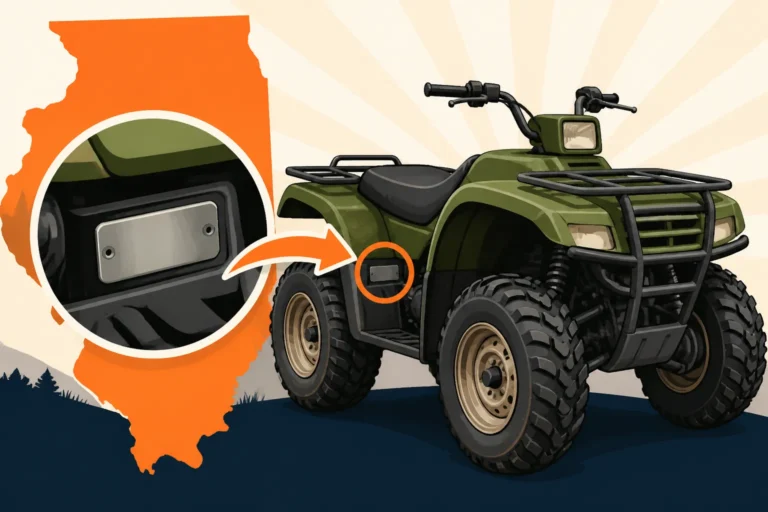
- OHV Usage Stamp: This sticker must be clearly visible and permanently affixed to the forward half of your ATV or UTV. The key is "forward half" and "clearly visible." Many riders choose to place it on the front fender, handlebars, or another prominent spot on the front portion of the machine. The goal is easy readability. For more specific guidance, see [Illinois Stamps on the Forward Half].
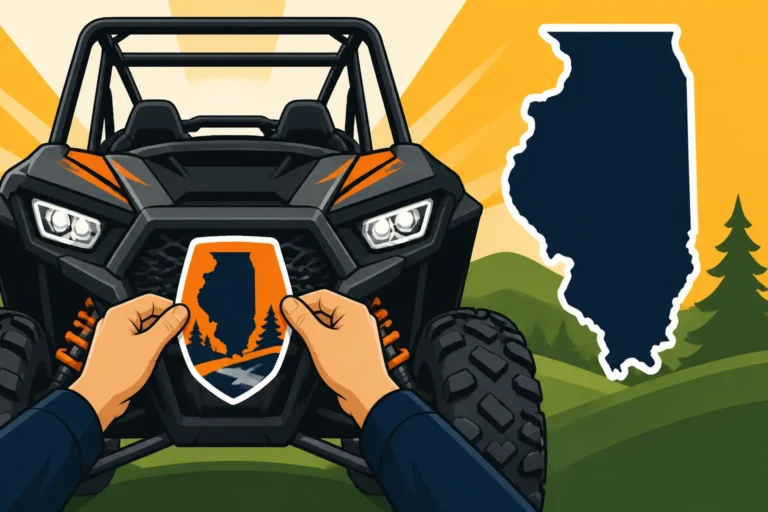
- Public Access Decal: This decal, also designed for clear visibility, should be mounted "front and center" on your machine. This often means on the front bumper, hood, or another central, forward-facing location. Again, the emphasis is on immediate visibility for compliance checks at park entrances or out on the trails. Ensure it's not obscured by mud, accessories, or other stickers. [Illinois Decals Mounted Front and Center] provides further details.
For both permits, make sure the surface is clean and dry before applying to ensure good adhesion. You don't want to lose your permit mid-ride!
Penalties for Non-Compliance
Operating an ATV, UTV, or dirt bike without the required Usage Stamp or Public Access Decal can lead to penalties. Conservation officers and park staff routinely check for these permits, especially at designated riding areas. The fines can be substantial, often exceeding the cost of the permits themselves, and can quickly put a damper on your riding day.
For example, without the necessary decal, you could be cited for illegal entry onto a grant-assisted site, leading to a fine. Similarly, riding on other public or private (non-owner) land without the Usage Stamp can result in a ticket. These penalties are designed to encourage compliance and support the funding mechanisms for OHV recreation in Illinois. It's simply not worth the risk to skip these permits. Be aware of [Illinois Penalties for No Decal] and [Illinois Penalties for No Stamp] before you head out.
Keeping Your Paperwork in Order
Beyond the physical stickers on your machine, it's always a good idea to keep digital or physical copies of your permit purchase confirmations, along with your title and any other relevant machine documentation, accessible when you ride. This can be particularly helpful if a sticker somehow gets damaged or lost. While it won't replace the physical sticker, having proof of purchase can sometimes smooth things over in a pinch.
If you ever decide to sell your machine, having a clear record of its permits and ownership details is crucial. For drafting official documents like a bill of sale, services like LawDepot can provide templates to ensure all necessary information, including any notes on transferred permits, is correctly recorded. This ensures a smooth transaction for both parties. Similarly, if you're establishing co-ownership or a rental agreement for an ATV or UTV, LawDepot can assist in creating legal documents that clarify responsibilities, including who is responsible for acquiring and maintaining these permits.
Understanding the Illinois OHV Usage Stamp and the Public Access Decal is essential for any off-road enthusiast in the state. By knowing their distinct purposes and crucial overlap, you can ensure you're compliant, contribute to the OHV community, and most importantly, enjoy your rides without worry.
Disclaimer
This article is for general informational purposes only and does not constitute professional advice. Laws, prices and regulations vary by location and change over time. Consult a qualified professional for guidance on your specific situation.