The Usage Stamp Year Runs April Through March
It’s a common scenario: you’ve finally got your ATV or UTV, the weather's perfect, and you're itching to hit the trails. But then you remember the dreaded "usage stamp" and suddenly you’re scratching your head, wondering if the stamp you bought last fall is still good, or if you need a new one right now. The Illinois OHV Usage Stamp doesn't follow a calendar year, and this often leads to confusion, missed renewal dates, and sometimes, unexpected fines. This guide is here to unravel the mystery of the Illinois usage stamp year, clarify its timeline, and help you stay compliant so you can ride worry-free.
Understanding the Illinois OHV Usage Stamp Calendar
One of the biggest sources of confusion for ATV and UTV owners in Illinois isn't whether they need a usage stamp – most know they do for public lands – but when that stamp is actually valid. Unlike many other annual passes or registrations that typically run from January to December, the Illinois OHV Usage Stamp operates on its own unique schedule.
Why April Through March? A Look at the Annual Cycle
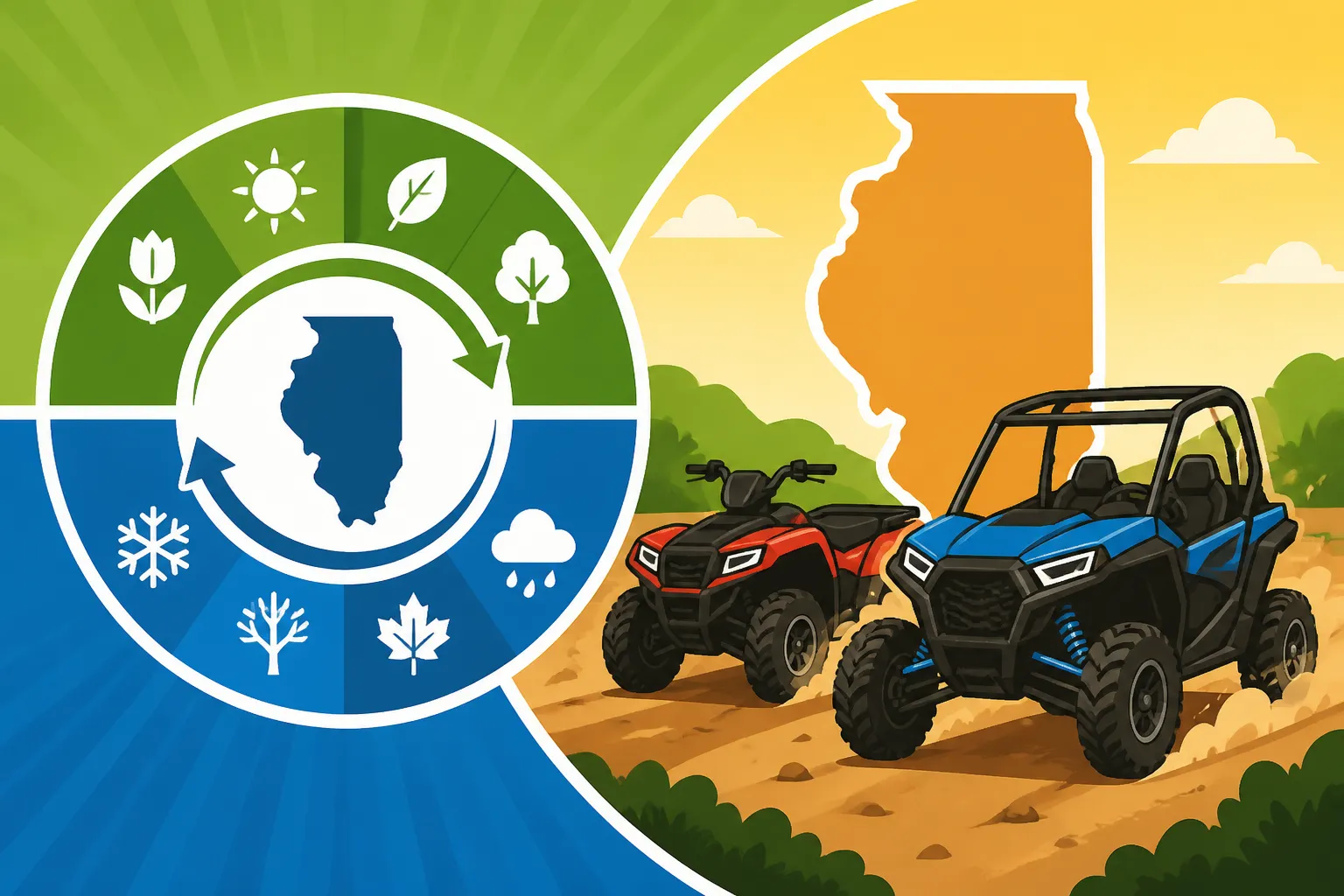
The Illinois OHV Usage Stamp year officially runs from April 1st through March 31st of the following year. This means that a stamp purchased in, say, July of one year, is valid until March 31st of the next year, not July of the next year. Similarly, a stamp bought in February is only good for a little over a month before it expires on March 31st. This specific annual cycle is thought to align with the typical start of the prime riding season in Illinois. As the snow melts and trails become passable in spring, the April 1st start date ensures that riders are getting a full year's worth of access right from the beginning of the most active riding period. It's designed to make sense with the rhythms of the outdoors, even if it feels a little counter-intuitive compared to a standard calendar year.
Many riders, especially new ones, often assume a 12-month validity from the date of purchase. It’s an honest mistake, but it's crucial to understand this fixed cycle to avoid riding on an expired stamp. Imagine planning a big trip to [Sahara Woods: Illinois's Only State OHV Park] in early April, only to realize your stamp from last May is no longer valid. That’s a quick way to put a damper on your adventure before it even starts. The Department of Natural Resources (DNR) sets this period, and it's rigidly enforced, so understanding the April-through-March rhythm is your first step to being a responsible Illinois OHV enthusiast.
The Impact of the Annual Cycle on Your Riding Plans
This specific usage stamp calendar has a direct bearing on how you plan your riding year and manage your machine's paperwork. If you're a regular rider, you know that the end of winter often brings a renewed desire to get out on the trails. With the stamp expiring on March 31st, it means that by April 1st, every rider needs a fresh stamp for the new season. This makes early spring a critical time for renewals. It's not uncommon to see a rush on vendors that sell stamps in late March and early April as everyone gets ready.
For those who primarily ride in the fall or winter, this calendar can be particularly tricky. If you bought your machine in October and picked up a stamp then, you’d only get about six months of use before it expires on March 31st. This isn't a prorated system; the fee is the same regardless of when in the cycle you purchase it. This can feel a bit frustrating, especially if you only ride occasionally. However, the system is designed to simplify enforcement and ensure a consistent revenue stream for trail maintenance throughout the year. Knowing this, you can better budget and plan your stamp purchases. For example, if you know you won't be riding until summer, you might wait until May to buy your stamp, but remember it will still expire the following March 31st. This is just one of the quirks of [Illinois OHV Permits: Two Stickers Explained] that riders need to be aware of.
How to Navigate the Renewal Process Effectively
Understanding the April-to-March cycle is just the first step; knowing how to strategically buy and renew your stamp is equally important to avoid any headaches or legal issues while out on the trails.
Timing Your Purchase and Renewal for Maximum Value
Given the April 1st start date, the ideal time to purchase your usage stamp for the upcoming season is usually in late March or early April. This ensures you have a valid stamp right from the beginning of the new cycle, maximizing the period of time you can legally ride on grant-assisted sites. Many riders will make it a point to renew their stamp as part of their spring ATV/UTV maintenance routine – checking tires, changing oil, and picking up that new stamp.
However, the reality for some riders is that they might not plan to hit the trails until later in the year. If you know you won't be riding until, say, July or August, you could theoretically wait until closer to your riding date to purchase the stamp. But remember, the expiration date remains fixed at March 31st. So, if you buy a stamp in July, you're effectively getting nine months of validity. If you buy it in February, you only get two months. There's no pro-rating system in place, so the cost of the stamp remains the same regardless of when you buy it within the April-to-March window. This is a key point in [Illinois Charges $15 for a Usage Stamp] – the price is fixed for the duration, not for 12 months from purchase. For multi-machine households, it’s worth noting [Whether Each Machine Needs Its Own Usage Stamp] (spoiler: yes, they do!).
Avoiding Common Pitfalls with Expired Stamps
Riding with an expired usage stamp is a common pitfall that can lead to unnecessary fines and spoil a perfectly good day outdoors. Conservation police officers and park rangers regularly check for valid stamps at trailheads and out on the trails, especially at popular spots like [Sahara Woods: Illinois's Only State OHV Park] or grant-assisted riding areas. The penalties for not having a current stamp can include monetary fines, and nobody wants that. It's a simple, avoidable mistake.
To avoid this, make it a habit to check the expiration date on your stamp every spring. The stickers are generally designed to be clearly visible and often have the expiration month and year printed on them. Some riders set a reminder on their phone or mark their calendar for late March. If you’re ever unsure, it’s always better to err on the side of caution and purchase a new stamp. You can typically find authorized vendors, such as hunting and fishing license retailers, or even some DNR offices. Even if you only ride on private land, you might still venture onto a grant-assisted site for an event, so it's wise to always be current. Remember, the goal is to enjoy the ride, not stress about paperwork. If you're involved in selling a machine, be sure to cover the usage stamp status as part of your disclosures, and if you need any legal forms for a private sale, resources like LawDepot can help you draft a comprehensive bill of sale that includes details about included stickers or lack thereof.
The Difference Between Usage Stamps and Access Decals
One of the most frequent questions from Illinois ATV and UTV riders revolves around the two distinct stickers they might encounter: the Usage Stamp and the Public Access Decal. It’s a source of much head-scratching, and understandably so, as both are required in certain situations and both have annual renewal cycles.
Clarifying the Roles of Each Illinois Sticker
Let's break it down: The Illinois OHV Usage Stamp, which we've been discussing, is essentially your "membership card" to ride on Illinois Department of Natural Resources (IDNR) sites that allow OHVs and on trails that have received grant funding from the state. This includes popular destinations and many smaller, community-managed trails that benefit from state support. The money from these stamps goes directly into the OHV Grant Program, which helps fund the acquisition, development, and maintenance of OHV riding areas. So, when you buy a stamp, you're directly contributing to the trails you love.
The Illinois Public Access Decal, on the other hand, is specifically required for riding at what are known as "grant-assisted riding sites." These are specific locations that have received significant state funding to develop and maintain their OHV trails. While a usage stamp broadly supports the program, the decal is a site-specific permit for these particular areas. Think of it this way: the usage stamp is a general requirement for using the state's OHV system, while the access decal is an additional, specific permit for designated, heavily supported parks. It's a subtle but important distinction that often leads to confusion. You can read more about [Why the Two Stickers Exist] to get a full picture of their different purposes.
When You Need One, the Other, or Both
This is where many riders get tripped up. The simplest way to remember it is this:
- You need an Illinois OHV Usage Stamp if you plan to ride an ATV or UTV on any public land in Illinois that permits OHVs, or on any trails that benefit from the state's OHV grant program. This includes all grant-assisted riding sites.
- You need an Illinois Public Access Decal in addition to the Usage Stamp, if you plan to ride at a specific grant-assisted riding site, such as Sahara Woods or Mill Creek Park. This decal often comes with its own set of rules and can vary in price based on residency.
So, if you're headed to Sahara Woods, you'll need both a current Usage Stamp and a current Access Decal. If you're riding on a public trail that's not a designated grant-assisted site but still falls under IDNR management (or similar public land where OHVs are permitted and benefit from state funds), you would typically only need the Usage Stamp. However, it's critical to always check the specific rules of any riding area you plan to visit, as regulations can vary. For visitors to Illinois, there are specific rules too, as outlined in [Illinois Stamp Rules for a Visitor]. It's never a bad idea to review the park's website or call ahead to clarify before you hitch up the trailer. Being prepared with both stickers, if necessary, means you won't be turned away at the gate.
Here's a quick summary table of the stickers:
| Sticker Name | Purpose | Validity Period | Where Funds Go | Price (General Shape) | When You Need It |
|---|---|---|---|---|---|
| OHV Usage Stamp | General access to public OHV trails & grant-funded areas | April 1st – March 31st | OHV Grant Program for general trail support | Flat annual fee | Almost always, for any public land riding in Illinois |
| Public Access Decal | Specific access to designated grant-assisted riding sites (e.g., Sahara Woods) | Varies, often annual | Specific grant-assisted site maintenance | Flat annual fee (varies by residency) | Only when riding at a specific grant-assisted site |
Real-World Scenarios and Practical Advice
Dealing with the Illinois OHV Usage Stamp can sometimes feel like navigating a maze, especially when real-world situations throw a curveball. Let’s look at a few common scenarios and offer some practical advice.
Buying a Machine Mid-Year: What You Need to Know
Imagine you just found the perfect used side-by-side in August, or maybe you snagged a great deal on a new ATV during a late fall sale in November. You're excited, you complete the [Illinois Title Transfer After a Sale], and you're ready to ride. But what about the usage stamp? Since the stamp year runs April through March, buying a machine mid-year means you’ll be purchasing a stamp that will only be valid for a partial year. For example, a stamp bought in August will be good until March 31st of the following year – about seven months. If you buy it in January, you’ll only have it for three months.
There's no pro-rated fee, so you pay the full amount for whatever remains of the current cycle. This can be a bit of a bummer, but it's just the way the system works. When budgeting for your new (or new-to-you) machine, factor in the full stamp cost, regardless of when you buy it. It’s also wise to check if the previous owner had a current stamp. If you're buying from a private seller, you can ask to see the machine's paperwork, including any current stamps or decals. If they don't have one, or it's expired, you'll need to factor that into your immediate post-purchase plans. When creating a bill of sale for a private transaction, especially if you're including or excluding the stamp, using a template from a service like LawDepot can ensure all these details are clearly documented for both parties. Remember, you can't hit those public trails until you have your own valid stamp affixed to the forward half of your machine.
Planning Out-of-State Trips and Visitor Stamps
Illinois riders often enjoy venturing to neighboring states like Wisconsin, Missouri, or Indiana to explore new trails. Similarly, riders from those states might want to come and experience Illinois's offerings. This raises questions about how the Illinois usage stamp interacts with other states' requirements, and what visitors need to do.
Generally, your Illinois OHV Usage Stamp is only valid for riding within Illinois. If you plan to ride in another state, you will almost certainly need to comply with that state's OHV registration or permit requirements. Each state has its own system, and very few have reciprocity for basic usage stamps or permits. So, before you load up your rig for a trip to a trail system across the border, do your homework on the destination state's rules.
For visitors coming to Illinois, the situation is reversed. If you're from Indiana, for example, and want to ride at Sahara Woods, you'll need to purchase an Illinois OHV Usage Stamp. This is covered in more detail under [Illinois Stamp Rules for a Visitor]. It doesn't matter that your machine is registered or permitted in your home state; if you're riding on public land or grant-assisted sites in Illinois, you need to play by Illinois's rules. The good news is that these stamps are readily available at various vendors across the state, and often near popular riding areas. Just like residents, visitors will also need to be aware of the April-to-March validity period. Getting caught without the proper Illinois stickers, even as a visitor, can lead to fines and a less-than-pleasant experience. Always confirm the current requirements before you travel.
Where Your Stamp Money Goes and Why it Matters
It’s easy to see the Illinois OHV Usage Stamp as just another fee, but understanding where that money actually goes can shift your perspective. This isn't just a revenue generator; it's a vital component for sustaining and expanding OHV opportunities across the state.
Supporting Illinois OHV Trails and Facilities
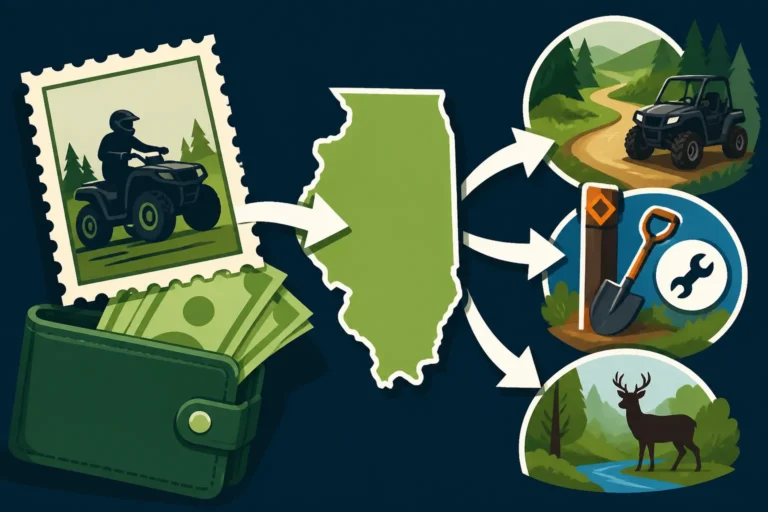
Every dollar collected from the sale of Illinois OHV Usage Stamps is deposited into the Off-Highway Vehicle Trails Fund. This dedicated fund is then used exclusively to support the Off-Highway Vehicle Grant Program. This program, administered by the Illinois Department of Natural Resources (IDNR), provides financial assistance to local government agencies, not-for-profit organizations, and private landowners for the planning, acquisition, development, maintenance, and rehabilitation of public OHV trails and facilities.
This means your $15 stamp fee directly contributes to making new trails, maintaining existing ones, improving parking areas, creating safer staging zones, and ensuring that the places you love to ride are well-cared for. It's the reason why sites like Sahara Woods have been developed and can continue to offer miles of trails for enthusiasts. Without this funding mechanism, the growth and sustainability of organized OHV riding in Illinois would be severely hampered. Think of it as an investment in your passion. For a deeper dive into the specifics, check out [Where the Stamp Money Goes].
The Value of Compliance for the Riding Community
Beyond the direct financial support for trails, compliance with the usage stamp requirement carries a broader significance for the entire OHV riding community in Illinois. When riders consistently purchase and renew their stamps, it demonstrates a strong, organized user base to state lawmakers and land managers. This collective compliance sends a clear message: OHV riders are responsible, they care about their sport, and they are willing to contribute to its future.
This kind of positive engagement is crucial when advocating for new riding areas, protecting existing ones, or seeking continued state support for the OHV program. High compliance numbers can be used to show the economic impact and recreational demand for OHV riding, making it easier to secure grants and political will for future projects. Conversely, widespread non-compliance can unfortunately be used by detractors to argue that the OHV community is not responsible or that the programs are not well-utilized, potentially jeopardizing future access. So, by simply buying and displaying your current Illinois OHV Usage Stamp, you're not just following the law; you're actively contributing to the health and future of OHV riding for everyone in the Prairie State. It's a small fee with a big impact on access and advocacy.
Disclaimer
This article is for general informational purposes only and does not constitute professional advice. Laws, prices and regulations vary by location and change over time. Consult a qualified professional for guidance on your specific situation.