Why an Illinois ATV Title Comes With No Plate
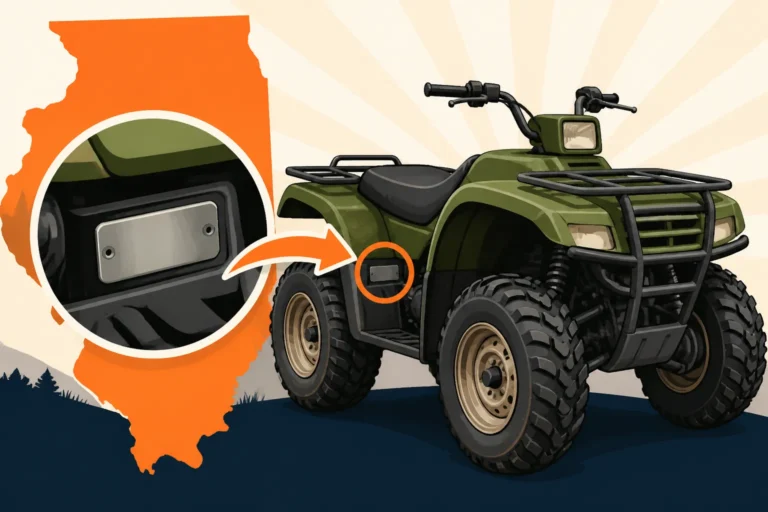
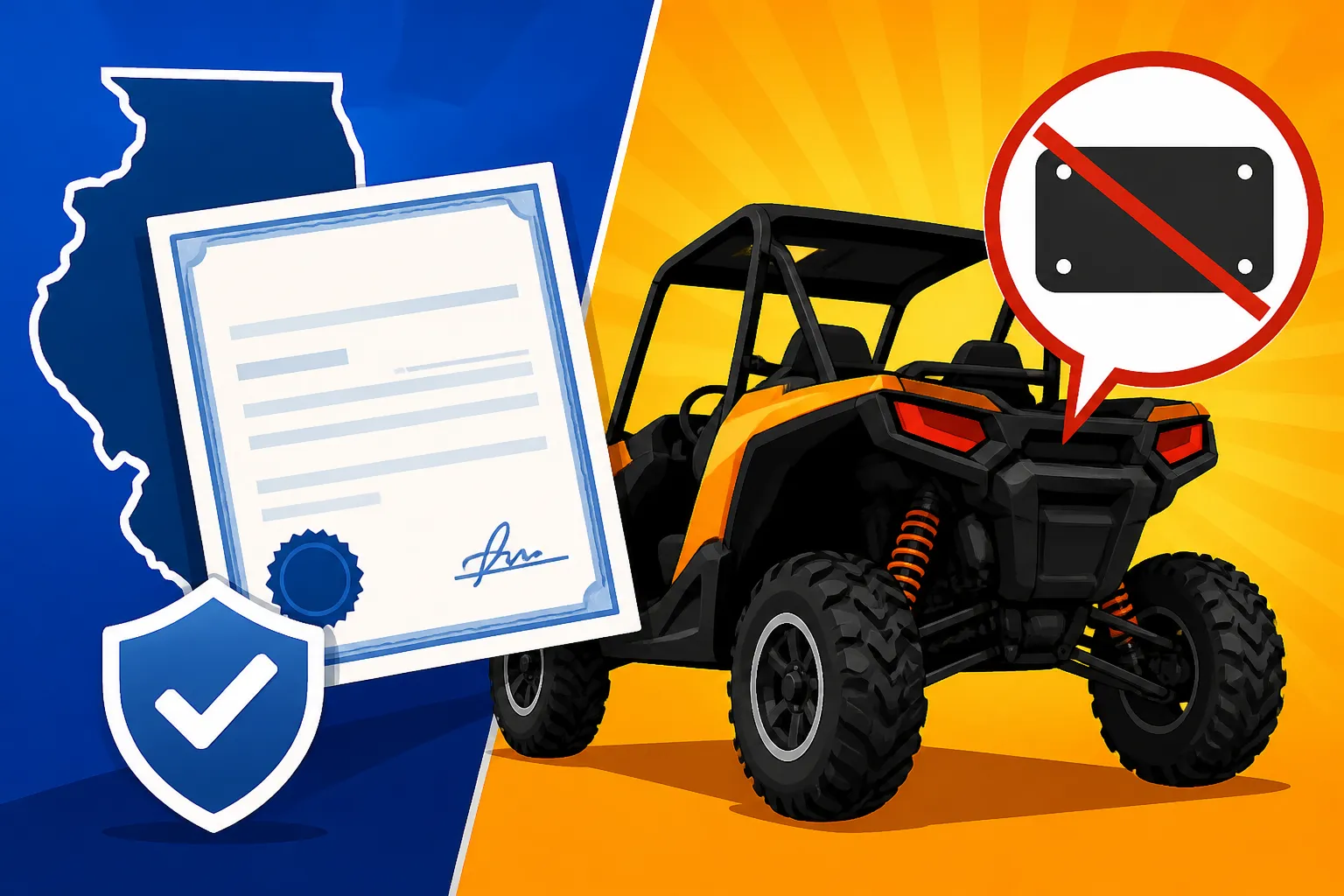
It's a common head-scratcher for new ATV and UTV owners in the Prairie State: you go through the process, get your official paperwork, and then realize your Illinois ATV title arrives without a corresponding license plate. This guide will dive deep into why your off-road machine isn't issued a traditional license plate in Illinois, demystifying the state's approach to titling versus registering these popular vehicles.
Understanding the "Title Only" Concept for Off-Road Vehicles
When you receive an Illinois title for your all-terrain vehicle (ATV) or utility terrain vehicle (UTV), it can feel incomplete if you're used to automobiles. Cars, trucks, and even motorcycles get a title and a license plate. But for ATVs and UTVs in Illinois, the title is specifically a "title only" document. This might seem confusing, especially when you're shelling out money and dealing with paperwork, but it boils down to the fundamental classification of these machines within the state's legal framework.
The Distinction Between Titling and Registering a Vehicle
To fully grasp why there's no license plate, we need to understand the difference between titling and registering. Titling a vehicle, whether it's a quad or a pickup truck, primarily establishes legal ownership. It's proof that you, or your financial institution if you have a loan, are the rightful owner of that specific piece of property. Think of it like the deed to a house; it proves who owns it. [Illinois ATV Title Certificates Explained] covers this in more detail.
Registration, on the other hand, is generally about permission to operate a vehicle on public roads and highways. When you register a car, you pay fees that often go towards road maintenance, and you're issued license plates that serve as a visual identifier for law enforcement and the public, confirming its legal status for street use. This is where the paths of cars and ATVs diverge significantly in Illinois. Because ATVs and UTVs are primarily considered off-highway vehicles, they aren't registered for general public road use in the same way your car is. Therefore, no need for a road-legal license plate.
Why Illinois Classifies ATVs and UTVs as Off-Highway Vehicles
Illinois defines ATVs and UTVs as "off-highway vehicles" (OHVs). This classification is the lynchpin of why they don't receive license plates. The state's general stance is that these machines are designed and intended for off-road use, not for navigating public streets and highways. This primary use dictates how they are regulated. While there are some exceptions for limited road use under specific local ordinances, the default classification prevents them from being treated like standard street-legal vehicles that require registration and a license plate. It's a foundational legal distinction that shapes the entire regulatory landscape for these machines in Illinois, ensuring that the rules align with their intended operating environment. [Illinois Titles but Does Not Register ATVs] further elaborates on this core policy.
The Core Purpose of an Illinois ATV Title
So, if you don't get a license plate, what's the point of the title? An Illinois ATV or UTV title serves several incredibly important functions, all centered around establishing clear and legal ownership, which is crucial for consumer protection, preventing theft, and facilitating legitimate transactions. Without a title, proving you own your machine could become a nightmare, opening the door to disputes and legal headaches.
Establishing Legal Ownership and Preventing Theft
The most fundamental purpose of your title is to legally prove you own your ATV or UTV. It's an official document issued by the state, recording your name as the rightful owner and detailing specific information about your machine, such as its Vehicle Identification Number (VIN). This official record is paramount for your peace of mind and for legal protection. If your machine is ever stolen, the title is critical evidence that helps law enforcement track it down and proves your claim to the vehicle. Without it, recovering a stolen ATV would be significantly more challenging, as there would be no state-backed documentation tying the machine to you directly. [Applying for an Illinois Off-Road Title] walks you through the process of securing this vital document.
Facilitating Lawful Sales and Transfers
Beyond just proving ownership, the title is absolutely essential when you decide to sell your ATV or UTV, or if you purchase one from a private seller. It's the key document that changes hands, legally transferring ownership from one party to another. When you sell, you'll sign over the title to the buyer, and they'll use it to apply for a new title in their name. This ensures a clean chain of ownership and protects both the buyer and the seller. Imagine trying to sell a machine without a title – potential buyers would (rightfully) be suspicious, worried it might be stolen or have other encumbrances. The title eliminates this uncertainty, making the transaction legitimate and transparent. You might even use a service like LawDepot to create a robust bill of sale to accompany your title transfer, ensuring all legal bases are covered in a private transaction.
Recording Liens and Financing Information
If you financed your ATV or UTV purchase, your title also serves as the official record for any outstanding liens. When a bank or credit union lends you money to buy the machine, they typically hold a lien on the title until the loan is fully paid off. This means the title will show the financial institution as a lienholder. This is a standard practice that protects lenders by ensuring they have a legal claim to the asset until the debt is satisfied. Once you've made your final payment, the lienholder will release the lien, and you'll typically receive a clear title free of any encumbrances. This aspect of the title is crucial for both the owner and any future lenders, providing a clear financial history of the machine. [Illinois Title and Lien Records] delves deeper into how these financial details are recorded.
Why ATVs Aren't Road Registered in Illinois
The primary reason you won't get a license plate for your ATV or UTV in Illinois is rooted in how the state views and regulates these machines in comparison to vehicles intended for public roadways. It's a matter of safety, infrastructure, and legislative intent. The state has decided that, for the most part, these vehicles don't belong on the asphalt alongside cars and trucks.
Design and Safety: Not Built for Public Roads
ATVs and UTVs are engineered for off-road terrain. Their suspension systems, tire types, steering mechanisms, and overall stability are optimized for dirt, mud, rocks, and trails, not for smooth pavement or high-speed traffic. Operating these machines on public roads can pose significant safety risks. Their handling characteristics are different from street-legal vehicles; they may be less stable at higher speeds, have different braking distances, and are often less visible to other motorists. These inherent design differences are a major factor in Illinois's decision not to register them for general road use, and thus, not issue them license plates. [Illinois Non-Highway Vehicle Equipment List] outlines some of the specific equipment needed for any limited road use.
Infrastructure and Funding: OHV vs. Road Use
The infrastructure funding model also plays a role. Vehicle registration fees and fuel taxes from street-legal vehicles primarily fund the construction and maintenance of public roads and highways. Since ATVs and UTVs are not primarily contributing to the wear and tear of these public roads, and their operation on them is highly restricted, the state hasn't established a general registration system for them that would funnel into road funding in the same way. Instead, specific fees and stamps for off-road use, like the usage stamp and access decal, contribute to the maintenance of designated off-highway riding areas.
Legislative Intent: Keeping Off-Road Machines Off Roads
Ultimately, the lack of a license plate reflects the state's legislative intent to keep off-highway vehicles off public roads for the safety of both OHV riders and other motorists. The laws are designed to channel these machines to designated riding parks, private property, or specific, limited-use scenarios where local ordinances permit. While some municipalities do allow limited UTV use on their streets, these are exceptions, not the rule, and they come with their own stringent requirements and permits, none of which involve a state-issued license plate. [Illinois ATV Road Rules: Local Ordinances Decide] provides context on how towns can create these exceptions.
The Stickers and Permits You Do Need in Illinois
While a license plate isn't part of the Illinois off-road vehicle scene, that doesn't mean you're free from all stickers and permits. In fact, Illinois requires specific decals and stamps to legally operate your ATV or UTV, especially if you plan to ride on state-funded trails or publicly accessible lands. It's important to know the difference and ensure you have the correct ones displayed.
The Illinois OHV Usage Stamp
The Illinois OHV Usage Stamp is a crucial permit for anyone riding their ATV or UTV off-highway in the state, with certain exemptions. This stamp primarily funds the Illinois OHV Grant Program, which provides financial assistance to public and private entities for the development, maintenance, and acquisition of OHV riding areas. Think of it as your contribution to keeping those trails open and in good shape. Without this stamp, you could face penalties if caught riding on lands where it's required. [Illinois OHV Usage Stamp Explained] details its purpose and requirements.
The stamp is typically an adhesive decal that you must affix to the forward half of your machine, visible and unobstructed. It's valid for a specific period, generally from April 1st through March 31st of the following year, requiring annual renewal. Many outdoor retailers and DNR direct vendors sell these stamps, making them relatively easy to acquire. [Illinois Penalties for No Stamp] is a good read to understand the consequences of skipping this important requirement.
The Illinois Public Access Decal
Alongside the Usage Stamp, you might also need the Illinois Public Access Decal, particularly if you intend to ride at grant-assisted riding sites. This decal is specific to grant-assisted sites, which are often public parks or private facilities that have received state funding through the OHV Grant Program (the same program funded by the Usage Stamp!). The decal ensures that riders using these specific sites contribute to their operation and maintenance. It's an additional layer of funding and regulation for areas that receive state support.
Unlike the Usage Stamp which is broader, the Access Decal is specifically for these designated grant-assisted sites. It also comes in different versions for residents, non-residents, and rental machines, often with varying costs. You'll need to display this decal prominently, usually on the front and center of your machine. It is important to note that if you have a current Public Access Decal, you generally do not need to purchase a separate Usage Stamp, as the decal serves a similar purpose and indicates compliance with the state's OHV program. [Illinois Public Access Decal Explained] clarifies the nuances of this sticker. Riders should always check the specific rules of the riding area they plan to visit to ensure they have all necessary permits.
| Permit/Sticker | Primary Purpose | Where to Display | Why It's Needed | Does it replace other stickers? |
|---|---|---|---|---|
| Illinois ATV Title | Proof of legal ownership, lien record | Keep with owner, not on machine | Essential for buying/selling, theft prevention | No, separate from riding permits |
| Illinois OHV Usage Stamp | Funds OHV Grant Program, required for most off-road riding | Forward half of machine, visible | Supports trail systems, required by law | Replaced by Public Access Decal at grant sites |
| Illinois Public Access Decal | Funds specific grant-assisted riding sites, required for those sites | Front and center of machine, visible | Required for specific state-supported trails | Yes, replaces Usage Stamp at grant sites |
Limited Road Use and What It Requires (No Plate)
Even though ATVs and UTVs aren't road-registered in Illinois and don't receive license plates, there are specific, highly regulated instances where you might be able to operate them on public roads. These exceptions are typically at the local level and come with a strict set of conditions and equipment requirements, none of which magically grant your off-road machine a license plate. It's all about navigating local rules and ensuring your machine is adequately equipped for the limited task.
Local Ordinances and Restricted Public Road Access
The ability to ride an ATV or UTV on public roads in Illinois rests almost entirely with local municipalities – villages, cities, townships, and counties. The state law generally prohibits OHVs on roads, but it provides a framework for local governments to pass ordinances that allow limited use within their own jurisdictions. This means that what's legal in one town might be strictly forbidden in another, even a neighboring one. It's a patchwork of regulations that requires diligent research before you hit any paved surface. [Illinois UTV Street Legal Rules by Town] highlights this variability.
These ordinances usually specify which roads are open (often limited to those with speed limits of 35 mph or less), the hours of operation, and sometimes even require a local permit. They're not a carte blanche for joyrides on Main Street, but rather a concession for specific purposes like accessing trails, going to a local store, or connecting farm properties. Always check with the local police department or village hall for the most current rules before assuming you can ride.
Required Equipment for Road-Legal Use
If a local ordinance does permit limited road use, your ATV or UTV will need to meet a specific set of equipment requirements to be considered "road-legal" for that specific jurisdiction. This isn't about getting a license plate; it's about making an off-highway vehicle minimally safe and visible for brief stints on the asphalt. Typically, this includes things like headlights, tail lights, brake lights, turn signals, a rearview mirror, and a slow-moving vehicle emblem. Some towns may even require proof of insurance beyond the basic liability.
These equipment stipulations are designed to bring the OHV closer to street-legal standards in terms of visibility and signaling, reducing the risk of accidents with other vehicles. It’s important to ensure all required equipment is functioning correctly before operating on any public road, even if only for a short distance. Failure to comply with these equipment rules, in addition to local ordinance rules, can lead to fines and citations. You can imagine the frustration of getting a ticket because your turn signal wasn't working when you thought you were following all the rules.
Insurance Requirements for Limited Road Use
Another critical component for any road-legal ATV or UTV use in Illinois, even under a local ordinance, is insurance. While not universally required for off-road riding on private property, if you plan to operate your machine on public roads, you will almost certainly need to carry liability insurance. This is to protect you and others in case of an accident. The minimum coverage amounts are usually similar to those for automobiles, often referred to as 25/50/20 coverage, referring to bodily injury liability limits per person, per accident, and property damage liability.
Even if a local ordinance doesn't explicitly state insurance is required, it's a wise decision for any rider on public roads. Accidents happen, and without proper coverage, you could be facing significant financial liability. Always confirm the specific insurance requirements with your chosen municipality before hitting the streets. [Illinois Insurance Minimums for Street Use] provides a deeper dive into these requirements for street-legal machines.
Future Outlook: Could Plates Ever Be a Thing?
The idea of ATVs and UTVs getting traditional license plates in Illinois raises questions about potential shifts in legislation, public perception, and how these versatile machines are used. While the current system strongly distinguishes between off-highway and on-highway vehicles, the landscape is always evolving, driven by rider demand, safety concerns, and economic factors.
Current Legislative Stance and Challenges
Currently, the legislative stance in Illinois remains firm: ATVs and UTVs are primarily off-highway vehicles, hence the "title only" status without a license plate. Any widespread change to this would require a significant legislative overhaul, likely involving debates about funding, safety, enforcement, and the fundamental definition of these machines. One of the biggest hurdles is the vast difference in design and safety standards between an OHV and a passenger car. Equipping every ATV and UTV to meet full road-legal standards (including crash-worthiness, emissions, and lighting for all conditions) would be an enormous, and likely cost-prohibitive, undertaking for owners.
Furthermore, introducing license plates for all ATVs and UTVs could imply a broader acceptance of them on public roads, which could conflict with the safety objectives that currently keep them off. There's also the question of infrastructure; could the state's roads handle a significant increase in OHV traffic, and how would that impact maintenance and traditional vehicle flow? These are complex issues that would need careful consideration by lawmakers before any such change could be seriously enacted.
Potential Drivers for Change
Despite the challenges, there are always potential drivers for legislative change. The growing popularity of UTVs for both recreational and utility purposes, including farm work and accessing remote job sites, could put pressure on lawmakers. As more people own these machines, and as their capabilities expand, the demand for broader street access might increase. Economic benefits, such as increased tourism if more areas permitted OHV use, could also be a factor.
Another driver could be standardization. If neighboring states move towards more comprehensive road registration for OHVs, Illinois might feel pressure to align its laws to simplify cross-border travel for riders. However, any such change would likely be gradual, starting with pilot programs or specific categories of machines rather than a blanket change. For now, the "title only" system without a plate is firmly in place, reflecting Illinois's long-standing approach to off-highway vehicle regulation.
Disclaimer
This article is for general informational purposes only and does not constitute professional advice. Laws, prices and regulations vary by location and change over time. Consult a qualified professional for guidance on your specific situation.