Illinois Group Size at a Park
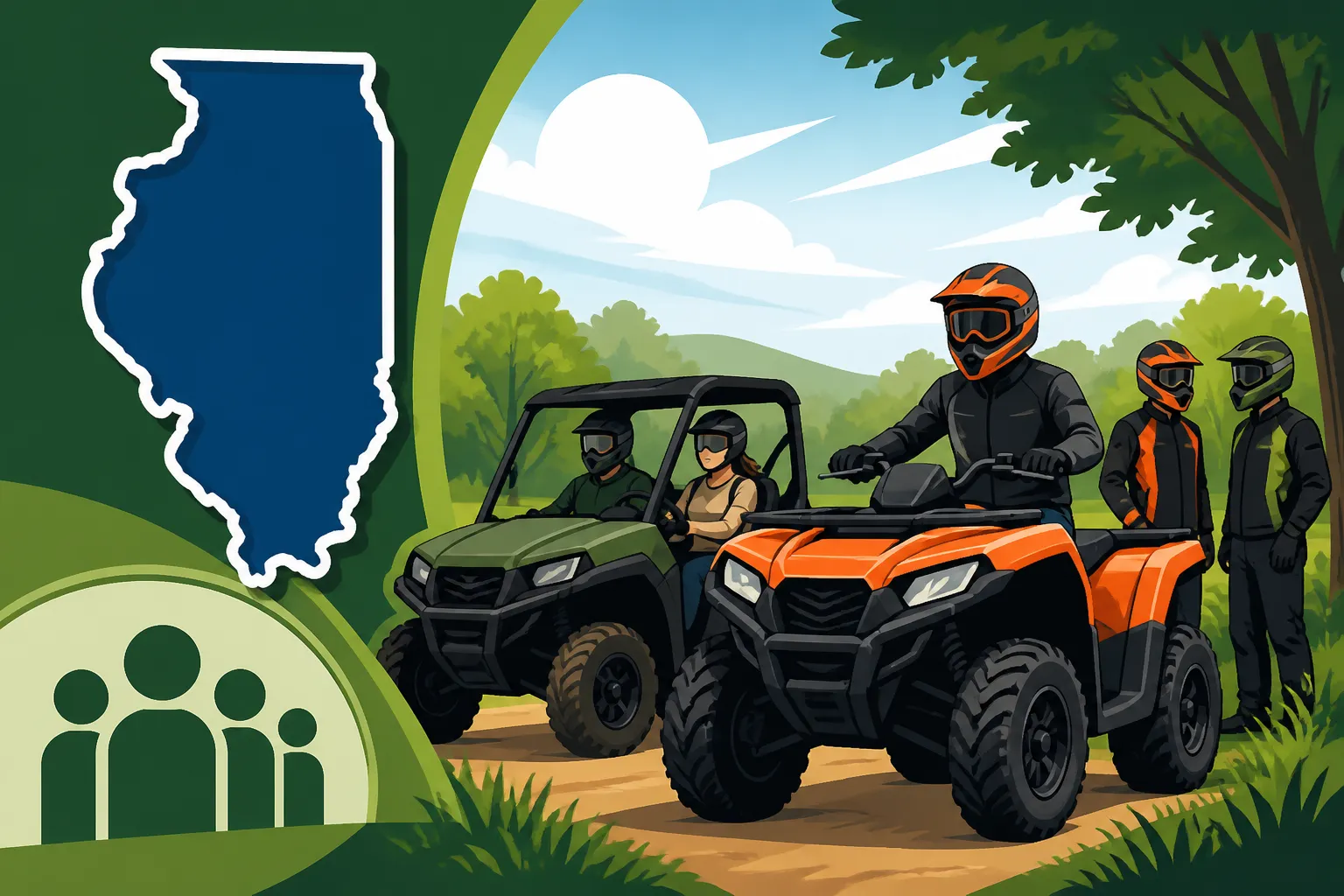
Planning a group ride in Illinois is more complicated than picking a trail and agreeing on a meeting time. Each park can set its own limits for group size, vehicles, reservations and check-in. The safest approach is to confirm the rules with the specific site, then plan the ride around the number of machines and riders it can accommodate.
Why group size depends on the park
There is no single group-size number you should assume applies to every Illinois off-road riding area. A park’s operator may limit how many machines can enter, how many riders may register together, or how many vehicles can be on a trail at once. Those are different kinds of limits, and a rule about one does not automatically tell you the others.
The type of site matters, too. A privately operated riding park may use its own reservation system and visitor rules. A grant-assisted riding site may have access requirements that apply to every machine. A club-run area may rely on membership, day-pass or event procedures. For an overview of how these settings differ, see Illinois Private Off-Road Parks and Illinois Grant-Assisted Riding Areas.
Ask the site operator what “group size” means in its rules. It may refer to:
- The total number of people in your party.
- The number of ATVs, UTVs or other machines arriving together.
- The number of machines allowed on a particular trail segment at one time.
- The maximum number of riders allowed under one reservation or event registration.
- The total number of vehicles the site can admit that day.
For example, a group may have enough room in its reservation for every machine but still be too large to ride together on a narrow or busy trail. Or the park might allow a large party to visit but ask it to divide into smaller riding groups. Neither arrangement should be assumed without asking.
A daily cap is not the same as a group limit
Some sites limit the total number of machines they admit for the day. That is a site-wide cap, not necessarily a limit on how many machines one party may bring. But if a cap is close to being reached, a large party can be harder to fit into available spaces, especially if riders arrive separately or have not reserved in advance. Illinois Daily Caps and Sell-Outs explains why checking availability matters before making a long drive.
A daily cap can affect your plans even when the operator does not publish a separate maximum party size. If the site has space for only a few more machines, a group that shows up together may not all be admitted. A reservation or confirmation should also be read carefully: check whether it covers each rider, each machine, or a specified party. Do not assume that one person’s booking covers everyone traveling with them.
Different rules can apply within one site
A park may have rules for the property as a whole and additional rules for certain trails or features. A narrow trail, difficult section or one-way route can be a poor fit for a large convoy, even when every machine in the group has permission to ride at the park. Trail difficulty and current conditions also affect how comfortably a group can stay together. Use Illinois Trail Difficulty Ratings and Illinois Trail Closures After Rain as reminders to check whether the planned route matches the group’s abilities and conditions.
The operator may also impose rules that are not described as group-size rules but still shape a group ride. These might include check-in procedures, vehicle inspections, waiver requirements, riding hours, passenger restrictions or limits on where machines can go. Read the park’s current rules as a complete set rather than looking only for a number labeled “maximum group size.”
What to confirm before inviting everyone
A quick call or message to the park can prevent a frustrating arrival. Give the operator useful details: how many machines are coming, what types they are, how many riders will be present, whether children or passengers are included, and whether the group wants to ride together or in smaller pods. Ask about the site’s current rules rather than relying on a friend’s memory of a past visit.
Use this checklist when you contact the operator:
| Question | Why it matters |
|---|---|
| Is there a limit on machines per party or reservation? | A vehicle limit can differ from a rider limit. |
| Does the site require advance reservations? | Large parties may need to reserve separately or earlier. |
| Does each rider or machine need its own check-in? | One organizer may not be able to check in the whole group on everyone’s behalf. |
| Can the party ride together, or must it split into smaller groups? | A permitted group size does not guarantee that a single convoy is allowed or practical. |
| Are there special rules for children, passengers or machine types? | These can affect who may ride and where. |
| What happens if the group arrives late or some machines are missing? | The operator may have procedures for late arrivals, no-shows or changes. |
| Are trail conditions or closures likely to affect the planned route? | A route that worked on a previous visit may not be available or suitable now. |
If you are booking a site with limited availability, make the reservation plan clear before collecting money or promising a date. Illinois Riding Areas That Take Reservations covers why booking procedures can matter, while Illinois Group Ride Planning can help with the logistics of coordinating a larger outing.
Confirm what the booking covers
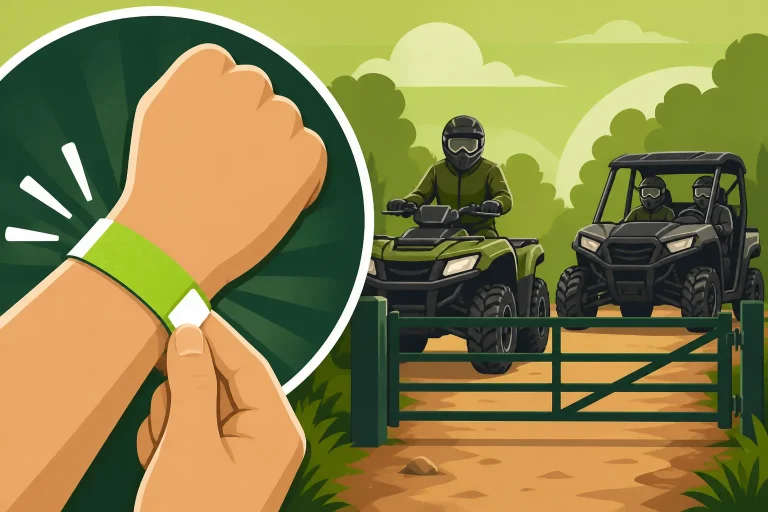
A booking can be tied to a person, a vehicle, a riding day or a specific entry slot. Read the confirmation and ask the park if anything is unclear. Check that the reservation includes the right number of machines and that every rider who needs to complete a waiver or check in has a way to do so. If the operator issues wristbands or vehicle stickers, find out whether each person or machine must collect one at the gate.
Do not treat a confirmation as proof that every other requirement has been met. A reservation may secure a place at the park without replacing a required access decal, waiver, permit or proof of ownership. At grant-assisted sites, the applicable machine-access requirements are separate from the park’s own booking process. Illinois OHV Permits: Two Stickers Explained and Illinois Public Access Decal Rules explain the distinction between common Illinois off-highway requirements.
For a large party, designate one organizer to keep the confirmations and current park instructions in one place. That person can share the arrival time, check-in location, parking instructions and any last-minute updates. Each driver should still know what they personally need to bring and complete.
Ask about changes and cancellations
Group plans often change. A machine may break down, a rider may become ill, or another person may decide to join. Before finalizing arrangements, ask how the park handles changes to a reservation and whether additional vehicles can be added later. If weather or trail conditions affect operations, find out how the site announces closures or schedule changes.
Avoid relying on a social media post or a message from a different group as the final word. Rules and available capacity can change between visits. Confirm directly with the park close to departure, especially before a holiday weekend or a long-distance trip.
How to keep a large ride manageable
Even when the park accepts the whole party, riding as one long line may not be the best choice. Machines move at different speeds, riders have different experience levels, and trail features can create gaps. Smaller groups are usually easier to keep organized and less likely to block a trail while someone waits for the rest of the party.
Divide riders before leaving the staging area
Choose smaller riding groups based on ability, machine type, pace and the route each group plans to take. Avoid putting inexperienced riders at the back of a fast group where they may feel pressured to keep up. Let everyone know which group they are in, who is leading it and who will ride at the back.
A simple group structure works better than a vague instruction to “stay together”:
- Choose a lead rider who knows the planned route and the park’s rules.
- Choose a sweep rider who can notice if someone has fallen behind or stopped.
- Agree on safe places to wait, such as a designated junction or wide staging area.
- Set expectations for pace, stops and what to do if someone needs to leave the route.
- Confirm that every rider knows how to contact the organizer and where to return.
Do not stop in a way that blocks trail traffic. If the group needs to regroup, move to a safe, wide place where other riders can pass. Clear, courteous habits help prevent a large party from disrupting other park users. See Illinois Trail Etiquette Locals Expect for more on sharing trails responsibly.
Make the plan understandable to every rider
A route description is only useful if everyone can follow it. Share a map or explain the route before riding, including the planned turnaround point and a place where the group can regroup. Tell riders what to do if they become separated; “keep going until you catch up” is a poor plan if the route has forks or different skill levels.
Cell service can be unreliable at some riding areas. If the park allows handheld radios, they can help a group communicate over short distances, but they should not replace safe spacing, route awareness or following site rules. If you purchase radios through Amazon or another retailer, check that the models can communicate with one another and are suitable for the conditions. Have a backup plan in case a radio fails or a rider cannot hear it.
Consider keeping an emergency contact and the park’s contact information accessible to the organizer. Make sure riders know where to return if a group separates and what to do if a machine becomes disabled. Those preparations matter more when the group is large, the route is unfamiliar or some riders are new to off-road riding.
Set a realistic pace
A group can ride only as fast as its least comfortable participant can safely manage. A pace that feels easy to an experienced rider may be stressful for a new rider or a child. Choose routes based on the least experienced rider in each group, not the most capable machine. If riders want different levels of challenge, split the party by ability and agree on a time and place to meet again.
The machine matters as well. A UTV, a youth quad and a dirt bike may have different handling and trail needs. Confirm that the park allows each type of machine and that the planned route is appropriate. Never assume that a machine’s physical ability to travel a trail means the park permits it there.
Common planning mistakes and how to avoid them
Assuming a group limit from another park
A rule at one Illinois riding area does not establish the limit at another. Operators may have different land, staffing, trail layouts, booking systems and safety procedures. Even if someone in your group has visited the site before, confirm the current rules directly.
Counting people but not machines
A party of a certain number of riders could arrive in far fewer machines than another party of the same size. Parks may track vehicles for capacity, parking or access purposes. When asking about a limit, provide both totals. Include passenger counts if relevant, and mention youth riders so the operator can clarify any age or supervision rules.
Assuming one organizer can complete everyone’s paperwork
A group leader can coordinate, but the park may require each rider to complete a waiver, show a confirmation or check in individually. Ask what each participant must do and share those instructions before departure. Parents or guardians should also confirm how the park handles paperwork for minors rather than waiting until the group reaches the gate.
Arriving without a plan for late or separate vehicles
When a party travels in several trucks or trailers, some vehicles may arrive later than others. Ask whether the whole party must check in together and how the site handles a late arrival. Give everyone the exact meeting point and a way to contact the organizer. A group that is spread across several roads should not assume the first vehicle can hold a place for the rest unless the park confirms that arrangement.
Trying to keep a large convoy together on every trail
A long line can make passing difficult, delay other riders and leave inexperienced participants feeling rushed. Split into smaller groups when needed, keep a reasonable following distance and regroup only where it is safe to stop. If a park gives a specific instruction about group movement, follow it even if your party would prefer to ride together.
Treating a permit as permission to ignore site rules
An Illinois stamp or access decal does not give a group permission to ride anywhere it chooses. Site access, machine requirements and park-specific rules still apply. The Illinois Usage Stamp vs Access Decal comparison can help distinguish those requirements, but it does not replace checking the rules of the site you plan to visit.
Failing to tell the park when plans change
A change in the number of machines can affect a reservation, capacity or check-in process. If a rider drops out or another machine is added, contact the operator before leaving. This is especially important when the park has a daily vehicle cap or the group is arriving on a busy day. If you cannot reach the operator, do not assume an extra machine will be admitted.
A well-planned group ride does not have to be small. It does need to fit the park’s current rules, the available capacity and the riders’ abilities. Confirm the limit in terms of both people and machines, make reservations when needed, and divide the party into manageable groups if the trails or site procedures call for it. Those steps reduce uncertainty at the gate and make the ride more considerate for everyone sharing the property.
Disclaimer
This article is for general informational purposes only and does not constitute professional advice. Laws, prices and regulations vary by location and change over time. Consult a qualified professional for guidance on your specific situation.