Illinois Waivers Signed Before You Ride
A waiver can feel like one more form between you and the trail, but signing without understanding it can leave riders confused about responsibility, minors, passengers, and check-in. Illinois riding sites may have different registration and release procedures. Here’s what to review before you sign, what to prepare for a child, and why a waiver does not replace a permit or site rules.
What an Illinois riding waiver does
A riding waiver is a document a park or event may ask participants to sign before they ride. It commonly describes risks associated with off-highway vehicle use and asks the participant to acknowledge those risks. It may also include a release of claims, an agreement to follow site rules, or permission to use certain information for check-in.
The exact language and process depend on the riding site. A state OHV park, a grant-assisted site, a private riding park, and an organized event may each use different forms. There is no single waiver that automatically covers every place in Illinois. Read the instructions from the specific site you plan to visit, even if you have signed a similar form elsewhere.
A waiver is not the same thing as a riding permit. It also does not, by itself, give you permission to ride on land. Depending on the destination, you may still need a permit or other authorization, and you must follow the site’s operating rules.
| Item | What it generally addresses | What it does not replace |
|---|---|---|
| Waiver or release | Acknowledgment of risks and terms set by the site | A riding permit, landowner permission, or site rules |
| Site permit | Permission to ride at a particular site under its conditions | A signed waiver if the site requires one |
| Vehicle sticker | Identification or entry requirements set by the site | Proof that every rider has completed required paperwork |
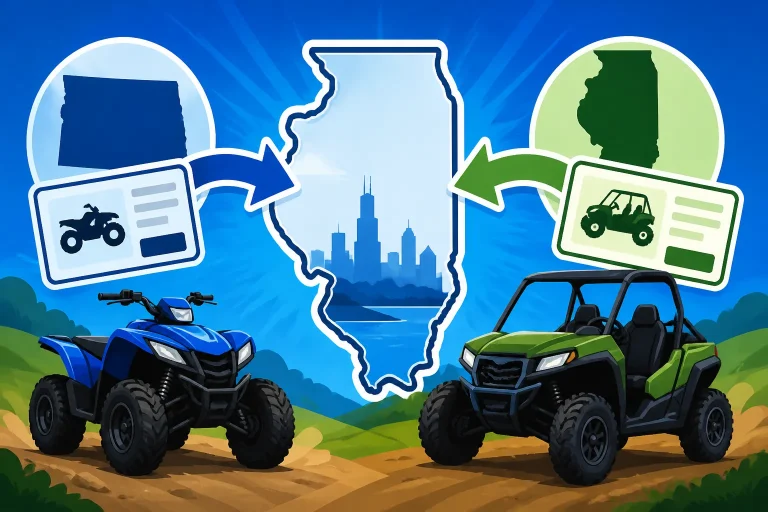
| Illinois usage stamp or access decal | Separate Illinois OHV requirements that may apply to the rider or machine | A private park’s waiver or entry requirements |
At Sahara Woods, for example, registration, waivers, and gate check-in are part of planning a ride. Review Illinois Sahara Woods Permits and Illinois Advance Registration and Waivers for related details, and confirm the current procedure with the site before traveling. A waiver signed for one location should not be assumed to work at another.
The practical rule is simple: identify every person who will ride or participate, find out which forms the site requires, and complete them as instructed. A waiver may apply only to the person who signs it. Do not assume that one adult’s signature covers every rider in a group.
Before you sign: check the form and the process
A few minutes spent reading the form can prevent avoidable problems at check-in. Pay attention to what the site says about who must sign, how to submit the waiver, and whether the form has to be completed for each visit.
Confirm the site’s instructions first
Start with the riding site’s official registration or visitor instructions. Check whether it requires a waiver before arrival, allows an electronic signature, or expects participants to complete paperwork at check-in. Some sites may ask you to register online and show a confirmation; others may have a different procedure. Do not rely on an old email, a form saved from a previous trip, or another rider’s recollection as the final word.
Ask the site directly if the instructions are unclear. Useful questions include:
- Does every rider need to complete a separate waiver?
- Does the waiver apply to passengers as well as vehicle operators?
- Can a participant sign electronically, or is a printed form needed?
- Does a parent or legal guardian have to complete a separate section for a minor?
- Does the waiver need to be renewed for each visit?
- What identification or confirmation should participants bring?
- What happens if a rider arrives without a completed waiver?
The answers can vary by property and event. Check again close to your visit, especially if you are going with a group or bringing children.
Read the terms rather than treating the form as a checkbox
Look for language explaining the activities covered by the waiver. It may address trail riding, vehicle operation, spectators, passengers, camping, events, or other activities offered at the property. If you intend to do something beyond riding, check whether the form and site rules cover it.
Pay attention to statements about inherent risks, personal responsibility, conduct, and compliance with staff instructions. A signature may also confirm that you have read the rules or agree to follow them. If something is unclear, ask the site before signing rather than guessing what a clause means.
Do not assume a waiver guarantees that the site is responsible for every incident, or that it eliminates every legal right a participant might have. The effect of waiver language can depend on the wording and applicable law. For advice about what a particular document means for your situation, consult a qualified legal professional.
Enter accurate participant information
Use the name and other information requested by the form, and make sure the details are accurate. If a site asks for an emergency contact, provide someone who can be reached during the ride. If a field does not apply, follow the site’s directions rather than leaving it blank when the form says it is required.
Do not sign for another adult or enter a participant’s information without permission. If the site has a process for group registration, follow it precisely. A group organizer’s booking confirmation does not necessarily mean all individual riders have completed their own required paperwork.
If you make a mistake or need to update information, contact the site and ask how to correct the form. Altering a completed waiver or submitting a second version without explanation could create check-in confusion.
Save proof of completion
When the waiver is completed online, keep the confirmation or receipt in the format the site accepts. If the site permits phone display, make sure the confirmation is accessible without relying on a strong cell signal at the trailhead. If it requests a printed copy, print it before leaving.
For a group trip, one person can help keep confirmations together, but each rider should know whether their own waiver is complete. A waterproof document sleeve or folder can protect printed papers in a vehicle; a basic folder is often enough. If you shop on Amazon for a document pouch, choose one that fits your paperwork and can be secured in your vehicle rather than assuming a particular product is required by the park.
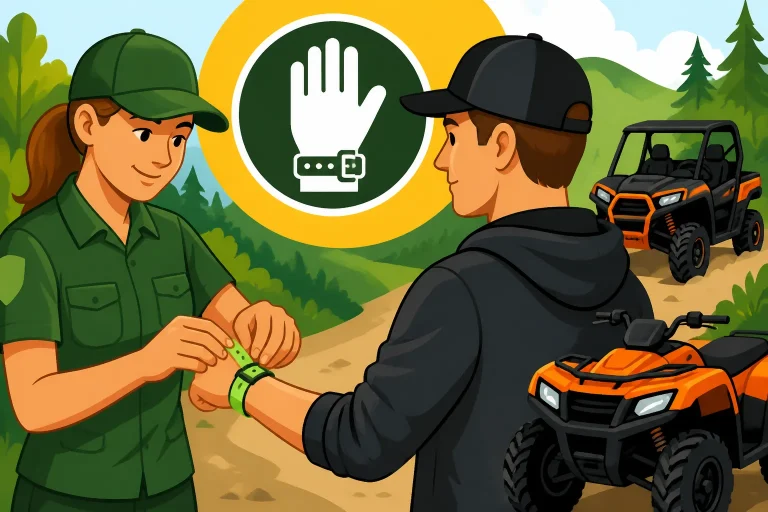
Keep the waiver confirmation separate from proof of a permit or vehicle sticker. The site may check those items independently. Illinois Wristbands and Vehicle Stickers explains another part of the check-in process at certain riding locations.
Waivers for children, passengers, and groups
Children and passengers need particular attention because the person completing the waiver may not be the same person operating the machine. Follow the site’s exact instructions for every participant, and do not treat a parent’s signature as a substitute for age, supervision, or passenger rules.
A parent or guardian may need to sign for a minor
A child generally cannot complete a binding waiver in the same way an adult can. A riding site may require a parent or legal guardian to provide consent, sign a designated section, or complete the child’s registration. The process and legal effect depend on the form and applicable law, so follow the site’s directions rather than deciding on your own that a child’s signature is enough.
For practical preparation, make sure the responsible adult is present or available in the way the site requires. If a child is arriving with a relative, family friend, or group leader, do not assume that person can sign on the parent’s behalf. Ask the site in advance what documentation or authorization it accepts.
The parent or guardian should read the form, rules, and age requirements before signing. A waiver does not make an otherwise prohibited activity permissible. Check Parents Must Sign the Waiver for a Child and Why a Minor Cannot Sign the Waiver for related questions, and review Illinois Rules for Young Riders before deciding whether a child is ready and allowed to participate.
Do not overlook passengers
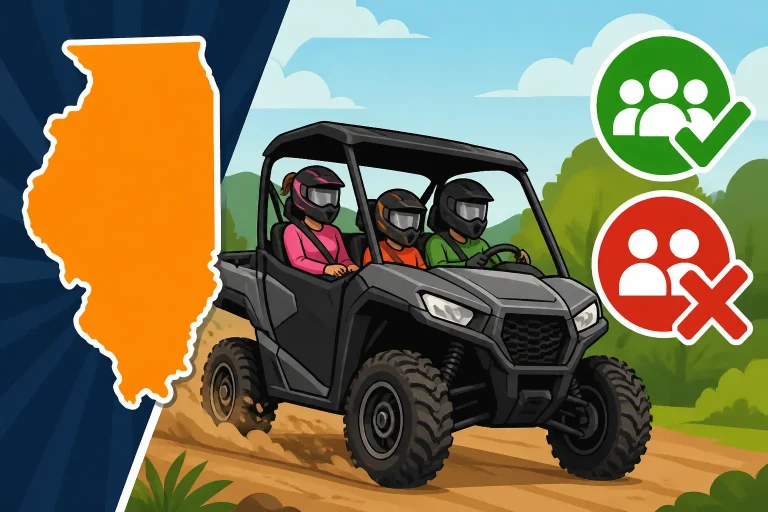
A passenger may be included in the site’s waiver process even if they are not driving. The site may require a separate form, participant registration, or acknowledgment of rules. Confirm this before departure, particularly when a child will ride as a passenger.
Waiver paperwork does not establish that a particular machine can legally or safely carry a passenger. The vehicle must be designed for the passenger arrangement, and the site may impose additional restrictions. Check the manufacturer’s instructions and the park’s requirements. For rules about passenger eligibility at a riding location, see Which Passengers a Riding Park Will Allow.
Make a group plan before the day of the ride
For a family, club, or large group, assign someone to check the paperwork without taking responsibility away from individual riders. A simple roster can show who is attending, who still needs to complete a form, and which minors need a parent or guardian to handle the required signature.
Before leaving, confirm that:
- Every person who needs a waiver has completed the correct form.
- The responsible adult has handled the site’s process for each minor.
- Passengers are included if the site requires them to register.
- The group has confirmations or printed copies in the requested format.
- Each rider understands that a waiver is separate from permits and vehicle requirements.
For an organized event, the event organizer may have an additional release or registration process. Ask whether the site’s form covers the event or whether both the organizer and the property require paperwork. Do not assume one release automatically satisfies the other.
What a waiver does not cover
Waiver paperwork is only one part of being ready to ride. It does not grant access to public or private land, verify that your machine meets site requirements, or cancel other Illinois OHV obligations.
It does not replace permits or access requirements
A waiver is not a usage stamp, access decal, site permit, or proof of landowner permission. Which requirements apply depends on where you plan to ride and the type of site. A private park may have its own admission process, while a grant-assisted riding area may require an applicable access decal. A state OHV site may have a separate permit and reservation process.
Before you go, confirm what applies to the site and your machine. Illinois OHV Permits: Two Stickers Explained provides context on the separate sticker requirements, while Illinois Grant Site Rules for Riders covers considerations for grant-assisted areas. For Sahara Woods-specific planning, see Illinois Advance Registration and Waivers.
Do not treat a waiver receipt as proof that you have bought a permit. Likewise, a permit does not necessarily show that every rider has signed the site’s waiver. Keep the documents and confirmations distinct so you can show the correct item if staff asks.
It does not override park rules
A signed waiver does not give permission to ignore speed limits, stay on closed trails, ride an unsuitable machine, or disregard staff instructions. Sites can have operating rules about hours, equipment, passengers, alcohol, noise, safety gear, or conduct. Those rules may be updated or differ from one property to another.
Read the rules alongside the waiver. If the form says participants must obey staff or site restrictions, take that condition seriously. A waiver is not a pass to ride in a way the park prohibits, and signing does not guarantee that staff will allow entry.
It does not make a machine eligible
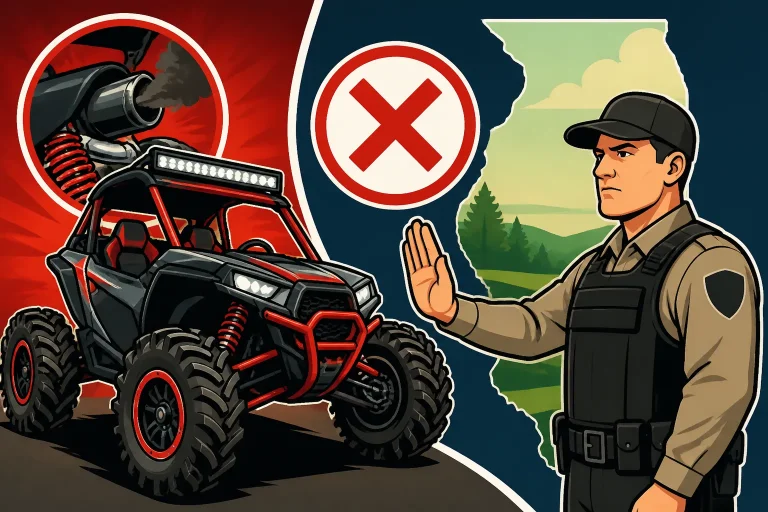
A waiver does not establish that a quad, dirt bike, or side-by-side meets a site’s requirements. A park may set vehicle specifications or conduct checks. A machine can be turned away if it does not meet the applicable conditions, even when the rider has completed the waiver and has a reservation.
Review the vehicle rules separately, including any stated requirements for passengers or machine modifications. If you are unsure whether a particular vehicle qualifies, ask the site before making the trip. This is especially important for heavily modified machines, rentals, and vehicles with unusual dimensions.
It does not substitute for careful riding
Signing a risk acknowledgment does not reduce the hazards of uneven ground, poor visibility, changing weather, other riders, or mechanical problems. Prepare the machine, use appropriate safety equipment, and ride within your skill level. The site’s safety instructions matter before, during, and after check-in.
If the park requires a helmet, safety briefing, wristband, or other condition, complete it as instructed. The Waiver Every Rider Signs Before Unloading and [Illinois Wristband Rules for Riders] offer related details about site procedures.
A practical checklist for waiver day
Use this sequence to keep the paperwork from becoming a last-minute problem. It works for a solo visit or a group, but the site’s own instructions take priority.
-
Identify the exact riding site. Confirm that the location is open to the type of machine and riding you plan to do. Do not use an old waiver or permit as a substitute for checking current access information.
-
Review the site’s registration instructions. Find out whether you must book ahead, complete a waiver online, sign at the gate, or bring a printed form. Check whether the process applies to each rider.
-
Check every participant’s requirements. Include operators, passengers, children, and anyone else the site defines as a participant. Confirm how a parent or guardian must handle a minor’s paperwork.
-
Read the waiver before signing. Understand the risks and terms the form describes. Ask the site about unclear procedures, and seek qualified legal advice if you need an explanation of the legal effect of the wording.
-
Complete the form accurately. Use the requested details, make required selections, and follow the site’s process for corrections. Do not sign for another adult.
-
Save or print proof. Keep confirmations in the format the site accepts. Make them available even if phone service is unreliable at the destination.
-
Check separate permits and vehicle rules. Confirm any required site permit, stamp, decal, reservation, or proof of permission. Verify that the machine and passengers meet the site’s requirements.
-
Bring the information needed at check-in. Carry the waiver confirmation and any separate permits or records the site asks to see. Keep them easy to find, but do not assume one document covers every requirement.
-
Recheck before you leave. If the visit is planned well in advance, verify that the site has not changed its paperwork or entry procedure. This is especially helpful for holiday weekends, organized events, and visits with minors.
If you are not sure whether a waiver is complete, contact the site before setting out. A brief confirmation is easier than discovering at the gate that a participant, passenger, or child is missing required paperwork. For more common entry questions, see Illinois Permit Questions Riders Ask.
Frequently Asked Questions
Does one waiver cover everyone in my group?
Not necessarily. A site may require each rider or participant to complete a separate form. Ask the site how it handles adults, passengers, minors, and group registrations.
Can I use a waiver from another Illinois riding park?
Do not assume so. Waiver language and submission procedures are set by the individual site or event. Use the form the destination currently requires.
Does signing a waiver mean I have a riding permit?
No. A waiver and a permit serve different purposes. Confirm the site’s entry requirements and any separate Illinois stamp or decal requirements that apply.
Can I sign a waiver for a child who is coming with another adult?
The answer depends on the site’s process. Ask whether the parent or legal guardian must sign directly and what arrangements the site accepts. Do not assume a friend or relative may sign on the parent’s behalf.
Should I sign if I do not understand a clause?
Ask the site to explain its procedure, but do not rely on staff for legal advice about the effect of a waiver. If you need legal guidance, consult a qualified professional before signing.
Disclaimer
This article is for general informational purposes only and does not constitute professional advice. Laws, prices and regulations vary by location and change over time. Consult a qualified professional for guidance on your specific situation.