Which Passengers a Riding Park Will Allow
A riding park’s passenger rules can be less obvious than its trail rules, especially when a child is riding along or a machine has more seats than riders. The safest approach is to check the site’s policy, the machine’s seating capacity and the rules for each rider before leaving home. That helps prevent a denied entry or an unsafe trip.
What Determines Whether a Passenger Can Ride
There is no single passenger policy that applies to every Illinois riding area. A park may set its own entry rules, and those rules can differ from the requirements for riding on public roads. The machine’s design matters too: a passenger should have a proper seat and a way to hold on or remain secured as intended by the manufacturer.
Think of permission as a check of three things:
- The riding area allows passengers. Some sites may set age, equipment or vehicle restrictions.
- The machine is built for the number of people aboard. A seat, footrests and restraints, where provided, should be intended for occupants.
- Each rider meets the site’s requirements. These may cover age, helmet use, check-in and supervision.
A park can refuse a passenger even if the vehicle has a passenger seat. It can also restrict a vehicle that is otherwise legal to own or use elsewhere. Check the riding area’s current rules directly, rather than assuming a rule from another park applies.
ATV passengers
Many ATVs are designed for one rider. A passenger should not be carried on a single-rider ATV simply because there is room on the seat or rack. A passenger changes the machine’s weight distribution and handling, and may lack a stable place for their feet or hands.
Some ATVs are specifically designed for two people. If yours is, confirm that the riding park accepts two-up ATVs and that the passenger uses the intended seat and footrests. Do not treat a rear rack, cargo box or fender as a passenger seat.
A passenger also needs to be able to sit securely and follow the rider’s instructions. If the person cannot reach the footrests, hold on as intended, or stay in position over rough ground, the machine may not be a suitable choice for carrying them, even if the seat is technically designed for two.
For broader considerations about carrying a child, see Illinois Rules for a Child Passenger. A riding park can add restrictions beyond the general rules riders may encounter elsewhere.
UTV passengers
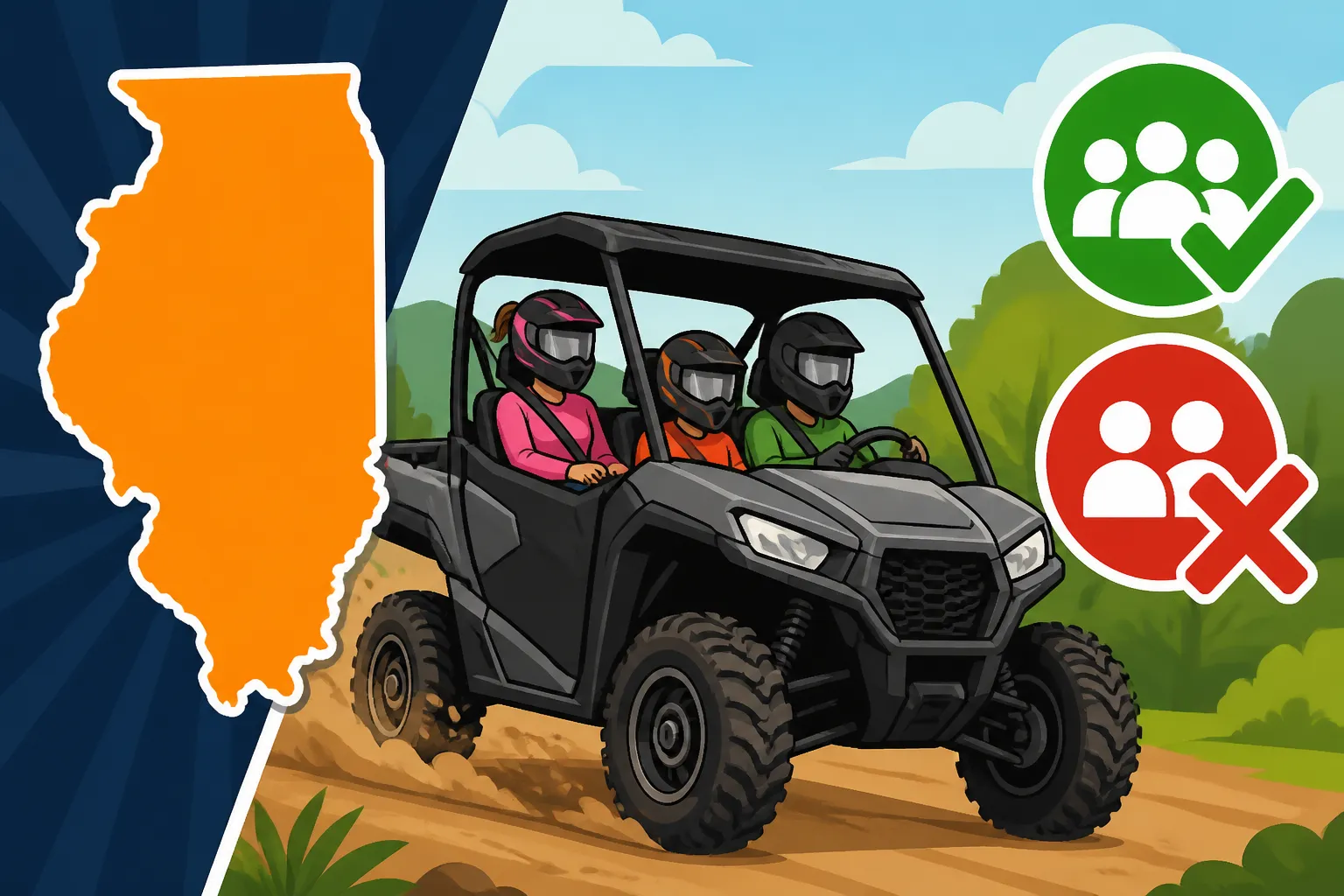
A side-by-side may have separate seats for multiple occupants, but the number of seats does not automatically settle whether a park will allow every passenger. Check the site’s maximum occupancy rule and the machine’s stated seating capacity. Each person should occupy a designated seat and use the restraint system provided for that position.
Do not carry passengers in a cargo bed, on the hood, on a running board, or in another place not intended for passengers. A belt or handhold does not turn a cargo area into a passenger seat. The park may prohibit such riding outright, and it can put everyone at serious risk if the machine tips or hits an obstacle.
For road-use considerations separate from a park’s policy, see Illinois Rules for Passengers on a UTV. At the park, follow the stricter applicable rule: if the machine’s instructions or the site’s policy sets a lower limit, do not exceed it.
| Situation | What to check | Safer approach |
|---|---|---|
| Single-rider ATV | Whether it is designed for a passenger | Carry only the operator |
| Two-up ATV | Whether the park allows two-up machines | Use the intended passenger seat and footrests |
| Multi-seat UTV | Occupant capacity and park limits | Keep each person in a designated seat with the provided restraint |
| Child passenger | Age rules, fit, supervision and protective gear | Ask the park about the child’s specific age and machine |
| Cargo area or rack | Whether the space is approved for passengers | Do not carry people there |
Age, Supervision and Equipment Rules
A park may have separate rules for the driver and the passenger. A child who can ride as a passenger may not be old enough to operate a machine, and an operator who meets the park’s age requirement may still be unable to carry a passenger under the site’s rules. Verify each person’s role rather than asking only whether children are allowed.
For site-specific age questions, see Illinois Private Park Age Minimums and Illinois Rules for Young Riders. The park’s policy is the one to confirm for the visit you are planning.
Age is only one part of the decision
A minimum age does not necessarily mean that every child of that age is ready to ride in every machine or on every trail. Consider whether the child can sit in the correct position, use the footrests and restraints, keep protective equipment in place, and follow instructions. A passenger who becomes tired, frightened or distracted can create a problem for the operator.
Check the machine’s owner information for any manufacturer guidance about passengers, age or fit. A park may apply its own rules even when a manufacturer gives guidance, and the park can refuse a machine or rider that does not meet its standards. See Manufacturer Age Guidance at a Park for more on that distinction.
Supervision rules can also vary. Ask whether a child must ride with a parent or guardian, whether an adult must be on the same machine, or whether it is enough for an adult to be present at the site. Do not infer the answer from another park’s practice.
Helmets and restraints
Confirm helmet requirements for both the operator and every passenger. Do not assume that a passenger is exempt because the driver is wearing a helmet or because the machine has a roof or windshield. For site-specific information, see Illinois Private Park Helmet Rules.
On a UTV, use the belt or restraint intended for each occupied seat, and keep occupants seated while the vehicle is moving. On an ATV, a passenger should use the machine’s intended passenger position and handholds. A passenger who cannot stay properly positioned should not ride.
A park may inspect equipment or refuse entry when a machine does not meet its requirements. The type of inspection and what staff check can vary, so ask whether the site checks helmets, restraints, seat count, machine condition or other equipment before arrival. The park’s published rules and staff instructions take precedence over assumptions based on what is allowed at home.
How to Confirm a Park’s Passenger Policy
A quick call or message to the riding area can resolve questions that a general description may leave open. Give staff details about the passenger and the machine, not just a broad question such as “Can kids ride?” Policies may depend on the passenger’s age, vehicle type, number of seats and whether the person will operate or ride along.
Use this process before you load the machine:
- Identify the exact riding area. Confirm whether it is a private park, club-run area or public riding site. Rules at one location do not automatically apply at another.
- Describe the machine. Give the make and model if you know them, whether it is an ATV or UTV, and its intended seating capacity.
- State who will ride. Give the passenger’s age and explain whether they will be a passenger or operator. Ask about any minimum age or supervision requirement.
- Ask about required equipment. Confirm helmet rules, seat belts, footrests and any other passenger-specific requirement.
- Check group and check-in procedures. Ask whether every passenger needs an individual waiver, wristband or other check-in step. Some sites require riders to complete paperwork before unloading; see The Waiver Every Rider Signs Before Unloading and Illinois Wristband Rules for Riders.
- Recheck before departure. Look for updates to operating hours, closures or rules, especially if the visit is planned well ahead of time.
When you ask, be precise. For example: “We have a two-seat ATV and a passenger who is 12. Does your site allow that passenger, and are there any age, helmet or supervision requirements?” For a UTV, include the number of occupied seats and whether every occupant has an individual belt.
If the answer is unclear, ask the staff member to clarify whether the rule is a legal requirement, a park policy or a machine restriction. You do not need to settle that distinction yourself to plan safely: if the park says a passenger is not allowed, do not bring that person expecting an exception at the gate.
Common Passenger Mistakes to Avoid
Passenger-related problems often come from assuming that a machine’s appearance, a previous visit or another site’s rule is enough to establish permission. A few checks can prevent a wasted trip and reduce risk on the trail.
Treating extra space as a seat
A rack, cargo box, tailgate or open floor area is not necessarily a passenger position. Do not carry someone in a spot that the manufacturer did not intend for seating. The park may turn away the machine, and the passenger may have no reliable way to stay seated over uneven terrain.
Assuming road rules and park rules are identical
A rule that applies to road use may not answer what a private riding park will allow. Conversely, permission at a private park does not make a machine or its passengers legal on a public road. For street-use questions, consult the relevant road rules separately, including Illinois Rules for Passengers on a UTV.
Bringing a child without checking fit and readiness
An age threshold is not a guarantee that a child is comfortable or secure on a particular machine. Confirm the site’s minimum age, but also check whether the child can use the passenger position correctly and stay there throughout the ride. If the child cannot maintain a safe position, choose another activity or wait until they are ready.
Forgetting that every rider may need to check in
A passenger may need to complete paperwork or receive an identification item even if they are not driving. Ask about requirements for every person in the group before arriving. If the riding area requires a permit, decal or other access step, passenger permission does not replace it. For state riding-site access, Illinois Public Access Decal Rules explains the access decal separately from a park’s passenger policy.
Assuming staff will make an exception
A full vehicle, a long drive or a child’s disappointment will not necessarily change the site’s rule. Confirm the policy before departure and bring an alternative plan if the passenger is not allowed. If the park’s instructions conflict with what you were told earlier, follow the current instructions from park staff and do not ride until the issue is resolved.
A good passenger plan is straightforward: confirm the exact site’s rules, make sure the machine is designed for the number of occupants, and check each rider’s age, gear and check-in requirements. When any part is uncertain, ask the park before you unload.
Disclaimer
This article is for general informational purposes only and does not constitute professional advice. Laws, prices and regulations vary by location and change over time. Consult a qualified professional for guidance on your specific situation.