Illinois Private Park Helmet Rules
An Illinois private riding park can require a helmet even when you believe state law does not. Rules may vary by park, vehicle, rider age, and trail area, so guessing can mean a denied entry or an unsafe ride. Here’s how to check the policy, choose suitable head protection, and prepare adults and children before you haul your machine.
What helmet rule applies at an Illinois private park
There is no single helmet policy you can safely assume applies at every privately operated riding area. A park can set its own entry and safety conditions, and those may be stricter than the rules riders expect from ordinary road use. Requirements can also differ for children, passengers, particular machines, or specific parts of a property.
That makes the park’s current written rules the practical starting point. Look for its rider handbook, reservation terms, waiver, posted operating rules, or safety page. A statement such as “helmets required” may leave important details unanswered: Does it apply to every rider? Are passengers covered? Does the park accept open-face helmets? Are goggles required? Does the rule change for a side-by-side?
Do not treat a waiver as a substitute for checking the helmet policy. Waivers can describe risk and require a signature without listing every equipment condition that staff enforce at the gate. Read both the waiver and the operating rules. For more on the kinds of park conditions to check, see Illinois Private Park Waivers and Rules.
Also separate a private park’s policy from the rules that apply elsewhere. A helmet policy for riding on private park trails does not establish what is required on a public road, at a state-managed site, or on land governed by a different operator. If your trip includes a road connection or another riding location, confirm the rules for that part of the route separately. Illinois ATV Helmet Rules covers the broader helmet question, while Illinois Grant Site Rules for Riders helps distinguish grant-assisted site requirements from a private park’s own rules.
Before you leave, confirm the policy directly if the website is unclear or seems out of date. Ask about the exact machine and riders in your group, not just “Are helmets required?” A useful question is: “Does every operator and passenger need a helmet, and what type will you accept?” If the answer differs for children or side-by-sides, write down the details.
| Situation | What to confirm with the park |
|---|---|
| Adult riding an ATV | Whether a helmet is required and whether the park specifies a helmet type |
| Side-by-side operator | Whether the same helmet rule applies to the driver and passengers |
| Child or teen rider | Minimum age, helmet standard, supervision, and any additional protective gear |
| Child passenger | Whether the park allows the child in that machine and what head protection is required |
| Open-face helmet | Whether the park accepts it and whether separate eye protection is mandatory |
| Mixed park and road trip | Which rules apply at the park and which apply on any public-road segment |
| Borrowed or rental machine | Whether the rider must bring a helmet or may use equipment supplied by the operator |
A park may turn riders away if they do not meet its safety conditions, even if they have paid, completed a waiver, or arrived with a helmet that looks suitable to them. Sorting out the requirement before departure is easier than trying to replace equipment at the trailhead.
What parks may require beyond “wear a helmet”
A helmet rule can cover more than whether something is on your head. Parks may specify an accepted standard, require a full-face design, or require eye protection along with a helmet. Some distinguish between vehicle types or have additional conditions for youth riders. The details are operator-specific, so avoid treating another park’s policy as proof of what your destination accepts.
Helmet style and safety markings
If the park names a safety standard, check the helmet’s label and product documentation rather than relying on its appearance. A bicycle helmet, for example, should not be assumed to meet an off-road park’s requirement. A helmet marketed for ATV or motorcycle use may still fail to meet a particular park’s stated rule, so confirm the required standard and type before buying or borrowing one.
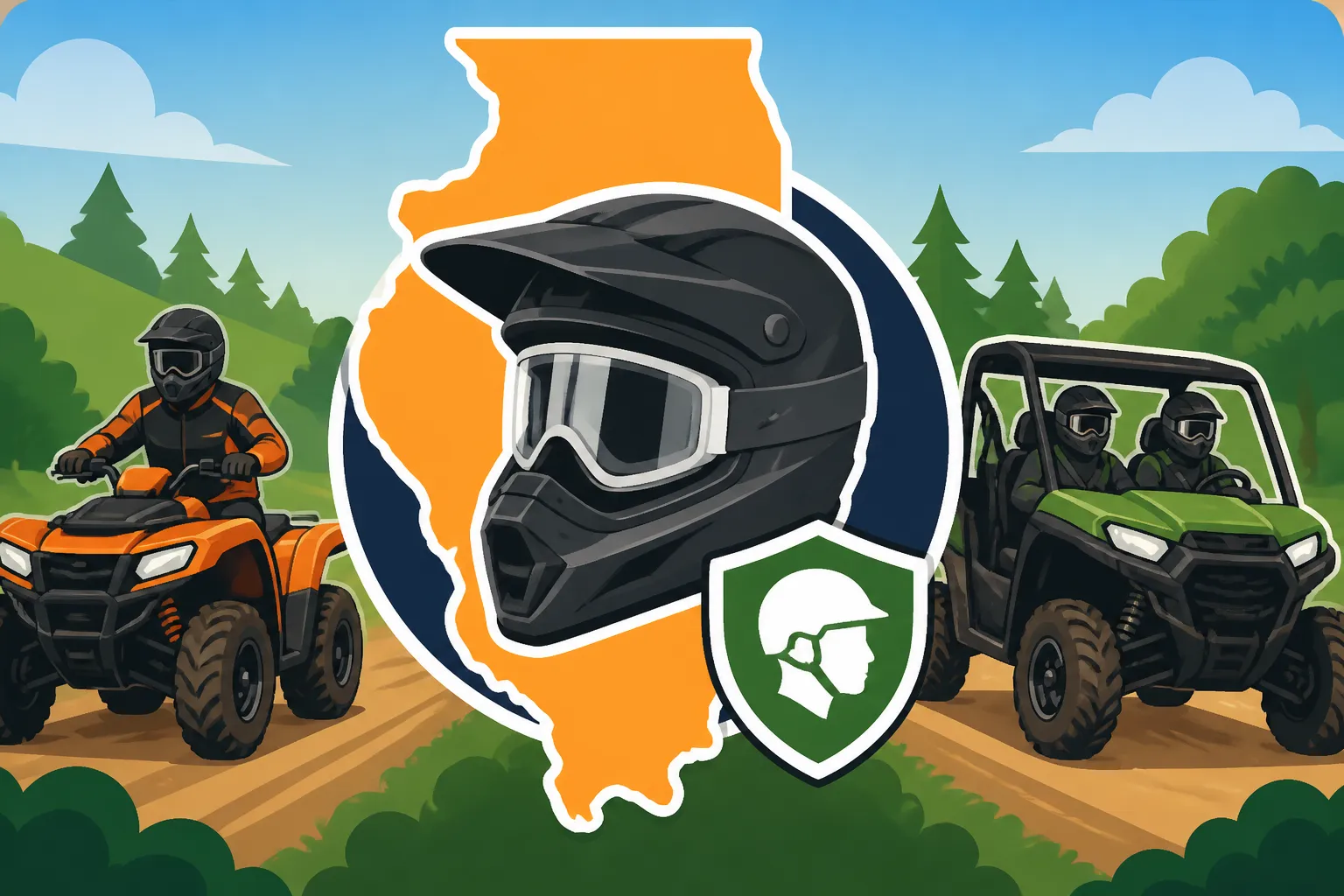
Full-face helmets offer more coverage around the chin and face than open-face designs. That does not mean every park requires a full-face helmet. It does mean you should ask if you are planning to use an open-face model, especially if the park’s rules mention face coverage, goggles, or a shield. A visor alone may not satisfy a separate eye-protection requirement.
Check that the helmet is in sound condition. Look for cracks, damaged straps, a loose or missing lining, and signs that it has taken a hard impact. Do not assume a helmet is safe just because it is clean or has little visible wear. Follow the manufacturer’s inspection and replacement guidance, and replace a helmet after a significant impact if the manufacturer advises doing so.
Eye protection and other gear
Parks may expect riders to protect their eyes from dust, branches, debris, and insects. Depending on the policy and helmet design, that could mean goggles, a face shield, or another approved form of eye protection. Ask whether tinted lenses are acceptable in the conditions you expect; a dark lens can make it harder to see in shade, woods, or changing light.
Eye protection is only one part of a safe setup. Gloves, boots that cover the ankle, long sleeves, and durable pants can help protect against scrapes and debris. They do not replace a helmet, and the park may not require every item. Think of them as practical riding gear, then check the operator’s written rules for mandatory equipment.
Do not assume a passenger is exempt because they are not driving. A park can require head protection for every person on a machine, and its passenger rules may depend on age, seating position, or the machine’s design. Confirm the park’s passenger policy as well as its helmet policy. For related age and supervision questions, see Illinois Private Park Age Minimums and Illinois Rules for Young Riders.
Why a child’s fit matters
A helmet that is too large can shift or come off in a crash. A child should not use an adult helmet simply because it can be tightened, and a loose helmet is not made secure by adding a hat or extra padding. The fit should follow the helmet maker’s instructions, with the chin strap fastened as designed.
Before the trip, have the child wear the helmet for a short period and check for discomfort, pressure points, and movement. Make sure the child can see and hear adequately with the helmet and eye protection on. If the park has age-specific equipment or riding rules, follow those rather than assuming an adult’s setup will do. A safe helmet does not make a machine appropriate for a child’s age, size, or experience.
How to check a helmet and park policy before you ride
A little preparation can prevent a gate problem and help your group make safer choices. Use this process for each park, especially if you have not visited before or are bringing children, passengers, or borrowed equipment.
- Find the park’s current rules. Check the official site or the information supplied with your reservation. Look for helmet, eye-protection, age, passenger, and machine-specific requirements.
- Ask about unclear terms. If the rule says “approved helmet,” ask what approval or marking the park accepts. If it says “helmet and goggles,” confirm whether a face shield is acceptable in place of goggles.
- Describe your group and machines. Tell staff whether you are bringing an ATV, a side-by-side, a youth rider, or passengers. A broad answer about helmets may not address those details.
- Inspect each helmet at home. Check the shell, lining, strap, buckle, fit, and label. Replace damaged equipment or resolve uncertainty before travel.
- Pack a backup plan. If someone’s helmet may not meet the requirement, arrange a suitable replacement or ask whether the park rents or provides equipment. Never count on that service unless the operator confirms it.
- Recheck shortly before departure. Hours, operating conditions, and rules can change. Confirm any details that affect your group’s entry, especially for a special event or a first visit.
If you are purchasing a helmet online, including through Amazon, verify the exact model, size, safety marking, and return conditions before ordering. Product photos and broad search labels may not show the details a particular park requires. Check the manufacturer’s fit instructions and the park’s policy rather than buying based on appearance alone.
Use the same care when borrowing a helmet. Check its condition, confirm the fit, and make sure the park accepts its type. A helmet that belongs to a friend or came with a machine is not automatically appropriate for every rider or every park. If the helmet has been dropped hard or was involved in a crash, do not treat it as ready to use without checking the manufacturer’s guidance.
Rules for a private park can also be different from those at a grant-assisted riding site. A public access decal or another permit does not automatically satisfy a private operator’s helmet requirements. Conversely, meeting a private park’s helmet policy does not replace permits or other conditions that apply at a different location. If your plans include multiple sites, check each one individually. Illinois Permit Questions Riders Ask can help with other access questions, but the park’s own current helmet instructions are the authority for its gate policy.
Common situations that catch riders off guard
The most common mistake is bringing a helmet that seems reasonable but does not match the park’s rule. Riders may assume any motorcycle-style helmet is accepted, or that an open-face helmet is fine because it has a visor. Another person may assume the helmet rule applies only to the driver. Both assumptions can be wrong at a particular property.
A second mistake is relying on a policy from a previous visit. An operator can revise its rules, and an event may have additional requirements. A phone call or message to the park is worthwhile if the wording is uncertain, particularly when several people are traveling together. Keep the response with your trip details so everyone in the group knows what to bring.
The machine itself can affect what a park allows. Some private areas have separate requirements for side-by-sides, passengers, youth machines, or modified vehicles. Helmet compliance will not override a rule that prohibits a particular machine or setup. Check the full set of rules, including vehicle specifications and passenger limits, rather than focusing only on head protection. Illinois Trails That Allow Side-by-Sides may help when comparing riding options, but confirm any destination’s rules directly.
A helmet also does not guarantee that a rider is ready for a trail. Make sure the helmet fits, the rider understands how to secure it, and any goggles or face shield stay in place. For a child, consider whether they can keep the helmet fastened and communicate with the operator. A park’s age and supervision requirements remain separate from its equipment rules.
If the gate staff says your helmet does not meet the policy, stay calm and ask which requirement it fails. The issue might be an unacceptable style, missing marking, poor condition, or absent eye protection. Do not argue that another park allowed it; policies are set by each operator. If you cannot meet the rule with safe equipment, do not ride until the problem is resolved.
When planning a visit, think of the helmet policy as one item in a broader check: reservation terms, waiver, age limits, passenger rules, machine restrictions, and any site-specific permit or decal requirements. If your visit is part of a larger Illinois riding trip, Illinois Private Park Waivers and Rules and Illinois Grant Site Rules for Riders can help you keep those separate requirements straight.
The practical bottom line is simple: wear a properly fitted helmet, but do not assume that your preferred model meets a park’s entry rule. Confirm the exact policy for every rider and passenger, check the equipment before loading, and ask the operator when any wording is unclear. That small step can prevent a wasted trip and make the ride better prepared from the start.
Disclaimer
This article is for general informational purposes only and does not constitute professional advice. Laws, prices and regulations vary by location and change over time. Consult a qualified professional for guidance on your specific situation.