The Waiver Every Rider Signs Before Unloading
An OHV waiver can feel like one more form in a day already filled with permits, machines and gear. But signing without understanding who must complete it, when it is due or what it covers can cause delays at the gate. Here’s how to prepare for a riding-area waiver in Illinois, especially when the park expects paperwork before you unload.
What the waiver is for
A riding-area waiver is a document that sets out risks associated with using the property and records a rider’s agreement to the park’s stated terms. Depending on the form, it may also cover rules about conduct, property damage, emergency response, photography or other conditions of entry. The exact language matters: waivers differ by park, and a form for one facility should not be assumed to apply at another.
Off-highway riding involves real hazards. A machine can roll, collide with another vehicle, strike an obstacle or become stuck. Trail surfaces and conditions can change, and riders may be some distance from staff or medical help. A waiver is one way an operator tells visitors about risks and documents that the visitor has reviewed the terms before riding.
That does not make the waiver a riding permit, a safety certificate or proof that the machine is allowed on every trail. Nor does signing mean the rider can ignore park rules or basic precautions. Treat it as one part of admission and check-in, separate from the park’s access requirements.
For example, a waiver does not replace an Illinois OHV usage stamp or public access decal when those are required for the machine and riding location. Those stickers have different purposes, explained in What the Stamp Covers and What the Decal Covers. Similarly, a park-specific permit or reservation may be a separate requirement. Check Illinois OHV Permits: Two Stickers Explained if you need to sort out the state stickers before traveling.
A waiver also is not a promise that every possible claim will be prevented. Its effect depends on the wording, circumstances and applicable law. If you have a serious concern about a term, ask the park to explain it before signing, and seek legal advice if you need an assessment of your rights. Do not rely on a quick description from another rider as a substitute for reading the actual form.
Waivers are specific to the place and activity
A state OHV site, a grant-assisted riding area and a privately operated park may each have their own forms and check-in practices. Even two private parks can use different waivers. A form may apply to a single visit, a particular event or a broader period, so look for the scope and any expiration or renewal language.
This matters for group rides and multi-stop trips. A waiver signed at one location should not be assumed to cover another location, even if both are in Illinois. If you plan to visit more than one area, confirm the paperwork and admission process for each one. Illinois Private Park Waivers and Rules can help frame what to ask a privately operated park, while Illinois Waivers Signed Before You Ride covers the timing issue more directly.
Who needs to sign
The park’s instructions determine who must complete a waiver. If the rule says every rider must sign, plan on each rider completing the required paperwork rather than assuming the person who paid for the group can sign for everyone. A driver, passenger or other participant may have separate obligations under the park’s process.
The distinction between a rider and a guest can matter. A person who is not operating a machine may still be expected to sign a release if they will enter the riding area or take part in the activity. The form and the park’s staff can clarify who is covered. Do not assume that someone is exempt simply because they are not driving.
| Person in the group | What to check before arrival |
|---|---|
| Adult operator | Whether the waiver is completed online, at check-in or both |
| Adult passenger | Whether passengers sign separately from the operator |
| Child or teen rider | Whether a parent or legal guardian must sign, and whether the young rider also completes a section |
| Child passenger | Whether the park treats passengers differently from operators |
| Spectator or visitor | Whether entry to the property or riding area requires a waiver |
| Group organizer | Whether each person must submit an individual form, even when one person booked |
Children and teenagers
A minor generally cannot simply be treated as an adult signing on their own behalf. Parks commonly require a parent or legal guardian to complete the required consent or release process for a child. The park’s form may also ask the young participant to acknowledge rules or provide other information. Follow the exact instructions rather than trying to interpret or alter the form yourself.
Confirm who qualifies to sign for the minor. If a grandparent, coach, relative or another adult is bringing the child, ask the park whether that adult can complete the required paperwork or whether a parent or legal guardian must do it beforehand. Do this before the trip; a disagreement about who may sign can disrupt check-in or leave the child unable to participate.
Parks may also have separate age, supervision, machine or operator requirements. A signed waiver does not waive those rules. For example, the child still needs to meet the facility’s eligibility and supervision conditions, and the machine still needs to be permitted on the site. Read Illinois Rules for Young Riders and Illinois Supervision at a Riding Park for the broader questions to check. The park’s own current instructions control its admission process.
Each participant should understand the form
One person should not rush through a group’s paperwork on the assumption that everyone else knows what they accepted. Give each adult time to read the form and ask questions. For a minor, the responsible adult should review the document and explain the rules in language the child can understand.
If someone in the group cannot read the form comfortably, has a question about a term or needs an accommodation, contact the park before arriving. A rushed explanation at a busy gate is not a good substitute for understanding a document.
How to prepare before unloading
The safest assumption is that the waiver must be handled before riding, and possibly before unloading. If a park’s instructions say to complete it earlier, follow that direction. At a busy site, completing paperwork after the trailer is parked can create a bottleneck, leave the group unsure where to go, or require someone to walk back to the entrance.
For Sahara Woods, check the site’s current registration and waiver instructions before setting out. Some parks provide an online process, but online registration does not necessarily mean every requirement has been completed. Confirm whether each participant has a separate waiver, whether a parent must complete a minor’s form, and whether the park wants a confirmation at check-in. The procedure can vary, so rely on the operator’s current directions rather than a past visit or a friend’s recollection.
A useful preparation sequence is:
- Confirm the facility and date. Make sure you have the correct park’s official instructions, including any changes to hours, reservation steps or entrance procedures.
- Identify everyone who will attend. Include passengers and younger participants, not just the person driving the machine.
- Check who signs for each person. Ask the park about minors, guardians and any participant who cannot sign or needs assistance.
- Complete online forms only as instructed. Use the correct name and visit details, and make sure every required participant is included.
- Save confirmation information. If the park provides a confirmation, keep it accessible on a phone or in printed form, according to the site’s directions.
- Bring identification or other requested information. Do not assume the waiver is the only item staff will check.
- Keep the group together at check-in. If signatures or questions need to be handled in person, having participants present can avoid repeated trips between the entrance and parking area.
- Wait for staff clearance before unloading or riding. If the site’s process is unclear, ask where to stop and what must be completed first.
If signing online, read every page before submitting it. Review the names, dates and machine or reservation details that the form requests. A confirmation email or screen is useful, but it does not prove that every other admission condition is satisfied. Keep it available until staff have confirmed the group is checked in.
If the park uses paper forms, bring enough time to complete them carefully. Make sure the correct person signs each section; do not sign for another adult. Avoid leaving a completed form where personal information can be seen by others. If staff need to retain the document, follow their directions.
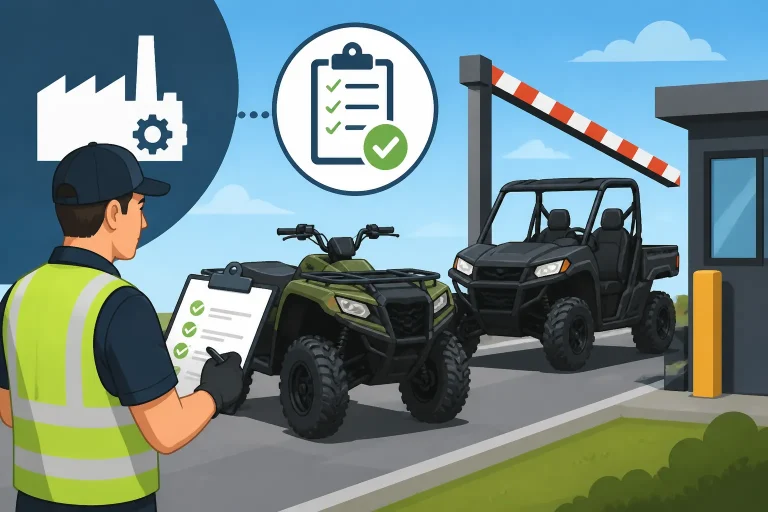
A waiver may be part of a broader sequence involving reservation checks, payment, wristbands, vehicle stickers or a gate inspection. These steps are related to admission but are not interchangeable. For example, the waiver does not substitute for the park’s vehicle sticker or rider wristband if those are required. See Illinois Wristband Rules for Riders and Every Machine Gets a Sticker at the Gate for why those check-in items should be treated separately.
If you are visiting Sahara Woods, it can help to review Illinois Waivers Signed Before You Ride and Signing a Waiver When You Register Online before leaving. For the broader reservation process, see How to Book an Illinois OHV Permit. Confirm details directly with the site, especially for a first visit, a group or a holiday weekend.
What to expect at check-in
The waiver is commonly handled as part of registration or gate check-in. Staff may verify that the correct people have completed the required paperwork before allowing the group to proceed. The exact order—whether a waiver is completed online, reviewed at the entrance or signed on site—is determined by the operator.
Arrive with enough time to deal with a missing form or an unclear signature. This is particularly important when a child is in the group or several adults are attending. If the waiver has not been completed, ask staff what to do before unloading. Do not assume you can take the machine into the riding area while the paperwork is sorted out.
A practical check-in conversation can be brief and specific:
- “Does each person in our group need a separate waiver?”
- “Does a parent need to complete the form for this minor?”
- “Is our online submission showing as complete?”
- “Should we wait to unload until you confirm the paperwork?”
- “Are there other permits, stickers or wristbands we need before riding?”
These questions are more useful than asking only whether “the waiver is done.” A group may have submitted one form but still have a missing participant, an incomplete minor’s section or another park requirement.
Staff may also give instructions about where to display a sticker or wear a wristband. Follow those directions and keep required identification in place during the visit. A waiver signature does not authorize riding outside the permitted area, entering a closed trail or ignoring a staff instruction. Why Staff Check Wristbands Out on the Trail explains the separate role of wristbands during a visit.
If someone arrives late, has not read the form or is uncertain about whether they agreed to a term, pause and ask staff before joining the ride. Do not sign a blank form, complete someone else’s signature or guess at an answer. If a form appears to contain an error, have the staff explain how to correct it.
After check-in, keep any confirmation or instructions until the end of the visit. If there is a question about what the group was told, having the paperwork and staff directions available can make it easier to sort out. Do not photograph or share another person’s form without permission, particularly if it contains personal information.
What signing does not do
A waiver is not a substitute for understanding the site’s rules. It does not turn a closed trail into an open one, make an ineligible machine acceptable or give a rider permission to enter land without authorization. It also does not replace state or local requirements that apply to the machine or the location.
Before the trip, separate the questions into three categories:
| Requirement | What it answers | Where to verify |
|---|---|---|
| Waiver | What terms and risks the participant acknowledges at a particular location | The riding-area operator |
| State sticker or permit | Whether the machine has a required Illinois OHV stamp or access decal | Illinois rules and the issuing source |
| Park admission and riding rules | Whether the date, machine and participants are eligible to use that facility | The park or site operator |
A rider can complete a waiver and still lack the required access decal. A machine can have the correct decal and still be excluded by the park’s rules. A reservation can be confirmed while one participant’s paperwork is incomplete. Treat each check as its own task, rather than assuming one document covers everything.
For state stickers, check Illinois Public Access Decal Rules and Illinois Usage Stamp Exemptions if you are unsure whether they apply to your situation. For a site that received a grant, Why a Site That Took a Grant Needs a Decal explains why a public access decal may be relevant. The waiver itself does not decide whether a machine is covered by a state requirement.
Nor should signing a release be treated as proof that a riding area is safe for every person or machine. Consider the rider’s skill, the machine’s condition, the trail’s difficulty and weather. If a participant is uncomfortable with the conditions, they can decline to ride or choose a more suitable activity. A waiver does not replace a helmet, responsible speed, spacing between machines or a plan for an emergency.
Finally, do not assume the waiver guarantees a refund or changes the park’s cancellation terms. Admission, weather closures, reservation changes and refund policies are separate matters. Ask the operator about those conditions before paying or traveling, and keep any written answer with the booking information.
Frequently Asked Questions
Does every rider in Illinois have to sign a waiver?
There is no single waiver process for every riding location. A particular park may require each rider or participant to sign its form before riding. Check that facility’s instructions and do not assume another park’s waiver will be accepted.
Can a parent sign a waiver for a child?
A park may require a parent or legal guardian to complete the minor’s paperwork. Confirm who is allowed to sign and whether the child also needs to complete a section. Ask before arrival if the child is coming with someone other than a parent or guardian.
Can I sign the waiver after unloading?
Follow the site’s process. If its instructions say the waiver must be complete before unloading, do not unload first and hope to resolve it later. When the process is unclear, stop at check-in and ask staff where to wait.
Does signing a waiver replace an Illinois access decal?
No. A waiver and an access decal serve different purposes. Check the site’s requirements and the applicable Illinois sticker rules separately.
Should I keep a copy of the waiver?
Keep any confirmation or copy the park provides, at least through the visit. If the form is completed online, save the confirmation where it can be shown at check-in. Do not assume a saved form eliminates other admission steps.
Disclaimer
This article is for general informational purposes only and does not constitute professional advice. Laws, prices and regulations vary by location and change over time. Consult a qualified professional for guidance on your specific situation.