Why a Minor Cannot Sign the Waiver
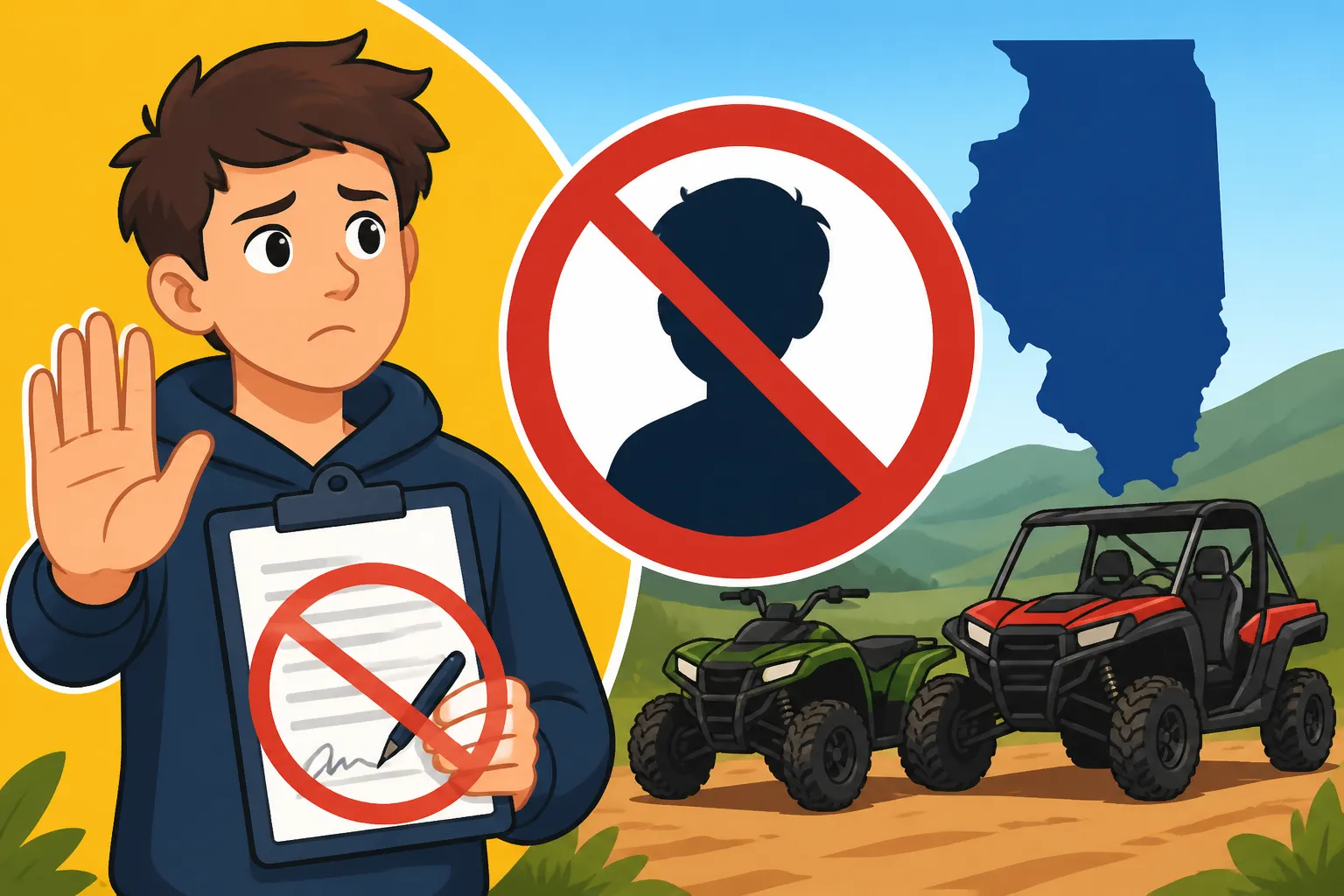
A child can be ready to ride while the paperwork still needs an adult’s attention. At Illinois riding parks, a minor generally cannot complete and sign the waiver on their own. Knowing who must sign, what the signature does, and what else the park may require can prevent a delay—or a turned-away rider—at the gate.
Why a minor cannot sign the waiver alone
A riding waiver is a legal document, not just a check-in form. It may describe risks, set conditions for using the property, and ask the signer to release or limit certain claims. Because minors generally have limited ability to enter binding contracts, a park may not accept a child’s signature as a substitute for an adult’s.
That is the practical reason a parent or legal guardian is commonly asked to complete the waiver for a child. The park wants a responsible adult to acknowledge the risks and agree to the venue’s terms before the minor rides. Some sites may also ask the adult to confirm that the child will follow safety instructions and park rules.
This does not mean every waiver signed by an adult automatically eliminates every legal claim involving a child. Whether a particular waiver is enforceable, and what claims it may affect, can depend on the document, the circumstances, and applicable law. A parent’s signature should not be treated as a guarantee that the park has no responsibility for unsafe conditions or that a child has no legal rights.
For a rider arriving with a parent, the process is usually straightforward: the adult reviews the waiver, completes the required information, signs in the correct place, and confirms the child is included. For a rider arriving with another adult, such as a grandparent, coach, or family friend, do not assume that person can sign. The park may require a parent or legal guardian, written authorization, or a specific process completed before arrival.
| Situation | What to confirm with the park |
|---|---|
| A parent or legal guardian is attending | Whether the adult signs one form for each child or includes multiple minors on one form |
| A child arrives with another adult | Whether that adult can sign and what authorization the park accepts |
| The waiver is completed online | Whether a parent must submit it, and whether the park still needs a check-in signature |
| A child is riding as a passenger | Whether the waiver covers passengers and whether separate age or equipment rules apply |
| A child has more than one legal guardian | Whether the park needs one signature or additional consent |
The waiver is only one part of a child’s eligibility to ride. A signature does not override a park’s minimum-age rules, supervision requirements, equipment limits, or operator requirements. Review Illinois Rules for Young Riders and Illinois Supervision at a Riding Park alongside the waiver instructions so you understand the rules that apply to the child’s role and machine.
Who should sign and what the adult is agreeing to
The safest approach is to have a parent or legal guardian complete the waiver unless the specific riding site clearly says another arrangement is acceptable. A legal guardian is not necessarily the same as any adult who is supervising the child that day. If an aunt, grandparent, or friend is bringing the rider, ask the venue in advance whether that adult can sign and what documentation is needed.
Read the form before signing. Waivers can differ from one site to another, and the wording matters. Look for sections that identify the participant, describe activities covered, address minors, and explain the risks or rules being accepted. Make sure the child is identified correctly and that the adult signs in the parent or guardian section rather than in a space intended for the participant.
A waiver is not permission to ignore safety requirements. The adult should explain the park’s rules to the child in plain language: where riding is allowed, how to respond to staff, what protective equipment is required, and what behavior can end the visit. A young rider may not fully understand the legal wording, but they can still be expected to follow practical instructions.
Before signing, check whether the form applies to the right activity. A venue might have separate paperwork for riding, camping, rentals, organized events, or passengers. If the child will ride a rented machine, ask whether the rental agreement has its own waiver and whether the parent must sign that document too. For private facilities, the site’s specific terms can be especially important; see Illinois Private Park Waivers and Rules.
Keep a copy or confirmation if the waiver is submitted online. If the park uses a digital process, verify that the parent or guardian—not the child—completed the required fields and that the submission was accepted. Do not assume that filling out a form on a phone means the entire check-in is complete. Staff may still need to verify the adult’s identity, confirm the child’s information, or issue a wristband.
The venue’s process may also differ for a child who is riding independently versus one who is a passenger. A passenger may need to be named on the paperwork, and the machine may have its own passenger limits. A signed waiver does not make a machine suitable for a child or authorize a passenger where the park’s rules do not allow one.
How to avoid a waiver problem at the gate
Most waiver delays come from a mismatch between the person who signs, the participant named, and the park’s instructions. A few checks before leaving home can resolve those problems while there is still time to contact the venue.
- Ask who may sign for the minor. Confirm whether the venue requires a parent or legal guardian in person, accepts an online signature, or has another approved procedure. If someone other than a parent will attend, ask what authorization the park requires rather than relying on a general consent note.
- Confirm how each child is listed. Find out whether the form covers one minor or several. Enter the child’s legal name and other requested details consistently with any registration or permit information.
- Check the participant’s role. Tell the park whether the child will operate a machine, ride as a passenger, or attend without riding. Different roles may involve different age, supervision, and equipment rules.
- Complete forms before arrival when possible. If the park offers online registration, follow its instructions for the adult’s signature and save the confirmation. Check whether every participating child needs a separate form.
- Bring identification and relevant confirmation. The parent or guardian may need to show identification, and staff may ask to see the registration confirmation or other paperwork. Ask the venue what it checks so you bring the appropriate documents.
- Allow time for staff review. A waiver issue can take longer to resolve when a group arrives at once or when the adult who must sign is not present. Arriving early gives staff time to explain what is missing before the group unloads.
Some Illinois riding sites also issue wristbands or machine stickers after registration. Those items may help staff verify that a rider or vehicle has checked in, but they do not replace a parent’s signature. Review Illinois Wristband Rules for Riders and Illinois Waivers Signed Before You Ride if you are preparing for a site that uses check-in bands or advance paperwork.
If a parent cannot attend, call or email the park before the riding day. Ask the staff to describe the accepted process in writing if possible. A signed note from a parent may be helpful, but it is not necessarily enough; the site may require its own form, an online submission, or the parent’s direct confirmation. Do not wait until the group reaches the gate to find out.
What a waiver does not replace
A waiver addresses a venue’s terms and risk disclosure. It does not serve as an ATV title, permit, proof of ownership, riding credential, or substitute for following the site’s rules. Nor does it establish that a child is old enough to operate a particular machine. Keep each requirement separate when preparing for a ride.
For example, a child may have a properly signed waiver and still be unable to ride if they do not meet the site’s minimum age or supervision rules. A child may be permitted to ride at one location but not at another, because private parks and public riding sites can set different operating procedures. Confirm the rules for the exact location and activity, not just a general understanding of how Illinois parks handle minors.
Also check the paperwork for the machine and any required permits. If the child is riding a family-owned machine, the adult may need to bring separate ownership or permit information. Illinois Proof of Ownership on the Trail explains why it is useful to keep machine records organized, while Illinois Permit Questions Riders Ask can help clarify which riding documents apply to a particular site.
A parent should not sign a waiver without understanding what it says, and a child should not be told that the signature means there is no risk. Off-road riding can involve falls, collisions, changing trail conditions, and other hazards. Match the machine to the rider’s size and ability, use the required protective gear, and follow staff directions. Paperwork is part of preparation; it is not a substitute for sound supervision and safe riding decisions.
If the waiver wording is unclear or the family has a specific legal concern, ask the park for an explanation of its procedure and consult a qualified attorney for advice about legal rights. The venue can explain what it requires to admit a minor, but it cannot necessarily resolve questions about the legal effect of a particular waiver.
Disclaimer
This article is for general informational purposes only and does not constitute professional advice. Laws, prices and regulations vary by location and change over time. Consult a qualified professional for guidance on your specific situation.