Illinois Supervision at a Riding Park
Illinois riding parks may set their own rules for children, adult supervision, passengers and machine size. That makes planning a family ride harder than simply showing up together. The safest approach is to confirm the park’s current age and supervision policies before you travel, then match each young rider with an appropriate machine and a capable adult.
Supervision rules depend on the riding park
There is no single supervision policy that applies to every Illinois riding park. Public sites and private parks can have different entry requirements, operating rules and ways of checking riders. A parent should not assume that being on site—or riding somewhere else in the group—automatically satisfies a park’s supervision rule.
The park’s own policy may specify an adult’s minimum age, whether the adult must ride, how closely the adult must stay with a child, or which machines a minor may operate. It may also set a minimum age for riding or riding as a passenger. These are separate requirements: a child might meet the park’s age rule but still need an adult under its supervision policy.
Before you leave, check the park’s current rules directly. Look for an official rules page, booking instructions or waiver information, and call the operator if anything is unclear. Ask about the exact park and riding area you plan to use; rules at a private park may not match those at a state or grant-assisted site.
Useful questions include:
- What is the minimum age to operate each type of machine?
- Must a minor ride with an adult, or is an adult required only to be on site?
- Does the supervising adult need to ride in the same group?
- Can a child ride as a passenger, and what age or size limits apply?
- Does the park have requirements for a driver’s license, helmet, waiver or safety course?
- Are there separate rules for youth machines, side-by-sides and multi-person rides?
| Rule to check | Why it matters | What to confirm |
|---|---|---|
| Minimum operator age | A child may be too young for a particular machine or park | Age limits by machine type |
| Adult supervision | “With an adult” can mean different things at different sites | Whether the adult must ride, stay nearby or remain on site |
| Passenger eligibility | A child may not be allowed on every passenger seat | Minimum age, seating and restraint rules |
| Waiver | Minors may need a parent or guardian to complete paperwork | Who must sign and whether forms are completed in advance |
| Machine specifications | A modified or oversized machine may not qualify for entry | Size, equipment and condition requirements |
| Trail access | Some routes may not suit young or inexperienced riders | Youth-friendly areas and any restricted routes |
The park’s age policy is not the same thing as state law. Illinois requirements and a park’s own conditions can both apply, and meeting one does not necessarily meet the other. For example, a park may require a form of supervision or impose an age limit that is more restrictive than the general rules a visitor has in mind. Check Illinois Private Park Age Minimums and Illinois Rules for Young Riders for related issues, then verify the actual policy with the place you will visit.
A riding site may also have rules for waivers, check-in, wristbands, machine stickers or permitted routes. Those requirements are part of access, not just supervision. At a state site, confirm whether the rider needs a license or other documentation; Illinois License Rules at Sahara Woods covers that park’s separate gate requirements. Never rely on a rule from a different riding area as proof that your child will be admitted.
Decide what supervision needs to look like on the trail
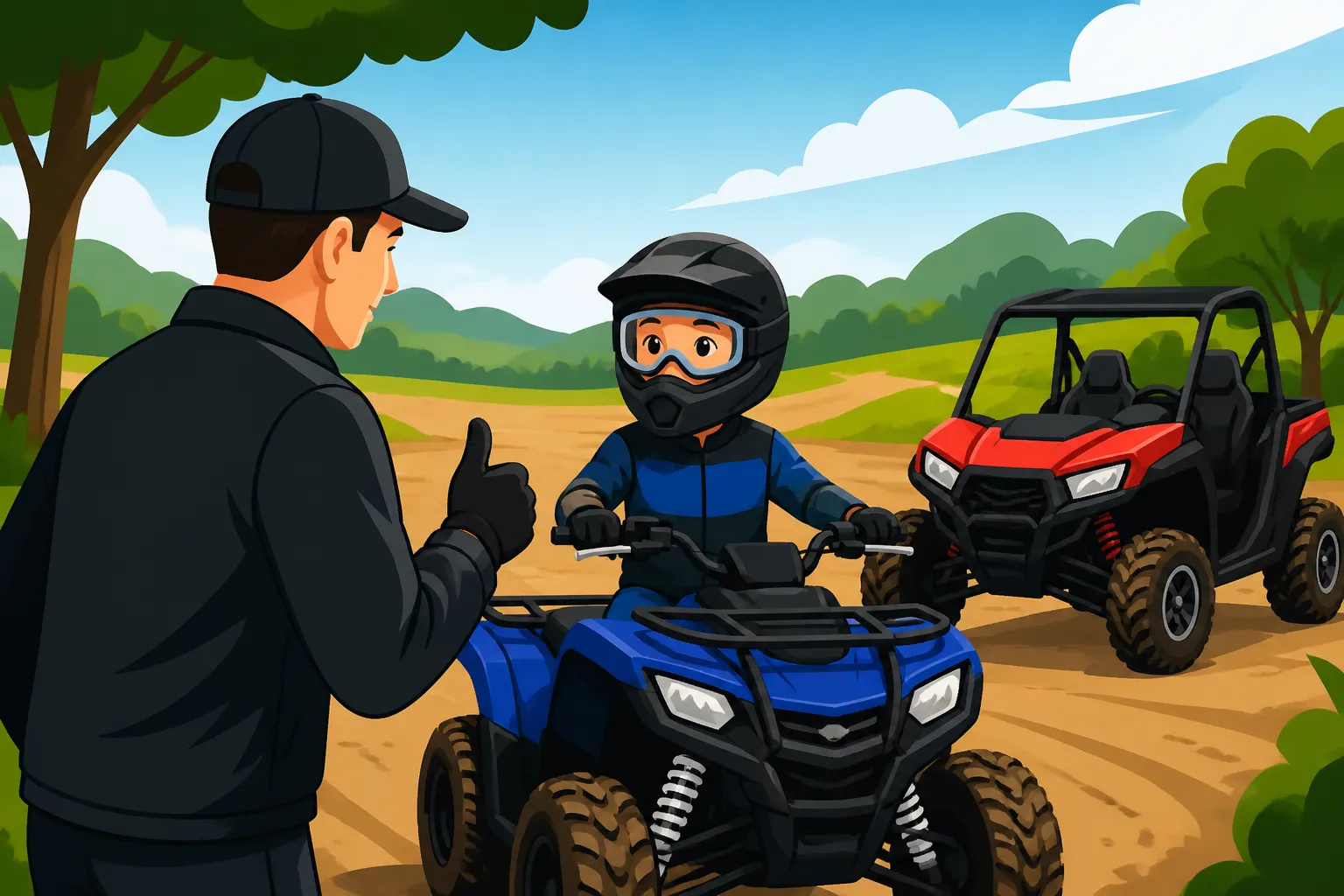
A rule may say an adult must supervise a young rider, but a family still needs to decide how to make that supervision effective. The adult should be able to keep track of the child, communicate clearly and respond if the child has trouble. That can be difficult if the adult is on a faster machine, takes a different route or rides far ahead.
Plan the group around the least experienced rider. Choose a route and pace that let the child keep up without being pressured to ride beyond their ability. Agree on a stopping point before a difficult section, and decide what the child should do if the group gets separated. On a busy trail, simple instructions matter: stop safely, stay on the marked route and wait for the adult rather than trying to find a shortcut.
Supervision is easier when the adult is close enough to notice a problem. That does not always mean riding directly beside the child; trail width, traffic and the park’s rules may affect where each machine can go. But if adults split up, the child should know which adult is responsible for them and how to reach that person. A vague plan such as “stay with the group” is less useful than naming a lead rider and a tail rider.
Use a brief pre-ride check with the child:
- Show the child the planned route and explain any sections to avoid.
- Set a pace that suits the child, not the fastest adult in the group.
- Agree on a stop signal and a meeting point if riders become separated.
- Check that the child can operate the controls and stop the machine reliably.
- Make sure the child has appropriate protective equipment and knows when to use it.
- Confirm that the supervising adult can stay engaged rather than focusing on another task.
Parents can review Illinois Parent Riding With a Child for planning considerations, but the park’s own supervision instructions come first. If the site requires an adult to ride with a minor, being at the campground or parked at the trailhead may not be enough. If the requirement is unclear, get a direct answer before buying a permit or setting out.
Do not confuse supervision with permission to ride
An adult’s presence does not make an unsuitable machine appropriate for a child. A youth rider needs a vehicle they can control, with a seat and controls that fit, manageable power and working safety equipment. The manufacturer’s age guidance is an important starting point, though it does not replace the park’s rules or an adult’s judgment. See Manufacturer Age Guidance at a Park before choosing a machine.
Avoid letting a child ride a machine that is too large or powerful just because an adult is nearby. A young rider may struggle to reach the controls, steer on uneven ground or stop quickly. If they cannot demonstrate basic control in a safe area, they are not ready for a trail ride. Supervision reduces risk; it does not eliminate it.
Passengers need their own check. A child who can ride as a passenger on one machine may not be allowed on another, and the park may have age or equipment restrictions. Follow the machine’s passenger instructions and the site’s rules. Do not carry a child in a way that leaves them unable to sit securely or hold on as intended. Related details are covered in Illinois Rules for a Child Passenger.
Prepare for check-in, waivers and youth requirements
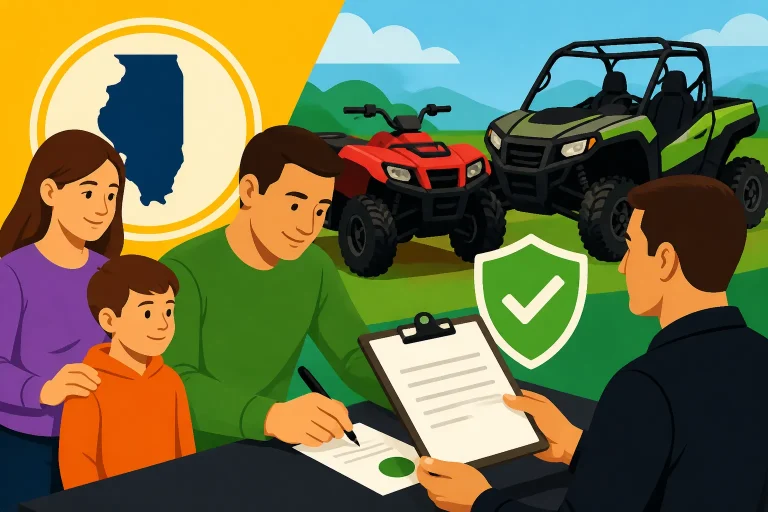
A smooth arrival starts with paperwork. Ask whether a minor needs a parent or guardian to sign a waiver, whether the form can be completed before arrival and whether the adult who signs must be present at check-in. A child should not be expected to sign for themselves if the park requires an adult’s signature. See Why a Minor Cannot Sign the Waiver and Parents Must Sign the Waiver for a Child for more on that distinction.
Bring the documents and items the park tells you to bring, and make sure the supervising adult knows the rules before reaching the gate. Depending on the site, the park may check identification, waivers, machine condition, permits or rider credentials. Do not assume that a reservation guarantees entry if a rider or vehicle fails an on-site requirement.
For a youth rider, verify the following before the trip:
- The rider meets the park’s age and supervision rules.
- The supervising adult meets the park’s definition of an eligible supervisor.
- The machine is allowed, properly maintained and suitable for that rider.
- Required waivers are completed by the right adult.
- Each rider has the required helmet and other protective equipment.
- Any license, permit, decal or check-in requirement is handled.
- The group understands which trails or areas are appropriate for the child.
Illinois does not have a single statewide safety-course requirement that automatically replaces a park’s own conditions. A course can still help a young rider learn basic operating habits, but ask the site whether it requires or recognizes any specific training. Illinois Safety Course Options discusses ways to look into training without assuming that a certificate guarantees access.
Protective gear should fit the child rather than simply be borrowed from an adult. A helmet that shifts or blocks vision is a poor fit, and gloves or goggles should not interfere with control. If ordering child-sized gear through Amazon or another retailer, check sizing guidance and make sure the equipment is suitable for the machine and activity. Try everything on before the ride, not at the trailhead.
Make a family ride safer and less stressful
A child’s readiness depends on more than age. Consider experience, size, confidence, attention and the ability to follow instructions under pressure. A rider who handles a machine comfortably in an open area may feel overwhelmed by noise, ruts, dust, other vehicles or a crowded trail. Start conservatively and be willing to stop early.
Give the child clear permission to say they are tired or uncomfortable. A parent can mistake silence for confidence, especially when the group is moving. Check in at natural breaks and after a difficult stretch. If a young rider is struggling, take an easier route or end the ride. Keeping the day enjoyable is more important than finishing a loop.
Adults should also plan for the practical limits of supervising while riding. A parent carrying a passenger, managing another child or leading a large group may have less capacity to watch a new rider. Consider assigning one adult to stay with the child while another adult leads the rest of the group. If the park’s rules require the supervisor to ride with the minor, organize the group so that adult can maintain a safe pace and position.
Weather and trail conditions affect how closely a child needs to be monitored. Mud, loose ground, poor visibility and heavy traffic can make a route substantially harder. Ask the park about current conditions and closures, and do not treat a trail’s posted rating as a guarantee that it will feel easy to a beginner. Bring water and basic first aid, and agree on what to do if a rider needs help.
If you are unsure whether a child or machine qualifies, call before booking. Give the operator the child’s age, the type of machine, whether the child will drive or ride as a passenger, and who will supervise. Ask the same questions again if the park’s policy is not clearly stated online. A short confirmation before the trip is much easier than discovering at check-in that the group cannot ride as planned.
The key is to treat supervision as an active plan, not a box to check. Confirm the park’s current rules, choose a machine the child can control, stay close enough to respond and adjust the ride when conditions or confidence change. That preparation helps the whole group spend less time sorting out entry questions and more time riding within its abilities.
Disclaimer
This article is for general informational purposes only and does not constitute professional advice. Laws, prices and regulations vary by location and change over time. Consult a qualified professional for guidance on your specific situation.