Illinois Private Park Camping Rules
Camping at an Illinois ATV or UTV park can make a riding weekend easier, but the campground may have rules that differ from the trail rules. Site access, fires, generators, pets, quiet hours and check-in procedures are often set by the individual park. Confirming those details before you tow helps avoid a denied arrival, an unexpected extra charge or a campsite that does not fit your group.
Private park rules are set by the park
Illinois does not have one set of camping rules that applies to every private off-road park. A campground may be operated by the riding park, a separate campground business or a nearby property. Each can set its own reservation process and conditions for using campsites, facilities and trails.
That means a campground reservation does not automatically tell you what riding access is included. Some parks may bundle lodging and riding access; others may require separate purchases or reservations. Similarly, a riding pass does not necessarily reserve a place to camp. Ask the park to confirm exactly what your booking covers and whether everyone in your group is included.
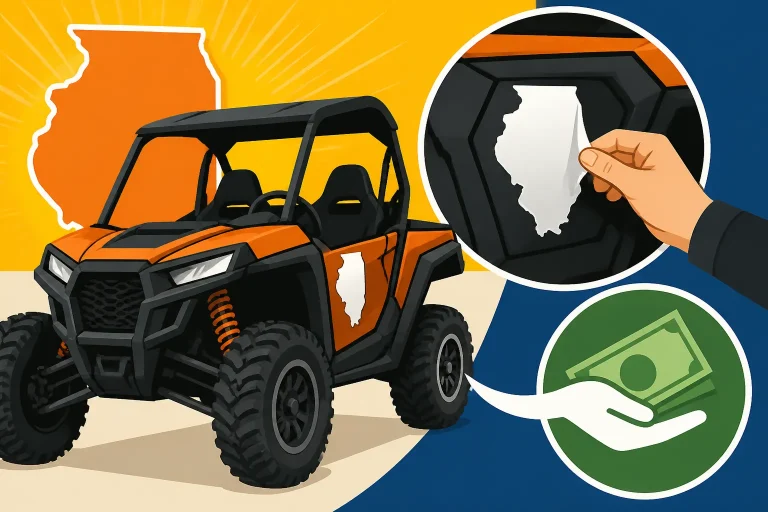
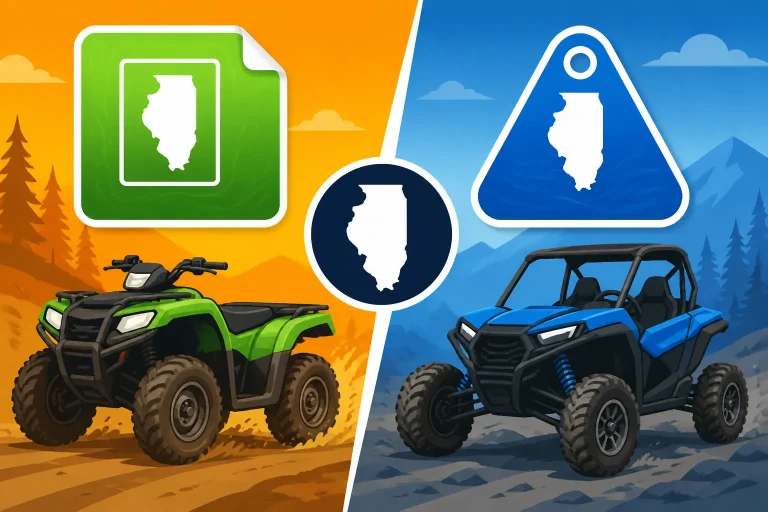
The distinction between a private park and public riding access matters, too. An Illinois usage stamp or access decal does not replace a private park’s own entry requirements. A stamp does not by itself open a gate to a riding site, and a public-access decal is not a campsite reservation. Check The Usage Stamp Opens No Gates by Itself for the difference between those state credentials and a site’s own permission to ride.
Before booking, get clear answers to these questions:
- Is the campsite on the riding property, or will you need to drive between the campground and trail entrance?
- Does the campsite booking include riding, or is a separate pass required?
- Does the reservation cover every rider, passenger and machine in your group?
- Are trail access and camping available on the same dates?
- What are the check-in and departure times?
- Does the campground offer tent sites, RV sites, cabins or a mix?
- Are water, electric service, toilets, showers or dump facilities available?
- Are there restrictions on machine noise, vehicle width, trailers or riding after dark?
- What happens if weather or a trail closure affects your plans?
If the answers are only given over the phone, ask whether the park can send the rules or reservation details in writing. Save the confirmation, any waiver instructions and the campground’s contact information. A quick written record is useful if the person who checks you in has different information from the person who took the booking.
| Camping detail | What to confirm with the park | Why it matters |
|---|---|---|
| Reservation | Dates, site type, occupancy and cancellation terms | A campsite may not include riding access or cover every guest |
| Arrival | Check-in time, gate hours and late-arrival procedure | A late arrival may mean waiting outside or missing check-in |
| Machines | Approved types, width limits, required stickers and parking rules | A machine allowed on one trail system may not fit another |
| Campsite use | Tent, RV, trailer and vehicle limits | Site dimensions and hookups vary |
| Fire and cooking | Whether fires, grills or portable stoves are allowed | Restrictions may change with conditions or park policy |
| Quiet and generators | Quiet hours, generator rules and campground boundaries | Riding hours and overnight hours may be different |
| Pets and alcohol | Whether they are allowed and under what conditions | Policies can apply to the whole property, not just campsites |
A private park can have additional rules beyond what state law requires. Its waiver, posted signs, staff instructions and reservation conditions may all matter. Review Illinois Private Park Waivers and Rules before arrival, especially if your group includes minors or anyone who has not visited that park before.
Reservations, check-in and campsite setup
Do not assume that a campsite can be chosen or paid for when you arrive. Popular weekends and events can fill up, and some facilities require advance reservations for camping, riding or both. Ask whether your site is assigned, whether you can select a site, and whether the park allows same-day changes.
When you reserve, give an accurate count of people, machines and camping vehicles. Tell the park if your group includes a large trailer, multiple side-by-sides or a motorhome. A site that works for a tent and pickup may not have enough room for a large RV and a machine trailer. If the site is not large enough to unload safely, ask about overflow parking or a separate trailer area rather than assuming you can use a neighboring site.
Check-in procedures may include more than receiving a campsite number. Parks may ask riders to complete waivers, show identification, check in machines or collect wristbands and vehicle stickers. Requirements vary, so read the park’s instructions instead of relying on another rider’s experience at a different site. If your party has children, confirm who must sign for them and whether all riders need to be present at check-in. For related considerations, see Illinois Private Park Age Minimums.
Before leaving home, organize the items the park says it needs. Depending on the facility, that might include:
- A reservation confirmation and contact number
- The names of everyone in the party
- Required identification or proof of age
- Signed forms, if the park accepts or requires them before arrival
- The machine’s ownership or registration papers, if requested
- Payment method accepted at the gate or campground
- Confirmation of any separate riding pass or camping fee
Do not treat a phone screenshot as a substitute for every document the park requests. A confirmation on your phone is useful, but a weak signal or dead battery can make it inconvenient. Save the confirmation offline and consider carrying a printed copy, especially for a remote property. Confirm whether the park sells passes at the gate or expects you to complete the process before driving down.
On arrival, follow staff directions for unloading and parking. Keep machines on approved paths and within the areas the park identifies. A campsite is not automatically a trail, practice area or place to test a machine. Ask where you may warm up, load and unload, and park your trailer. If the park has separate routes for trucks and off-road machines, use the route it specifies.
Keep the site orderly and avoid blocking roads, access lanes, neighboring campsites or emergency routes. Put equipment where it will not create a trip hazard, and secure machines and trailers when they are parked. If you need replacement tent stakes, tie-downs or other basic supplies, check what is available locally before the trip; online retailers such as Amazon may be an option for routine gear, but do not count on a last-minute delivery for an item needed at check-in.
Fires, generators, pets and quiet hours
Rules for fires, cooking and generators are particularly important because they may change with weather, fire danger or campground conditions. Never assume that a fire ring means a wood fire is permitted on the day you arrive. Ask whether the park allows campfires, charcoal, propane stoves and portable grills, and whether there are restrictions on where they can be used.
If fires are allowed, use only the locations and materials the park permits. Keep flames attended, have a way to extinguish them and follow any posted instructions. Do not burn trash or leave hot coals unattended. If a fire restriction is in effect, a fire ring does not override it. When uncertain, ask staff before lighting anything.
Generator policies are also park-specific. Confirm whether generators are allowed, when they may run and where they may be placed. A generator that is acceptable during daytime hours could disturb nearby campers overnight. Keep exhaust away from tents, RV doors and occupied areas, and do not run a generator inside an enclosed space. If the park has designated generator areas or quiet hours, follow those rules even if your equipment is quieter than average.
Quiet hours generally apply to more than music. Loud conversations, power tools, idling machines, repeated engine starts and late-night loading can all disturb neighboring campers. Ask when quiet hours begin and whether the park restricts machine operation near the campground after riding hours. A trail’s closing time and the campground’s quiet period are separate rules; one does not necessarily define the other.
Pets may be permitted at some private parks and restricted or prohibited at others. Ask about leash rules, designated pet areas, cleanup and whether pets are allowed on trails or only at the campsite. Do not assume that a pet-friendly campground permits pets in every part of the riding property. Keep animals secured so they cannot run into machine traffic, and carry waste bags if the park allows dogs.
Alcohol policies vary, too. Confirm whether alcohol is allowed at campsites, on the broader property or during events. A campground rule does not make it safe or lawful to operate a machine after drinking. Review Illinois Private Park Alcohol Rules and follow both the park’s policy and applicable law. When anyone in the group is drinking, plan a clear separation between alcohol and machine operation.
Other common overnight questions are worth asking directly:
- Can guests bring extra visitors who are not on the reservation?
- Are open-flame lanterns or outdoor cooking equipment allowed?
- Are there limits on music, lights or outdoor speakers?
- Are dogs allowed to remain at a campsite unattended?
- Can campers bring outside firewood, or must they buy it on-site?
- Are glass containers, fireworks or firearms restricted?
- Is there a rule about children riding or playing near the campground?
- Where should trash, wastewater and used cooking oil go?
Do not rely on a general camping checklist to answer these policy questions. The park’s posted rules take priority for its property. If a rule is not clear, ask staff before setting up rather than trying to resolve a disagreement after a violation.
A practical plan for a smooth riding weekend
Camping rules are easier to manage when you make one check before booking and another shortly before departure. A park’s conditions can change, and an old webpage or a friend’s recollection may not reflect the current instructions. Confirm the details with the facility that controls the campground.
Use this process:
- Identify the property and operator. Confirm who manages the campground and whether it is part of the riding park.
- Ask what the reservation includes. Separate campsite, riding access, machine fees and other required purchases in your notes.
- Check site capacity. Give the park the number of people, tents, RVs, trailers and machines you expect to bring.
- Read the current rules. Look for check-in steps, waivers, machine requirements, pet rules, fire restrictions and quiet hours.
- Confirm important details close to departure. Ask about gate hours, weather-related restrictions, road conditions and any temporary closures.
- Save the confirmation and contact details. Keep copies available offline and make sure someone in the group knows how to reach the park.
- Follow directions on site. Ask staff if you are unsure where to unload, park, ride or set up camp.
Also check whether the campground’s policies differ from the riding park’s trail policies. A property may impose separate requirements for helmets, passenger eligibility, machine condition, speed, sound or permitted riding areas. The park may require a waiver or restrict certain machines even when you are only staying overnight. For example, review Illinois Private Park Helmet Rules and [Illinois Private Park Pet Rules] rather than assuming those policies are the same everywhere.
Take a moment to check your machine before the trip. Make sure tie-downs, ramps and trailer connections are secure, and that the vehicle will meet any requirements the park has communicated. If a park checks machines at its entrance, a modification, excessive noise or a machine that does not meet its stated specifications could prevent entry. Ask about restrictions in advance if you have a heavily modified machine, a wide side-by-side or an unusual setup.
Plan for conditions beyond the campsite, too. Trails may be muddy, dusty or closed after poor weather, and cellular service may be limited. Bring drinking water, basic first-aid supplies, suitable riding gear and a way to navigate without depending on a strong phone signal. Leave enough time to load out without disturbing nearby campers during quiet hours. Pack trash and belongings out as required, and leave the campsite in the condition the park expects.
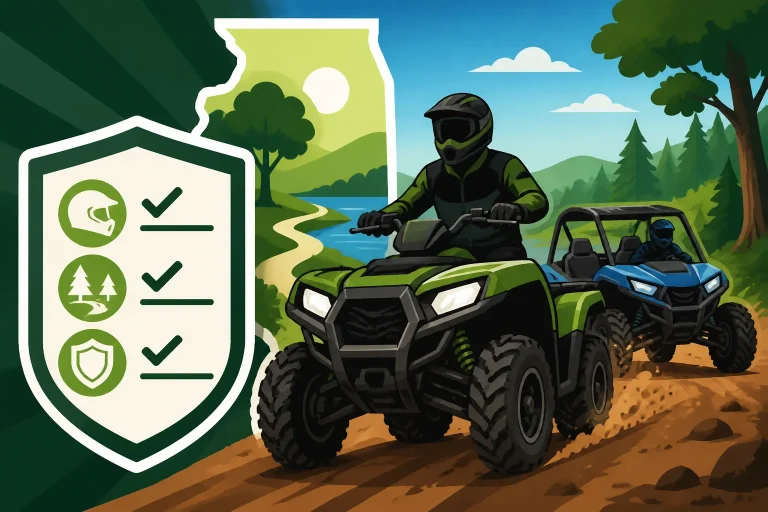
The main rule is simple: treat the park’s camping terms and riding terms as separate checklists. A reservation confirms only what the park says it confirms. Before you go, verify the site, the riding access, the machine requirements and the overnight restrictions with the operator. That small amount of preparation is more reliable than assuming every Illinois private park handles camping the same way.
Disclaimer
This article is for general informational purposes only and does not constitute professional advice. Laws, prices and regulations vary by location and change over time. Consult a qualified professional for guidance on your specific situation.