The Usage Stamp Opens No Gates by Itself
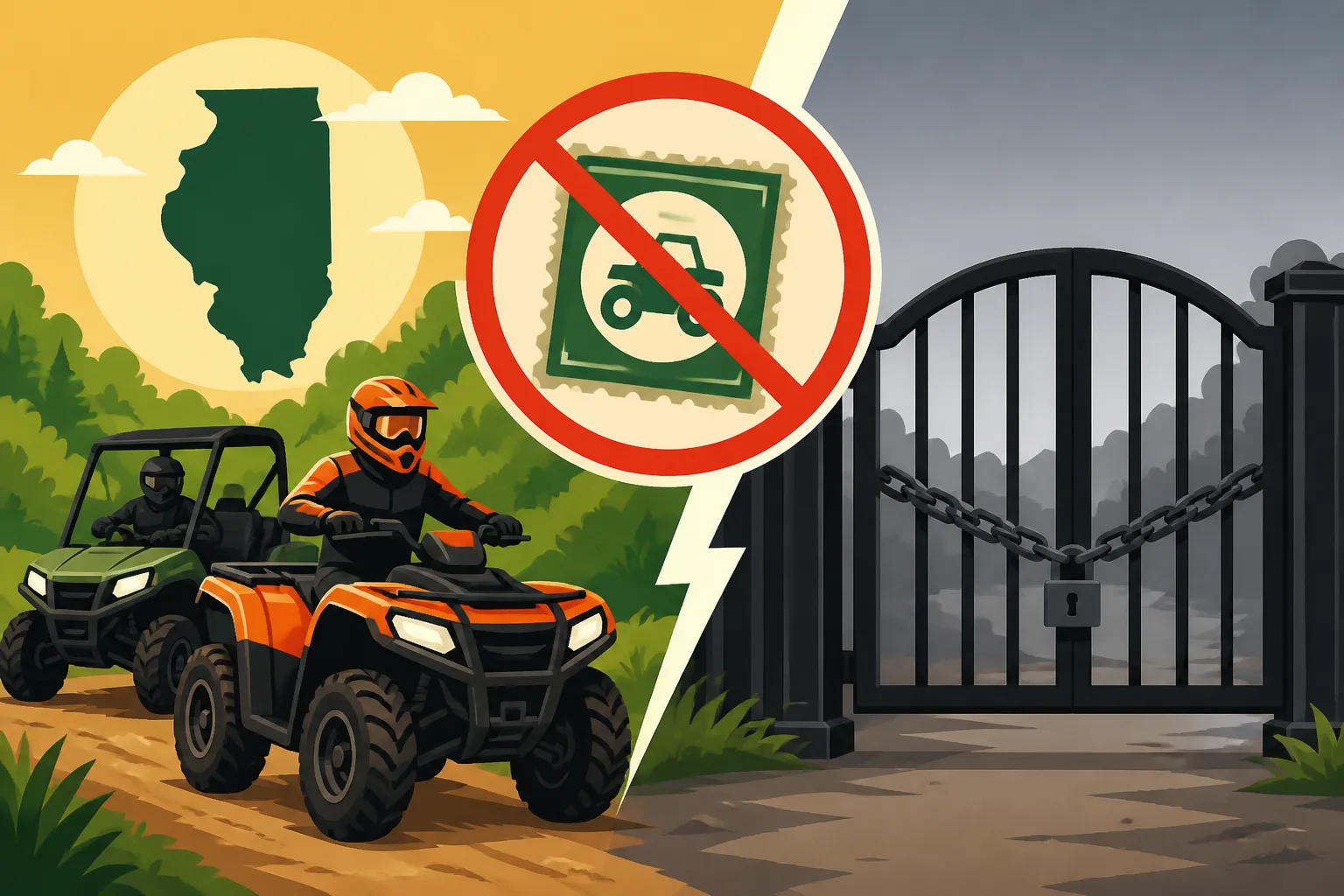
It’s a scenario many Illinois ATV and UTV enthusiasts have faced: you diligently purchase your annual Illinois Usage Stamp, thinking you’ve done everything right, only to arrive at a popular riding area and discover you’re missing crucial paperwork or facing unexpected fees. This common misconception, that the usage stamp alone unlocks all riding opportunities, can lead to frustration, wasted trips, and even citations. This guide will meticulously break down the true purpose of the Illinois Usage Stamp, clarify what permissions it grants (and doesn't), and explain why it absolutely does not "open any gates by itself," ensuring you understand the full regulatory landscape for off-highway vehicles in the Prairie State.
What the Illinois Usage Stamp Actually Covers
When you invest in an off-highway vehicle (OHV) in Illinois, whether it’s a nimble ATV or a robust side-by-side, one of the first things you'll encounter is the requirement for an Illinois Usage Stamp. However, understanding its precise role is where many riders get tripped up. It’s not just a sticker; it's a contribution to the state's broader OHV initiatives, yet it carries specific limitations regarding where and how you can ride.
The Core Purpose of the Usage Stamp
At its heart, the Illinois Usage Stamp is a user-funded fee designed to support the state's Off-Highway Vehicle Recreational Trails Program. Think of it as your direct investment into the system that helps maintain existing trails, develop new riding opportunities, and fund safety and educational programs across Illinois. When you pay for this stamp, your money goes into a dedicated fund managed by the Illinois Department of Natural Resources (IDNR) to enhance the overall OHV experience for everyone. It’s a collective contribution from riders to ensure the future of the sport in the state.
However, this is where the misconception often arises. Because it's a "usage" stamp, many assume it grants them permission to use any OHV trail or land. This is simply not the case. The stamp is about funding the infrastructure, not about providing explicit access to specific locations. It’s a fundamental part of operating an OHV legally within Illinois, much like a vehicle registration fee contributes to road maintenance but doesn't give you free access to tollways. [Illinois Charges $15 for a Usage Stamp], plus a small issuance fee, and this revenue is vital for the health of Illinois's OHV network. It allows the IDNR to apply for federal grants and invest directly in facilities, making it a crucial component of the state's commitment to the sport. [Where the Stamp Money Goes] is directly back into the OHV program, demonstrating that while it doesn't open gates, it certainly builds and maintains the paths behind them.
Who Needs an Illinois Usage Stamp
The requirement for an Illinois Usage Stamp is quite broad, encompassing nearly all off-highway vehicles operated within the state. This means if you ride an ATV, UTV, or dirt bike anywhere in Illinois, you likely need this stamp. This applies to residents and non-residents alike, ensuring that everyone who benefits from the OHV program contributes to its upkeep. The idea is to create an equitable system where all users participate in supporting the trails and programs they utilize.
However, there are several key exemptions to this rule that are important to understand. For instance, if you strictly use your machine for agricultural purposes on your own farm, moving between fields, or tending to livestock, you might be exempt. Similarly, machines used exclusively on your own private property and not for recreational purposes that interact with public lands or trails usually don't require the stamp. There are also exemptions for machines used in organized competitions on closed courses or those owned by government agencies. It’s crucial to scrutinize these [Illinois Usage Stamp Exemptions] carefully, as assuming you're exempt without proper verification can lead to penalties. For example, a farmer might use their UTV daily to check fences, which would fall under the agricultural exemption, but if that same farmer takes their UTV to a public riding area for recreation, the stamp would then become mandatory. Another common exemption is for [Machines Ridden Only on Your Own Yard Skip the Stamp], highlighting the distinction between private, non-recreational use and broader recreational operation.
How to Properly Display and Renew Your Stamp
Once you've acquired your Illinois Usage Stamp, proper display is essential to avoid potential issues with conservation officers or park staff. The IDNR mandates that the stamp be affixed to the forward half of your off-highway vehicle, in a place that is clearly visible and easily accessible for inspection. This ensures that enforcement personnel can quickly verify compliance without causing undue delay or requiring you to search for hidden paperwork. Think of it like your vehicle's license plate; it needs to be seen.
The Illinois Usage Stamp is not a one-time purchase; it's an annual commitment. These stamps operate on a specific cycle, with all stamps expiring on March 31st of each year, regardless of when you purchased it during the previous cycle. This means if you buy your stamp in January, it will still expire on March 31st of the same year, giving you only a few months of validity. This system ensures a predictable renewal schedule and continuous funding for the OHV program. Therefore, mark your calendar for spring renewals to stay compliant. [Illinois Usage Stamps Expire March 31] is a crucial date for every rider to remember. For a practical example, imagine you’re riding at a grant-assisted site, and a conservation officer approaches. They’ll expect to see your stamp clearly affixed, as detailed in guidelines like [Where the Usage Stamp Goes on Your Machine]. Failing to display it properly, even if you’ve purchased it, can lead to questions or even a citation.
Why the Usage Stamp Doesn't Grant Riding Access
The distinction between funding and access is perhaps the most critical point of confusion for Illinois OHV riders. Many assume that because they've paid the state a fee for "usage," they are then granted a free pass to any public land. This simply isn't how Illinois OHV regulations work, and understanding this nuance is key to legal and enjoyable riding.
The Crucial Distinction: Funding vs. Permission
Let's reiterate: the Illinois Usage Stamp is a funding mechanism, not a permit for direct access. It's a fundamental contribution to the state's OHV program, ensuring that resources are available for trail development and maintenance. However, it does not, by itself, grant you legal permission to ride on any specific piece of land, public or private. Imagine contributing to a charity that builds playgrounds; your donation helps build them, but it doesn't give you exclusive access or allow you to use them outside of their established rules. This is exactly the relationship between the usage stamp and riding access.
This is a common source of frustration. Riders envision pulling up to a trailhead, displaying their stamp, and simply driving through. The reality is that the stamp is only one piece of a larger puzzle. If you approach a gate, expecting your stamp to be the golden ticket, you'll likely be met with disappointment and potentially a firm explanation from staff or law enforcement. Illinois's OHV regulations are layered, designed to manage land use, safety, and environmental impact comprehensively. The stamp addresses the financial aspect of supporting the OHV infrastructure, but other permits address the legal aspect of accessing specific properties. To truly understand why this is, you need to grasp the purpose of the other "sticker" often required, and why [Why the Two Stickers Exist] sheds light on this layered approach.
The Role of the Illinois Public Access Decal
If the Usage Stamp doesn't grant access, then what does? For state-managed, grant-assisted OHV sites in Illinois, the answer is the Illinois Public Access Decal. This decal is the actual key that unlocks entry to designated public riding areas that have received funding from the state's OHV program. These are the trails and parks that directly benefit from the funds collected by the Usage Stamp, and the decal ensures that only those who contribute to the system (or meet specific criteria) can use them.
The Public Access Decal signifies that your machine is authorized to ride at these specific locations. Without it, even if you have a valid Usage Stamp, you will typically be denied entry to places like Sahara Woods State OHV Park or other [Illinois Grant-Assisted Riding Areas]. The decal is your proof of permission for those sites, a crucial distinction from the stamp's funding role. While the stamp supports the broader program, the decal is your specific pass to the sites built and maintained by that program. It’s also important to note that the Access Decal usually costs more for non-residents than for Illinois residents, reflecting different contribution levels to the state's resources. [Illinois Public Access Decal Explained] details its specific requirements and how it functions as the direct access permit for these valuable riding locations.
Private Land and Other Permissions
Beyond public riding areas, a vast amount of potential OHV terrain in Illinois is privately owned. Whether it's a friend's farm, a timber company's land, or a private recreational park, the Illinois Usage Stamp offers absolutely no right of access. For any private property, explicit permission from the landowner is not just a courtesy—it's a legal requirement. Riding on private land without permission is trespassing, a serious offense that can lead to fines, legal action, and even confiscation of your machine.
This is where the importance of formal agreements comes into play. A verbal "yeah, sure, go ahead" might seem sufficient, but it leaves both parties vulnerable to misunderstandings. If you're negotiating access with a private landowner, having a clear, written agreement can prevent misunderstandings. Services like LawDepot offer templates for land use agreements that can help formalize these permissions, protecting both you and the landowner. These documents can specify duration, permitted areas, liability waivers, and other crucial details. Always respect the landowner’s wishes, and never assume that simply because a gate is open or there are no "No Trespassing" signs, you have an inherent right to ride. Illinois has strict [Illinois Trespass Penalties for Riders], and conservation officers take these seriously. Obtaining explicit, ideally written, permission is paramount when riding on any land that isn't a designated public OHV park. This also extends to areas like private fields or wooded lots; [Illinois Private Land Permission Rules] are clear: get permission first.
Navigating Illinois Riding Sites with the Right Paperwork
Understanding the individual purpose of the Illinois Usage Stamp and the Illinois Public Access Decal is the first step. The next is knowing how they, and any other required permits, fit together when you plan a trip to an actual riding site. Different types of riding areas in Illinois have different requirements, and showing up unprepared can quickly turn a fun outing into a frustrating experience.
Understanding Grant-Assisted Riding Sites
Illinois is home to several fantastic grant-assisted riding sites, which are areas that have received funding from the state's OHV Recreational Trails Program. These sites are designed specifically for off-highway vehicle recreation and are crucial to the state's riding landscape. Examples include the popular Sahara Woods State OHV Park, Mill Creek Park near Marshall, and club-run areas like Little Egypt Off Road. These locations are often heavily maintained and managed, offering marked trails, staging areas, and sometimes even camping facilities.
For these sites, the Illinois Public Access Decal is the primary permit required for entry. The decal signifies that your machine is authorized to use these facilities, helping to ensure that only those who contribute to the system via the decal fee get to enjoy the benefits. While your annual Usage Stamp helps fund the overarching program, it's the decal that grants the actual right to enter and ride within these specific parks. Each of these sites also typically has its own set of rules and regulations regarding everything from helmets and age limits to spark arrestors and quiet hours. For example, [Illinois Rules for Young Riders] might be particularly stringent at these public parks, often requiring adult supervision or specific safety certifications for minors. Always check the specific rules of the grant-assisted site you plan to visit before you head out, as these can vary. [What a Grant-Assisted Riding Site Actually Is] often comes with additional rules and considerations beyond just the state permits.
Specific Requirements for State OHV Parks
Even with a valid Illinois Usage Stamp and Public Access Decal, state-managed OHV parks, like the highly popular Sahara Woods, often have additional layers of permitting. These parks, due to their popularity and finite capacity, implement further measures to manage rider numbers, ensure safety, and protect the delicate environment they encompass. It's not uncommon for them to have daily vehicle caps, meaning only a certain number of machines are allowed to enter each day. Once that cap is reached, no more riders are admitted, regardless of their permits.
To mitigate this, many state parks require advance registration and booking, especially for weekend and holiday riding. You might need to reserve your spot online, pay additional day-use fees beyond the decal, and sign liability waivers before you even unload your machine. Upon arrival, expect to check in, receive a wristband that must be worn throughout your ride, and have a vehicle sticker affixed to your machine. [Illinois Sahara Woods Permits] are a prime example of this multi-layered approach, where you book your riding day through an online portal, pay a specific fee for that day, and then go through a physical check-in process at the gate. Weekends and holidays at places like Sahara Woods can sell out days or even weeks in advance, making [Illinois Daily Caps and Sell-Outs] a very real concern for riders who don't plan ahead. Always check the park's official website well in advance of your trip to understand all the specific requirements and avoid being turned away.
Private Off-Road Parks and Their Own Rules
Illinois also boasts a number of excellent private off-road parks, which offer a different kind of riding experience and often operate under their own distinct sets of rules. Places like The Cliffs Insane Terrain Off-Road Park or the riding areas at Heartland Lodge are privately owned and managed. While you are still technically required to have an Illinois Usage Stamp on your machine if operating it recreationally within the state, these private parks typically do not require the Illinois Public Access Decal for entry. Instead, they charge their own entrance fees, which directly fund their operations, trail maintenance, and facilities.
These private parks have complete autonomy over their specific regulations. This means they might have different age minimums, helmet requirements, passenger rules, or even specific insurance demands than state-run sites. They will almost certainly require you to sign their own liability waivers, which are often comprehensive. For instance, [Illinois Private Park Waivers and Rules] can differ significantly from public land regulations, sometimes allowing alcohol in designated areas or having different enforcement structures. It’s absolutely essential to consult the specific website or contact the staff of any private park you plan to visit to understand their particular rules before you go. Don't assume that state regulations automatically apply or that your state permits will grant you carte blanche. Even though you're likely paying an entry fee, it's about adhering to their property-specific guidelines. [Illinois Private Off-Road Parks] are a fantastic option, but they require due diligence from riders to ensure compliance.
Common Misconceptions and Avoiding Penalties
The intricacies of Illinois's OHV permit system can be confusing, leading to persistent myths and honest mistakes. Understanding these common pitfalls and the potential consequences is crucial for any rider hoping for a smooth, penalty-free experience on the trails.
The "Two Stickers That Cancel Each Other" Myth
One of the most persistent pieces of misinformation circulating among Illinois OHV riders is the idea that the Usage Stamp and the Public Access Decal are somehow mutually exclusive, or that one "cancels out" the other. This simply isn't true, but the confusion is understandable given the nuances of the regulations. The truth is, the Access Decal grants you specific access to grant-assisted sites, and in doing so, it exempts you from needing the separate Usage Stamp if your riding is exclusively limited to those grant-assisted sites.
However, if you plan to ride your OHV recreationally anywhere outside of grant-assisted sites—even on private land with permission, or if you simply trailer your machine on public roads—then the Illinois Usage Stamp is still required. Many riders, to ensure full compliance no matter where their adventures take them, opt to purchase both stickers. This way, they're covered for both the general Illinois usage requirement and specific access to state-funded trails. It's not that the stickers cancel each other, but rather that the decal provides a specific exemption under certain conditions. For a clear explanation of this often-misunderstood relationship, delve into [Two Stickers That Cancel Each Other] and how [Illinois Stamp and Decal Together] provide the most comprehensive coverage for riders who utilize various types of riding areas.
Penalties for Riding Without Proper Documentation
Ignoring Illinois's OHV permitting requirements can lead to more than just a ruined day of riding; it can result in significant financial penalties and other legal repercussions. Conservation officers and local law enforcement are authorized to enforce these regulations, and they frequently patrol riding areas and rural roads where OHVs are commonly transported or operated. Getting caught without a valid Illinois Usage Stamp where required can lead to fines. Similarly, attempting to ride at a grant-assisted site without the necessary Public Access Decal will likely result in being turned away or ticketed.
Beyond the specific permits, riding on private land without explicit permission is trespassing, which carries its own set of steep penalties. These fines can quickly add up, and repeat offenses can lead to more severe consequences, including impoundment of your machine. Imagine being pulled over on a rural county road or approached by a park ranger at a trailhead. They will expect to see your documentation. Knowing the [Illinois Penalties for No Stamp] and [Illinois Penalties for No Decal] can be a stark reminder of why compliance is so important. These aren't just minor infractions; they are violations of state law designed to manage recreational vehicle use responsibly.
Ensuring Full Compliance for Worry-Free Riding
The key to enjoying Illinois's OHV opportunities without constant worry is proactive compliance. Before every ride, take a moment to confirm you have all the necessary permits and documentation for your specific destination. This means:
- Usage Stamp: Ensure your annual Illinois Usage Stamp is current and properly displayed on the forward half of your machine. Remember its March 31st expiration.
- Access Decal: If you plan to visit a grant-assisted riding site, verify that you have a current Public Access Decal affixed front and center.
- Site-Specific Permits: For state parks like Sahara Woods, confirm your reservation, day-use permits, and any other unique requirements.
- Private Land Permission: If riding on private property, always have explicit (and ideally written) permission from the landowner. Tools like those from LawDepot can assist in creating and storing these vital documents, ensuring you have everything readily accessible should a conservation officer request it.
A good practice is to create a small "OHV packet" containing copies of your title, proof of ownership, and any private land agreements, which you can easily carry on your machine. [Carrying Papers at a Grant Site] is not just good advice; it's often a requirement. Finally, always take the time to research the specific rules and regulations for your intended riding location. Local municipalities and counties may have unique ordinances, and private parks certainly will. Websites for the IDNR, park systems, and local government can provide crucial information, ensuring you follow [Illinois Ordinance Lookups Before You Ride]. By taking these steps, you can avoid common pitfalls and ensure your Illinois OHV adventures are safe, legal, and truly enjoyable.
| Feature | Illinois OHV Usage Stamp | Illinois Public Access Decal |
|---|---|---|
| Primary Purpose | Funds OHV programs, trail maintenance, safety initiatives | Grants access to state-managed, grant-assisted OHV riding sites |
| Cost (approx.) | $15 (plus a small issuance fee) | $11 (resident), $17 (non-resident/rental) |
| Who Needs It | Most OHV operators in Illinois, unless specifically exempt for limited uses (e.g., farm work, private property non-recreational). | Riders intending to use state-managed, grant-assisted OHV sites (e.g., Sahara Woods). |
| Where to Buy | IDNR Direct Vendors, online through ExploreMoreIL | IDNR Direct Vendors, online through ExploreMoreIL, some state park gates |
| Expiration | March 31st annually, regardless of purchase date | March 31st annually, regardless of purchase date |
| Display | Affixed to the forward half of the OHV, clearly visible | Affixed to the front and center of the OHV, clearly visible |
| Grants Access? | No, it funds programs but does NOT grant direct access to land. | Yes, it specifically grants access to designated grant-assisted OHV sites. |
| Exemptions | Machines used exclusively for agriculture, competition, or strictly on private land (non-recreational). | Not required for riding on purely private land with permission, or at non-grant-assisted private parks. |
| Combined Use | Can be used in conjunction with the Access Decal. The Decal exempts you from the Stamp requirement only if you ride exclusively at grant sites. | Works with the Usage Stamp for overall compliance. If you ride only at grant sites, the Decal's purchase covers the "usage" requirement. |
Disclaimer
This article is for general informational purposes only and does not constitute professional advice. Laws, prices and regulations vary by location and change over time. Consult a qualified professional for guidance on your specific situation.