Applying for an Illinois Off-Road Title
Navigating the ins and outs of off-road vehicle ownership in Illinois can feel like trying to solve a puzzle with half the pieces missing, especially when it comes to official paperwork. Many riders get frustrated trying to figure out if their ATV or UTV even needs a title, let alone how to properly apply for one. This comprehensive guide will walk you through every step of applying for an Illinois off-road title, making the process much clearer and less daunting.
Understanding the Illinois Off-Road Title Requirement
It's a common misconception that if you're not driving your ATV or UTV on public roads, you don't need to bother with official state paperwork. However, Illinois has specific requirements for titling off-highway vehicles (OHVs), which include ATVs, UTVs, and dirt bikes. This isn't just bureaucratic red tape; it's about establishing legal ownership and helping to combat theft, which unfortunately, is a real concern in the off-road community.
Why Illinois Requires Titles for Off-Road Vehicles
Back in 1998, Illinois recognized the growing popularity of off-road vehicles and the need for a system to track ownership, similar to cars and trucks. That's when the state began requiring titles for these machines. This legal framework provides an essential paper trail, offering protection for both buyers and sellers. When you're looking to buy a used machine, having a clear title in hand from the seller is your best defense against inadvertently purchasing a stolen vehicle. Conversely, as a seller, having a clean title proves your right to transfer ownership, making the sale smoother and more secure. Without this requirement, it would be much harder for law enforcement to track stolen machines or for individuals to prove they legitimately own their prized quad or side-by-side. Essentially, [Illinois Titles Required Since 1998] ensure a level of accountability and security for everyone involved.
Consider a scenario where you've invested a good chunk of change into a new-to-you side-by-side, only to find out later that it was reported stolen years ago. Without a proper title transfer process, proving your legitimate purchase becomes a nightmare, and you could lose both your machine and your money. The titling system acts as a shield against these kinds of unfortunate situations, giving owners peace of mind and making the secondary market for off-road vehicles much more transparent.
What "Title Only" Means and Why It's Distinct from Registration
One of the most frequent sources of confusion for Illinois off-road enthusiasts is the distinction between titling and registration. In Illinois, you title your off-road machine, but you don't "register" it in the same way you would a car or truck with license plates. The state issues a "title only" for OHVs. This means you'll receive a Certificate of Title from the Illinois Secretary of State, but you won't get license plates or a registration card that needs annual renewal in the typical sense.
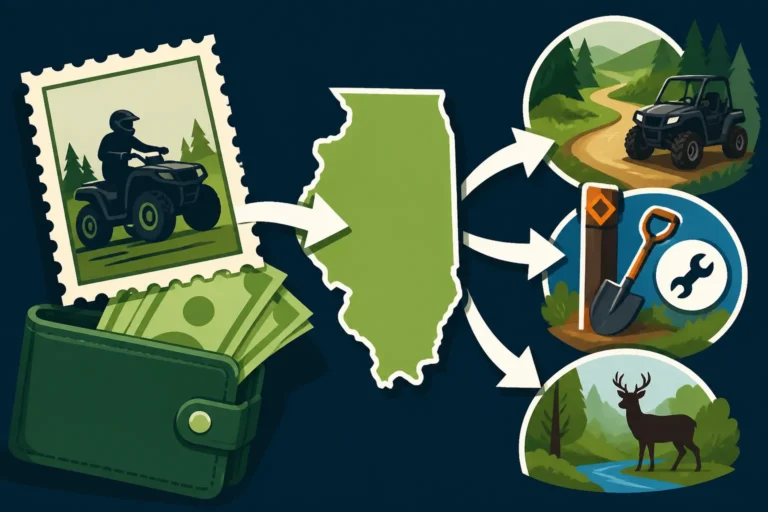
The "title only" status explicitly acknowledges that these machines are not generally meant for highway use. Instead, the title serves as the official record of ownership. While you don't get traditional registration, you will need other permits or stickers if you plan to ride your machine at designated public riding areas in Illinois. These might include an [Illinois OHV Usage Stamp Explained] or an [Illinois Public Access Decal Explained], which are distinct from the title itself. Think of it this way: the title proves you own it, while the stamp or decal proves you have permission to ride it in specific locations. [What "Title Only" Means on a Title Application] is a critical concept to grasp, as many new owners mistakenly believe getting a title means they can ride anywhere. It simply means the state recognizes you as the legal owner.
For example, you might have a beautifully restored vintage dirt bike that you only ride on your own private property. In this case, you would still need an Illinois off-road title for it to legally establish your ownership, even if you never plan to take it to a public riding park. The title is about the machine's legal status, not about where or how you use it.
Which Machines Need a Title
Generally speaking, any off-highway vehicle operated in Illinois, whether bought new or used, needs an Illinois title. This includes:
- All-Terrain Vehicles (ATVs): The classic four-wheelers.
- Off-Highway Motorcycles (OHMs) / Dirt Bikes: Two-wheeled machines designed for off-road use.
- Recreational Off-Highway Vehicles (ROVs) / Side-by-Sides (UTVs): These multi-passenger machines, often used for recreation or utility tasks, also fall under the titling requirement.
There are very few exemptions to the titling rule. If you've purchased a machine that fits these descriptions, you're almost certainly going to need an Illinois off-road title. The main exceptions typically involve machines used exclusively for farm work on private land, certain competition-only machines that never touch public land, or very old machines that pre-date the 1998 requirement and haven't been titled since. However, even with older machines, if they are sold and a new owner wants to establish clear ownership, obtaining a title is highly recommended and often necessary.
For instance, if you just bought a new Polaris RZR from a dealership or found a fantastic deal on a used Yamaha Grizzly through a private seller, the titling process will apply to you. Even if you only plan to use your side-by-side to haul equipment around your rural property, the state still requires you to possess a valid title for it. This consistency helps everyone involved in the off-road vehicle ecosystem stay organized and legitimate.
Gathering Your Essential Documents
Applying for an Illinois off-road title isn't usually complicated, but it does require careful preparation. The biggest hurdle for most people is making sure they have all the right documents in hand before they even walk through the door or mail anything off. Missing a single piece of paperwork can lead to frustrating delays, sending you back to square one.
Proof of Ownership
This is arguably the most crucial document you'll need. How you prove ownership depends on whether your machine is new or used.
- New Machines: If you bought your ATV or UTV new from a dealership, you'll be provided with a Manufacturer's Certificate of Origin (MCO), sometimes called a Manufacturer's Statement of Origin (MSO). This document is essentially the "birth certificate" for your machine. It proves that the vehicle is new and has never been titled before. The dealership should fill out their portion and sign it over to you. You'll then present this MCO to the Illinois Secretary of State as your primary proof of ownership. Make sure the VIN on the MCO matches your machine exactly.
- Used Machines with a Title: If you purchased a used machine that already has an Illinois (or even out-of-state) title, that existing title certificate becomes your proof of ownership. The previous owner must properly sign over the title to you, indicating the sale date and price. Verify that their signature matches the name printed on the title, and ensure all lien releases are properly noted if the machine was financed. Without the seller's proper endorsement, the title is incomplete and cannot be transferred.
- Used Machines Without a Title (Special Situations): This is where things can get a bit trickier. If you bought a used machine from a private seller and they don't have a title (which can happen, especially with older machines or those from states with less stringent titling laws), you'll need alternative proof. A notarized bill of sale is absolutely critical here. This document should clearly state the buyer's and seller's names and addresses, the sale date, the purchase price, and a detailed description of the machine, including its VIN. While a bill of sale can help, the state might require additional steps to verify ownership if no prior title exists. This often involves a VIN inspection and potentially even a surety bond in some cases, which can add complexity and cost. Platforms like LawDepot can be a useful resource for generating a legally sound bill of sale that includes all necessary details, ensuring you have robust documentation in these situations.
Imagine a situation where you found a fantastic deal on a vintage Kawasaki Bayou, but the seller claims they never got a title when they bought it years ago. Instead of just taking their word for it, insist on a detailed bill of sale. Without it, you might find yourself with a machine you can't legally prove you own, which could complicate future sales or even recovery if it's stolen. This is also why [Illinois Title Without a Bill of Sale] is generally a difficult path to navigate.
Proof of Identity
When you apply for an off-road title, you'll need to prove who you are. This typically means presenting a valid form of identification, such as an Illinois driver's license or state ID card. The name on your identification should match the name you're putting on the title application. If you're applying in person, they'll likely ask to see this. If you're mailing in your application, you typically don't send a copy of your ID, but you're signing under penalty of perjury, affirming your identity. For businesses, you'll need appropriate business registration documents and the ID of the authorized signatory.
It's a straightforward step, but a crucial one for preventing fraudulent title applications. Ensuring your current identification is up-to-date with your correct address can also help avoid any issues with receiving your new title in the mail.
Vehicle Identification Number (VIN) Verification
The Vehicle Identification Number (VIN) is your machine's unique fingerprint. It's paramount that the VIN on all your documents (MCO, previous title, bill of sale) exactly matches the VIN stamped on the frame of your ATV or UTV. Errors here are a common reason for title application delays. For new machines, the dealership handles this. For used machines, it's your responsibility to visually confirm the VIN. The VIN is usually located on the frame near the steering column, on the engine casing, or in other prominent places depending on the make and model.
In some specific situations, especially if there's any discrepancy or if you're applying for a title for a machine that has never been titled or has questionable paperwork, the Illinois Secretary of State may require a physical VIN inspection. This helps ensure the machine isn't stolen or cobbled together from multiple parts without proper documentation. Being meticulous about matching VINs from the start will save you a lot of headaches later on. Knowing [Where the Serial Number Hides on an Older Quad] can be invaluable before you even make a purchase.
Navigating the Application Forms
The heart of the titling process lies in accurately completing the necessary forms. While it might seem daunting, taking it one step at a time can make it much more manageable. The primary form you'll be working with is critical for establishing your ownership.
The Primary Form: VSD-190
For titling off-road vehicles in Illinois, the key document you'll need to complete is the Application for Vehicle Transaction (VSD-190). This form is used for various vehicle transactions, including obtaining a new title, transferring an existing one, or requesting a duplicate. It’s a multi-purpose form, so you’ll need to pay close attention to which sections apply to your specific situation. You can usually download this form from the Illinois Secretary of State's website, or pick one up at a Secretary of State facility.
Many people find themselves intimidated by government forms, but the VSD-190 is designed to be user-friendly if you go through it methodically. Don't rush through it; read each section carefully. If you're unsure about a particular field, it's always better to leave it blank and ask for clarification than to guess and risk making a mistake that could delay your application. This form is the cornerstone of your title application, so accuracy is paramount.
Filling Out Each Section Meticulously
Let's break down the key sections of the VSD-190 form that you'll typically need to complete for an off-road title:
- Section A – Transaction Type: This is where you indicate what you're doing. For a new title application, you'll likely check the box for "New Title" or "Transfer of Ownership" if you're buying a used machine. You'll also specify the type of vehicle, ensuring you select "Off-Highway Vehicle (OHV)." This is where you indicate that you're applying for an [Illinois ATV Title Certificates Explained], not a full road registration.
- Section B – Vehicle Description: This section requires detailed information about your ATV or UTV. You'll need to enter the Vehicle Identification Number (VIN), make, model, year, and body style. Make sure the VIN matches your MCO or previous title exactly. Any discrepancy here will cause an immediate flag and delay. You'll also list the fuel type and purchase date.
- Section C – Owner Information: This is where you provide your personal details. Include your full legal name, current address, driver's license number (or state ID number), and date of birth. If there are multiple owners, all names and information should be included. For a business, include the business name and Federal Employer Identification Number (FEIN). It's crucial that this information is accurate and matches your proof of identity.
- Section D – Lienholder Information (if applicable): If you financed your ATV or UTV, your lender (bank, credit union, etc.) will be listed here as the lienholder. They hold a security interest in your machine until the loan is paid off. Your lender will typically provide you with the necessary information to complete this section, or they might even handle this part of the application for you. If you paid cash or the machine is fully paid off, you'll leave this section blank. This is a critical part of [Illinois Title and Lien Records].
- Section E – Seller Information (for transfers): If you bought a used machine, this section requires the previous owner's name and address. This information helps the state track the chain of ownership.
- Section F – Odometer Reading (not typically applicable for OHVs): While standard for road vehicles, off-highway vehicles generally do not have odometers that are tracked for titling purposes in the same way. You can typically leave this blank or note "N/A."
- Section G – Fees: This is where you calculate the applicable fees, including the title fee and any use tax (which we'll discuss in more detail later). You'll specify the payment method here.
- Section H – Signatures: This is a legally binding section. All owners listed on the application must sign and date this section. By signing, you're affirming that all the information provided is true and correct to the best of your knowledge. This is not a section to overlook or rush.
Take your time with each field, referring to your MCO, previous title, or bill of sale as needed. A common phrase among experienced riders is "measure twice, cut once," and that definitely applies to filling out official government forms. This thoroughness is exactly what's needed for [Filling Out VSD-190 for an Off-Road Machine].
Common Mistakes to Avoid
Even with careful attention, it's easy to make small errors that can lead to big delays. Here are some of the most common pitfalls to sidestep:
- Incorrect VIN: Double-check, triple-check the VIN. Even one digit wrong can send your application back.
- Missing Signatures: Ensure all required signatures are present – yours, any co-owners, and the seller's if it's a transfer. Unsigned forms are immediately rejected.
- Incomplete Information: Don't leave any applicable fields blank. If a section doesn't apply, write "N/A" rather than leaving a void.
- Outdated Forms: Always download the most current version of the VSD-190 form directly from the Illinois Secretary of State's website. Regulations and forms can change, and using an old version can invalidate your application.
- Incorrect Fees: Verify the current title fee and any applicable tax. Sending too little money will hold up your application; sending too much might mean a refund delay.
- Not Including Proof of Ownership: Simply submitting the VSD-190 isn't enough. You must include the original MCO or the properly assigned previous title. Without this, your application is incomplete. If you used a bill of sale as primary proof, make sure it's notarized and includes all required details.
- Rushing the Process: Trying to complete the form and gather documents at the last minute increases the chances of error. Give yourself ample time. [Paperwork Mistakes That Delay an Illinois Title] are avoidable with diligence.
By being meticulous and avoiding these common errors, you significantly increase the chances of a smooth and swift titling process for your off-road machine.
Where to Submit Your Title Application
Once you've meticulously gathered all your documents and filled out the VSD-190 form, the next step is to submit your application to the Illinois Secretary of State. You have a couple of options, each with its own advantages.
Secretary of State Facilities
For many people, the most straightforward way to submit their title application is in person at a Secretary of State (SOS) facility. These are the same offices where you handle driver's licenses and vehicle registrations. While the wait can sometimes be a bit long, the benefit of an in-person visit is that you can have a clerk review your documents on the spot. If anything is missing or incorrect, they can usually tell you immediately, allowing you to correct it right then and there if possible, or at least understand what additional steps you need to take.
When you go, make sure to bring:
- Your completed VSD-190 form.
- Your original MCO or the properly assigned previous title.
- Any necessary supporting documents (like a bill of sale, lien release, etc.).
- Proof of identity (driver's license or state ID).
- Payment for the title fee and any applicable taxes.
Be prepared for a potential wait, especially during peak hours. However, the ability to get immediate feedback and potentially resolve issues on the spot makes it a preferred option for many, especially if you're dealing with a somewhat complex situation. For example, if you're not entirely sure how to fill out a specific section or if your paperwork has a slight anomaly, a clerk can often provide guidance. This is the most common approach for [Titling a Quad at a Secretary of State Facility].
Mail-In Options
If an in-person visit isn't feasible or you prefer to handle things remotely, you can mail your completed application and supporting documents to the Illinois Secretary of State. This method offers convenience, as you can prepare everything from home and avoid travel and wait times.
When mailing your application, it's crucial to:
- Make copies of everything: Before putting your originals in the mail, make clear copies of the VSD-190, MCO/title, bill of sale, and any other documents. This provides you with a record in case anything gets lost or if you need to refer back to your submission.
- Include all original documents: The SOS typically requires original MCOs or titles. Do not send photocopies of these key ownership documents unless specifically instructed.
- Send a check or money order: Do not send cash through the mail. Ensure your payment amount is correct.
- Use a traceable mailing service: Consider using certified mail with a return receipt or a similar service that allows you to track your package. This gives you proof that your application was sent and received.
The mailing address for title applications is usually found on the VSD-190 form itself or on the Secretary of State's website. While convenient, the downside to mailing is that if there's an issue with your application, it will take longer to resolve, as documents will need to be mailed back and forth. You won't get immediate feedback, which can extend the [Illinois Title Processing Time].
Electronic Submission (if applicable for off-road)
The Illinois Secretary of State has been expanding its electronic services, including the [Illinois Electronic Registration and Title System] for some vehicle types. However, for off-road vehicle titles, direct electronic submission by individuals might still be limited compared to dealerships. Dealerships often have access to electronic systems that allow them to submit title applications on your behalf when you purchase a new machine.
For private individuals, the primary electronic interactions will typically involve downloading forms or checking the status of an existing application online, rather than submitting the entire package digitally. Always check the most current information on the Illinois Secretary of State website to see if direct electronic filing for OHV titles has become available for private citizens, as these services do evolve. For now, plan on either an in-person visit or mailing your physical documents.
Understanding Fees and Payment
Beyond the paperwork, understanding the financial side of titling your off-road machine is crucial. There are specific fees involved, and knowing how to pay them correctly will prevent unnecessary delays.
The Illinois ATV Title Cost
The good news is that the [Illinois ATV Title Cost] is a flat fee, which makes budgeting straightforward. Illinois charges a specific amount for an off-road vehicle title. This fee is standard across all ATVs, UTVs, and dirt bikes that fall under the OHV titling requirement, regardless of the machine's value or age.
It's important to remember that this title fee is separate from any usage stamps or access decals you might need later to ride on public lands. This title fee is solely for establishing legal ownership with the state. While I cannot state the exact current price, be prepared to pay this fee at the time of your application. Always verify the most current fee directly from the Illinois Secretary of State's website or by contacting them, as fees can occasionally be adjusted.
For example, if you're buying a side-by-side that cost you $15,000, the title fee is the same as if you bought a $1,500 dirt bike. This simplicity is a welcome aspect of Illinois's titling process.
The 50-Cent Issuance Fee
On top of the standard title fee, Illinois also adds a small issuance fee. This is a nominal charge that applies to many state-issued documents. It's usually a very small amount, historically around 50 cents, but it's important to include it in your total payment to avoid your application being considered incomplete. This is why you'll often see the total cost listed as the title fee plus the 50-cent issuance fee. It's a minor detail, but one that can cause a hiccup if overlooked.
So, when you're calculating your total payment for the title application, make sure to add that small extra amount to the base title fee. This small charge ensures your title can be properly processed and issued. [Illinois Adds a 50 Cent Issuance Fee] is a detail sometimes forgotten.
Acceptable Payment Methods
When submitting your application, you'll need to provide payment for the title fee and any applicable taxes. The Illinois Secretary of State typically accepts several forms of payment:
- Checks: Personal checks are generally accepted, but make sure it's drawn on a valid bank account with sufficient funds. Include your driver's license number on the check.
- Money Orders: These are a secure way to pay, especially if you don't use checks or are mailing your application.
- Cashier's Checks: Similar to money orders, these are guaranteed funds and are readily accepted.
- Credit/Debit Cards: Most Secretary of State facilities accept major credit and debit cards for in-person transactions. If submitting by mail, credit card payments are usually not an option unless there's a specific form for it.
Important Note for Mail-In Applications: Never send cash through the mail. Always use a check, money order, or cashier's check for mailed applications to prevent loss or theft. If you're going in person, having multiple payment options available is always a good idea in case one method isn't working or accepted for some reason. The [Illinois Title Payment Methods] are generally flexible.
When Fees Are Due
All title application fees are due at the time of submission. Whether you're applying in person or by mail, your application will not be processed until the correct payment has been received. If you're missing funds or if your check bounces, your application will be rejected, and you'll have to start the process over, leading to delays.
It’s always best to be prepared with the exact amount, or slightly more, if you're unsure, to avoid any last-minute scrambling. This ensures your title application moves forward smoothly without financial holdups. Keep in mind that for a private sale, the buyer is generally responsible for paying the title fee and any applicable use tax when they submit their application to the state. This is a common question: [Who Pays the Title Fee in a Private Sale].
After You Apply: Processing and Receiving Your Title
You’ve done all the hard work: gathered your documents, filled out the forms, and submitted your application and fees. Now comes the waiting game. Understanding what happens next and what to expect can ease any anxiety during this period.
Expected Processing Time
The processing time for an Illinois off-road title can vary. Generally, if your application is complete and accurate, you can expect to receive your title certificate in the mail within a few weeks. However, during peak seasons, or if there's any holiday backlog, it might take a bit longer. The Secretary of State's office typically provides estimated processing times on their website, so it's a good idea to check there for the most current information.
If you submitted your application in person, sometimes the processing might be slightly quicker as any initial errors might have been caught immediately. For mailed applications, the clock starts ticking once they receive it, so factor in mailing time both ways. Patience is key, but it's also wise to keep track of when you submitted your application. This is exactly why it's called [Illinois Title Processing Time].
What to Do If There Are Delays
If you've waited longer than the estimated processing time and haven't received your title, don't panic. Here are some steps you can take:
- Check the Status Online: The Illinois Secretary of State might offer an online tool to check the status of your title application. If available, this is usually the quickest way to get an update.
- Contact the SOS: If an online check isn't available or doesn't provide sufficient information, you can contact the Secretary of State's Vehicle Services Department directly. Have all your application details ready, including the date you submitted it, your name, and the vehicle's VIN. They can often tell you if there was an issue, such as missing information or an incorrect fee, that is holding up the process.
- Review Your Copies: Go back to the copies you (hopefully!) made before sending out your application. Double-check all the information you provided against your original documents. Sometimes a small transcription error on your part might be the cause of the delay.
Delays, while frustrating, are often resolvable. Proactive follow-up is generally the best approach rather than passively waiting indefinitely.
Receiving Your Official Title Certificate
When your application is successfully processed, you will receive your official Illinois Certificate of Title in the mail. This is a physical paper document, typically a secure form that includes various security features to prevent fraud. The title will display:
- Your name (and any co-owner's name) as the legal owner.
- The complete Vehicle Identification Number (VIN).
- The make, model, and year of your off-road machine.
- Any lienholder information, if you financed the machine.
Upon receiving it, immediately verify all the information. Ensure your name is spelled correctly, the VIN matches your machine, and all other details are accurate. If you find any errors, contact the Secretary of State's office right away to get them corrected.
Once you have your title, keep it in a safe and secure place, like a fireproof safe or a secure document file. Do not keep it on your ATV or UTV, as it's a legal document proving ownership. You don't want it to get lost, damaged, or stolen while you're out riding.
Duplicate Title Needs
Losing your Certificate of Title can be a stressful event, but it's not the end of the world. If your title is lost, stolen, or damaged beyond recognition, you can apply for a duplicate title. This process generally involves filling out another VSD-190 form, checking the "Duplicate Title" box, and paying a duplicate title fee. The fee for a duplicate title is typically different from the original title fee, often being a higher cost for the administrative processing. [Illinois Charges $30 for a Duplicate Title] is an example of the kind of fee you might face.
You'll need to provide your owner information and the machine's VIN. Just like with the original application, ensure all information is accurate to avoid further delays. It's a good practice to keep a record of your VIN and title number in a separate, secure location, making it easier to apply for a duplicate if the need ever arises.
Special Titling Situations
While the basic titling process covers most scenarios, life often throws us curveballs. What happens when your machine comes from out of state, or you're dealing with an inheritance? Illinois has provisions for these special situations, but they often require extra attention to detail.
Illinois Titles for a Machine Bought Out of State
If you purchased your ATV or UTV from a dealership or private seller in another state and plan to operate it in Illinois, you will still need to apply for an Illinois off-road title. The process is similar to buying a used machine within Illinois, but with a few key considerations:
- Out-of-State Title: You'll need the original title from the previous state, properly assigned to you by the seller.
- Bill of Sale: A detailed bill of sale is highly recommended, especially if there's any ambiguity on the out-of-state title regarding purchase price or date.
- Use Tax: Illinois levies a use tax on vehicles purchased out-of-state and brought into Illinois. This is essentially the sales tax you would have paid if you bought it in Illinois, ensuring fairness regardless of where you made the purchase. You'll declare the purchase price on your VSD-190 form, and the tax will be calculated from that.
- VIN Inspection: In some cases, the Secretary of State may require a physical VIN inspection to confirm the vehicle's identity before issuing an Illinois title. This is particularly true if the originating state has different titling practices or if there's any concern about the paperwork.
The goal is to integrate the machine into Illinois's titling system, establishing clear ownership under Illinois law. Don't assume an out-of-state title is sufficient on its own for continued ownership in Illinois. This specific process is detailed in [Illinois Titles for a Machine Bought Out of State].
Illinois Title Transfer After a Sale
When you sell your off-road machine to another individual in Illinois, you are responsible for properly transferring the title to the new owner. This is a critical step for both the buyer and the seller.
Seller's Responsibilities:
- Sign and Date the Title: On the existing Illinois Certificate of Title, you will find a section for "Assignment of Title" or "Transfer of Ownership." You, as the seller, must sign and print your name in the designated area.
- Enter Buyer's Information: Fill in the new owner's name and address.
- Record Date and Price: Clearly write the date of sale and the agreed-upon sale price. This is crucial for the buyer to calculate any applicable use tax.
- Odometer Reading (N/A for OHVs): As mentioned, off-highway vehicles typically don't require odometer disclosures for title transfers.
- Deliver the Title: Hand over the original, properly assigned title to the buyer. This document is their proof of ownership.
Buyer's Responsibilities:
- Take the Assigned Title: The buyer then takes this assigned title, along with their completed VSD-190 form, to the Secretary of State to apply for a new title in their name.
- Pay Fees and Tax: The buyer will pay the Illinois off-road title fee and any applicable use tax based on the purchase price.
Failing to properly assign the title as a seller can leave you legally liable for the machine, even after it's left your possession. It's a simple step that protects both parties, and it's covered in [Illinois Title Transfer After a Sale]. A bill of sale, which you can easily generate using a service like LawDepot, can further document the transaction details and provide an extra layer of protection for both parties.
Illinois Title Without a Bill of Sale
While a bill of sale isn't always strictly required if you have a properly assigned previous title or MCO, it becomes absolutely essential in situations where the paper trail is incomplete or unclear. Trying to title an ATV or UTV in Illinois without any form of ownership proof—no MCO, no previous title, and no bill of sale—is incredibly challenging, if not impossible. The state needs a clear chain of custody to issue a title.
If you find yourself in a situation where a seller doesn't have a title, insist on a notarized bill of sale. If you've already purchased a machine without either and are now stuck, you might face significant hurdles:
- VIN Inspection: A law enforcement officer or state official might need to perform a physical VIN inspection to verify the machine isn't stolen.
- Surety Bond: In rare cases, if no other proof of ownership can be established, the state might allow you to obtain a title by purchasing a surety bond for a certain percentage of the vehicle's value. This bond protects the state (and any potential previous owners) if the machine turns out to be stolen. This is a complex and often costly route.
The best advice here is to avoid purchasing any off-road machine in Illinois that doesn't come with either an MCO, a properly assigned title, or at the very least, a comprehensive and notarized bill of sale. Trying to obtain an [Illinois Title Without a Bill of Sale] can be a bureaucratic nightmare.
Illinois Title for an Inherited Machine
If you've inherited an ATV or UTV after the owner dies, titling it in your name requires a specific process, largely depending on the value of the estate and whether the deceased had a will.
- Small Estate Affidavit: If the machine is part of a "small estate" (meaning the total value of the deceased's personal property is below a certain threshold, which varies by state law), you might be able to transfer the title using a Small Estate Affidavit. This is a sworn statement, often requiring notarization, attesting to your right to inherit the property.
- Letters of Administration/Testamentary: If the estate is larger and goes through probate, the court will issue "Letters of Administration" (if there was no will) or "Letters Testamentary" (if there was a will) to the executor or administrator of the estate. This document authorizes that individual to transfer assets, including the ATV or UTV title, to the rightful heirs.
- Deceased's Title: You'll still need the original title for the machine, if it exists, along with the death certificate of the previous owner.
You will typically fill out the VSD-190 application, noting that the transfer is due to inheritance, and attach the required legal documents (affidavit or letters). This process ensures that ownership is legally transferred from the deceased owner to the heir, as outlined in [Illinois Title for an Inherited Machine].
Illinois Title and Lien Records
When you finance an ATV or UTV, the lender (a bank, credit union, or the dealership's financing arm) typically holds a lien on the machine. This means they have a legal claim to the vehicle until the loan is fully paid off. Illinois records this lien directly on the Certificate of Title.
- Lienholder on Title: When you apply for a title with a loan, the lender's name and address will be listed on your title as the "lienholder." The physical title certificate might even be sent directly to the lienholder by the Secretary of State, and they will hold it until the loan is satisfied.
- Lien Release: Once you pay off your loan, the lienholder is legally obligated to issue a "lien release." This is a document (often a stamped signature on the original title or a separate form) stating that their claim on the vehicle has been satisfied.
- Getting a Clean Title: With the lien release in hand, you can then submit it to the Illinois Secretary of State to have the lien removed from your record and receive a "clean" title certificate that shows you as the sole owner, free of any encumbrances.
Understanding [Illinois Title and Lien Records] is vital for anyone financing their off-road machine, ensuring a smooth transition to full ownership once the debt is cleared.
Illinois Titles for a Homemade Machine
Building your own ATV or UTV, or extensively modifying one to the point where it's essentially a new creation, is a fantastic project for many enthusiasts. However, titling a "homemade" machine in Illinois presents unique challenges because there's no Manufacturer's Certificate of Origin.
- Proof of Components: You'll need to meticulously document the source of major components. Keep receipts for the frame, engine, transmission, and any other significant parts. This proves you legally acquired them.
- Affidavit of Construction: You'll likely need to submit an "Affidavit of Construction" (or a similar form provided by the SOS) detailing how the machine was built, the parts used, and its specifications.
- VIN Assignment: Since there's no manufacturer-assigned VIN, the state will need to assign a new VIN. This typically involves a detailed inspection by a state official or law enforcement to verify the construction and assign a unique identifier. This assigned VIN will then be physically stamped onto the machine's frame.
- Inspection: Be prepared for a thorough inspection to ensure the machine meets basic safety standards and to verify the details in your affidavit.
Titling [Illinois Titles for a Homemade Machine] is a more involved process than for a factory-built model, but it is achievable with careful documentation and cooperation with the state.
Common Pitfalls and How to Avoid Them
Even with the best intentions, the titling process can sometimes trip up even experienced owners. Knowing the common pitfalls ahead of time can help you steer clear of unnecessary delays and frustrations.
Incorrect VINs
We've touched on this already, but it bears repeating: the Vehicle Identification Number (VIN) is paramount. An incorrect VIN on your application, bill of sale, or even a mismatch between your paperwork and the actual machine, is almost guaranteed to cause a rejection or significant delay. The Secretary of State's system relies on accurate VINs to track ownership and prevent fraud.
How to avoid:
- Verify visually: Physically locate the VIN on your ATV or UTV and compare it digit-by-digit to your MCO, previous title, or bill of sale. Do this several times.
- Photocopy/photograph: Take a clear photograph or make a legible rubbing of the VIN plate/stamp on the machine itself. This can serve as proof if there's any dispute.
- Cross-reference: If buying used, compare the VIN on the seller's title to the VIN on the machine before you finalize the purchase. Use a service like VINCheck to ensure the VIN isn't flagged as stolen.
A small mistake, like a transposed number or a misread letter, can lead to your application being returned, prolonging the time until you receive your official [Illinois ATV Title Certificates Explained].
Missing Signatures
Government forms often require multiple signatures, and missing even one can invalidate the entire document. This is especially true for title transfers where both the seller and buyer need to sign.
How to avoid:
- Read instructions thoroughly: Before signing anything, read the instructions on the VSD-190 form and the back of the previous title carefully to identify all required signature lines.
- Witness/Notarize: For important documents like a bill of sale, consider having signatures witnessed or notarized. This adds a layer of legal protection and verification. LawDepot can assist in creating a notarized bill of sale template.
- Check for all parties: If there are multiple owners listed on a title (e.g., "John AND Jane Doe"), both individuals typically need to sign off on the transfer.
Always review the form one last time specifically for signatures before submitting. An unsigned application is a non-starter.
Outdated Forms
The Illinois Secretary of State occasionally updates its forms to reflect changes in laws, fees, or administrative processes. Using an outdated form can lead to your application being rejected, simply because the information or format no longer aligns with current requirements.
How to avoid:
- Download current forms: Always download the VSD-190 form directly from the official Illinois Secretary of State website (www.ilsos.gov) just before you plan to fill it out. Do not rely on old forms you might have saved on your computer or picked up months ago.
- Check dates: Look for version numbers or effective dates on the bottom or top of the form.
Staying current with the forms ensures you're providing the state with exactly what they need, preventing unnecessary rejections due to obsolete paperwork.
Understanding the Difference Between Title and Other Stickers
This is a recurring point of confusion for new and even some seasoned off-roaders in Illinois. An Illinois off-road title proves legal ownership. It does not grant you permission to ride on public trails or designated OHV parks. For that, you need other specific stickers or permits.
- Usage Stamp: If you plan to ride your off-road machine on public lands (like state forests or some county parks) that don't receive state grant funding for OHV trails, you generally need an [Illinois OHV Usage Stamp Explained]. This is an annual sticker that costs money ([Illinois Charges $15 for a Usage Stamp], plus an issuance fee) and goes on the forward half of your machine.
- Public Access Decal: If you plan to ride at a "grant-assisted" OHV park (like Sahara Woods), you'll need an [Illinois Public Access Decal Explained]. This is a separate annual sticker, also with a fee ([Illinois Charges $11 for a Resident Decal] for residents). This decal typically goes front and center on your machine and serves as your permit for those specific sites. Owning this decal means you generally don't need the usage stamp for grant-assisted sites, as the decal is tied to specific funds for those areas.
How to avoid confusion:
- Recognize distinct purposes: The title is about ownership. The stamp and decal are about permission to ride on specific public lands.
- Budget separately: Factor in the cost of the title, and then consider the costs for any stamps or decals you'll need based on where you plan to ride.
- Check park rules: Always verify the specific permit requirements for any riding area you plan to visit, as they can vary.
Mistaking your title for a riding permit is a common error that could lead to fines if you're caught riding in a restricted area without the correct sticker.
Disclaimer
This article is for general informational purposes only and does not constitute professional advice. Laws, prices and regulations vary by location and change over time. Consult a qualified professional for guidance on your specific situation.