Rental Fleets Pay $17 a Machine for a Decal
If you rent ATVs or UTVs in Illinois, it can be unclear whether the access decal belongs to you, the rental company, or the riding site. For rental fleets, the fee is charged per machine, not per customer or rental. Here’s what that decal is for, what it does not cover, and what renters and fleet operators should check before a machine heads to a trail.
What the $17 Rental Decal Covers
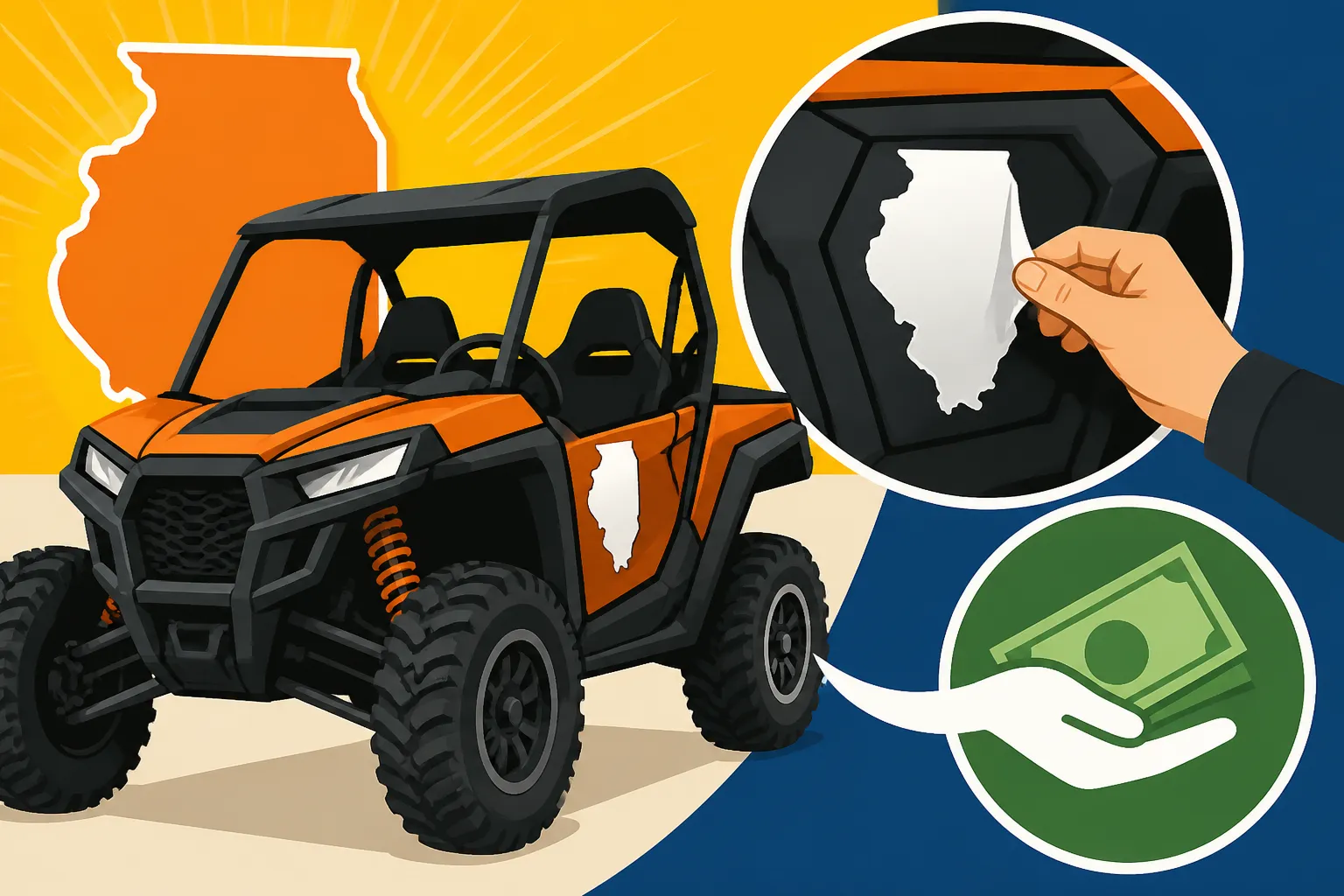
Illinois has a Public Access Decal for off-highway vehicles used at qualifying grant-assisted riding sites. Rental fleets have a specific decal category, with a listed fee of $17 per machine. The decal is associated with the vehicle, so a fleet should plan for each eligible machine that needs one rather than buying a single decal to cover all its rentals.
The decal is not a general permission slip for every trail, park, or piece of public land in Illinois. It does not create access where riding is prohibited, and it does not replace a site’s own entry requirements. A grant-assisted site may have its own hours, vehicle rules, check-in process, fees, or reservation requirements. Read Illinois Public Access Decal Explained for the distinction between the decal and the access rules at a riding area.
The decal is also different from the Illinois OHV Usage Stamp. The programs serve different purposes, and a renter should not assume that having one means every other requirement has been met. The basic comparison is:
| Item | What it relates to | What it does not automatically provide |
|---|---|---|
| Rental Public Access Decal | A qualifying rental machine’s access decal for grant-assisted riding sites | Admission to every park or permission to ride anywhere |
| OHV Usage Stamp | The state usage-stamp program for off-highway machines | A reservation, site pass, or guarantee that a trail is open |
| Riding-site permit or admission | A particular site’s entry and operating rules | Statewide permission to ride other places |
For more on the other program, see Illinois OHV Usage Stamp Explained. When the rules for a trip are not obvious, check Illinois Stamp and Decal Together rather than treating the two stickers as interchangeable.
The fee is per machine, not per rental
A fleet’s decal cost is tied to the number of machines that require decals, not how many times those machines are rented. If the listed $17 fee applies, a fleet of 10 eligible machines would budget $170 for those decals; 25 would budget $425. Those totals are just the per-machine amount multiplied by the fleet size. They do not include any separate site admission, rental, maintenance, or administrative costs.
This distinction matters for both businesses and customers. A renter does not normally need to buy a new fleet decal for each outing when using a machine that already has the appropriate decal. Conversely, a company should not assume one decal covers several vehicles just because they are rented by the same business. The practical rule is One Decal Per Machine: verify that the specific vehicle being sent out has the required decal for the intended use.
Fees and program instructions can change. Before budgeting or purchasing, confirm the current rental decal amount, eligibility, validity period, and application process with an official Illinois source or an authorized vendor. The $17 figure is useful for understanding the per-machine structure, but it should not be treated as a substitute for checking current instructions.
A decal is not a site ticket
Even when the machine carries the right decal, the rider may still need to satisfy the riding area’s admission process. A site could require advance registration, a separate permit, a signed waiver, check-in, or other conditions. A decal does not reserve a riding day or guarantee space at a site with a capacity limit.
Likewise, having a site ticket does not necessarily settle every state decal or stamp requirement. Before a trip, check both the site’s rules and the machine’s paperwork. Illinois Grant Site Rules for Riders covers the kinds of requirements that may apply at a grant-assisted area.
Which Machines and Trips Need Fleet Decals
The rental category is for qualifying rental machines, not simply any vehicle owned by a business. A company should verify that its machines and intended use fit the program’s current definition before ordering decals. The fact that an ATV or UTV is available for rent does not, by itself, prove that a particular decal category applies.
The key question is where the machine will be ridden. If customers may take it to a grant-assisted site, the company should determine what the site and Illinois program require for that machine. If the vehicle is used only on private land, on a closed course, or in another setting, the applicable requirements may differ. Don’t assume the same sticker rules apply to every kind of off-road property.
A fleet with varied vehicles should also avoid treating all units as identical for compliance purposes. ATVs, side-by-sides, youth machines, and other off-highway vehicles may have different operating limitations or site rules. Confirm the requirements for the actual machine and intended destination. [Illinois Permit for a Rented Machine] is useful for understanding the renter’s side of that question.
The decal follows the machine
Because the rental decal is assigned per machine, fleet operators should manage it as part of each vehicle’s records. If a customer switches from one unit to another, the decal on the original machine does not transfer to the replacement. The replacement vehicle needs to meet the requirements for its own use.
That point is easy to miss when a business dispatches machines from several locations or moves vehicles between a rental fleet and a sales inventory. Keep the unit’s identifying information and decal status together. Before handing over keys, staff should be able to verify that the decal belongs on the machine being released and that it remains valid for the planned trip.
A decal that is attached to one ATV should not be treated as a spare for another ATV. If a decal is lost, damaged, or becomes unreadable, the business should check the replacement process rather than copying, moving, or improvising a substitute. See Illinois Decal Replacement If Lost for the related issue.
The decal does not open every gate
A customer may hear that a machine is “decal-ready” and understand that as a promise of access. That wording can be misleading if the customer has not checked the destination. The decal addresses one part of the rules. It does not override closures, trail restrictions, capacity limits, age rules, equipment standards, or private-property boundaries.
Before advertising a route or rental package, a business should make clear what the decal covers and what the customer must arrange separately. If a site requires a booking or admission payment, tell customers that directly. If a site’s eligibility is uncertain, ask the site operator or program contact before recommending it.
That approach helps avoid a frustrating situation: a customer arrives with a correctly decaled rental but cannot ride because the site is closed, full, or requires a separate reservation. For broader sticker distinctions, What the Stamp Covers and What the Decal Covers explains why having one credential should not be mistaken for having all permissions.
Who Buys the Decal and What Renters Should Check
For a rental fleet, the business is generally the party that manages the machine’s decal. The customer rents the vehicle; the customer does not normally purchase a separate fleet decal for each rental. Still, a renter should not rely on an assumption. Ask the rental provider whether the machine is equipped for the intended destination and whether any separate customer permit, site booking, or admission payment is required.
This is especially important when a rental includes delivery to a trailhead, when the customer plans to ride at a particular grant-assisted site, or when the rental agreement limits where the machine may go. Rental contracts can restrict routes for safety, insurance, property, or equipment reasons. A state decal does not cancel those contract terms.
For a quick check before departure, ask the rental provider:
- Is this specific machine equipped with the required rental decal for the place I plan to ride?
- Does the riding area require a separate reservation, admission payment, or permit?
- Are there restrictions on which trails or sites this rental may use?
- Do I need to carry proof of the rental or any machine documents?
- What should I do if the decal is missing, damaged, or difficult to read?
The question of who pays for a decal is not the same as who has to comply with site rules. The business may handle the vehicle decal, while the renter remains responsible for following the riding area’s instructions and staying within the rental agreement. Who Buys the Decal on a Rented Quad addresses that split in more detail.
Check the actual machine at pickup
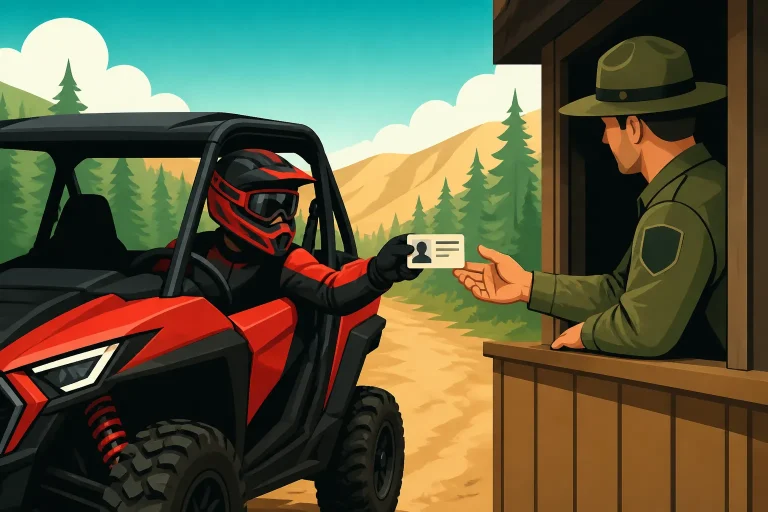
Before leaving the rental location, take a moment to confirm that the machine you received is the one described in the rental paperwork and that its decal is present and legible. If staff tell you that the decal is on another vehicle or will be provided later, ask for a clear explanation before hauling or riding the machine.
Do not remove or reposition a decal yourself unless the provider or official instructions tell you to. If it appears loose, obscured, or damaged, raise the issue with the rental company. A quick check at pickup is easier than trying to resolve a compliance question at a trailhead.
The decal’s required placement matters too. Fleet staff should follow the official placement instructions and keep the sticker visible as directed. Customers should avoid covering it with accessories, cargo, mud flaps, or other equipment. If the placement is not obvious, ask the business to confirm it rather than guessing.
Confirm requirements for the destination
A decal does not make a machine legal on every road, trail, or public parcel. In particular, street use and off-road site access are separate questions. A machine rented for trail riding should not be taken onto a public road unless that use is allowed and the vehicle and rider meet the applicable requirements. A site’s operating rules may also limit vehicle types or routes.
Before setting out, check the riding location’s current information. Confirm that it is open, that the machine is allowed, and that the renter has any required booking or admission. If the plan changes, check the new destination rather than assuming the original decal or permit covers it.
How Rental Fleets Can Manage Decals
For a rental operator, the easiest way to avoid confusion is to treat decal tracking as part of routine fleet administration. Keep a record for each machine, including its identifying information, decal status, purchase or renewal records, and any notes about approved use. The record should make it easy for staff to answer whether a particular unit is ready for a planned rental.
A simple release checklist can include:
- Confirm the vehicle’s identity against the rental agreement.
- Check that its decal is present, readable, and placed as instructed.
- Confirm that any required decal or stamp remains valid for the planned use.
- Review the customer’s destination and any site-specific requirements.
- Explain restrictions, separate admission requirements, and what to do if plans change.
This is more reliable than storing decals or paperwork in a shared drawer and expecting staff to remember which item belongs to which unit. It also helps when a machine is repaired, replaced, transferred between locations, or taken out of the rental fleet.
Budget by eligible vehicle count
Because the fee is per machine, fleet planning starts with an accurate inventory. Count the machines that need the rental decal for the planned season or program period, then verify which vehicles qualify and how the current validity period works. Avoid ordering only for the number of units you expect to rent on a typical weekend; a different machine may be sent out when the usual unit is down for maintenance.
Using the listed $17 amount as a planning example, a fleet of 10 machines would have a decal line of $170, while a fleet of 25 would have a line of $425. If a business operates more than one location, tally units by vehicle rather than by branch. Reconcile that count against machines actually available for rental so that a vehicle is not overlooked or counted twice.
The decal is only one piece of the business’s operating costs. Site admission, insurance, maintenance, cleaning, transportation, and customer support are separate considerations. Do not present the decal fee as though it were the total cost of making a rental trip possible.
Build renewal checks into the calendar
The business should confirm when its decals expire and when renewal or replacement is required. Do not infer the validity period from the date a decal was bought, from a prior season’s process, or from a different decal category. Keep the official renewal instructions with the fleet records and set reminders early enough to resolve questions before peak rental periods.
A useful internal process is to review decal status whenever a machine is inspected or prepared for a new operating period. That creates an opportunity to spot a missing sticker, an unclear record, or a vehicle that has changed status. When guidance is unclear, consult an authorized source before sending the unit out. Illinois Rental Decal Pricing provides a focused reference for the rental category, while Questions Worth Asking a Vendor can help frame a follow-up.
Common Mistakes to Avoid
The most common error is treating the decal as a per-rental charge. The listed rental fee is per machine, so repeated bookings of the same properly equipped unit do not mean a new decal must be bought for every customer. The opposite mistake is assuming a single decal covers a fleet. It is associated with the individual machine.
Another frequent misunderstanding is treating the decal as a substitute for all other requirements. It does not automatically include a site reservation, admission, or permission to ride on any public land. A renter should confirm the destination and any separate rules before departure.
Businesses and customers should also avoid relying on vague verbal assurances when a simple check can resolve the issue. “The company has decals” does not confirm that the particular machine being rented has the required decal. “The site accepts decals” does not establish that the site is open or that a customer can arrive without booking. Ask about the vehicle and the destination specifically.
Finally, don’t move, alter, or duplicate a decal to make another vehicle appear compliant. If a sticker is missing or damaged, use the official replacement process and check whether the machine can be used while the issue is resolved. Keep the rental customer informed so they can adjust plans before driving to a riding area.
Frequently Asked Questions
Is the $17 fee charged for each rental?
No. The listed rental decal fee is per machine, not per customer or individual booking. Confirm the current fee and program terms before purchase.
Does a rental customer need to buy the fleet decal?
Typically, the rental business manages the decal for its vehicle. A renter should still confirm that the specific machine is properly equipped and ask about any separate site permit or admission requirement.
Does the decal let a rental machine ride anywhere in Illinois?
No. It applies to qualifying program use and does not create universal access. The site must allow the machine, be open, and accept any required reservations or other permissions.
Can one decal be moved between machines?
Do not assume it can. The decal is managed per machine. If a vehicle is replaced or a decal is lost or damaged, check the official instructions before making a change.
Disclaimer
This article is for general informational purposes only and does not constitute professional advice. Laws, prices and regulations vary by location and change over time. Consult a qualified professional for guidance on your specific situation.