Illinois OHV Usage Stamp Explained
Understanding the ins and outs of Illinois's off-highway vehicle (OHV) rules can feel like navigating a maze, and one of the most common points of confusion often revolves around the Illinois OHV Usage Stamp. You might be scratching your head, wondering if it's yet another fee, another sticker to worry about, or if it truly applies to how you ride. This guide is here to untangle the complexities of the Usage Stamp, explaining exactly what it is, who needs it, how to get one, and how it fits into the larger picture of enjoying your ATV or UTV responsibly in the Prairie State.
What Exactly Is the Illinois OHV Usage Stamp?
When you’re gearing up for a ride on your ATV or UTV in Illinois, you might think your title or even registration (if your machine is street legal in certain towns) covers everything. However, Illinois has a specific requirement for most off-road machines used on public or grant-assisted lands: the OHV Usage Stamp. It’s a small adhesive sticker, but it plays a big role in accessing trails and staying compliant with state regulations.
The Core Purpose Behind the Stamp
At its heart, the Illinois OHV Usage Stamp is a funding mechanism. It’s designed to generate revenue specifically for the improvement and maintenance of OHV trails and riding areas throughout the state. Think of it as your contribution to keeping those trails open, safe, and enjoyable for everyone. The money collected from these stamps goes directly into a dedicated fund that supports projects like trail development, signage, erosion control, and safety initiatives. This ensures that the beautiful natural spaces where you love to ride are preserved and enhanced for future generations of riders.
It's a common frustration to feel like there's always another fee or sticker, but this particular one has a clear, direct benefit back to the riding community. Without this funding, many of the trails and facilities that we all enjoy simply wouldn't exist or wouldn't be maintained to the standards we expect. It's a way for riders to collectively invest in their passion. Understanding [Where the Stamp Money Goes] can help clarify its importance beyond just being a mandatory sticker.
A Historical Perspective: When Did the Stamp Become Necessary?
The Illinois OHV Usage Stamp wasn't always a requirement. Like many regulations concerning recreational vehicles, it evolved over time as the popularity of ATVs, UTVs, and dirt bikes surged. In the early days, fewer designated riding areas existed, and regulations were less comprehensive. However, as more people discovered the thrill of off-road riding, the need for managed access, environmental protection, and dedicated funding became apparent.
The state recognized that for OHV recreation to be sustainable and grow, a dedicated source of funding was essential. While [Illinois Titles Required Since 1998] for off-road vehicles, the Usage Stamp came into play separately to specifically address the funding of riding opportunities. Its introduction marked a shift towards a more structured approach to OHV management, acknowledging the impact of these vehicles on natural resources and the need for organized trail systems. This move helped ensure that as rider numbers increased, so too did the resources available to maintain a high-quality riding experience across Illinois.
Who Needs to Get an Illinois OHV Usage Stamp?
This is where the rubber meets the trail, so to speak, and it’s critical to understand whether you need this stamp or not. The rules aren't always straightforward, and making assumptions can lead to unwanted penalties. Generally speaking, if you plan to ride your off-highway vehicle anywhere other than your own private property, you likely need a Usage Stamp.
Understanding the General Requirement
The Illinois OHV Usage Stamp is required for any off-highway vehicle operated on public lands or lands that have received grants from the Illinois Department of Natural Resources (IDNR) for OHV trail development or maintenance. This includes state parks, some county parks, and designated riding areas that benefit from state funding. It's easy to assume that if you've gone through the process of getting an Illinois title for your ATV or UTV, you're all set. However, Illinois operates on a "title only" system for most OHVs, meaning there's no statewide registration in the traditional sense, like for cars or boats. So, while you need a title, that doesn't automatically grant you access to public trails. [Do You Need to Register an ATV in Illinois?] The answer for general purposes is no, but the Usage Stamp acts as your permission slip for state-funded riding areas.
This applies equally to Illinois residents and visitors from out of state. While your home state's registration might be valid for titling purposes, it doesn't exempt you from Illinois's Usage Stamp requirement if you're riding on qualifying land within Illinois borders. A visiting rider needs to purchase the stamp just like an Illinois resident. Understanding [Illinois Stamp Rules for a Visitor] is crucial before you haul your machine across state lines for a weekend adventure. Don't let a misunderstanding about state lines spoil your trip; always check the local requirements for where you plan to ride.
Key Exemptions to the Usage Stamp Rule
While the general rule is to get the stamp for public or grant-assisted lands, there are a few important exceptions that can save you both money and a headache. Knowing these exemptions can prevent you from purchasing a stamp you don't actually need or, conversely, from assuming you're exempt when you're not.
The most common exemption applies if you ride your OHV exclusively on your own private property, or on private property with the express permission of the landowner, and you never operate it on any public road, trail, or grant-assisted land. If your quad never leaves your farm or your large backyard, then you generally don't need the stamp. [Machines Ridden Only on Your Own Yard Skip the Stamp]. This is a significant exemption for many rural landowners or those with substantial private acreage. It’s important to note that “private property” means truly private land, not an open field adjacent to a public trail without specific, documented permission. If you do ride on private land with permission, having a written agreement can save a lot of headaches if questions arise. Resources like LawDepot offer templates for landowner permission forms that can be easily customized to document these arrangements.
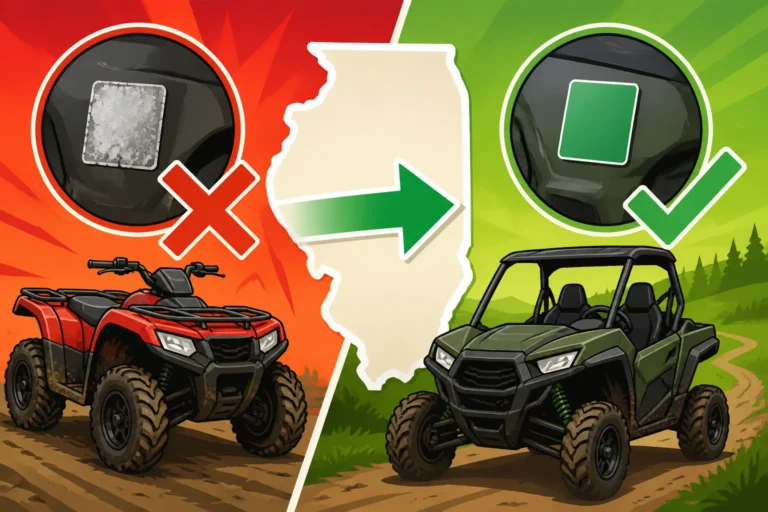
Another critical exemption comes into play if your OHV already displays a valid Illinois Public Access Decal. This is where it gets a little tricky, as these two stickers serve different, yet sometimes overlapping, purposes. Essentially, if you have the Public Access Decal, you do not need the Usage Stamp. The Decal covers access to all IDNR-designated public OHV sites, including Sahara Woods and the various grant-assisted riding areas. In this scenario, [Two Stickers That Cancel Each Other] – you only need one or the other, not both. The Public Access Decal essentially supersedes the Usage Stamp for the specific sites it covers. We'll dive deeper into the differences between the stamp and the decal later, but for now, remember that having the Decal means you skip the Stamp for grant sites.
Finally, certain types of machines or specific uses are also exempt. This typically includes machines used for agricultural purposes strictly on farmland, machines owned and operated by governmental agencies, or machines used exclusively for competition on a closed course. For instance, if your side-by-side is used solely for tending livestock or hauling feed on your farm, it falls under the [Illinois Farm and Livestock Exemption] and wouldn't require a Usage Stamp. However, if that same farm machine occasionally gets taken to a public trail for recreational riding, the exemption no longer applies, and a stamp would be necessary. Always consider your primary use and where you intend to ride when determining your need for the stamp.
When and How to Acquire Your Illinois OHV Usage Stamp
Once you've determined that you need an Illinois OHV Usage Stamp, the next logical steps are understanding the timing and the process for getting one. It's an annual requirement, and missing the renewal date can throw a wrench into your riding plans, especially if you get caught out on the trails without a current stamp.
The Annual Renewal Cycle and Key Dates
The Illinois OHV Usage Stamp operates on a fixed annual cycle, which is important to remember. All stamps expire on March 31st of each year, regardless of when you purchased them during the preceding year. The new usage year then begins on April 1st. This means that if you purchase a stamp on, say, December 1st, it will still expire on the following March 31st, giving you only four months of use. This fixed expiry date is why [Illinois Usage Stamps Expire March 31] is a crucial piece of information for all riders.
It's highly advisable to renew your stamp before April 1st, especially if you plan on riding early in the spring season. Many riders, eager to hit the trails as soon as the weather breaks, have found themselves non-compliant simply because they forgot about the March 31st deadline. Imagine planning a spring break trip to a riding area only to realize at the gate that your stamp is expired. This scenario highlights why proactive renewal is key. The state doesn't prorate the stamp price, so whether you buy it in April or February, the cost is the same, but the validity period differs. This can sometimes lead to frustration, for example, if you're [Buying a Stamp in February and Losing It in March] – that stamp will only be valid for a very short period until the new season begins.
Purchasing Your Stamp: Options and Process
Acquiring your Illinois OHV Usage Stamp is a relatively simple process, designed to be accessible to riders across the state. Unlike some more complex permits, you have several convenient options for purchase.
The most common way to get your stamp is through authorized [Illinois DNR Direct Vendors]. These vendors are typically local businesses that cater to outdoor enthusiasts, such as bait and tackle shops, sporting goods stores, some hardware stores, and even certain county clerk offices. They are equipped to issue the stamp on the spot, allowing you to walk in, make your purchase, and leave with your sticker ready to affix to your machine. To find a location near you, the IDNR usually provides a search tool on their website, making [Finding a DNR Direct Vendor That Sells Stamps] relatively easy. It’s always a good idea to call ahead to confirm their hours and ensure they have stamps in stock, especially during peak riding season or close to the renewal deadline.
When purchasing your stamp, you'll need to provide some basic information about yourself and your off-highway vehicle, including your name, address, and the machine's Vehicle Identification Number (VIN). This information helps the state track compliance and ensures that the stamp is correctly associated with your specific OHV. The cost of the stamp is fixed: [Illinois Charges $15 for a Usage Stamp]. However, be aware that there's also a small administrative charge. [Illinois Adds a 50 Cent Issuance Fee] to the total, so you should expect to pay $15.50 for your stamp. While minor, this additional fee is often overlooked by riders planning their budget for annual expenses.
Where to Affix Your Illinois OHV Usage Stamp
Once you have that little sticker in hand, knowing exactly where to put it on your ATV or UTV is crucial. It's not just about slapping it anywhere; there are specific rules about placement to ensure compliance and avoid potential issues during trailside inspections. Proper placement is just as important as having the stamp itself.
The Official Placement Requirements
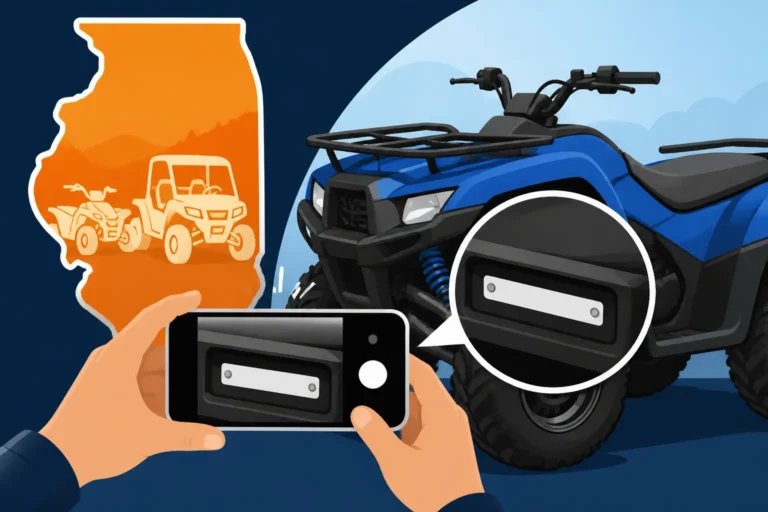
Illinois regulations are quite clear about where the OHV Usage Stamp must be displayed. It needs to be affixed to the forward half of your machine, in a prominent and clearly visible location. Specifically, the rule states [Illinois Stamps on the Forward Half] of the OHV. This means somewhere on the front fender, the handlebars, the frame near the front, or the front cowl of a side-by-side. The key is visibility. It must be easily seen and read by a conservation officer or park ranger without them having to search for it or ask you to point it out.
The rationale behind such specific placement is purely practical for enforcement. Conservation officers conduct routine checks at trailheads and out on the trails themselves to ensure riders are compliant with all state regulations. Having the stamp in a consistent, visible location makes these inspections quick and efficient. It allows them to verify your compliance at a glance, minimizing interruptions to your ride. Imagine a conservation officer having to stop every rider and search their machine for a hidden sticker – it would create unnecessary delays and frustration for everyone. Proper placement demonstrates that you understand and respect the rules, making your interaction with enforcement personnel much smoother. [What a Conservation Officer Can Ask to See] often includes this stamp, among other documents.
To ensure secure placement, clean the area thoroughly before applying the sticker. Make sure it's free of dirt, mud, grease, and moisture. Apply the sticker firmly, smoothing out any air bubbles, to prevent it from peeling off during rides, especially in muddy or wet conditions. Losing a stamp on the trail not only means you're no longer compliant but also that you'll have to go through the hassle and cost of obtaining a replacement.
Common Placement Mistakes and How to Avoid Them
Despite the clear guidelines, many riders inadvertently make mistakes when placing their Usage Stamp. These errors, though often unintentional, can still lead to warnings or even citations, which nobody wants. Understanding these common pitfalls can help you ensure your stamp is always correctly displayed.
One frequent mistake is placing the stamp in an obscured location. This could be underneath a fender, on the inside of a storage compartment, or on the rear of the machine. While you might know it's there, if an officer can't easily see it from a reasonable distance, it defeats the purpose of the visibility requirement. Some riders might also place it on removable parts, like a helmet or a rider's jacket, thinking it’s sufficient. However, the stamp is specific to the machine, not the operator. Each off-highway vehicle requires its own stamp, regardless of who is riding it. This means [Whether Each Machine Needs Its Own Usage Stamp] is a resounding yes, and each machine's stamp must be affixed to that machine.
Another common issue arises from poor adhesion, leading to the stamp peeling, fading, or falling off. This can happen if the surface isn't cleaned properly before application or if the stamp is placed on a part of the machine that experiences extreme flexion or heat. While losing a stamp isn't necessarily a violation if you can prove you had one, it's an inconvenience. Officers are looking for a currently valid and properly affixed stamp. To avoid these issues, always choose a flat, clean, and durable surface on the forward half of your ATV or UTV, and apply the stamp carefully. Don't let a simple sticker placement error turn your fun day into a frustrating one with a conservation officer.
Distinguishing the Usage Stamp from Other Illinois OHV Stickers
This is perhaps the most significant area of confusion for Illinois OHV riders. The state has more than one type of sticker for off-highway vehicles, and understanding which one you need, and when, is absolutely essential. Many riders mistakenly believe the Usage Stamp is the only sticker, or that it's interchangeable with the Public Access Decal. Let's clear that up.
Usage Stamp vs. Public Access Decal: A Crucial Difference
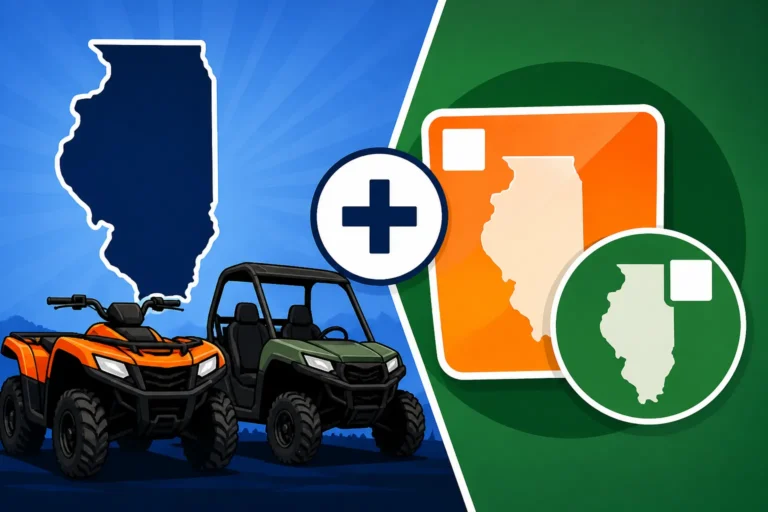
The Illinois OHV Usage Stamp and the Illinois Public Access Decal are two distinct stickers with different purposes, funding mechanisms, and usage rules. It's not uncommon for riders to wonder if [Illinois Stamps and Decals Compared] means they need both, or if one is simply an updated version of the other. The key takeaway is this: for most grant-assisted riding areas, you will need either a Usage Stamp or a Public Access Decal, but not both.
The Usage Stamp, as we've discussed, is a general annual permit that allows your OHV to be operated on public or grant-assisted lands. Its primary function is to provide broad funding for OHV programs across the state. The Public Access Decal, on the other hand, is specifically designed for use at the state's designated OHV recreation areas, such as Sahara Woods State OHV Park and other grant-assisted sites. Its purpose is to specifically fund the operation and maintenance of those particular sites.
Here's the crucial point: if your machine displays a valid Illinois Public Access Decal, you are exempt from needing the Usage Stamp for riding at grant-assisted sites. This is because the Decal fulfills the access requirement for those specific areas, and its purchase already contributes to their funding. It's a classic case of [Why an Access Decal Cancels the Usage Stamp]. You might think you need both, but if you're riding exclusively at designated grant sites, the Decal is what you'll need, and the Stamp becomes redundant. Conversely, if you ride occasionally on other public lands not covered by the Decal, or on private land where a Stamp is still required for certain crossings, you might opt for the Stamp instead. [Illinois Decal Holders Skip the Stamp] is a rule worth remembering.
Comparison of Illinois OHV Usage Stamp and Public Access Decal
| Feature | Illinois OHV Usage Stamp | Illinois Public Access Decal |
|---|---|---|
| Primary Purpose | General OHV program funding & access | Specific funding & access for designated grant-assisted OHV sites |
| Cost (approx.) | $15 (plus 50-cent issuance fee) | $11 (resident), $17 (non-resident/rental/dealer) |
| Annual Validity | April 1 – March 31 | Valid for 12 months from purchase date |
| Where to Buy | DNR Direct Vendors, some online | DNR Direct Vendors, ExploreMoreIL.com |
| Placement | Forward half of the machine, visible | Front and center of the machine, visible |
| Exemptions | Covered by Public Access Decal | N/A (this is the exemption for the stamp at grant sites) |
| Cancellation | Is canceled out by a valid Access Decal for grant sites | Cancels out the need for a Usage Stamp at grant sites |
Other Illinois OHV Stickers You Might Encounter
Beyond the Usage Stamp and the Public Access Decal, you might come across a few other stickers or permits associated with OHVs in Illinois, depending on how and where you ride. While these are less common or serve very specific niches, it’s good to be aware of them to avoid any further confusion.
For example, specific riding parks, particularly private ones or even state-run ones like Sahara Woods, might have their own daily or annual [Illinois Sahara Woods Permits] that are required in addition to (or sometimes in place of, depending on the site's agreement with the state) the state-issued stickers. These park-specific permits often cover the day-to-day operational costs of the facility, separate from the broader funding streams of the Usage Stamp or Access Decal. Always check with the specific park you plan to visit to understand their individual permit requirements before you tow your machine all the way there.
Additionally, there are specialized decals for certain entities. For instance, rental fleets or OHV dealers in Illinois have their own specific decals. A [Illinois Rental Decal Pricing] is different than a general resident decal, reflecting the commercial nature of their operations. Similarly, [Illinois Dealer Decal Pricing] applies to businesses that sell or manufacture OHVs. These aren't something the average recreational rider would typically need but are part of the comprehensive sticker system in the state. Remember, when it comes to stickers for your machine, the general rule is [One Decal Per Machine], meaning each individual ATV or UTV must have its own valid and appropriately affixed sticker, whether it's a Usage Stamp, an Access Decal, or a specific park permit.
The Financial Side of the Illinois OHV Usage Stamp
Let’s be honest, anytime you talk about regulations, money usually isn’t far behind. The Illinois OHV Usage Stamp is no exception. While it’s not a huge expense, it’s a mandatory one for many riders, and it’s important to understand what you’re paying for and how it fits into your overall OHV budget.
Breaking Down the Cost
The base cost for an Illinois OHV Usage Stamp is quite modest. As previously mentioned, [Illinois Charges $15 for a Usage Stamp]. This $15 is the statutory fee set by the state for the permit itself. However, it's not the only figure you'll see on your receipt. There's an additional, smaller charge that many people overlook until they're at the counter.
On top of the $15 fee, the state tacks on a 50-cent issuance fee. This means the actual total you'll pay for your stamp is $15.50. While 50 cents might seem negligible, it’s part of [The 50-Cent Issuance Fee on Top of $15] that ensures the administrative costs of distributing and processing these stamps are covered. It's a small charge, but it's part of the complete financial picture. All the revenue collected from these stamps, including the base fee, goes into the Off-Highway Vehicle Trails Fund, as discussed in [Where the Stamp Money Goes]. This fund is then specifically allocated to support the development, maintenance, and safe operation of OHV trails and riding areas throughout Illinois, directly benefiting the riding community.
Budgeting for Your Annual OHV Expenses
For new OHV owners, or those just moving to Illinois, it's easy to focus on the big-ticket items like the machine itself, gear, and fuel. However, overlooking the smaller, recurring annual costs can lead to unexpected hits to your wallet. The Illinois OHV Usage Stamp, while inexpensive, is just one piece of a broader financial puzzle when owning and operating an ATV or UTV.
Thinking about [Illinois OHV Usage Stamp in Your Budget] is a good start, but savvy riders also factor in other annual expenses. If you plan to ride at designated state parks or grant-assisted sites, you'll also need to consider the [Illinois Access Decal in Your Budget] (if you choose that over the Usage Stamp). For specific parks, especially during peak season, you might also have to budget for [Illinois Park Permits in Your Budget], which are daily or seasonal passes for entry. These might seem like small individual costs, but they add up quickly over a riding season, particularly if you visit multiple locations or have multiple machines.
Beyond permits, don't forget the initial cost of getting your machine legally set up in Illinois, which includes the [Illinois ATV Title Cost] of $30. While not an annual fee, it's a one-time expense during ownership transfer. And of course, there's always insurance. [Illinois ATV Insurance Costs] can vary widely based on your machine, riding habits, and desired coverage, but it's an annual expense that can't be ignored, especially if you plan to finance your machine or ride on public roads where insurance is mandated. These are all part of [What Illinois Owners Forget to Budget For] when first entering the world of OHV riding, and proactive budgeting can prevent future financial surprises.
Maintaining Compliance and Avoiding Penalties
Having the Illinois OHV Usage Stamp is one thing; making sure it's current and properly displayed to avoid penalties is another. Nobody wants to deal with a fine or have their riding day cut short because of an easily avoidable mistake. Staying compliant means understanding the rules around renewal, replacement, and enforcement.
Staying Current with Renewals
As we’ve established, the Illinois OHV Usage Stamp operates on an annual cycle, with all stamps expiring on March 31st. This means that [Illinois Usage Stamp Renewal Each Spring] is a non-negotiable part of responsible OHV ownership in Illinois. Forgetting this date is a common oversight that can lead to unnecessary hassle. It's a good practice to set a recurring reminder on your phone or calendar for early March each year, giving you ample time to purchase your new stamp before the old one expires on March 31st.
If your stamp is lost, damaged, or stolen, you'll need to obtain a replacement. Unfortunately, the state does not offer free replacements, and you'll typically have to purchase a new stamp at the full price. This makes secure application and careful handling important. If you find yourself in this situation, the process for [Illinois Stamp Replacement If Lost] is the same as purchasing a new one: visit a DNR Direct Vendor, provide your machine's VIN, and pay the $15.50 fee. While it's frustrating to pay again for something you already had, it's necessary to remain compliant and avoid more significant penalties. Keeping a clear record of your purchase, like a receipt, might offer some temporary proof if you lose the physical sticker, but the expectation is that the sticker itself is affixed to the machine.
Understanding Penalties for Non-Compliance
Operating an OHV on public or grant-assisted lands without a valid and properly displayed Illinois OHV Usage Stamp (or an appropriate exemption, like the Public Access Decal) can lead to penalties. Conservation officers and park rangers are authorized to enforce these regulations, and they frequently patrol riding areas. The penalties for non-compliance are typically monetary fines, and they can vary depending on the specific violation and the discretion of the enforcing officer. [Illinois Penalties for No Stamp] can be substantial enough to significantly dampen your riding experience.
When you're out on the trail, a conservation officer might ask to see your usage stamp, along with proof of ownership for your machine. It’s important to be cooperative and have your documents readily accessible. [What a Conservation Officer Can Ask to See] includes proof of title, your valid stamp or decal, and potentially a form of identification. If you don't have the required stamp, you could be issued a citation. The person responsible for the machine, typically the operator, is usually the one who [Who Writes the Ticket at a Grant Site]. These fines are not trivial and are designed to encourage compliance.
Beyond the monetary fine, being caught without a valid stamp could lead to your machine being impounded or you being asked to remove your OHV from the riding area, ending your day prematurely. To avoid such scenarios, always ensure your stamp is current, correctly affixed, and that you have any necessary supporting documentation, such as proof of title or even a written landowner permission form, which you can find templates for on sites like LawDepot, if you're riding on private land. Being prepared is the best defense against unexpected penalties and helps ensure your enjoyment of Illinois's riding opportunities remains uninterrupted.
Common Questions and Misconceptions About the Illinois Usage Stamp
Even after diving deep into the rules, some questions about the Illinois OHV Usage Stamp seem to pop up repeatedly. It's a complex system, and myths can quickly spread among riders. Let's tackle some of these common concerns and clear up any lingering confusion.
Clarifying Frequent Rider Concerns
One of the most frequently asked questions is, "Do I need a separate Usage Stamp for every OHV I own?" The answer is unequivocally yes. The Illinois OHV Usage Stamp is specific to the machine, not the owner. So, if you have an ATV and a UTV, each one will require its own separate stamp if they are both used on public or grant-assisted lands. This reiterates the point that [Whether Each Machine Needs Its Own Usage Stamp] is not open to interpretation. Each stamp bears a unique number tied to a specific VIN, ensuring that each machine contributes to the trail fund.
Another common query is, "What if I only ride a few times a year? Do I still need to buy an annual stamp?" Unfortunately, the state does not offer short-term or daily Usage Stamps. If your riding activity, however infrequent, takes place on land that requires the stamp, then you are obligated to purchase the annual stamp, regardless of how many times you actually hit the trails. The system is designed around the annual contribution to the OHV fund, not prorated usage.
Some riders might also wonder if their hunting license or fishing license covers OHV access. The answer is a clear no. [Your Hunting License Is Not a Riding Permit] for your off-highway vehicle, nor is any other recreational license. The OHV Usage Stamp is a distinct permit specifically for OHV operation and funding, separate from other outdoor activities. While conservation areas might offer both hunting and OHV opportunities, the permits for each activity are managed separately.
Dispelling Common Myths
Several myths persist about the Illinois OHV Usage Stamp, leading to potential non-compliance or confusion. It’s vital to address these directly.
Myth 1: The Usage Stamp grants you permission to ride anywhere. This is a dangerous misconception. The stamp is simply a permit to operate your OHV on designated public or grant-assisted lands that require it. It absolutely does not grant you carte blanche to ride on private property without permission, non-designated public lands, nature preserves, or public roads that are not specifically opened to OHV use by local ordinance. Remember, [The Usage Stamp Opens No Gates by Itself]. You must still adhere to all other local, state, and federal laws regarding trespassing, designated riding areas, and local road ordinances.
Myth 2: Only Illinois residents need to purchase the Usage Stamp. This is incorrect. As discussed earlier, the requirement applies to any OHV operated on qualifying land within Illinois, regardless of the operator's state of residency. Visitors from Indiana, Missouri, Wisconsin, or any other state must purchase an Illinois OHV Usage Stamp or Public Access Decal if they plan to ride on trails requiring it. [Illinois Stamp Rules for a Visitor] are the same as for residents in this regard; the machine's location of use dictates the need for the Illinois stamp.
Myth 3: The Usage Stamp is the same as the Public Access Decal. As thoroughly explained in a previous section, these are distinct stickers with different purposes and costs. While there is an overlap in that one can sometimes exempt you from needing the other for grant sites, they are not interchangeable. Confusing the two can lead to purchasing the wrong sticker or being found non-compliant because you assumed one covered the other in all situations. Always verify which sticker is appropriate for your specific riding plans.
By understanding these clarifications and dispelling common myths, you can navigate Illinois's OHV regulations with confidence and enjoy your riding adventures without unnecessary worry or penalties.
Disclaimer
This article is for general informational purposes only and does not constitute professional advice. Laws, prices and regulations vary by location and change over time. Consult a qualified professional for guidance on your specific situation.