Do You Get a Refund When Rain Closes the Gate?
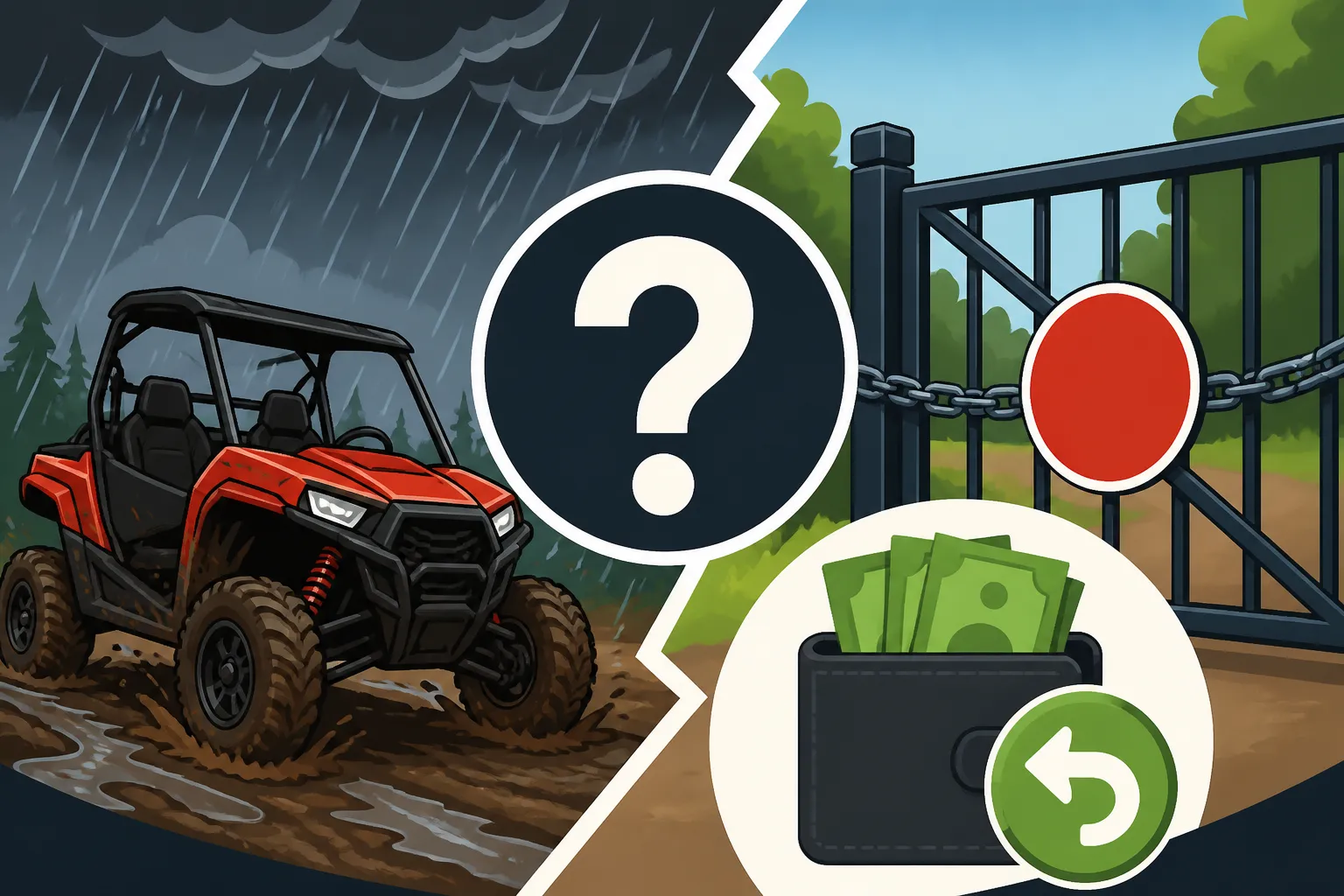
A rain closure can turn a paid ATV or UTV day into a frustrating drive home—or a question about money you may not get back. In Illinois, there is no single refund rule for every riding area. Your options depend on who runs the site, what you bought, and the operator’s posted weather policy.
Why a Rain Closure Does Not Guarantee a Refund
Illinois riding areas are run by different operators. A state OHV site, county park, club-run area, and private park may each set its own rules for reservations, admission, and weather closures. A closure because of unsafe trail conditions does not automatically mean every rider is entitled to a refund.
The first thing to check is what your payment covered. A day permit or admission reservation is different from a seasonal usage stamp or public access decal. The stamp and decal serve specific purposes; neither is a reservation for a particular riding day. If a park closes, ask the operator about the payment tied to that park visit, rather than assuming a separate stamp or decal will be refunded. For the distinction between the two Illinois stickers, see Illinois Usage Stamp vs Access Decal.
A weather closure can also mean different things in practice. The operator might close the entire site, close only some trails, delay opening, or let riders decide whether to continue. These situations may be treated differently under the site’s policy. A full closure announced by the operator is not the same as a rider choosing not to travel because rain is forecast.
| Situation | What to check | Practical next step |
|---|---|---|
| The operator closes the site before your reserved day | The booking terms for weather closures, refunds, and credits | Save the closure notice and contact the operator |
| Some trails close, but the site remains open | Whether your admission still allows use of open trails | Ask which areas remain rideable before unloading |
| The site opens late or closes early | Whether the policy covers partial-day access | Record the posted hours and ask how the operator handles lost riding time |
| You stay home because rain is forecast, but the site stays open | The cancellation or transfer deadline | Contact the operator before the deadline, if one applies |
| You paid for a seasonal stamp or decal | The rules for that specific permit | Do not assume it works like a day reservation |
The operator’s written terms matter more than a general expectation that rain should qualify for a refund. Some sites may offer a credit or date change when they close; others may make payments nonrefundable or handle each closure individually. Even if another park has a generous policy, it does not set the rule for the place you booked.
For a state OHV site, review the booking details and any notices issued for your reserved date. Illinois Sahara Woods Permits explains the permit context, while Illinois Waivers Signed Before You Ride covers another part of the check-in process. A waiver and a refund policy are not the same thing, so read the payment and cancellation terms separately.
At private parks and club-run areas, look for the operator’s own reservation conditions. Start with Illinois Private Off-Road Parks or Illinois Grant-Assisted Riding Areas if you are still sorting out what kind of site you plan to visit. The organization running the property is usually the best place to confirm whether a weather closure results in a refund, a credit, or no adjustment.
What to Do When the Gate Closes
When a gate is closed, focus first on confirming what happened and keeping a clear record. A closure sign, an announcement on the site’s official page, or a message from the park can help establish whether the operator closed the facility or whether you simply could not use the trails you expected.
Confirm the closure directly
Check the operator’s official communication channels before you start the drive, if possible. If the closure is announced after you arrive, take a photo of the posted notice and note the date and time. If the gate is closed without an explanation, call or message the operator using the contact details shown in your booking confirmation or on its official materials.
Do not rely only on a weather app or a social media comment from another rider. Rain can affect different parts of a property differently, and the operator may keep some areas open while closing others. Illinois Trail Closures After Rain and Illinois Trail Conditions Before You Tow offer useful context for checking conditions before a trip.
Gather your booking details
Have the information ready when you contact the site. This makes it easier for staff to locate the transaction and explain the applicable policy.
- Reservation or order confirmation
- The date and time you were booked to ride
- The name used for the booking
- The payment method and transaction record
- Any closure notice, gate sign, or message from the operator
- A short description of what happened, such as a full closure or a partial trail closure
Ask a specific question: “The site closed on my reserved date because of rain. Does the policy provide a refund, a credit, or a date change?” If only part of the property closed, explain which area was unavailable and ask whether the remaining trails were considered sufficient access under the site’s terms.
Make the request promptly and in writing
If staff explain the policy by phone, follow up through the operator’s preferred written channel. A short email or message lets you keep the answer with the reservation details. Be polite and direct. Include the confirmation number, the closure date, and the remedy you are asking about.
If the operator offers a credit, ask how to use it, whether it has an expiration date, and whether it applies to the same type of booking. If you are offered a new date, confirm that the change is recorded before making travel plans. Do not assume that a verbal promise has transferred the reservation.
If you booked through a third-party service, check whether the operator or the booking service controls changes and refunds. The confirmation should identify where to direct the request. Keep copies of messages from both parties if responsibility is unclear.
How to Avoid Losing the Cost of a Riding Day
A little checking before departure can prevent confusion and make it easier to decide whether a reservation is worth keeping. Weather is unpredictable, but the operator’s cancellation process and communication practices should be easier to confirm.
Read the terms before paying
Look for the policy in the booking flow, confirmation email, or site rules. Search specifically for terms such as weather closure, cancellation, transfer, credit, and partial-day operation. If the terms do not explain what happens when rain shuts the site, contact the operator before booking and ask for a written response.
Do not treat a statement that permits are “nonrefundable” as proof that a weather closure has no exceptions—or assume that a closure automatically creates an exception. Ask what the operator does when it closes the entire property. Also ask how it handles a delayed opening, an early closure, or a limited trail closure.
This is especially important on busy weekends, when you may need to book ahead. Booking Before You Drive Down and Reserving a Riding Day at a State OHV Park can help with planning. A reservation may secure a place on a particular day, but that does not by itself explain how weather changes are handled.
Check conditions again before towing
Check the park’s updates the evening before and again before leaving. If rain is in the forecast, call rather than assuming the site will be open or closed. Ask whether the decision has been made, when the operator expects to make it, and where it will post updates.
If you are driving a long distance, consider asking what time the operator will provide a final status update. That can help you avoid leaving before a closure announcement. If you are traveling with a group, make sure everyone knows who will check the status and communicate any change.
Separate a site closure from other costs
A refund for admission, if available, may not cover travel, lodging, meals, fuel, or equipment expenses. Those costs are usually governed by separate arrangements. If you booked a campsite or cabin near the riding area, check that provider’s cancellation policy too. Do not assume a park closure automatically changes a separate lodging reservation.
Also keep track of which purchases are tied to the specific riding day. A seasonal stamp or access decal is not the same as park admission, and an annual permit may remain subject to its own terms even when a particular trip is lost. The Usage Stamp Opens No Gates by Itself explains why a stamp should not be mistaken for a promise that a specific riding site will be open.
If the operator does not offer a refund or credit, read the booking terms before disputing the charge with your payment provider. A dispute does not replace the site’s process, and the payment provider may ask for the reservation details and the operator’s response. Keep your request factual: state what you purchased, what closure occurred, what the published terms say, and what resolution you are seeking.
The practical takeaway is simple: a rain closure may lead to a refund, credit, or rescheduled visit, but it is not safe to count on any one outcome across Illinois. Confirm the specific site’s policy before paying, check its official updates before traveling, and document what happened if the operator closes the gate.
Disclaimer
This article is for general informational purposes only and does not constitute professional advice. Laws, prices and regulations vary by location and change over time. Consult a qualified professional for guidance on your specific situation.