Generator Hours a Riding Park Sets Overnight
A riding park may allow overnight camping but still limit when you can run a generator. The hours can depend on the park, campground, campsite layout and posted quiet rules—not simply on your riding permit. Before towing to an Illinois riding area, confirm what “generator hours” means there, whether your setup is covered and what you can use after shutdown time.
What generator hours mean at a riding park
Generator hours are the times when a park allows campers to operate portable or built-in generators. They are usually set to limit noise around other campers, but the exact schedule and what counts as a generator are up to the individual park. There is no single schedule you can safely assume applies to every Illinois riding area.
A rule might describe a specific daily operating window, require generators to be off during quiet hours, or restrict them to certain sites. Some parks may distinguish between a generator outside a tent and an RV’s built-in generator. Others may apply the same rule to both. If the wording is unclear, ask the park rather than interpreting it in the way that best suits your setup.
The key distinction is that overnight access does not necessarily mean generators can run overnight. A park can permit campers to stay while requiring generators to be switched off at a set time. It may also set separate rules for check-in, quiet hours, fires, lights and vehicle movement. Read these as separate requirements rather than assuming one permission covers everything.
| What to check | Why it matters |
|---|---|
| Start and stop times | The allowed window may not match your arrival, riding or meal schedule. |
| Which equipment is covered | A rule may include portable units, RV generators, or both. |
| Where generators may run | Some locations may restrict use to designated campsites or areas. |
| Quiet hours | These may apply even if the posted generator window is vague. |
| Exceptions | Medical equipment or other special needs may require advance approval. |
| Enforcement | Ask what staff do when a camper runs a generator outside the allowed hours. |
A generator schedule is usually a campground or park rule, not a permit feature. An Illinois usage stamp or access decal does not, by itself, tell you whether you can camp or run a generator at a particular property. Those stickers serve different purposes; What the Stamp Covers and What the Decal Covers explains why it is useful not to treat riding access as permission for every other activity.
This is especially important when comparing a public riding site with a private off-road park. A site may allow day riding but have no overnight camping. A private park may offer camping but set its own operating and quiet-hour rules. For a broader look at the kinds of places that offer overnight options, see Illinois OHV Camping With Trail Access and Illinois Private Off-Road Parks.
Generator hours are not the same as quiet hours
Quiet hours often cover more than generators. They may also govern loud music, idling vehicles, conversations, power tools or other noise. Conversely, a generator restriction may begin before a park’s general quiet period. Do not assume the terms are interchangeable.
If the posted material says “quiet hours” but does not mention generators, ask whether the generator must be off during that period. If it lists generator hours but says nothing about other noise, ask when the broader quiet period starts. This can prevent a disagreement after you have already unloaded and settled in.
Also ask whether a rule applies to a particular campground section or the whole property. A site near trail facilities might have different conditions from a quieter camping area. A park with RV hookups may treat generator use differently from one where campers rely on portable units.
How to confirm the rule before you travel
Rules can differ from one property to another and may be updated in booking information, posted signs or a park’s current instructions. Confirm the rule for the specific location and date you plan to visit. A rule you heard from another rider may be accurate for a different park, a different section of the same property or a previous visit.
Use a simple check before you load the trailer:
- Identify where you will camp. Confirm that overnight camping is allowed at the riding area and whether it requires a separate reservation or campsite payment.
- Read the current camping rules. Look for generator hours, quiet hours, electrical hookups, fire restrictions and any equipment limits.
- Ask about your exact setup. Say whether you have a portable generator, a built-in RV generator, a battery power station or another source.
- Confirm the time zone and arrival details if relevant. If you expect to arrive late or leave early, make sure the schedule works with those plans.
- Save the answer. Keep the current rules or the park’s written response where you can check it while packing and at check-in.
- Ask again at arrival if signs or staff instructions differ. Follow the current on-site direction and clarify any apparent conflict politely.
When contacting a park, useful questions are specific:
- What hours may a portable generator run?
- Does the rule also cover an RV’s built-in generator?
- Do generator hours differ from quiet hours?
- Are there designated sites where generators are permitted?
- Are there restrictions on generator size, sound or fuel?
- What power options are available after generators must be off?
- Are exceptions possible for medical equipment, and how should I arrange one?
- What happens if a generator is running outside the allowed time?
The details matter because “generator allowed” is not the same as “generator allowed at any time.” If the answer is that generator use is limited, ask whether a battery-powered device or a powered campsite is available. If you need electricity for a medical device, raise that need before booking; do not rely on an informal assumption that staff will make an exception on arrival.
It also helps to confirm what the reservation actually includes. A riding fee, park pass, camping reservation and site-specific rules may be separate parts of the visit. For a private property, review Illinois Private Park Camping Rules. If you are planning to camp at a location with RV facilities, Illinois Riding Areas With RV Sites can help you think through the options, but verify availability and rules directly with the property.
For a grant-assisted site, check the riding rules and facilities rather than assuming it operates like a private campground. Illinois Grant Site Rules for Riders covers the access side; camping and generator permissions still need to be confirmed for the individual location. Likewise, Illinois Private Park Quiet Hours is relevant when you are sorting out how noise restrictions fit around generator use.
Plan power around the shutdown time
Once you know the allowed hours, plan your power use so you are not relying on a generator after it must be off. This is easier than trying to negotiate a rule when the campground is quiet and nearby campers are settling in.
Start with a short list of what genuinely needs power overnight. A phone can often be charged before quiet hours. Some lights, fans and small devices can run from charged batteries. An RV may have house batteries, but their capacity and condition vary; check the equipment instructions and test your setup before the trip. Do not assume that a battery will last through the night just because it worked for a shorter outing.
A practical routine could look like this:
- Charge devices and batteries during permitted generator hours.
- Run only the equipment you need while the generator is on.
- Switch it off before the park’s required cutoff, leaving time to avoid a rushed shutdown.
- Use a safe, independent backup for essential overnight needs.
- Start the generator again only when the permitted period begins.
Avoid running a generator for long periods just because the rules allow it. A smaller load can reduce noise, fuel use and disturbance to neighboring campsites. If you need to power high-draw equipment, check the generator’s instructions and capacity. Overloading a unit or using improvised connections can create electrical and fire hazards.
Ask whether the campground has electric hookups before choosing a site. Hookups can remove the need to run a generator for routine charging, but they may not be available at every site or included in every reservation. Confirm the outlet type and any restrictions before you rely on it. A site listing that mentions RV camping does not automatically mean each site has power.
If you use a portable power station or battery system, distinguish it from a fuel-powered generator when asking about rules. The park may not treat the two devices alike, but do not assume battery equipment is exempt from every restriction. Large inverters, cooling fans, lighting and charging gear can still create noise or safety concerns. Ask the park how its policy applies.
Timing matters for riding plans, too. If you return from the trails close to the generator cutoff, you may not have much time to cook, recharge equipment or prepare for the next day. Pack meals that do not require powered cooking, charge radios and phones before leaving camp, and keep a flashlight or other battery-powered light available. If you are staying several nights, plan charging around each day’s schedule rather than expecting to catch up after quiet hours.
When choosing a campsite, consider the space between your generator and other campers, not only the operating window. A unit that meets the park’s rules can still be intrusive if it is placed close to another tent or directed toward a neighboring site. If the campground has designated generator areas, use them. If you are unsure whether a site is suitable, ask staff before setting up.
Use a generator safely and keep the campsite respectful
Following the schedule is only part of responsible generator use. Safe placement, exhaust direction and fuel handling matter whether you are at a private riding park or another campground. Follow the manufacturer’s instructions and the park’s directions. If the site’s layout makes safe placement difficult, ask staff for guidance rather than improvising.
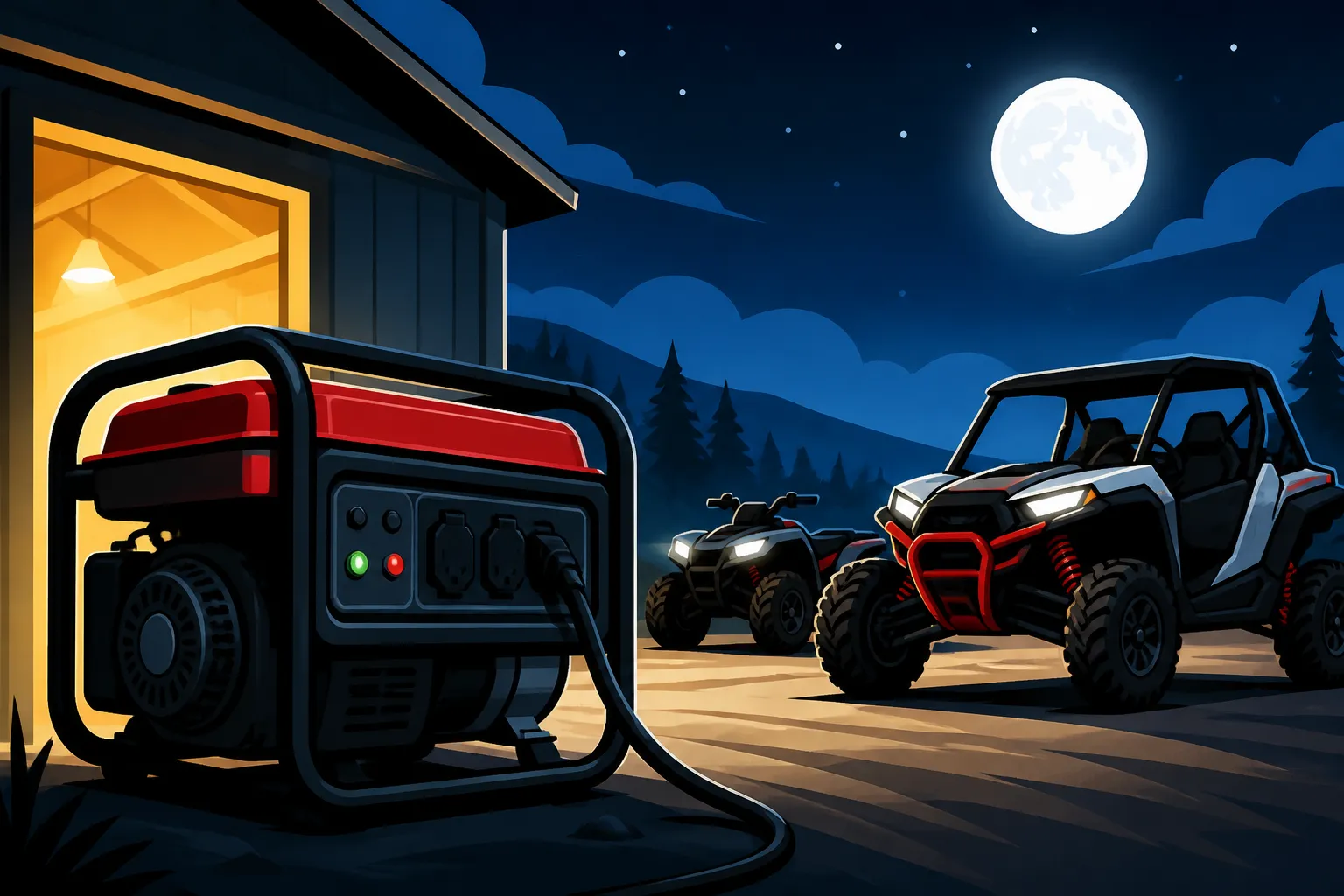
Operate a fuel-powered generator outdoors, away from tents, vehicles, windows, doors and other enclosed spaces. Never run one inside a tent, RV, garage or enclosed trailer, even with a door or window open. Generator exhaust contains carbon monoxide, a dangerous gas that cannot be reliably detected by smell. Keep the exhaust pointed away from people and occupied spaces, and use a working carbon monoxide alarm in sleeping areas where appropriate.
Place the unit on a stable surface in a location where it cannot be bumped by a vehicle or tripping camper. Keep it clear of dry grass, leaves, stored fuel and other combustible material. Let the generator cool before refueling, and store fuel only in appropriate containers in a location permitted by the park. Follow posted fire restrictions; a generator does not make other fire rules irrelevant.
Noise is a safety and neighbor issue as well as a courtesy issue. Use a properly maintained unit, keep it as far from neighboring sleeping areas as the rules and site layout allow, and avoid unnecessary revving or repeated starts. Do not use a makeshift enclosure to muffle sound if it blocks ventilation or creates a fire risk. A quiet-rated model may reduce disturbance, but it does not override the park’s hours or placement rules.
At check-in, take a moment to notice signs and ask staff about any unclear instruction. If a neighbor says your generator is disturbing them, check the park’s rule and make a reasonable adjustment. If the concern is about a formal cutoff or restricted area, contact staff rather than turning a campsite disagreement into a confrontation.
The consequences for breaking a generator rule depend on the property’s policy. Staff may ask you to shut it down, move it or comply with a quiet period; repeated or serious violations may affect your stay. Do not assume every park handles complaints the same way. Read the posted conditions and ask what the process is if you are unsure.
A well-planned overnight stay balances riding, rest and power needs. Confirm the campsite, clarify the generator schedule, charge what you can before cutoff and keep a safe alternative for overnight essentials. If you are comparing locations, include generator rules alongside trail access, camping availability and reservation details. Checking Hours Before a Long Drive is a useful reminder to verify operating details before towing to a riding area.
Disclaimer
This article is for general informational purposes only and does not constitute professional advice. Laws, prices and regulations vary by location and change over time. Consult a qualified professional for guidance on your specific situation.