Checking Hours Before a Long Drive
A long drive to an Illinois riding area can turn into a frustrating day if you arrive to a closed gate, a full reservation list, or hours that changed after rain. Before loading the ATV or UTV, check the site’s operating schedule, booking rules, weather notices, and arrival requirements. This guide lays out a practical routine for confirming the details that maps and old social posts may miss.
Why checking hours takes more than a quick map search
A map listing is a starting point, not a gate confirmation
A map can help you find a riding area and estimate the route, but its listed hours may not tell the whole story. Riding sites can have seasonal schedules, designated operating days, special-event closures, or rules that apply only to certain areas. A listing that says a place is open does not necessarily mean the trails are open to the public that day.
This matters especially when the destination is far from home. A rider leaving from the Chicago suburbs for southern Illinois may spend much of the day driving. If the site has changed its schedule or requires advance registration, discovering that at the gate is an expensive way to learn the rules. Check the riding area’s own website, reservation page, or official social media account, then contact the operator if anything is unclear.
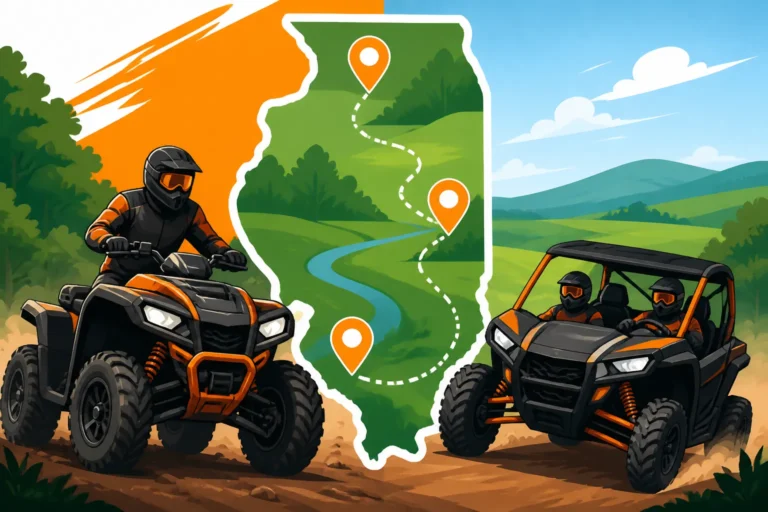
Tools such as onX Offroad can help with route planning and understanding the surrounding area, but a trail map is not an operating-hours notice. Use mapping tools for navigation and context, then confirm access directly with the riding area. That distinction is useful whether you’re heading toward Sahara Woods, a club-run site near Marion, or a private riding park.
Hours can differ by season, weather, and type of visit
A venue may operate on a seasonal schedule rather than keeping the same hours all year. Some areas have fixed opening periods, while private parks and club-run sites may set their schedules around weekends, events, maintenance, or staffing. Even if you rode there last month, do not assume the same hours apply to your next visit.
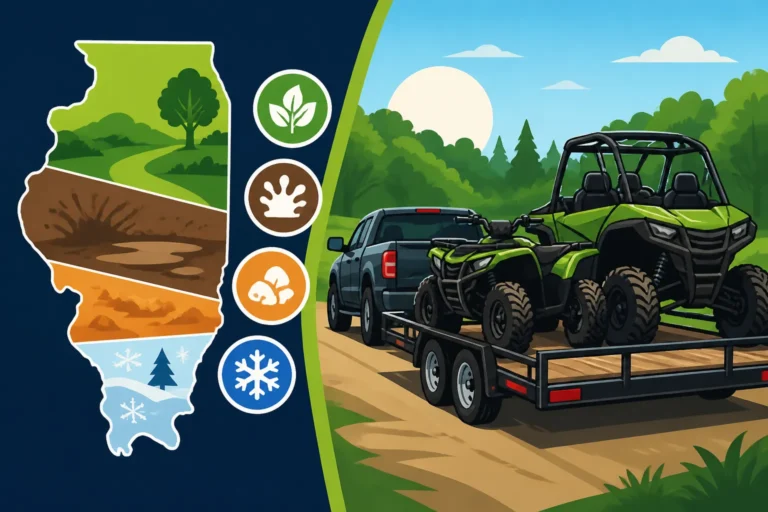
Weather can change the plan, too. Heavy rain may leave trails unsafe or damage the property, prompting a closure or restricted access. A sunny forecast at home does not guarantee good conditions at a site several hours away. Check for a same-day notice before you leave, and ask whether the closure applies to the whole property or only certain trails.
The site’s regular hours also may not be the hours for every activity. Registration, check-in, camping, machine unloading, and trail access can each have different cutoffs. Ask what time you need to arrive to complete required steps and begin riding, rather than relying only on the time the gate opens. For a broader look at planning around seasonal access, see Illinois Riding Season Considerations.
How to confirm a riding area is open
Use a three-step confirmation routine
Start with the operator’s primary source. Look for a current schedule, reservation calendar, closure notice, or event announcement on the site’s official page. If information appears on multiple channels, prioritize the one maintained by the operator, not a search result or an old rider discussion. An old post can remain visible long after a schedule has changed.
Next, check the booking or registration system. Some riding areas require riders to reserve before traveling, and availability can be separate from the site’s general hours. If the reservation calendar shows no openings, do not assume you can simply pay at the gate. Confirm whether walk-ins are accepted and whether the site has a daily limit. This is particularly important for popular dates and holiday weekends. Illinois Booking Windows for a Weekend explains why booking timing can affect your plans.
Finally, contact the site if any essential detail is uncertain. Ask a specific question rather than “Are you open?” For example: “Are ATV trails open this Saturday, do I need to reserve, and what time must we arrive to check in?” A clear question is more likely to get you the practical details you need. Write down the answer, including any instructions about permits, waivers, parking, and arrival time.
Check closures and capacity close to departure
For a trip that is still several days away, confirm the schedule when you make the plan, then check again the day before you leave. If severe weather is possible, check once more on the morning of the trip. The closer you are to departure, the more useful a closure update becomes.
Also look for a capacity limit or sold-out notice. Some sites cap the number of machines or riders they admit. A venue can be open while no longer accepting additional visitors. If the site uses advance reservations, save the confirmation and make sure the details match the date, rider count, and machines you are bringing. For guidance on limited availability at a state OHV park, see What Happens When Sahara Woods Hits Its Daily Cap.
Do not rely on a single message from a friend who visited recently. They may have gone on a different day, attended a special event, or had a reservation that is not available to the public. Personal recommendations are helpful for trail conditions and general expectations, but operating status should come from the venue.
What to verify before loading the machine
Confirm arrival, check-in, and reservation requirements
A posted opening time does not necessarily mean you can ride as soon as you arrive. The operator may need to check riders in, confirm the reservation, issue wristbands or vehicle stickers, review waivers, or inspect machines. Ask how much time to allow for those steps, especially when traveling with a group or children.
Find out whether each rider needs to register separately and whether every machine must be listed. Clarify whether a minor’s waiver must be signed by a parent or guardian, and whether the site has age or supervision rules. These details can cause delays when a group arrives together but has not completed the paperwork. Illinois Waivers Signed Before You Ride and Parents Must Sign the Waiver for a Child cover common planning questions.
Ask whether permits can be purchased at the site or must be obtained beforehand. Requirements vary by riding location, and a permit for one type of access should not be assumed to cover another. Review Illinois OHV Permits: Two Stickers Explained and One Access Decal Covers Every Grant-Assisted Site if your plan includes a grant-assisted riding area. Keep required confirmations and permit information easy to retrieve, either printed or saved on your phone.
Check vehicle rules, parking, and site conditions
Before you load, confirm that the site allows your machine type. A trail area may have limits related to vehicle dimensions, equipment, or the types of machines permitted on particular routes. A side-by-side that fits the trailer may still be too wide for a trail, and a modified machine may not meet a site’s entry requirements. Ask the operator if your machine has unusual dimensions or modifications. When Your Side-by-Side Is Too Wide for the Trail discusses why this check matters.
Parking and access are worth confirming, too. Ask whether there is room for a truck and trailer, whether parking is available near the unloading area, and whether the entrance is suitable for your rig. If you are bringing several machines, check whether the group can park together. A narrow approach road or limited trailer parking can change the timing and logistics of arrival.
Trail conditions can also shape the day even when the site is officially open. Rain, mud, maintenance, or temporary closures may affect which routes are usable. Ask whether the operator has a recent conditions update and whether any trails are closed. A map app can help you orient yourself, but it cannot reliably tell you whether a particular route is currently passable. You can use onX Offroad to plan around the area, then verify route access with the site. For more trip-planning detail, see Illinois Trail Conditions Before You Tow.
| Detail to confirm | Why it matters | What to ask |
|---|---|---|
| Operating date and hours | Schedules may vary by season or day | Are the riding areas open on my specific date? |
| Reservations and capacity | A site may be open but full | Do I need to reserve, and are spaces still available? |
| Arrival and check-in cutoff | Gate hours may not equal riding hours | What is the latest time to check in and unload? |
| Machine eligibility | Width, type, or modifications may affect entry | Is my ATV or UTV allowed on the trails? |
| Permits and paperwork | Missing requirements can delay or prevent entry | What permits, waivers, or proof should I bring? |
| Weather and trail conditions | Rain or maintenance may close routes | Are any trails closed or restricted today? |
| Parking and unloading | Trailer space may be limited | Is there suitable parking for my truck and trailer? |
A practical checklist for the day before and morning of the drive
The day before you leave
Make one final pass through the operator’s official channels. Confirm that the date, hours, reservation, and machine count still match your plan. Check for weather notices, event announcements, and trail closures. If you have not received a clear answer about a detail that could prevent entry, contact the operator before packing the trailer.
Save the address and directions, but do not treat a navigation app’s destination pin as proof that you have the correct entrance. Riding properties can have separate public entrances, parking areas, and check-in locations. Follow the venue’s directions and note any instructions about where to unload. If the route includes remote roads, download or save useful navigation information before leaving.
Prepare the documents and confirmations you may be asked to show. Keep them together rather than searching through messages in the parking area. A small folder or a dedicated phone album can hold reservation details, permit information, and vehicle records. For tips on what to have available at a riding site, see Carrying Papers at a Grant Site.
On the morning of the trip
Check the site’s latest updates before you hitch up or start the drive. If a closure notice appears, contact the operator to confirm what it means for your plans. Do not assume a trail is open simply because the road to the venue is clear or because another rider has posted that they are going.
Build in a reasonable arrival buffer. A group may need extra time to park, unload, check in, complete waivers, and sort out last-minute questions. That is especially true if you are bringing children, multiple machines, or a trailer that takes time to maneuver. Leaving a little earlier is easier than trying to solve paperwork or parking problems while watching the riding window shrink.
If the venue is open but weather or capacity has changed the plan, decide whether the drive still makes sense before you are halfway there. Keep a backup option in mind, but verify that any alternate location is actually open and suitable for your machines. For other planning considerations, Checking Hours Before a Long Drive is only one part of a broader routine that can include Illinois Trail Etiquette Locals Expect.
A simple confirmation habit can prevent most avoidable surprises: check the operator’s source, verify reservations and entry requirements, and check again close to departure. Use maps for navigation, not as a substitute for the riding area’s own updates. With those details settled, you can spend less of the day troubleshooting at the gate and more of it doing what you drove there to do.
Disclaimer
This article is for general informational purposes only and does not constitute professional advice. Laws, prices and regulations vary by location and change over time. Consult a qualified professional for guidance on your specific situation.