Illinois Riding in Summer Heat
A summer ride in Illinois can turn uncomfortable fast: humid air, exposed trails, slow-moving groups, and a machine working hard in heat all add up. A little planning helps you avoid dehydration, overheating, and a long, miserable haul back to the trailer. This guide covers when to ride, what to carry, how to watch your ATV or UTV, and how to adjust your plans.
Plan Around Illinois Summer Heat
Choose your riding window before you choose your route
The hottest part of the day is often the least enjoyable time to be crawling through a wooded trail or waiting for a group to clear a narrow section. Start early when the riding area allows it, take a substantial break during the hottest hours, or choose a shorter late-day ride. Check the site’s hours before you leave; a trail park may not offer the flexible schedule you have on private land. [Checking Hours Before a Long Drive]
Humidity matters as much as the temperature. When the air is muggy, sweat may not cool your body as effectively, and a shaded trail can still feel punishing. In southern Illinois, a ride near Harrisburg or Marion may include long stretches of sun, dusty access roads, and humid forest cover in the same outing. Don’t assume that being under trees means you can skip water or rest breaks.
Build a conservative schedule rather than trying to ride every mile you planned. If your group is taking longer than expected, someone is getting quiet, or the trail feels harder than it did an hour ago, shorten the route. A paper map or a downloaded map in an app such as onX Offroad can help you understand your general location and identify a way back. Check that your map covers the riding area, and don’t rely on a phone signal being available in the woods.
Check the site and trail conditions before towing
A comfortable ride starts before the machine comes off the trailer. Confirm that the area is open, learn its current entry procedures, and check whether any trails have been closed or affected by recent weather. Summer storms can leave slick mud, washouts, standing water, or damaged sections even when the forecast looks clear on your drive down. [Illinois Trail Conditions Before You Tow]
Ask the park or site manager what conditions to expect and whether there are restrictions that affect your machine or route. If the riding area has a website or phone contact, use it before committing to a long trip. A map app like onX Offroad can be useful for route planning, but it is not a substitute for the site’s posted rules or closure notices.
If your plans include an Illinois grant-assisted riding area, make sure you understand which permit or decal applies before you arrive. An OHV usage stamp and a public access decal serve different purposes, and access requirements can depend on the site. [Illinois OHV Permits: Two Stickers Explained] It is much easier to sort out the paperwork at home than at the trailhead with a hot machine, impatient passengers, and a line of vehicles behind you.
Protect Riders From Heat Stress
Hydrate before you feel thirsty
It is easy to underestimate how much fluid a ride takes out of you. Riders may be focused on steering, dust, and keeping up with the group, while passengers are sitting in direct sun with less opportunity to move around. Start hydrating before you unload, bring more than you think the group will need, and make drinking part of regular stops rather than waiting until someone asks for water.
Pack water where it is easy to reach. A bottle buried under camping gear or strapped behind a cooler is not useful during a quick trail break. For a group ride, assign someone to check that everyone has water and is actually drinking it, especially children and newer riders who may not recognize early signs of heat trouble. Take breaks in shade when available, and avoid treating a short stop as wasted riding time.
Heat-related illness can become serious. Watch for signs such as unusual weakness, dizziness, headache, nausea, confusion, or a person who seems unsteady or disoriented. Stop riding and get the person to a cooler place. If symptoms are severe, worsening, or include confusion or loss of consciousness, seek emergency medical help. Don’t assume someone can simply “push through” and catch up at the trailer.
Dress for sun, dust, and protection
Hot weather is not a reason to skip protective gear. A helmet, eye protection, gloves, and appropriate clothing help protect against injuries, dust, branches, and sun exposure. Choose breathable layers that still provide coverage, and avoid clothing that could snag on controls or moving parts. A brimmed hat can help during breaks, but it does not replace a helmet while riding.
Sunscreen, sunglasses for camp or the parking area, and a change of dry clothing can make the day more comfortable. Remember that sun reaches riders through open stretches and can reflect off pale gravel or dust. A passenger in a side-by-side may feel cooler than the driver because of shade or airflow, but can still become dehydrated. Check in with passengers instead of assuming they are fine because they are quiet.
Plan a place to cool down between riding sessions. Some riding areas have wash stations or other facilities, while others have limited amenities, so confirm what is available rather than counting on it. [Illinois Riding Areas With Wash Stations] Bring a towel, spare shirt, and enough drinking water for the time you expect to spend away from the trailer.
Prepare Your ATV or UTV for Hot Conditions
Inspect cooling and basic maintenance before the trip
A machine that is already overdue for maintenance is a poor candidate for a hot, demanding ride. Before loading up, check the owner’s manual for routine service guidance and inspect the cooling system, air intake, tires, brakes, and visible hoses or wiring. Make sure the radiator area is clear of debris where the machine’s design allows safe inspection. If you are unsure how to check a component, ask a qualified mechanic instead of improvising.
Dust, grass, and debris can build up during a ride and restrict airflow. Pay attention to warning lights, unusual smells, changes in engine sound, or a temperature warning. If a machine appears to be overheating, stop somewhere safe, shut it down as the manual directs, and let it cool. Do not open a hot cooling system; pressurized coolant can cause severe burns. Follow the manufacturer’s instructions before inspecting or adding anything.
Bring basic tools and the items your machine’s manual recommends for trail use. At a minimum, think about what you would need to handle a minor issue without turning a small delay into a major problem. Carrying a phone is useful, but a phone cannot fix a loose connection or replace a repair plan. For longer rides, know how the group will respond if a machine needs to be recovered.
Adjust your riding style and route
Deep mud, steep climbs, heavy loads, and long stretches at low speed can demand more from a machine than a relaxed ride on an easy trail. In hot conditions, avoid unnecessary revving and aggressive riding, and give the machine a chance to cool during planned breaks. If the route has demanding sections, consider shortening the day or splitting the group by ability so less-experienced riders do not get pressured into difficult terrain.
Check your machine during breaks. Look for debris around the cooling area, leaks, loose parts, or anything that changed during the last stretch. Keep people clear of hot engine and exhaust components, especially children who may walk up to the machine after it stops. If the machine is making a new noise or giving a warning, don’t keep riding just to reach the next planned stop.
Carry offline mapping for the areas you plan to ride. onX Offroad can help with orientation when cell service is weak, but downloaded maps and a charged phone are only part of your plan. Tell someone where you are going, agree on a regrouping point, and make sure the group knows what to do if riders become separated. [Illinois Riding Areas With Cell Service] can help you compare connectivity expectations, but cell coverage can still vary within a single riding area.
| Summer concern | What to do before or during the ride | When to change the plan |
|---|---|---|
| Heat and humidity | Start early, drink regularly, and schedule shaded breaks | Riders feel weak, dizzy, nauseated, confused, or unusually tired |
| Dust and debris | Inspect the machine and check the cooling area during stops | A warning light appears or the machine’s temperature rises |
| Storms or wet trails | Check conditions and closures before leaving home | Trails are damaged, closed, or unsafe to cross |
| Weak cell service | Download maps, charge devices, and agree on regrouping points | The route is unclear or the group cannot stay together |
| Long ride with children | Plan frequent stops and check that each child has water | A child seems overheated, unusually quiet, or unsteady |
Make the Day Easier for Your Whole Group
Set expectations before anyone starts the engine
A summer ride is more pleasant when the group agrees on the basics beforehand. Discuss the route, riding pace, expected breaks, and what to do if someone feels unwell. New riders may be reluctant to ask for a stop because they do not want to slow everyone down. Make it clear that anyone can call for a break, and that a shorter day is better than an avoidable emergency.
Keep the group size and ability level in mind. A long line of machines can spend more time waiting than riding, particularly on narrow trails or at busy sites. Set a regrouping point and avoid leaving the slowest rider alone at the back. A map on a phone can help with general orientation, but the group should also agree on a simple plan that works if phones lose signal or batteries run low.
Pack for the time you might be delayed, not just the time you hope to be riding. That means extra drinking water, a first-aid kit, a basic tool kit, and enough food for a longer day. [Packing for Humidity on a Summer Riding Day] is a useful companion for building a more complete warm-weather kit. If you are camping, keep supplies accessible so you can recover and cool down after the ride rather than digging through a packed trailer.
Leave room for changing weather and trail conditions
Illinois summer weather can shift from bright sun to a storm while you are out riding. Check the forecast before you leave and keep an eye on the sky during the day. If thunderstorms approach, follow the riding area’s instructions and move to a safe location; do not assume that a tree-lined trail is a safe place to wait out lightning. Avoid low areas or routes that could become difficult to cross after heavy rain.
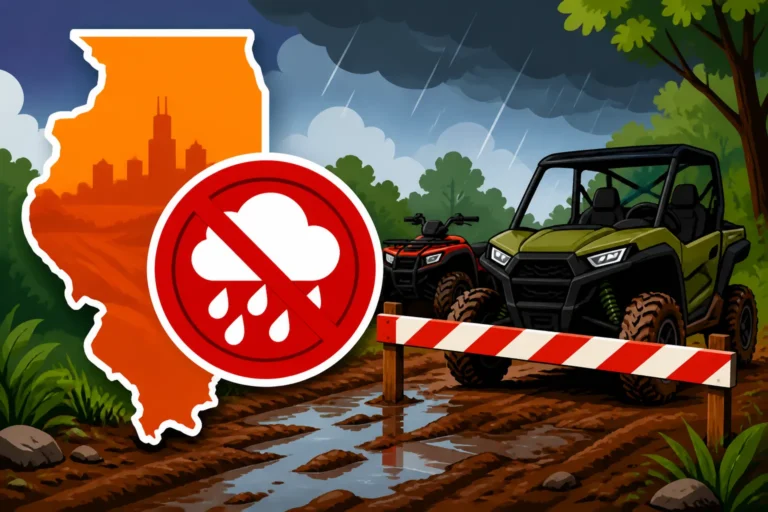
Rain can also change the trail itself. A section that was manageable on a dry morning may become slippery, muddy, or rutted later. Respect barriers and closure signs, even if a track appears passable. Riding around a closure can damage the trail or put your group in a more hazardous area. [Illinois Trail Closures After Rain]
If the conditions no longer suit your group, turn back. That can feel disappointing after towing from Chicago, Rockford, Springfield, or across the state, but it is better than pushing into a dangerous situation because the trip took effort to plan. For ideas on what to expect across the riding season, see [Illinois Riding Season Considerations]. If your destination is in the southern part of the state, [Illinois Riding Near Harrisburg] can help with location-specific planning.
A good summer ride is not measured by how many hours you stay out. It is the day when everyone returns to the trailer in good shape, the machines make it home without avoidable damage, and the group still wants to ride together next time. Plan for the heat, keep checking on one another, and be willing to cut the route short when conditions call for it.
Disclaimer
This article is for general informational purposes only and does not constitute professional advice. Laws, prices and regulations vary by location and change over time. Consult a qualified professional for guidance on your specific situation.