Illinois Riding in Spring
Spring riding in Illinois can turn into a frustrating mix of muddy trails, changing park conditions, and long drives to a closed gate. A little planning helps you choose a suitable riding area, protect your machine, and avoid assuming that a trail is open just because the calendar says spring. Here’s how to prepare for a safer, smoother ride.
What spring riding in Illinois is really like
Expect changing ground conditions
Illinois spring weather can change quickly. A trail that was firm when you left home may be slick after overnight rain, while low areas can stay saturated long after higher ground has dried. Southern Illinois clay can cling to tires and undercarriages; wooded trails may hold water in shaded spots, and gravel access roads can become rutted under repeated traffic.
Those conditions affect more than comfort. Spinning tires can deepen ruts, damage the trail, and leave you stuck where recovery is difficult. If a trail is visibly soft or a park has posted a closure, take it seriously. Riding around a muddy section to avoid it can widen the trail and create a new problem for the land manager.
Before you load up, look for a recent trail update and check directly with the riding area about closures, reservations, and weather-related restrictions. [Illinois Trail Closures After Rain] is useful background if you’re deciding whether to go after a wet spell. If conditions look questionable, postponing the trip is often less frustrating than spending the day winching, cleaning mud from every crevice, or trying to find a route back to the trailhead.
Spring does not mean every riding area is open
Illinois has relatively few places where you can legally ride an ATV or UTV, and each site can set its own operating calendar and rules. A public road, state forest, conservation area, or strip of open land is not automatically an OHV trail. Before riding, confirm that the specific property allows motorized recreation and that your vehicle is permitted there.
For example, Sahara Woods is a designated OHV destination near Harrisburg, while other riding areas in the state may be privately run, club-operated, or managed by a local public agency. Their opening days, registration process, trail conditions, and machine restrictions can differ. [Illinois ATV Trails: Where You Can Actually Ride] explains why checking the site matters before you head out.
Spring visitors should pay especially close attention to operating schedules. Some sites may not open until later in the season, may have limited riding days, or may pause access after rain. A map pin or old social media post is not a substitute for confirmation from the park or manager. Check the official site information before leaving, and have a backup plan if the area is closed.
Choosing a spring riding area and route
Match the trail to the weather and your experience
A first ride of the season does not have to be the most challenging one. If you’re returning after a winter break, start with an area that offers routes appropriate for your experience and machine. Beginner access roads can give you a chance to check your handling, brakes, and tires before you tackle rougher ground. Riders who want steep, muddy, or technical terrain should be prepared for the added recovery and damage risks.
The right choice also depends on who is coming along. A family outing with a new rider may call for a different park and pace than a group of experienced riders looking for technical trails. Confirm that each machine is allowed, that riders meet the site’s age and supervision rules, and that any passenger is permitted on the vehicle. [Best Illinois ATV Trails for Beginners] can help you think through the kind of route that may suit a less experienced rider.
If you’re comparing areas, use a simple checklist rather than relying on a trail’s reputation alone:
| What to check | Why it matters in spring |
|---|---|
| Current operating status | Seasonal schedules and weather closures can affect access |
| Recent trail conditions | Mud, standing water, and soft ground change the ride |
| Machine restrictions | Width, vehicle type, or equipment rules may limit where you can ride |
| Reservation requirements | Some sites require advance booking or have daily capacity limits |
| Parking and access | A muddy entrance or limited trailer parking can complicate arrival |
| On-site rules | Speed, passenger, helmet, and noise rules vary by location |
For a site with multiple routes, choose a conservative first loop and reassess before continuing. A trail that seems manageable at the start can become more demanding as the ground gets wetter or the route climbs through rutted terrain.
Plan for navigation before you lose signal
Cell coverage can be unreliable in rural and wooded riding areas, particularly when you’re away from the main entrance. Download or save the information you need before you leave home: the trailhead location, your reservation confirmation, the park’s contact details, and a route back to your vehicle. Carrying a paper map is a sensible backup, especially for a group ride where not everyone has the same phone service.
A mapping app such as onX Offroad can help with route planning and keeping track of where you are, but it should support—not replace—checking the property’s current rules. An app display does not give you permission to ride on private land or on a closed trail. Confirm boundaries and authorized riding areas with the land manager. If you use onX Offroad, download the information you expect to need before entering an area with weak reception.
For a longer day, agree on a few basics before anyone starts riding: who leads, who rides last, where the group stops, and what to do if someone gets separated. Make sure every rider knows the trailhead name and has a way to contact the rest of the group. A short conversation in the parking area can prevent a stressful search later.
Preparing your machine for muddy, wet conditions
Inspect tires, brakes, and recovery gear
After a winter in storage, do not assume your ATV or UTV is ready to go just because it starts. Check tire condition and pressure, brake response, throttle operation, steering, lights, and fluid levels. Look for cracked hoses, loose battery connections, damaged wiring, and signs of rodents chewing on materials while the machine was parked. If something feels wrong during a slow test near home, address it before heading to a remote trail.
Mud places extra demands on a machine. Tires may lose traction, brakes can collect grit, and a radiator can become clogged with mud or plant debris. A winch can be helpful if your route and vehicle call for one, but it is not a reason to push into conditions you would otherwise avoid. Carry appropriate recovery equipment and know how to use it safely. Keep bystanders clear when a winch line is under tension.
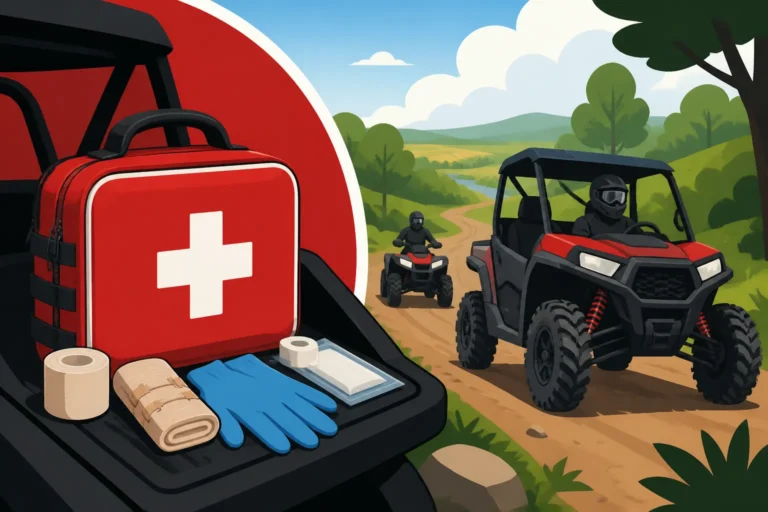
Check your owner’s manual for maintenance and operating guidance, and bring basic items suited to your machine and route. Depending on the outing, that may include a tire repair kit, tools, a tow strap, gloves, drinking water, and a first-aid kit. [Choosing a Winch Before You Sink in Clay] and [Radiator Screens for Corn Dust] cover equipment considerations that can matter when conditions get messy.
Protect the machine after the ride
A muddy ride is not finished when you pull back onto the trailer. Before washing, follow the manufacturer’s guidance for cleaning your vehicle. Pay attention to the radiator, brakes, suspension, underbody, and areas around the wheels, where packed mud can hide damage or interfere with moving parts. Avoid directing high-pressure water at seals, bearings, electrical connectors, or other sensitive components unless the manufacturer says it is appropriate.
After cleaning, inspect for loose fasteners, torn boots, damaged skid plates, and leaks. If the machine was submerged or exposed to deep water, do not assume that a quick rinse is enough; check the maintenance instructions and have a qualified mechanic assess it if you suspect water entered the engine, transmission, or electrical system.
Also clean mud off your trailer and gear before bringing them home. Seeds and plant material can travel with equipment, and leaving mud on a trailer can hide cracks or damage that should be fixed before the next trip. For more detailed cleaning considerations, see [Washing Clay Out of a Radiator and Frame]. If the machine has been parked all winter, [Storing a Quad Through an Illinois Winter] can help with the other end of the seasonal routine.
A spring ride checklist that prevents avoidable headaches
Confirm access, rules, and paperwork
A good spring ride starts before the truck is loaded. Confirm that the riding area is open on your intended day, that your vehicle and riders meet its rules, and that you understand whether reservations or waivers are required. Ask about trail conditions, parking, check-in, and any restrictions triggered by rain. Keep your confirmation accessible, either saved on your phone or printed, and bring identification or ownership documents if the site requires them.
Illinois also has separate requirements for usage stamps and access decals, and which one applies depends on where you ride. Do not assume that one sticker covers every site or that a permit for one riding area replaces another requirement. [Illinois OHV Permits: Two Stickers Explained] and [What the Stamp Covers and What the Decal Covers] explain the distinction. If you’re uncertain about a specific location, ask the site manager what applies before you travel.
Make sure the machine displays any required sticker in the correct place and that it is easy to see. Pack a small document pouch or keep digital copies of confirmations and relevant records together. If someone else in your group is hauling or riding the machine, make sure they know where the paperwork is and what the site may ask to see.
Pack for a longer day than you expect
Spring weather can shift from cool and damp to sunny and warm over the course of an outing. Bring layers that work under riding gear, rain protection, drinking water, and a dry change of clothes for the drive home. Gloves and eye protection matter when trails are wet, and a helmet should fit properly and meet the applicable site rules. Check the forecast for the riding area itself, not only the town where you live; conditions can differ across the state.
If you’re riding with children or newer riders, plan shorter loops and regular stops. Tired riders make poorer decisions, and wet ground can make an unfamiliar trail feel more difficult as the day goes on. Agree on a turnaround time and leave room for check-in, fuel, cleanup, and the drive home. For an early-season outing, [Illinois Riding Season Considerations] offers helpful context for planning around the state’s changing conditions.
Finally, ride within your group’s ability and respect closures, posted signs, and private property boundaries. A spring outing is more enjoyable when the plan leaves room to change course. If the trails are too wet, take a break, explore a nearby town, or reschedule rather than forcing the ride. That choice helps protect the trail and makes it more likely you’ll find good conditions when you return.
Disclaimer
This article is for general informational purposes only and does not constitute professional advice. Laws, prices and regulations vary by location and change over time. Consult a qualified professional for guidance on your specific situation.