Illinois Riding Through an Old Mine Area
Riding through an old mine area can mean rolling over broad reclaimed ground one minute and facing steep spoil banks, hidden water, or a closed trail the next. In Illinois, the key is knowing whether the land is open to riding and how its terrain changes your route. This guide explains how to plan, ride, and prepare safely around former mining sites.
What Riding Through an Old Mine Area Really Means
Reclaimed ground is not the same as an abandoned mine
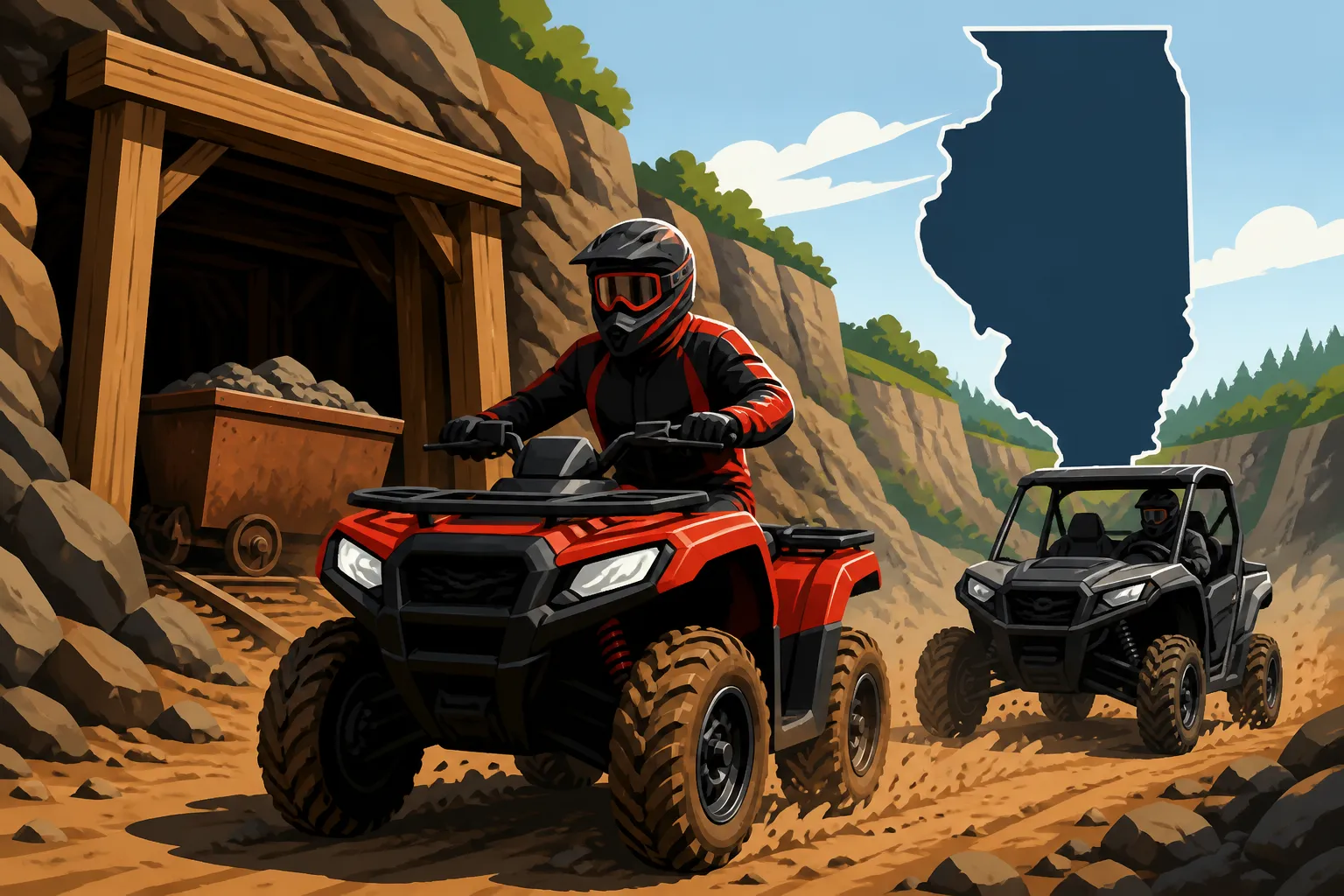
In southern Illinois, some riding areas sit on land that was previously mined and later reclaimed. That history can shape the landscape: you may encounter rolling ridges, open areas, steep-sided cuts, loose rock, and low spots that hold water. These features can make a trail feel very different from a level farm track or wooded route.
Reclamation does not automatically mean that every part of a former mine site is safe, stable, or open to recreational use. It describes land that has undergone some form of rehabilitation, but riders still need to follow the site’s designated trails and current access rules. An old mine property outside a managed riding area may be privately owned, closed, or subject to restrictions even if it looks inviting from a nearby road.
The practical distinction is simple: ride only where access is explicitly allowed. A visible track, a gap in a fence, or an old trail on a downloaded map does not establish permission. For background on where riding is and is not allowed, read [Illinois Land You May Not Ride] and [Illinois Grant-Assisted Riding Areas].
Why former mining terrain feels unpredictable
Mining and reclamation can leave a mix of surfaces close together. A firm-looking ridge may be dry and solid, while a shallow dip nearby can be soft, muddy, or filled with standing water. Spoil material may shift under tires, and erosion can create ruts or sharp edges that are difficult to spot until you are close.
The shape of a trail can also hide what is ahead. A crest may block your view of a descending section, and a berm or cut bank can make a turn tighter than it appears from a distance. On a side-by-side, the extra width and weight can make narrow or off-camber routes more demanding than they look. Riders on quads may have more room to maneuver, but they still need to assess traction, slope, and visibility.
That is why “I’ve ridden rough trails before” is not quite enough preparation. Former mine ground can change rapidly with rain, traffic, and erosion. A route that felt manageable on a dry weekend may become slick or deeply rutted after a storm. Treat each unfamiliar section as its own decision rather than assuming the whole trail will have the same surface.
Choosing a Legal Riding Area and Planning Your Route
Confirm that the site allows motorized riding
Start with the riding area’s own current rules, not a general map of the surrounding region. Illinois has public land that is not designated for ATV or UTV riding, and access can differ between a managed OHV site, a private park, a grant-assisted area, and land that merely appears unused. Check that the property is open to your vehicle type and that the route you plan to take is part of the riding area.
Sahara Woods is a designated OHV destination in southern Illinois, and its landscape includes former mine ground. It is a much safer planning starting point than trying to locate an unmarked abandoned mine property. Even at a designated site, however, you need to follow posted routes, operating requirements, and closures. The page [Sahara Woods: Illinois's Only State OHV Park] is a useful place to explore the site’s role in the state’s riding landscape.
Do not assume that a riding permit is permission to roam outside marked or authorized areas. A permit or access sticker may satisfy one requirement without opening every trail or parcel. For a clear explanation of how Illinois permits differ, see [Illinois OHV Permits: Two Stickers Explained]. Confirm the site’s specific requirements before unloading, especially if you are visiting from out of state or bringing a rental machine.
Build a route around your group and machine
Before the trip, think about the least experienced rider, the widest machine, and the person most likely to need a break. A route that feels easy to a confident adult on a small quad may be stressful for a new rider, a child, or a side-by-side operator encountering a narrow turn. Ask the site whether routes are marked by difficulty and whether certain trails restrict vehicle types or dimensions.
A mapping app such as onX Offroad can help you review a planned route and keep track of your group’s general location. Treat it as a planning aid rather than proof of access: digital map lines may not show a temporary closure, a current trail restriction, or the precise boundary of land where riding is permitted. Compare what you see on your screen with site information, signs, and instructions from staff.
Save a simple backup plan before you leave home. Note the entrance, check-in point, likely turnaround options, and a place where the group can regroup if riders become separated. If phone service is weak, a paper map can make it easier to understand the area without depending on a live connection. [Carrying a Paper Map to a Grant Site] covers why a printed backup can be useful when you are riding beyond reliable cell coverage.
| Planning question | Why it matters in former mine terrain | What to do |
|---|---|---|
| Is the property open to OHV riding? | Old mine land may be private or closed | Confirm directly with the site |
| Is this route designated for my machine? | Trail width and rules can vary | Check vehicle restrictions and signs |
| Has weather affected the trails? | Clay, ruts, and standing water can change quickly | Ask about closures and surface conditions |
| Can the group turn around safely? | Steep or narrow sections may limit maneuvering | Identify regroup and exit points |
| Will we have a backup for navigation? | Phone service may be unreliable | Save maps and carry a paper copy |
Understanding Hazards on Old Mine Ground
Watch for slopes, loose material, and hidden edges
A slope can be deceptively difficult when the surface is loose or uneven. Before entering a hill, look at its angle, the condition of the ground, the route down, and whether there is enough space to stop or turn around. If you cannot see the whole line, do not assume the section is clear just because another rider has gone ahead.
Avoid crossing a steep hillside at an angle unless the trail is clearly designed for it and you know your machine can handle the conditions. Side slopes can shift a vehicle’s weight and reduce traction, while loose rock or wet clay can make steering unpredictable. On a side-by-side, passengers and cargo affect balance; keep the load secured and within the manufacturer’s guidance.
Stay away from unstable banks, abrupt drop-offs, and unmarked edges. A former cut or water-filled depression may look like a harmless puddle from above but be deeper or steeper than expected. If the trail has been altered by erosion, mud, or recent vehicle traffic, choose a marked alternative rather than attempting to test the surface with your machine.
Treat water, mud, and old structures with caution
Water on former mine ground deserves extra care. A pool may conceal a rut, soft bottom, submerged debris, or a sudden change in depth. Never ride into water simply because another vehicle has left tracks through it; that rider may have taken a different line, or the conditions may have changed since they passed.
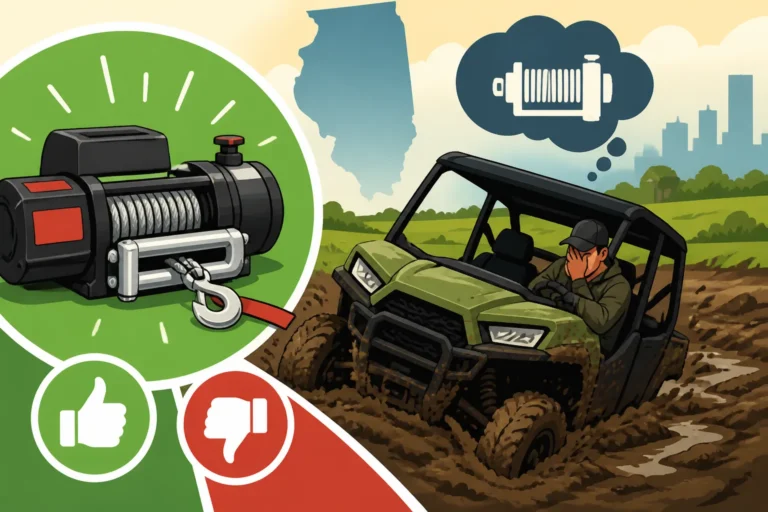
Mud creates its own problems even when it is not deep. A tire can lose traction quickly, and a machine that becomes stuck may be difficult to recover safely on a slope or in a narrow cut. If the site has closed trails after heavy rain, respect those closures. They help prevent damage and reduce the chance that riders will enter terrain that has become unsafe. For more on changing conditions, see [Illinois Trail Closures After Rain] and [Illinois Trail Conditions Before You Tow].
Do not investigate abandoned structures, equipment, shafts, pits, or piles of debris. They may be unstable, concealed by vegetation, or outside the permitted riding area. Keep people and machines on designated trails, and do not climb fences or cross barriers to get a closer look. If something appears to be a hazard on an open trail, turn around if you can do so safely and alert site staff.
Riding Safely Through a Former Mine Site
Adjust speed and spacing to the terrain
Ride at a pace that gives you time to react to the surface immediately ahead. On rolling ground, a modest speed can still be too fast if a crest blocks your view or the trail bends sharply beyond it. Slow down before entering a blind rise, narrow cut, or rough descent rather than braking hard once you are already committed.
Leave more room between machines than you would on a smooth, open road. Dust can obscure the trail, and loose material can be kicked up by the vehicle ahead. Extra spacing also gives each rider room to respond to a rut, stalled machine, or sudden stop without forcing the group into a close-following chain.
Keep your group together without pressuring slower riders. Agree on where to regroup before setting out, and make sure the last rider is not left to navigate alone. A simple “wait at the next marked junction” plan is more useful than shouting directions over engine noise. The [Illinois Trail Etiquette Locals Expect] guide offers more practical guidance on sharing routes and riding considerately.
Prepare the machine and people for a long day
Before unloading, check tires, brakes, steering, lights, fuel, and any protective equipment your machine requires. Inspect the vehicle for loose cargo and make sure everyone knows how to use the basic controls. If your route could involve rough or muddy ground, bring recovery equipment appropriate to your machine and know how to use it without placing anyone in a dangerous position.
Personal preparation matters just as much. Wear a properly fitted helmet and suitable riding gear, carry water, and bring basic first aid. Tell someone who is not riding with you where you are going and when you expect to return. If your group includes children or newer riders, choose a route with straightforward exits and enough places to stop without blocking other traffic.
Navigation should not depend on a single phone or one person’s memory. Download or save useful map information before arrival, keep a paper backup, and agree on what the group will do if it becomes separated. onX Offroad can be one part of that planning routine, but follow official site signs and staff directions if they differ from a line shown on a screen. A map is helpful; it does not replace judgment on the ground.
Making the Most of the Trip Without Taking Unnecessary Risks
Ask about conditions before the drive
Former mine terrain changes with weather and maintenance, so a recent report can be more helpful than a description from a previous visit. Before towing to the site, check whether the riding area is open, whether any routes are closed, and whether the conditions suit your machine and experience level. This is especially worthwhile after prolonged rain, during muddy periods, or when your group is traveling a long distance.
Ask specific questions rather than relying on a general “Is it open?” If you have a wide UTV, ask whether the trails you intend to ride allow it. If you are bringing a youth rider, ask about age, supervision, and equipment requirements. If you hope to ride challenging terrain, ask whether the site has a route that fits your group’s ability and what conditions are like on that route.
Planning around the site’s rules also reduces avoidable frustration at the gate. Keep required confirmations and documents accessible, arrive with enough time to check in, and make sure each rider understands the boundaries before setting out. If you are unfamiliar with sticker placement or access requirements, review [Illinois Public Access Decal Rules] before your visit.
Know when to turn around
Turning around is a sound riding decision, not a failure. If the trail becomes steeper, softer, narrower, or more exposed than your group expected, pause somewhere safe and reassess. Do not let the presence of another machine, a group’s schedule, or the effort of towing several hours persuade you to continue into terrain you cannot confidently manage.
A turn-around point should be chosen carefully. Avoid stopping on a blind corner, a steep slope, or a narrow trail where other riders cannot see you. If reversing is necessary, use a spot with stable footing and enough room, and keep bystanders away from the vehicle’s path. For a stuck or damaged machine, prioritize people first and contact site staff or emergency services as appropriate rather than improvising a risky recovery.
The most enjoyable ride is usually the one where everyone gets back to the staging area without a preventable incident. Staying on authorized routes protects access for other riders, too. That matters on reclaimed land, where careful use and respect for closures help preserve the riding opportunities that remain available.
Disclaimer
This article is for general informational purposes only and does not constitute professional advice. Laws, prices and regulations vary by location and change over time. Consult a qualified professional for guidance on your specific situation.