Illinois Riding Areas With RV Sites
Finding an Illinois riding area that also works for an RV trip takes more than spotting a campground on a map. A campsite may be miles from the trails, lack the hookups your rig needs, or require a separate reservation. This guide explains what to check, which Illinois riding areas to investigate, and how to avoid towing a machine to a setup that doesn’t fit your weekend.
What RV camping near an Illinois riding area really means
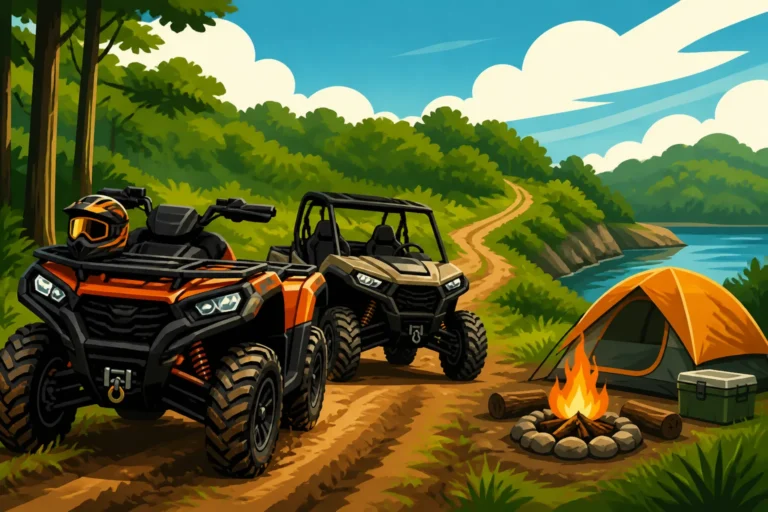
“RV sites” can describe several different arrangements: a campsite inside the riding park, a campground next door, or a commercial campground that’s a short drive away. Those options can feel interchangeable when you’re browsing listings, but they make a big difference once you arrive with a trailer, a machine, and limited time.
Before booking, clarify whether the RV site is part of the riding property and whether you can ride directly from camp. A campground close to a trailhead may still require you to load the ATV or UTV and tow it to the entrance. For a broader starting point, compare listings in [Illinois OHV Camping With Trail Access] and [Illinois Campgrounds Next to a Trailhead].
On-site camping versus a nearby campground
Camping on the same property can make a riding weekend simpler. You may be able to leave your RV set up, unload your machine once, and avoid moving the trailer between camp and the riding area. But “on-site” does not automatically mean you can ride from your campsite to the trails. The park may have designated routes, restricted areas, or rules about where machines can be driven.
A nearby campground can be a good choice when the riding property doesn’t offer the kind of RV site you need. It might have more suitable facilities or better room for a large rig. The tradeoff is extra driving and possibly extra loading. Ask how far the campground is from the riding entrance, whether machines are allowed on the connecting road, and whether a trailer can be parked at the trailhead.
If you’re comparing options with onX Offroad, use it as a planning aid for understanding the general layout and distances around a riding area. Don’t treat a mapped line as proof that a road is legal for an ATV or UTV, or that a trail is open to public riding. Confirm access and rules with the campground and riding-site operator.
RV hookups and site dimensions matter
A listing that says “RV camping” may not meet your needs. Ask whether the site is suitable for your vehicle length, whether the surface is level, and what kind of utility connections are available. If you need power or water, confirm that those services are actually available at the individual site rather than only somewhere else in the campground. If you plan to rely on your own water, power, or waste tanks, make sure the setup works for the length of your stay.
Also think about the space you need beyond the RV itself. A truck, toy hauler, and separate machine trailer can take up more room than one standard camper. Ask whether there is a place to park the tow vehicle and trailer after unloading, and whether the campground allows you to keep machines at the site. These details can prevent an awkward arrival where your rig fits, but the trailer has nowhere to go.
Illinois riding areas to investigate for an RV weekend
Illinois has several types of riding destinations, from a state OHV area to private parks and club-run sites. Their camping arrangements and riding rules can differ, so treat each location as a lead to verify rather than assuming that an RV listing means camping is available on the riding property.
The most reliable plan is to contact both the riding area and the campground. Ask about current access, reservations, machine rules, and whether the camping location is actually connected to the riding area. If your trip depends on a specific amenity, get that detail confirmed before you tow south or across the state.
Southern Illinois riding destinations
Sahara Woods near Harrisburg is a well-known state OHV destination to consider when planning a southern Illinois ride. It is not safe to assume that a riding permit includes an RV campsite, however. Check the site’s current reservation information and ask whether overnight camping is allowed at the riding location or whether you’ll need a separate campground. If you’re planning a visit, [Illinois Sahara Woods Permits] and [Reserving a Riding Day at a State OHV Park] can help you think through the riding-day side of the trip.
Little Egypt Off Road near Marion is another location worth investigating for riders who want to make a weekend of it. Confirm whether RV camping is offered on the property, what kind of rigs it can accommodate, and whether camping and riding require separate arrangements. A club-run riding area can have different admission and operating practices from a public park, so ask about check-in, hours, and machine requirements before you go.
Heartland Lodge near Nebo is also a useful name to research when looking for a southern Illinois riding trip. Ask directly whether RV camping is offered for riding visitors, whether sites are available for your type of rig, and how you get between the campsite and riding area. For more riding-location context, see [Heartland Lodge Runs a Riding Area at Nebo] and [Illinois Riding Near Nebo].
Central and northern Illinois options
Mill Creek Park near Marshall is another riding destination to check if you’re planning a trip in central or eastern Illinois. Don’t assume the park’s riding access and camping arrangements are bundled together. Ask whether there are RV sites on the property, whether those sites can be reserved with a riding visit, and whether you need to transport your machine to a separate trail entrance.
The Cliffs near Marseilles can be worth investigating for riders looking for an option closer to northern Illinois. Before choosing it for an RV stay, verify the exact camping arrangement and whether the campground can accommodate your full setup. A park may have nearby lodging or camping without offering RV spaces directly at the riding property. [Illinois Riding Near Marseilles] can help you explore that area as part of a wider trip plan.
When a particular riding destination doesn’t offer a suitable RV site, broaden your search to campgrounds nearby and compare the full travel routine. [Illinois Riding Areas With RV Sites] is a useful topic to review alongside [Illinois Trailheads With Trailer Parking]. Together, those considerations help you assess whether you can keep the RV parked at camp and still manage your machine and trailer conveniently.
How to choose a campsite that works for your rig and ride
A campsite can look perfect in a listing and still be a poor fit for a riding weekend. The key is to match the site, trailer, machine, and riding schedule before booking. A few direct questions can uncover restrictions that aren’t obvious in a campground description.
Confirm the details before you reserve
Contact the campground or riding-area operator and ask specific questions instead of relying on a broad “RV friendly” label. Useful questions include:
- Is the RV site on the riding property or at a separate campground?
- Can you ride directly from camp, or must you trailer your machine to the riding entrance?
- What is the maximum RV or trailer length the site can accommodate?
- Is there room for the tow vehicle and machine trailer?
- What hookups are available at the site, if any?
- Are there separate reservations, permits, or fees for camping and riding?
- Are machines allowed to be parked at the campsite?
- What are the rules for noise, generators, fires, pets, and quiet hours?
- What happens if the riding area closes or conditions change during your visit?
Write down the answers and the name of the person or office you spoke with. If a particular site feature is essential, ask whether it can be confirmed in your reservation details. It’s much easier to sort out a hookup question before the trip than after you’ve arrived with a full water tank and nowhere suitable to park.
A map can help you plan distances, but it can’t answer every access question. onX Offroad can be useful for getting a visual sense of the area while you organize a route. Still, ask the operator which entrance to use, where trailers are allowed, and whether any connecting roads are legal for your machine. For more help preparing, review [Illinois Trail Conditions Before You Tow].
Build your weekend around the real travel time
A campground that seems close on a map may take longer to reach once you account for narrow roads, towing, check-in, and unloading. If the RV site is separate from the riding area, plan for the extra trip each riding day. You may need to tow the machine over, find suitable trailer parking, unload, and repeat the process at the end of the day.
This can shape your choice of campsite. A family that wants a relaxed weekend may prefer a site with easy access to food, restrooms, or other conveniences, even if it requires a short tow to the trails. A group that wants to ride for most of the day may prioritize staying as close as possible to the riding entrance. Neither choice is automatically better; the best fit depends on how much loading and driving your group is willing to do.
Use onX Offroad as one part of the planning process, not as a substitute for local confirmation. Check the official riding-area information for closures and entry rules, and ask the campground about its own vehicle restrictions. If the trip includes multiple stops, [Illinois Weekend Riding Itineraries] can help you think through the order and logistics.
A practical checklist for an easier RV riding trip
A little preparation helps avoid the most common problems: arriving without a suitable campsite, discovering that the riding site requires a separate reservation, or finding out that your trailer has nowhere to park. Use this checklist before you leave home.
Before booking
- Confirm whether the RV site is on the riding property or nearby.
- Verify that your RV, toy hauler, or trailer fits the site.
- Ask which hookups are available and whether they’re at your site.
- Find out whether camping and riding require separate reservations or permits.
- Check riding hours, entry procedures, and any daily capacity limits.
- Ask whether machines can be parked at the campsite.
- Confirm trailer parking at the riding entrance if you’ll be towing there.
- Review the campground’s rules for generators, pets, fires, and quiet hours.
- Check current trail conditions and weather-related restrictions.
- Make a backup plan in case the preferred campground is full.
Before unloading
Once you arrive, follow the site’s directions rather than assuming you can ride wherever the map seems to show a connecting route. Check in, confirm the approved unloading area, and ask where the trailer and tow vehicle should remain. Keep reservation details and any required riding confirmation accessible, and make sure everyone in the group understands the campground and riding-area rules.
If the operator identifies a route as closed or off-limits, don’t use it just because it appears passable. Private roads, local roads, and trail connections can have different rules. [Illinois Trail Etiquette Locals Expect] is a helpful reminder that considerate riding starts with respecting posted directions and the people who maintain the area.
For a smoother trip, decide in advance whether your priority is trail access, campground amenities, or minimizing how often you move the trailer. Then verify that the specific site you book matches that priority. A few phone calls and a realistic map check can save a long drive, a frustrating setup, and a weekend spent solving avoidable logistics.
Disclaimer
This article is for general informational purposes only and does not constitute professional advice. Laws, prices and regulations vary by location and change over time. Consult a qualified professional for guidance on your specific situation.