Machines Checked Against Factory Specifications at the Gate
A machine that looks trail-ready may still be turned away if its setup no longer matches the riding site’s requirements. For Illinois riders, the frustrating part is often learning about a factory-specification check at the gate, after the trailer is unloaded. Knowing what such a check can involve—and what to confirm before leaving—helps you avoid a wasted trip without assuming every park follows the same rules.
What a Factory-Specification Check Means
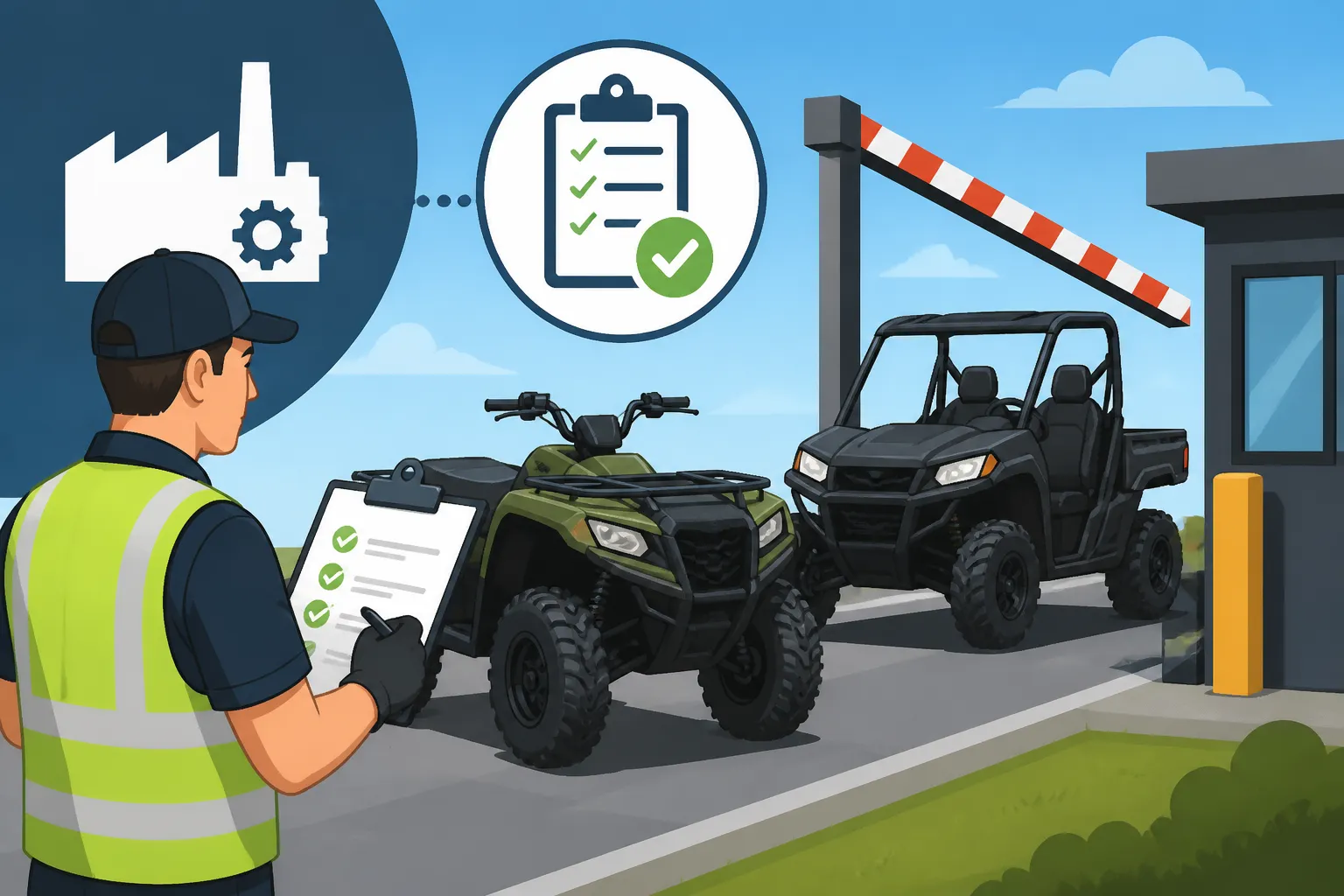
A gate check against factory specifications is a comparison between a machine’s current configuration and the specifications or intended setup provided by its manufacturer. It is not automatically a full mechanical inspection, and it does not mean every aftermarket part is prohibited. The site operator’s rules determine what is checked and what kinds of changes are acceptable.
The key point is that a machine can be mechanically sound and still fail a particular site’s entry requirements. A modification might change the machine’s dimensions, seating arrangement, noise, power, or other characteristics the operator considers relevant to safe use on its trails. Conversely, a machine with aftermarket components may still be accepted if those parts do not conflict with the site’s rules. The operator has the final say at that property.
This is different from a statewide permit, title, or registration question. Illinois riding access involves different requirements depending on where you ride. A title establishes ownership; an applicable stamp or decal addresses specific state requirements; and a park may also require its own reservation, permit, waiver, or inspection. Those items do not necessarily establish that a machine meets a private or public riding area’s equipment rules. For the sticker requirements, see Illinois OHV Permits: Two Stickers Explained and Illinois Grant Site Rules for Riders.
What staff may look at
The exact check depends on the site. A gate attendant might look at the machine’s general configuration, compare it with manufacturer information, or check for a feature that the park’s rules specifically restrict. Questions may concern whether the machine is a type the site allows, whether it has been substantially altered, or whether its setup is suitable for the trails and riding conditions.
Do not assume there is one universal Illinois checklist. An ATV trail, a side-by-side route, a private park, and a grant-assisted riding area can have different requirements. Some checks may be brief and visual; others may involve questions about the model or modifications. Ask the site operator what the check covers before you travel.
| Issue to clarify | Why it matters | What to have ready |
|---|---|---|
| Machine type and model | The site may limit which kinds of ATVs or UTVs can enter | Make, model, model year, and manufacturer information |
| Modifications | Changes may affect the site’s equipment or safety rules | A list of added or replaced parts and their purpose |
| Size or configuration | Trail width, seating, or other characteristics may matter at a particular property | Manufacturer specifications and clear photos, if helpful |
| Noise or exhaust | A site may have its own restrictions or inspection practices | Details about exhaust components and any applicable product information |
| Required riding documents | Entry screening does not replace permits or paperwork | Reservation, permit confirmation, waiver, and any required decals |
| Rider and passenger setup | Age, supervision, and passenger rules can differ by site | Rider ages and the machine’s seating information |
The table is a preparation aid, not an official inspection standard. The operator’s current instructions take precedence.
Factory information is more useful than a guess
If staff ask whether a machine remains within factory specifications, a model name alone may not answer the question. Manufacturer documentation can help establish the machine’s original configuration and intended use. Keep the owner’s manual or official model information accessible, either on your phone or as a printed copy. If a component has been changed, bring the part’s documentation when available.
Avoid relying on informal comparisons such as “it looks like the stock version” or “other riders use the same setup.” Two machines that appear similar may have different model specifications, and another rider’s entry does not guarantee that yours will be accepted. A site may also update or interpret its own rules differently from another property.
Modifications That Deserve a Call Before You Go
Many riders make practical changes to their machines: replacing tires, adding a winch, fitting guards, changing suspension parts, or installing an exhaust component. Whether any particular change creates an entry issue depends on the site’s written policy and the actual effect of the change. There is no safe shortcut of treating all modifications as harmless—or assuming all aftermarket parts lead to rejection.
The more a modification changes a machine’s original dimensions, seating, power delivery, exhaust, or intended use, the more important it is to ask in advance. A machine designed for one kind of trail may not be suitable for a narrow or technically demanding route after a substantial alteration. A change can also make it harder for an attendant to identify the model or confirm its specifications.
Before contacting the park, make a short, factual list:
- Identify the make, model, and model year.
- Note each change that could affect the machine’s dimensions, seating, engine, exhaust, suspension, or controls.
- Describe the component clearly, including its manufacturer or product information if known.
- Ask whether the change conflicts with the site’s requirements and whether the machine can use the trails you plan to ride.
- Keep the answer with your trip information and confirm that it applies to the specific property and date.
Be specific when you ask. “I have a modified UTV” may not give staff enough information to answer. A more useful question would describe the machine and the part that changed, then ask whether that configuration is permitted. If the answer is unclear, request the relevant rule or ask whether the site can review a photo or manufacturer document.
Some alterations have more obvious potential consequences than others. A wider setup may affect passage on a narrow trail; a changed seating arrangement may raise passenger questions; and an exhaust change may be relevant if the site enforces sound requirements. These examples are reasons to check, not a claim that any one change is automatically banned. See Why a Modified Machine Gets Turned Away for the distinction between a part being modified and a configuration conflicting with entry rules.
Do not wait until the gate to mention a change that you already know may be significant. If the operator says the setup is not allowed, arguing that the machine is safe or that the part is commonly sold does not necessarily change the site’s decision. A product listing or a retailer’s description is not approval from the riding area.
How to Prepare Before Hauling the Machine
A short check before departure can prevent the most avoidable problems. Start with the rules for the exact location, not a general assumption about Illinois riding sites. A state permit or decal may be necessary for certain types of access, but it does not promise admission to every park or override an equipment restriction. For example, review Illinois Sahara Woods Permits if that is your destination, and confirm the park’s own instructions separately.
Use this process:
- Identify the property and the day you plan to ride. Rules, hours, access procedures, trail availability, and booking needs can vary by site and date. Check Illinois Trail Conditions Before You Tow as part of your planning.
- Ask about factory-specification screening. Confirm whether the site checks machines against manufacturer information, and ask what features or modifications are most likely to matter.
- Describe your machine accurately. Include its make, model, model year, and any material changes. Do not rely on a broad label such as “stock” if the machine has altered parts.
- Check size and route compatibility. Ask whether your machine can use the intended trails, especially if it is a side-by-side or has changed dimensions.
- Confirm rider and passenger rules. A machine may be acceptable while a rider or passenger arrangement does not meet the site’s separate requirements. Review Illinois Rules for Young Riders when children are riding.
- Gather the required documents. Keep permit or reservation confirmation, any required waiver information, and relevant ownership or machine details together. Read Illinois Proof of Ownership on the Trail if you are unsure what ownership information to carry.
- Recheck shortly before leaving. A prior visit or another rider’s report may not reflect current site procedures. If the operator gave you an answer earlier, confirm it still applies to your planned visit.
If you are buying or borrowing a machine specifically for a trip, ask about the gate requirements before making the commitment. Do not assume the seller’s statement that a machine is “trail ready” means it meets a particular park’s rules. If you plan to bring a rented machine, confirm both the rental provider’s conditions and the riding site’s entry rules. The requirements for the machine and the paperwork can differ; Illinois Permit for a Rented Machine covers a separate permit question.
Keep the conversation practical
A gate attendant may need to make a quick decision based on the site’s policy. Make it easier to resolve questions by keeping the machine clean enough for its identifying information to be found and by having model details available. If staff ask about a component, answer directly rather than trying to conceal it or remove it in the parking area.
If the machine is refused, ask which requirement it does not meet and whether the decision applies to the entire property or only a particular trail. Stay courteous. Staff may not be authorized to make exceptions, and a disagreement at the entrance can delay the rest of your group. If the explanation is not clear, ask how to contact the site manager later. Do not ride after being told that the machine is not permitted.
If Your Machine Has Already Been Modified
If you discover a possible issue shortly before the trip, contact the site before loading up. Send only the details needed to identify the setup: machine model, a clear description of the change, and photos if the operator requests them. Ask for a specific answer about admission rather than a general opinion about whether the change is safe.
If the operator cannot confirm the machine is acceptable, weigh the cost and inconvenience of towing against the chance of being turned away. You could postpone the trip, choose a different property whose rules fit the machine, or restore the original configuration if that is practical and safe. Do not make last-minute changes that compromise the machine’s operation just to resemble a factory setup.
A modification does not necessarily invalidate a title, stamp, decal, or permit, but those documents do not settle every site’s equipment policy. Keep the issues separate: confirm the required paperwork for access, then confirm the machine itself is allowed. Illinois Permit for a Second Machine can help when paperwork is tied to an additional vehicle, while the site operator remains the right contact for configuration questions.
The most reliable approach is to treat gate screening as a property-specific condition of riding, not as a statewide certification that follows the machine from park to park. Know what has changed, carry useful manufacturer information, and get an answer from the site before hauling. That takes less time than arriving with a machine that cannot enter.
Disclaimer
This article is for general informational purposes only and does not constitute professional advice. Laws, prices and regulations vary by location and change over time. Consult a qualified professional for guidance on your specific situation.