Illinois Penalties for No Permit
Illinois ATV and UTV riders can face different consequences depending on whether they lack a required usage stamp, public access decal or riding-site permit. The confusing part is that these permissions are not interchangeable. Here’s how to identify what applies, what may happen if you ride without it, and what to do before heading out.
First, identify which permit is missing
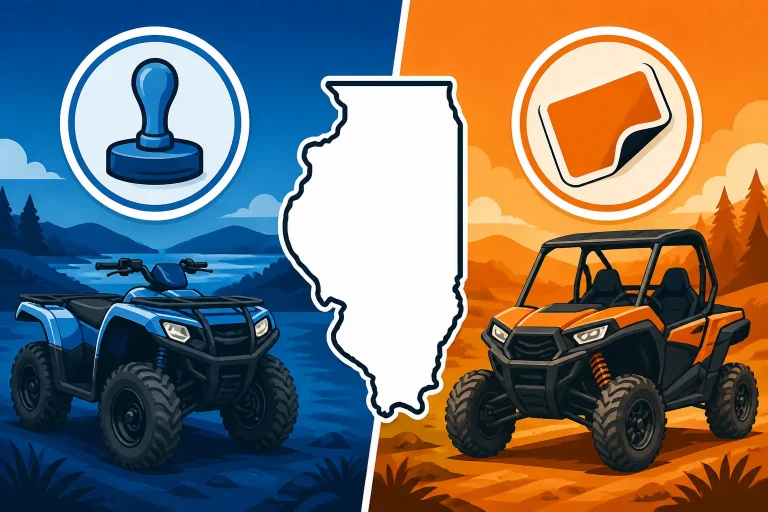
“Permit” can mean several different things for an off-road machine in Illinois. A rider might need a usage stamp to operate on certain public land, a public access decal to use a grant-assisted riding site, or a reservation or day permit required by a particular park. Each requirement has its own purpose, so having one does not automatically satisfy the others.
The Illinois Stamp and Decal Compared explains the distinction in more detail. In brief, the usage stamp and access decal relate to different kinds of riding access, while a park permit controls entry under a site’s own rules.
| Missing item | What it generally relates to | Possible consequence of riding without it |
|---|---|---|
| Usage stamp | Operating a covered off-highway vehicle in places where the stamp is required | A citation or other enforcement action may be possible |
| Public access decal | Riding at a grant-assisted site that requires the decal | A citation, being told to leave, or both may be possible |
| Site-specific permit | Entry to a particular park or reserved riding day | Entry may be denied, or park rules may require the rider to leave |
| Street-use requirements | Operating a machine on a road where local rules allow it | Separate road-use penalties may apply, even if off-road permits are in order |
These are general categories, not a guarantee of how a particular encounter will be handled. Requirements depend on where the machine is being ridden, what kind of machine it is, and whether an exemption applies. For more detail on the separate permissions, see What the Stamp Covers and What the Decal Covers.
A rider who only has a site reservation, for example, should not assume that the reservation replaces a required decal. Likewise, a stamp or decal is not a pass to ride anywhere: it does not open a gate, grant permission to cross private land, or make an undesignated public area legal for ATV or UTV use.
Before leaving home, match the machine and destination to the requirement. Check whether the riding area is public, privately operated, or grant-assisted, and ask the operator what riders must bring. The Illinois Grant Site Rules for Riders can help clarify what applies at grant-assisted locations.
What can happen when you ride without the required item
The consequence can range from being turned away at a gate to receiving a citation. Which outcome is possible depends on the missing authorization and the place where the machine is being used.
Missing a usage stamp
If a usage stamp is required for the type of riding you are doing, riding without it may lead to enforcement. The relevant details can depend on the land and any applicable exemption. A rider should not assume that owning the machine, having proof of purchase, or carrying a title substitutes for a stamp.
For specifics on this requirement, read Illinois Penalties for No Stamp. If you think your machine qualifies for an exemption, confirm that before riding rather than relying on an assumption made at the trailhead. The rules can vary by how the machine is used and where it is operated; Illinois Usage Stamp Exemptions covers the kinds of situations riders may need to check.
Missing a public access decal
A public access decal may be required at a grant-assisted riding site. Riding without a required decal can bring enforcement consequences, and site staff may also require a rider without the proper authorization to stop or leave. Having a decal for another machine does not necessarily cover the machine you brought: check whether each machine needs its own decal.
See Illinois Penalties for No Decal for more on this requirement. Do not treat a usage stamp as a substitute for a decal, or the reverse. The sticker needed depends on the riding location and the rules that apply there.
Missing a park’s own permit
Some riding areas require a separate reservation, day permit or other site-specific authorization. If you arrive without it, the immediate result may be that you cannot enter or ride. A park can also enforce its own posted rules, so a state stamp or decal does not necessarily meet the park’s entry requirements.
For a state OHV park, check the current requirements for the specific date and machine before traveling. Illinois Sahara Woods Permits explains the site-permit category. Private parks can set their own entry and operating rules, so check directly with the operator rather than assuming that a state permit covers admission.
Separate road-use violations
A missing off-road permit is not the same issue as riding an ATV or UTV on a road where that use is not allowed. If you take a machine onto a street, local ordinances and equipment requirements may apply independently. Riding without the required off-road authorization does not become lawful because a road is nearby or because the machine has equipment intended for street use.
Likewise, having the correct stamp or decal does not make street riding legal. See Illinois Penalties for Illegal Street Riding for the separate road-use issue. Keeping these rules distinct helps avoid treating one sticker as a general license to operate anywhere.
What to do if you realize you do not have a permit
If you notice the problem before unloading, pause and verify the requirement. Do not ride first and plan to sort it out if someone asks. The safest approach is to confirm the site’s rules, obtain the correct authorization if it is available, and avoid riding until you have it.
Use this checklist:
- Identify the exact destination. A public riding area, grant-assisted site, private park and road can have different rules.
- Confirm the machine is covered. Check whether the authorization applies to the vehicle you brought and whether a separate item is needed for each machine.
- Check for an exemption. Do not rely on an exemption unless you have confirmed it applies to your machine and use.
- Ask the site operator or relevant official source. Confirm current requirements, including any site-specific reservation or permit.
- Keep proof accessible. If you purchased online, keep the confirmation available in the format the site accepts. A receipt may show a purchase, but it does not replace an authorization that was never obtained.
- Do not ride while the issue is unresolved. If the required permit cannot be obtained, choose a location where your machine is authorized to ride.
A missing item discovered at the gate is frustrating, especially after a long drive, but it is better to lose the trip than risk riding without required authorization. Do not rely on the idea that a worker will sell the permit at the entrance; availability and procedures can vary. Check before leaving, and contact the operator if the purchase instructions are unclear.
If you are borrowing or renting a machine, ask who is responsible for the required decal or permit before the ride. Do not assume the owner’s paperwork follows the vehicle automatically, or that your own authorization covers a machine you do not own. Illinois Permit for a Rented Machine discusses that situation.
How to reduce the risk of a citation or denied entry
Most permit problems come from mixing up requirements, using an old assumption about a site, or forgetting that the authorization is tied to a particular machine or visit. A short check before the trip can prevent a costly or disappointing mistake.
Start with the destination, not the sticker. Find out whether the area is grant-assisted and whether it requires an access decal, then check whether a usage stamp is also required for your planned riding. If the location has its own reservation system, ask whether that permit is separate. The Illinois Permit Questions Riders Ask can help with common permit uncertainties.
Before you leave, verify that:
- You know which authorization applies to the place you plan to ride.
- The decal or stamp is valid for the required period and is mounted as directed.
- The permit covers the machine you are transporting.
- Any reservation or site-specific permit is confirmed for the intended date.
- You have proof of purchase or confirmation available if the site requires it.
- You have checked whether an exemption actually applies to your circumstances.
- You have permission to ride on the land and are not relying on a permit to grant access it does not provide.
If an enforcement officer or site employee tells you that an authorization is missing, stop riding and follow lawful instructions. Ask which requirement they believe is not met and what information they need to verify it. Keep the discussion calm and factual. If you disagree with a citation, use the process and deadline stated on the citation or confirmed by the relevant agency; do not ignore it or assume an explanation at the trailhead will resolve it.
Rules, enforcement practices and permit procedures can change. Confirm the current requirements with the responsible agency or riding-site operator before your trip, especially when riding at a new location or using a machine under an unusual exemption. A permit is only one part of lawful riding: it does not replace landowner permission, site rules, or any separate street-use requirements.
Disclaimer
This article is for general informational purposes only and does not constitute professional advice. Laws, prices and regulations vary by location and change over time. Consult a qualified professional for guidance on your specific situation.