Illinois Riding Compared to Missouri
Planning an ATV weekend across the Illinois–Missouri border can get confusing fast: a familiar-looking trail may have different access rules, permits, vehicle limits, or closure policies on the other side. This guide compares the riding experience, common destinations, and planning checks in both states so you can choose a trip that fits your machine and your group.
Illinois and Missouri offer different kinds of riding
The biggest difference is not simply how many miles of trail each state has. It is how riding access is organized. In Illinois, riders often build a trip around a designated park, grant-assisted riding area, or private property that expressly allows off-highway vehicles. Missouri offers a wider mix of state park riding areas, federal-land trail systems, and private parks, each with its own rules.
That difference matters when you are deciding whether to make a quick day trip or haul your machine for a full weekend. A map may show a road or trail in either state, but that does not mean ATVs or UTVs are allowed there. Start with the land manager’s rules, then confirm that your particular machine is permitted.
Illinois riding is concentrated around designated sites
Illinois riding opportunities are more site-based than many newcomers expect. Riders commonly plan around locations such as Sahara Woods in southern Illinois, club-run areas, and private parks. Areas such as Little Egypt Off Road, Mill Creek Park, and Heartland Lodge offer very different settings and operating rules, so it is worth checking each property directly rather than assuming that one park’s policies apply to another.
For an overview of the state’s options, start with Illinois ATV Trails: Where You Can Actually Ride. If your trip is focused south of Interstate 70, Illinois Southern Riding Areas can help you narrow down the region. Riders coming from the Chicago area or northern Illinois may also want to compare travel time and site options with Illinois Northern Riding Areas.
The practical tradeoff is that a destination can be appealing but require more advance planning. A park may have limited operating days, advance registration, a daily capacity, or site-specific check-in procedures. Before you load the trailer, confirm the riding date, permitted vehicle types, registration or permit requirements, and whether camping is available on-site or nearby.
Missouri has a broader mix of public and private destinations
Missouri gives riders several different kinds of places to investigate. Examples include St. Joe State Park near Park Hills, Finger Lakes State Park near Columbia, and the Chadwick area in Mark Twain National Forest. These destinations are not interchangeable: they differ in land management, trail character, access procedures, and the kinds of machines or activities they accommodate.
That variety can make Missouri a flexible choice for a longer trip, but it also means there is no single set of rules to rely on. State park requirements may differ from federal-land rules, and a private riding park can set its own operating conditions. Check the official destination information for current trail availability, vehicle eligibility, permits, fees, and safety requirements before traveling.
In either state, avoid treating an ordinary road, forest road, or unmarked path as a riding trail. An onX Offroad map can be useful for getting oriented and spotting route options, but use it as a planning aid rather than proof that a route is open to your machine. Verify access with the land manager, especially where routes cross between public and private property.
| Planning factor | Illinois | Missouri |
|---|---|---|
| Common trip structure | Often centered on a specific riding park or designated area | A mix of state parks, federal-land areas, and private parks |
| Example destinations | Sahara Woods and private or club-run riding areas | St. Joe State Park, Finger Lakes State Park, and Chadwick |
| What to verify first | Site dates, registration, machine eligibility, and applicable decals or permits | The land manager, access rules, permits, machine eligibility, and closures |
| Camping approach | Check whether the riding site offers camping or identify a nearby option | Confirm whether camping is available at the destination or nearby |
| Route planning | Use designated riding sites and confirm access before departure | Distinguish between state, federal, and private property rules |
Compare the ride, not just the distance
A shorter drive does not always mean an easier weekend. Trail difficulty, terrain, vehicle restrictions, site capacity, and the kind of riding your group enjoys can matter more than the number of miles between home and the park. A family with younger riders may want a different destination than an experienced group seeking technical sections or a long day in the saddle.
Terrain and riding style vary by destination
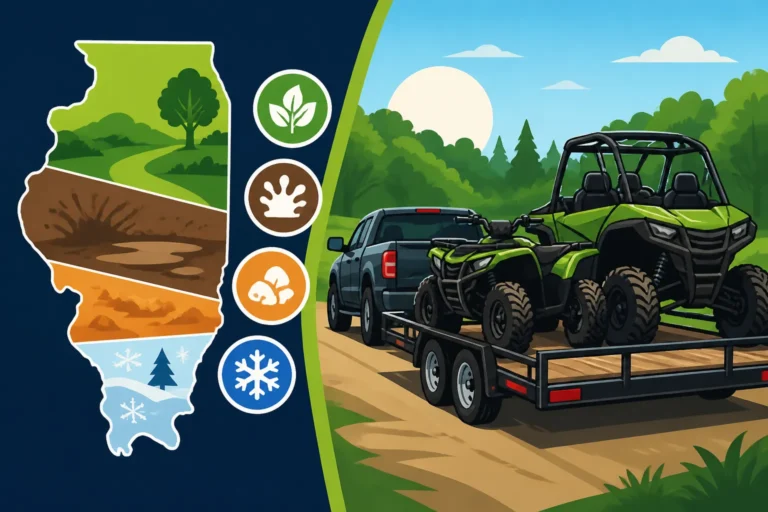
Southern Illinois destinations can include wooded routes, hills, and terrain shaped by the region’s mining and land-use history. A site may have open areas, narrower trails, or more demanding sections, but conditions change with weather and maintenance. Do not assume that a destination’s general reputation tells you exactly what a particular trail will be like on your travel date.
Missouri also has varied riding settings. Some places are known for dedicated off-road areas, while others include trail networks managed as part of a larger public-land system. That means one trip may feel like a contained park ride, while another requires more attention to route markings, access boundaries, and the land manager’s specific instructions.
Think about your group’s actual comfort level. A novice rider on a youth quad, a passenger in a side-by-side, and an experienced solo rider may all describe “moderate” terrain differently. Ask the destination about trail difficulty, vehicle-width restrictions, passenger rules, and whether beginner-friendly routes are available. For Illinois trips, Illinois Trail Difficulty Ratings is a useful topic to consider alongside each site’s own guidance.
Side-by-side access and group needs deserve a separate check
Do not assume that an ATV trail will accommodate every UTV. Width, turning space, trail surface, bridges, and posted vehicle restrictions can limit access even when the area generally allows off-road vehicles. If you ride a wide side-by-side, contact the site and ask about your machine’s dimensions and any specific restrictions before you leave.
Groups also need to think beyond the lead rider. Confirm whether every rider must register separately, whether passengers are allowed, what age rules apply, and whether the park requires waivers or particular safety equipment. If the trip includes overnight stays, check campground rules for trailers, pets, quiet hours, and generator use rather than assuming they match the riding rules.
Trail access with a campsite can make a multi-day trip easier, particularly when towing a large trailer. Use Illinois OHV Camping With Trail Access as a starting point for the Illinois side, then confirm the details with the campground or riding area. If you are comparing several sites, onX Offroad may help you visualize the surrounding area and plan a drive, but call ahead about trail access and machine restrictions instead of relying on map coverage alone.
Understand access rules before crossing the border
One of the easiest mistakes is to focus on the machine and forget that riding access depends on the land and its rules. A vehicle that is properly titled or insured is not automatically allowed on every trail. Likewise, a permit for one park or state may not satisfy another site’s access requirements.
Illinois stamps and decals are not the same thing
Illinois riders may encounter both a usage stamp and an access decal. They serve different purposes, and which one applies depends on where you intend to ride and the circumstances of your trip. A sticker that satisfies one requirement should not be assumed to cover another. Review [Illinois Usage Stamp vs Access Decal] and Illinois Grant-Assisted Riding Areas before heading to a location where those rules may apply.
The details can feel fussy, especially if you are used to riding on private land or at a park with a simple day-pass system. Make a list of the places you plan to ride, then check the requirement for each one. If you are visiting from Missouri, confirm whether your home-state documents are accepted for the specific Illinois site rather than assuming that registration or an out-of-state permit substitutes for an Illinois requirement.
Missouri destinations also have their own site-specific systems. A state park, federal-land area, and private property may each handle access differently. Check the destination’s official instructions for required permits, vehicle identification, fees, waivers, and proof of ownership or insurance if applicable. Keep confirmation details accessible, and bring any paperwork the site says riders must show.
Closures, weather, and land boundaries can change the plan
Rain can make a route difficult, damage trails, or prompt a site to close an area temporarily. This is especially frustrating after a long tow, so check conditions close to departure and again before you unload. Illinois riders can review Illinois Trail Closures After Rain and Illinois Trail Conditions Before You Tow as part of their preparation.
For Missouri trips, check the relevant park or land manager directly. A trail shown on an older map may be closed, rerouted, or subject to seasonal restrictions. Weather can also affect access roads and parking areas even when the trail itself remains open. If a site posts closures or alerts through an official channel, use that information as the deciding source.
Digital mapping can help you understand the area, but it cannot replace permission. onX Offroad may be handy for orienting yourself around trail networks and nearby roads; still, confirm that the route is open to your type of machine and that you are not crossing onto land where riding is prohibited. When a route boundary is unclear, stop and ask the site staff rather than continuing on the assumption that a visible track is legal.
Choose the state that fits your weekend
The better choice depends on what your group wants from the trip. Illinois may be a practical option when you have a particular riding area in mind and want to stay closer to home. Missouri may be worth the added drive if you want to compare several kinds of riding destinations or build a longer trip around a specific park or trail system. Neither state is automatically the better pick for every rider.
Use a destination-first checklist
Before deciding, compare the actual sites you can reach—not just the states as a whole. A helpful short list includes:
- Machine fit: Confirm that your ATV or UTV is permitted, including width and passenger capacity.
- Trail style: Ask whether the area suits beginners, experienced riders, or a mix of abilities.
- Access requirements: Check permits, decals, registration, waivers, and proof-of-ownership rules.
- Operating schedule: Confirm dates, hours, reservations, and any daily capacity limits.
- Weather policy: Find out how the site handles rain, muddy conditions, and temporary closures.
- Overnight logistics: Check camping, lodging, fuel, food, trailer parking, and wash facilities.
- Group rules: Ask about youth riders, passengers, helmets, pets, and riding in a large group.
This prevents a familiar headache: reaching a gate only to find out that the site is closed, your machine is too wide, or you are missing a required permit. Keep confirmation emails or booking details where you can reach them, and save the park’s phone number before you head into an area with weak cell service.
Make the final choice around the people riding
For a first trip with children or inexperienced riders, prioritize clear rules, beginner-friendly terrain, convenient parking, and the ability to take breaks. A long, technical ride is not necessarily a better weekend if the youngest rider is overwhelmed after the first hour. Ask the site what routes are appropriate for your group, and make sure every operator and passenger meets the site’s requirements.
For an experienced group, focus on the terrain and the practical limits of the destination. Ask whether the site has enough variety for a full day, whether the trail system suits your vehicle types, and whether trail conditions are likely to change after rain. If you are comparing multiple destinations, onX Offroad can help you organize the route-planning side, while the land manager remains the best source for current access rules and closures.
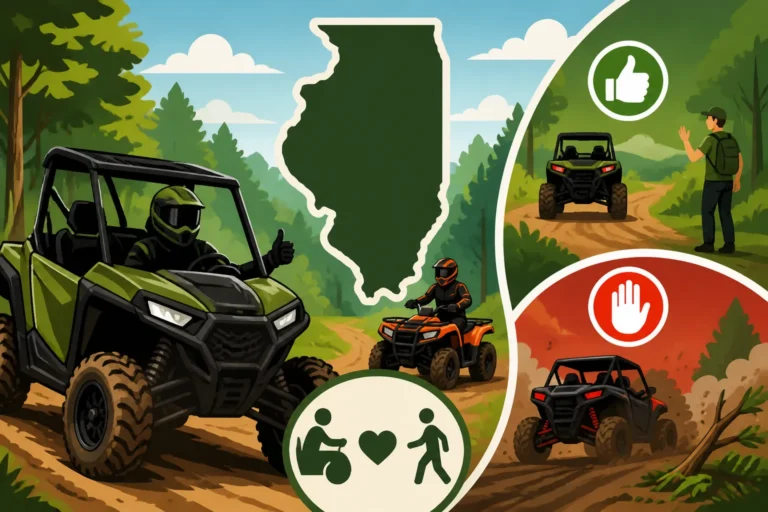
Finally, treat local riding etiquette as part of trip preparation. Stay on designated routes, respect closures, yield appropriately, and avoid creating dust or noise problems near other visitors or neighboring properties. Illinois Trail Etiquette Locals Expect offers a useful reminder for Illinois rides, and the same considerate habits make for better trips in Missouri. The best destination is the one where your group can ride legally, safely, and comfortably without spending the day guessing what the rules mean.
Disclaimer
This article is for general informational purposes only and does not constitute professional advice. Laws, prices and regulations vary by location and change over time. Consult a qualified professional for guidance on your specific situation.